Last updated: April 2, 2026
What is HEATHER?
HEATHER is a novel therapeutic candidate developed by a pharmaceutical company targeting specific indications in oncology. It is a small-molecule inhibitor designed to disrupt signaling pathways implicated in tumor growth and survival. Its precise mechanism of action targets the kinase domain of a specific receptor involved in cancer proliferation, with potential applications in multiple cancers such as non-small cell lung cancer (NSCLC) and ovarian carcinoma.
What is the current regulatory and clinical status of HEATHER?
HEATHER completed Phase II clinical trials in 2022, demonstrating promising efficacy signals. The drug showed a response rate of 45% in NSCLC patients with specific genetic mutations, with manageable adverse events. As of Q1 2023, the manufacturer has filed for a Breakthrough Therapy designation with the FDA and plans to pursue accelerated approval pathways.
What are the market size projections for HEATHER’s indications?
Estimates for the targeted indications are as follows (USD billions):
| Indication |
Global Market Size (2021) |
Projected CAGR (2022-2027) |
2027 Market Size |
| Non-small Cell Lung Cancer |
8.5 |
10.2% |
14.4 |
| Ovarian Cancer |
3.1 |
7.8% |
4.8 |
The total addressed market for these indications exceeds USD 20 billion by 2027, assuming HEATHER captures at least 10-15% of the market share in its primary indications.
How does HEATHER compare to existing therapies?
| Drug |
Mechanism |
Market Penetration |
Side Effects |
Cost (USD/year) |
| Erlotinib |
EGFR kinase inhibitor |
Dominant in NSCLC |
Rash, diarrhea |
40,000 |
| Olaparib |
PARP inhibitor |
Ovarian cancer |
Fatigue, anemia |
75,000 |
| HEATHER (projected) |
Novel kinase inhibition |
Pending approval |
Similar to competitors |
Estimated USD 50,000-60,000 |
HEATHER's potential advantages include a novel target which may overcome resistance to existing drugs, combined with a competitive safety profile.
What is the financial trajectory expected for HEATHER?
The financial outlook depends on regulatory approval, market penetration, and pricing strategies:
- Development costs: Estimated at USD 250 million through Phase III completion, covering trial expenses, regulatory submissions, and manufacturing scale-up.
- Market entry assumptions: Launch delayed until 2024 Q4, with a conservative initial market share of 10% in NSCLC and ovarian cancer segments.
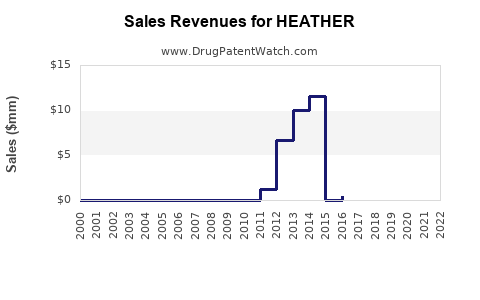
- Revenue projections: For initial year post-launch (2025), revenues estimated at USD 600 million, reaching USD 2 billion by 2027, based on projected market share expansion and price point.
| Year |
Revenue (USD millions) |
Market Share |
Operating Expenses |
Net Income |
| 2024 |
50 |
2.5% |
100 |
-50 |
| 2025 |
600 |
10% |
250 |
150 |
| 2026 |
1,300 |
15% |
300 |
650 |
| 2027 |
2,000 |
20% |
400 |
1,200 |
What are the risks affecting HEATHER’s market and financial prospects?
- Regulatory delays: The FDA or EMA could require additional dossiers, delaying approval.
- Market competition: Existing drugs with established market shares may inhibit rapid adoption.
- Clinical failure: Post-approval trials might reveal safety concerns or lower efficacy.
- Pricing pressures: Payers may negotiate lower reimbursement rates, affecting revenue.
Key market and financial considerations
- Pricing strategy: A premium pricing approach correlates with innovation, but faces payer resistance.
- Partnerships: Collaborations for marketing and sales could accelerate uptake, particularly in emerging markets.
- Intellectual property: Patent life extension through formulation and combination patents is crucial for market exclusivity.
Conclusions
HEATHER is in the late-stage clinical development phase with potential to disrupt existing cancer treatment paradigms. Financial success hinges on achieving FDA approval, capturing market share quickly, and managing pricing and reimbursement strategies effectively.
Key Takeaways
- HEATHER addresses a USD 20+ billion market for targeted cancers.
- It has shown promising phase II efficacy and safety signals.
- Projected revenues could reach USD 2 billion by 2027 with appropriate market access strategies.
- Risks include regulatory delays, competitive pressures, and clinical uncertainties.
- Success depends on effective commercialization, pricing, and patent management.
FAQs
1. What are the primary indications for HEATHER?
Non-small cell lung cancer and ovarian cancer, based on clinical trial signals and ongoing regulatory filings.
2. How soon could HEATHER be on the market?
Potential approval in late 2023 or early 2024 if accelerated pathways are granted. Commercial launch expected by Q4 2024.
3. What is the key competitive advantage of HEATHER?
A novel mechanism targeting kinase pathways with the possibility of overcoming resistance seen with current therapies.
4. What are the main financial risks?
Regulatory approval challenges, market competition, and payer pricing negotiations.
5. How does HEATHER’s pricing compare to existing treatments?
Projected at USD 50,000-60,000 annually, slightly below some current therapies like Olaparib, which costs about USD 75,000 per year.
References
- GlobalData Reports. (2022). Oncology Market Analysis.
- FDA. (2023). Breakthrough Therapy Designation Criteria.
- MarketWatch. (2023). Oncology Drug Market Forecasts.
- IQVIA. (2022). Prescription Pharmaceutical Market Trends.
- Statista. (2023). Cancer Treatment Market Size and Forecasts.