Last updated: September 23, 2026
GEODON is Pfizer’s brand for ziprasidone, an atypical antipsychotic approved in the United States for schizophrenia and acute manic or mixed episodes associated with bipolar disorder. Its commercial trajectory followed the standard lifecycle for a mature small-molecule psychiatric drug: rapid pre-generic growth, declining sales after patent protection weakened, and substantial erosion after generic ziprasidone entered the market.
The product remains FDA-approved, but its commercial value is now concentrated in generic ziprasidone rather than Pfizer’s branded GEODON franchise. The principal market risks are generic price competition, reduced promotional spending, therapeutic substitution within the atypical antipsychotic class, and the absence of meaningful remaining exclusivity.
What is GEODON and how does ziprasidone work?
GEODON contains ziprasidone, a dopamine D2 and serotonin 5-HT2A receptor antagonist with additional activity at serotonin 5-HT1A and 5-HT1D receptors and inhibition of serotonin and norepinephrine reuptake.
The FDA-approved product line includes:
| Product |
Dosage form |
Primary use |
| GEODON capsules |
Oral capsules |
Schizophrenia; acute manic or mixed episodes associated with bipolar disorder |
| GEODON injection |
Intramuscular injection |
Acute agitation in patients with schizophrenia |
The oral product is administered twice daily with food. The FDA label requires administration with at least 500 calories because food substantially increases ziprasidone exposure. This food requirement is a commercial and adherence disadvantage relative to several competing atypical antipsychotics. [1]
Ziprasidone also carries a prominent QT-prolongation warning. The label identifies torsade de pointes risk and advises against use in patients with certain cardiac conditions or in combination with other drugs that prolong the QT interval. [1]
When did GEODON receive FDA approval?
The FDA approved oral GEODON capsules in February 2001. The injectable formulation received approval in August 2002 for acute agitation associated with schizophrenia. [2]
The approval sequence established two commercial products:
- A chronic oral therapy for schizophrenia and bipolar mania.
- A hospital and acute-care injectable product for rapid control of agitation.
GEODON was not approved for depressive episodes associated with bipolar disorder, maintenance treatment of bipolar disorder, or dementia-related psychosis. The lack of a long-acting injectable formulation limited its ability to compete with products such as INVEGA SUSTENNA, ABILIFY MAINTENA, and RISPERDAL CONSTA.
What patents protected GEODON?
GEODON’s U.S. patent estate principally involved the ziprasidone active ingredient, pharmaceutical compositions, and related formulation or use claims. The key early compound patent was U.S. Patent No. 5,312,925, associated with benzisothiazole derivatives including ziprasidone. Its original term expired in the early 2010s, subject to any applicable patent-term adjustment or extension.
The commercial timing of generic entry was influenced by later-listed patents and litigation settlements rather than by the original compound patent alone. The relevant protection categories were:
| Protection category |
Commercial relevance |
| Active-ingredient and chemical-structure patents |
Established the initial exclusivity period |
| Pharmaceutical-composition patents |
Could delay or complicate generic approval |
| Method-of-use patents |
Covered approved psychiatric indications or dosing approaches |
| Injectable formulation protection |
Applied to the intramuscular product and hospital use |
| Pediatric exclusivity |
Provided a limited six-month regulatory extension where applicable |
The Orange Book has historically listed patents for GEODON capsules and injection. Orange Book listings are not equivalent to enforceable freedom from competition. A listed patent may be challenged through an Abbreviated New Drug Application Paragraph IV certification, invalidity litigation, or a settlement permitting a future generic launch. [3]
When did GEODON lose exclusivity?
GEODON lost effective branded exclusivity in stages rather than on a single date.
The original compound patent expired before the major commercial generic launch window. Generic manufacturers challenged Pfizer’s later patent positions through Paragraph IV certifications. Pfizer and generic applicants entered litigation and settlement arrangements that delayed the broad market entry of generic ziprasidone.
Generic ziprasidone became commercially available in the United States in the late 2010s. The resulting market transition sharply reduced the value of the branded product. Exact launch timing varied by dosage strength, manufacturer, and formulation.
GEODON exclusivity timeline
| Period |
Event |
Market effect |
| 2001 |
FDA approval of oral capsules |
Launch of chronic psychiatric franchise |
| 2002 |
FDA approval of intramuscular injection |
Expansion into acute-care use |
| Early 2010s |
Expiration of core chemical protection |
Opening of generic challenge pathway |
| 2010s |
Paragraph IV disputes and settlements |
Delayed or staggered generic entry |
| Late 2010s |
Generic ziprasidone launches |
Rapid erosion of brand pricing and share |
| 2020s |
Mature generic market |
Limited branded economic value |
The date of “loss of exclusivity” depends on whether the analysis uses the expiration of the principal compound patent, the end of regulatory exclusivity, or the first meaningful generic launch. For commercial forecasting, the first broad generic launch is the most relevant date.
Which companies challenged GEODON patents?
Generic companies including Teva, Sandoz, Lupin, and other ANDA applicants participated in the competitive challenge environment surrounding ziprasidone. The disputes involved Paragraph IV certifications and patent litigation concerning Pfizer’s listed GEODON patents.
The principal strategic issue was whether the generic applicant could enter before the full expiration of later-listed patents. A Paragraph IV certification states that a listed patent is invalid, unenforceable, or will not be infringed by the proposed generic product. Under the Hatch-Waxman Act, that certification can trigger patent litigation and a statutory stay of FDA approval for up to 30 months, subject to statutory exceptions. [4]
The litigation environment reduced the certainty of Pfizer’s exclusivity and created incentives for settlement. Generic companies gained value from early-entry rights, while Pfizer preserved some period of branded sales before generic competition became widespread.
What was the financial trajectory of GEODON?
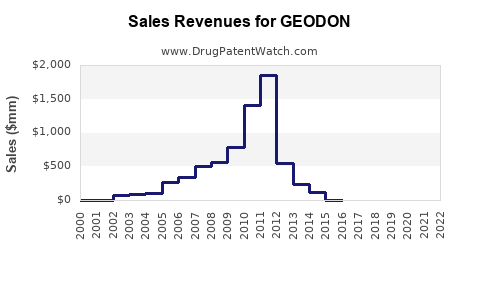
GEODON was a significant Pfizer neuroscience product during its protected period. Its revenue profile followed four phases.
1. Launch and expansion
From 2001 through the late 2000s, GEODON benefited from the expansion of atypical antipsychotic prescribing. Physicians used it for schizophrenia and bipolar mania, while the injectable product supported hospital and emergency-department demand.
The product competed with RISPERDAL, ZYPREXA, SEROQUEL, ABILIFY, and later INVEGA. Its clinical positioning included a comparatively lower propensity for weight gain than some alternatives, but its QT warning and food requirement limited its appeal in certain patients.
2. Mature branded sales
Before generic entry, GEODON generated substantial branded revenue for Pfizer. Sales were supported by chronic treatment duration, relatively high branded prices, and continued use in patients stabilized on the product.
Revenue growth was constrained by:
- Competition from other atypical antipsychotics.
- Generic competition to older agents.
- Safety concerns involving QT prolongation.
- The absence of a long-acting injectable form.
- Increased payer pressure on branded psychiatric medicines.
- Clinical preference for products with simpler administration requirements.
Pfizer’s annual reports disclosed GEODON within product-revenue tables during the branded period, but later reporting changes and portfolio reorganizations reduced the visibility of brand-level revenue. [5]
3. Generic transition
The late-2010s generic launch caused the most significant financial decline. In small-molecule markets, generic entry typically produces a rapid fall in average selling price and a transfer of prescriptions from the originator to multiple ANDA holders.
The commercial impact was amplified because:
- Ziprasidone had no meaningful remaining market exclusivity.
- The product was available in multiple strengths.
- Therapeutic alternatives were already established.
- Payers had strong incentives to mandate generic substitution.
- Pfizer had limited ability to defend price through differentiation.
4. Mature generic market
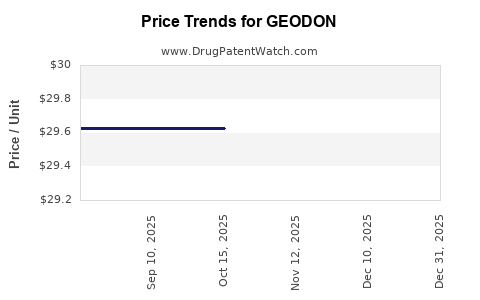
GEODON-branded revenue is now commercially limited compared with its pre-generic period. The relevant economic activity is primarily generic ziprasidone volume, distributor economics, and hospital procurement for the injectable form.
Pfizer’s strategic position also changed after its 2020 transaction separating Upjohn from Pfizer and combining Upjohn with Mylan to form Viatris. Legacy products transferred through the transaction, including certain mature off-patent brands and authorized or generic products. [6]
How does GEODON compare with competing atypical antipsychotics?
| Product |
Active ingredient |
Differentiating factor |
Generic or biosimilar risk |
| GEODON |
Ziprasidone |
Lower metabolic burden than some competitors; QT and food restrictions |
High; generic available |
| ABILIFY |
Aripiprazole |
Broad indications and long-acting injectable versions |
High; generic and authorized generic competition |
| SEROQUEL |
Quetiapine |
Broad psychiatric use and multiple formulations |
High; generic available |
| ZYPREXA |
Olanzapine |
Strong efficacy and multiple dosage forms |
High; generic available |
| RISPERDAL |
Risperidone |
Oral and long-acting injectable heritage |
High; generic and biosimilar-like competition for injectable products |
| INVEGA SUSTENNA |
Paliperidone palmitate |
Long-acting injectable platform |
Patent and litigation risk remains more relevant than for GEODON |
| LATUDA |
Lurasidone |
Bipolar depression positioning |
Generic entry risk after loss of exclusivity |
GEODON’s principal clinical advantages are its efficacy in schizophrenia and mania and its relatively favorable profile for weight gain and lipid effects compared with some alternatives. Its principal disadvantages are QT prolongation, twice-daily dosing, the need to take capsules with adequate calories, and the lack of an approved long-acting injectable product.
What is the Orange Book status of GEODON?
The FDA Orange Book historically listed GEODON capsules and injection as reference-listed drugs with associated patents and exclusivity information. Following generic approval, the practical Orange Book significance of the listings declined because the relevant patents expired or no longer prevented ANDA approval and commercial launch.
The current regulatory status is best understood as follows:
- GEODON remains an FDA-approved reference product.
- Generic ziprasidone capsules are approved in multiple strengths.
- Generic injectable ziprasidone is available.
- No biosimilar pathway applies because ziprasidone is a chemically synthesized small molecule, not a biologic.
- Current competition is governed primarily by ANDA approvals, state substitution rules, payer formularies, and manufacturing capacity.
The Orange Book should be reviewed by dosage form and strength because patent and exclusivity records can differ between capsules and injection. [3]
What formulation patents protect ziprasidone?
Formulation protection for ziprasidone has less commercial significance than it had before generic entry. The principal formulation-related issues are:
- Capsule strength and inactive-ingredient composition.
- Oral bioavailability when taken with food.
- Injectable reconstitution and concentration.
- Stability and container systems.
- Manufacturing controls for the active pharmaceutical ingredient.
Generic manufacturers must demonstrate pharmaceutical equivalence and bioequivalence for ANDA approval. They do not need to replicate every inactive ingredient or manufacturing process, provided the product meets FDA requirements.
The food-dependent absorption profile remains a product characteristic rather than a durable commercial barrier. A generic manufacturer can market an equivalent product with the same clinically important administration requirement.
Are biosimilars a risk to GEODON?
No. Biosimilars are not a relevant competitive category for GEODON because ziprasidone is a small-molecule drug.
The competitive threat is conventional generic substitution. Generic manufacturers compete through lower prices, formulary access, supply reliability, and contracting with wholesalers, hospitals, and pharmacy benefit managers.
What litigation and settlement risks affect GEODON?
The major litigation risk occurred before generic entry. Pfizer faced the standard exposure associated with Paragraph IV challenges:
- A generic applicant certifies that a listed patent is invalid, unenforceable, or not infringed.
- The brand company files an infringement action.
- FDA approval may be stayed for up to 30 months.
- The parties may litigate through trial or settle.
- The settlement determines the earliest generic launch date and any authorized-generic arrangements.
Once generic ziprasidone entered the market, patent litigation ceased to be the principal commercial risk. Current risks are more likely to involve product liability, manufacturing compliance, supply interruption, antitrust theories concerning settlements, or commercial disputes over distribution and pricing.
What generic launch scenarios existed for GEODON?
Three launch scenarios were commercially plausible:
| Scenario |
Result |
| Delayed generic entry after patent settlement |
Pfizer retained a defined period of branded revenue |
| At-risk launch before final patent resolution |
Rapid price erosion with potential damages exposure for the generic |
| Full entry after patent expiration |
Multiple suppliers entered with predictable substitution |
The observed market outcome was a delayed transition followed by conventional generic erosion. The strongest value transfer occurred from Pfizer and other branded suppliers to generic manufacturers, wholesalers, pharmacies, and payers.
What geographic coverage does GEODON have?
GEODON and ziprasidone have been marketed in multiple jurisdictions, but commercial exposure varies by country. Patent expiry, regulatory approval, reimbursement, and generic penetration are jurisdiction-specific.
The United States was the most important market for patent-driven value because of the Hatch-Waxman framework and the size of branded pharmaceutical reimbursement. European markets generally experienced earlier generic pressure under national and regional pricing systems. Emerging markets have more variable participation by local manufacturers and may rely on local registration, compulsory procurement, or hospital tenders.
The international patent estate did not create a durable global barrier after the U.S. and major European markets lost effective exclusivity.
How strong is the current GEODON patent estate?
The current patent estate is commercially weak. The core active-ingredient protection has expired, generic products are approved, and the brand no longer has a credible ability to prevent ordinary generic substitution.
Residual intellectual-property value may exist in:
- Manufacturing know-how.
- Supplier qualification.
- Injectable production controls.
- Trade secrets involving process parameters.
- Distribution contracts.
- Brand recognition among established prescribers.
These assets do not create the type of exclusivity associated with an unexpired composition-of-matter patent or a protected long-acting formulation.
What is the outlook for GEODON revenue?
The outlook is mature and volume-driven:
- Branded GEODON revenue should remain limited.
- Generic price competition will constrain unit economics.
- Injectable demand may be more stable in institutional settings than oral branded demand.
- No biosimilar event is relevant.
- A new formulation, such as a long-acting injectable or improved adherence product, would be required to create a substantial new exclusivity cycle.
- Pfizer’s economic exposure is materially lower than during the protected period.
The primary investment question is therefore not whether GEODON can regain blockbuster status. It is whether generic manufacturers can sustain supply and margins in a mature antipsychotic market.
Key takeaways
- GEODON is the originator brand for ziprasidone, approved in 2001 for oral use and in 2002 for intramuscular use.
- Its core patent protection expired before the broad generic market matured.
- Paragraph IV litigation and settlements delayed generic entry but did not preserve long-term exclusivity.
- Generic ziprasidone entered the U.S. market in the late 2010s.
- Branded revenue declined sharply after generic launch.
- GEODON has no biosimilar risk because it is a small-molecule drug.
- The main commercial disadvantages are QT prolongation, twice-daily dosing, the food requirement, and no long-acting injectable version.
- Current value is concentrated in mature generic volume, hospital injection demand, manufacturing capability, and supply reliability.
- The patent estate is no longer a meaningful barrier to standard generic competition.
FAQs
What is the generic name for GEODON?
The generic name is ziprasidone. Oral products are generally marketed as ziprasidone hydrochloride capsules, while the injectable product contains ziprasidone mesylate.
Is GEODON still sold by Pfizer?
GEODON remains an FDA-approved brand, but Pfizer’s ownership and commercial responsibility must be assessed against the company’s portfolio reorganizations and the Upjohn transaction. Generic ziprasidone accounts for the majority of current market activity.
Did GEODON have a 180-day generic exclusivity period?
Paragraph IV first-filer exclusivity may apply to eligible ANDA applicants, but the commercial impact depends on the specific dosage form, patent litigation, forfeiture events, and subsequent approvals. The presence of a 180-day period does not create durable protection for the brand.
Does ziprasidone have a long-acting injectable version?
No FDA-approved long-acting injectable version of ziprasidone is available. GEODON injection is an immediate-use intramuscular formulation for acute agitation, not a depot or maintenance product.
What is the main commercial risk for generic ziprasidone?
The main risk is margin compression from multiple suppliers, combined with hospital and payer pressure, manufacturing interruptions, and substitution toward other generic atypical antipsychotics.
References
-
U.S. Food and Drug Administration. (2023). Geodon (ziprasidone) prescribing information. Pfizer Laboratories.
-
U.S. Food and Drug Administration. (2001-2002). Drugs@FDA: Geodon application history and labeling. https://www.accessdata.fda.gov/scripts/cder/daf/
-
U.S. Food and Drug Administration. (2024). Approved drug products with therapeutic equivalence evaluations: Orange Book. https://www.fda.gov/drugsatfda
-
U.S. Congress. (1984). Drug Price Competition and Patent Term Restoration Act of 1984, 21 U.S.C. § 355(j).
-
Pfizer Inc. (2001-2019). Annual reports and Form 10-K filings. U.S. Securities and Exchange Commission, EDGAR database.
-
Pfizer Inc. (2020). Pfizer completes transaction to combine Upjohn business with Mylan. Corporate transaction announcement.