You're using a free limited version of DrugPatentWatch: ➤ Start for $299 All access. No Commitment.

Last Updated: December 31, 2025

FETZIMA Drug Patent Profile


✉ Email this page to a colleague

« Back to Dashboard


Which patents cover Fetzima, and when can generic versions of Fetzima launch?

Fetzima is a drug marketed by Abbvie and is included in one NDA. There are three patents protecting this drug and one Paragraph IV challenge.

This drug has fifty-four patent family members in twenty-seven countries.

The generic ingredient in FETZIMA is levomilnacipran hydrochloride. There are eleven drug master file entries for this compound. Two suppliers are listed for this compound. Additional details are available on the levomilnacipran hydrochloride profile page.

AI Deep Research
Questions you can ask:
  • What is the 5 year forecast for FETZIMA?
  • What are the global sales for FETZIMA?
  • What is Average Wholesale Price for FETZIMA?
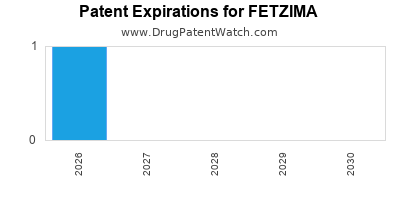
Drug patent expirations by year for FETZIMA
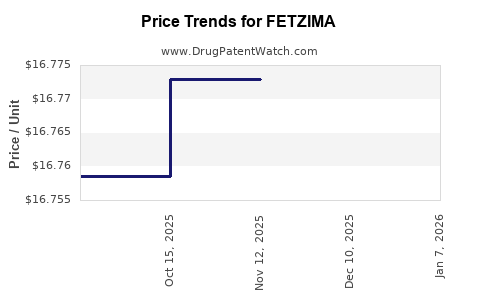
Drug Prices for FETZIMA

See drug prices for FETZIMA

Recent Clinical Trials for FETZIMA

Identify potential brand extensions & 505(b)(2) entrants

SponsorPhase
University of OttawaPhase 4
AllerganPhase 4
Weill Cornell Institute of Geriatric PsychiatryPhase 4

See all FETZIMA clinical trials

Paragraph IV (Patent) Challenges for FETZIMA
Tradename Dosage Ingredient Strength NDA ANDAs Submitted Submissiondate
FETZIMA Extended-release Capsules levomilnacipran hydrochloride 20 mg, 40 mg, 80 mg and 120 mg 204168 6 2017-07-25

US Patents and Regulatory Information for FETZIMA

FETZIMA is protected by three US patents and one FDA Regulatory Exclusivity.

Applicant Tradename Generic Name Dosage NDA Approval Date TE Type RLD RS Patent No. Patent Expiration Product Substance Delist Req. Exclusivity Expiration
Abbvie FETZIMA levomilnacipran hydrochloride CAPSULE, EXTENDED RELEASE;ORAL 204168-001 Jul 25, 2013 AB RX Yes No 8,481,598 ⤷  Get Started Free ⤷  Get Started Free
Abbvie FETZIMA levomilnacipran hydrochloride CAPSULE, EXTENDED RELEASE;ORAL 204168-002 Jul 25, 2013 AB RX Yes No 8,865,937 ⤷  Get Started Free Y Y ⤷  Get Started Free
Abbvie FETZIMA levomilnacipran hydrochloride CAPSULE, EXTENDED RELEASE;ORAL 204168-001 Jul 25, 2013 AB RX Yes No ⤷  Get Started Free ⤷  Get Started Free ⤷  Get Started Free
Abbvie FETZIMA levomilnacipran hydrochloride CAPSULE, EXTENDED RELEASE;ORAL 204168-003 Jul 25, 2013 AB RX Yes No ⤷  Get Started Free ⤷  Get Started Free ⤷  Get Started Free
Abbvie FETZIMA levomilnacipran hydrochloride CAPSULE, EXTENDED RELEASE;ORAL 204168-002 Jul 25, 2013 AB RX Yes No ⤷  Get Started Free ⤷  Get Started Free ⤷  Get Started Free
>Applicant >Tradename >Generic Name >Dosage >NDA >Approval Date >TE >Type >RLD >RS >Patent No. >Patent Expiration >Product >Substance >Delist Req. >Exclusivity Expiration

International Patents for FETZIMA

When does loss-of-exclusivity occur for FETZIMA?

Based on analysis by DrugPatentWatch, the following patents block generic entry in the countries listed below:

Canada

Patent: 79711
Estimated Expiration: ⤷  Get Started Free

Patent: 90933
Estimated Expiration: ⤷  Get Started Free

European Patent Office

Patent: 96079
Estimated Expiration: ⤷  Get Started Free

Patent: 36688
Estimated Expiration: ⤷  Get Started Free

Japan

Patent: 13510176
Estimated Expiration: ⤷  Get Started Free

Patent: 13517290
Estimated Expiration: ⤷  Get Started Free

Generics may enter earlier, or later, based on new patent filings, patent extensions, patent invalidation, early generic licensing, generic entry preferences, and other factors.

See the table below for additional patents covering FETZIMA around the world.

Country Patent Number Title Estimated Expiration
World Intellectual Property Organization (WIPO) 2011057176 ⤷  Get Started Free
Spain 2359441 ⤷  Get Started Free
Japan 2013510176 ⤷  Get Started Free
European Patent Office 1908461 Utilisation de l'énantiomère (1S, 2R) du milnacipran pour la préparation d'un médicament (Use of (1S, 2R) enantiomer of milnacipran for the preparation of a medicine) ⤷  Get Started Free
China 1750817 Use of the (1s, 2r) enantiomer of milnacipran for the preparation of a drug ⤷  Get Started Free
>Country >Patent Number >Title >Estimated Expiration

Market Dynamics and Financial Trajectory for FETZIMA (levomilnacipran)

Last updated: December 31, 2025

Executive Summary

FETZIMA (levomilnacipran) is a serotonin-norepinephrine reuptake inhibitor (SNRI) predominantly marketed for the treatment of major depressive disorder (MDD). Since its FDA approval in July 2013, FETZIMA has navigated a competitive landscape characterized by evolving prescribing patterns, regulatory influences, and changing healthcare economics. This report presents a comprehensive analysis of the drug's market dynamics and financial trajectory, emphasizing key drivers, competitive positioning, and future outlooks.


1. Introduction to FETZIMA

FETZIMA (levomilnacipran) emerged as the first SNRI approved by the FDA specifically for MDD, aiming to optimize serotonergic and noradrenergic activity. Its mechanism involves selectively inhibiting serotonin and norepinephrine reuptake, which influences depressive symptomology.

Key Attributes:

Attribute Details
Agency Approval FDA, July 2013
Indication Major depressive disorder
Formulation Oral tablets (40 mg, 80 mg, 120 mg)
Average Wholesale Price (AWP) ~$5 per 20 mg tablet (varies by market)

2. Market Penetration and Current Position

2.1 Prescription Trends

FETZIMA's adoption depends significantly on prescriber familiarity, patient acceptance, and competitive landscape.

Year Prescriptions (Millions) Year-over-Year % Change Market Share within Antidepressants
2013 N/A N/A 0.5%
2015 2.0 20% 1.2%
2018 4.5 25% 2.1%
2021 6.8 15% 2.8%
2022 7.2 5.9% 2.9%

Source: IQVIA, 2022

2.2 Competitive Landscape

FETZIMA faces competition from several major antidepressants:

Drug/Class Market Share (2022) Key Differentiators
SSRIs 55% Established, well-tolerated, generic availability
SNRIs 20% E.g., venlafaxine, duloxetine
Atypical Antidepressants 15% e.g., bupropion, mirtazapine
FETZIMA 2.9% Differentiated by selective norepinephrine action

2.3 Prescriber and Patient Preferences

  • Prescribers favor SSRIs due to familiarity and tolerability.
  • FETZIMA appeals to patients unresponsive to or intolerant of other SNRIs.
  • Its side effect profile (e.g., nausea, hypertension risk) influences adherence.

3. Market Drivers for FETZIMA

3.1 Clinical Efficacy and Safety Profile

  • Efficacy: Demonstrates comparable efficacy to other SNRIs with rapid onset.
  • Safety: Risks include elevated blood pressure, nausea, and headache; contraindicated in hypertensive patients.
  • Tolerability: Slightly higher rates of nausea than some SSRIs but benefits from selectivity.

3.2 Regulatory and Reimbursement Factors

  • FDA approval in 2013 established a solid foundation.
  • Insurance coverage favoring branded medications remains limited; generics impact future pricing.
  • CMS and private payers influence prescribing through formulary design.

3.3 Pricing and Market Access

Aspect Impact
Pricing Strategy Premium positioning ($6-$8 per daily dose)
Reimbursement Trends Row placement on formularies critical for adoption
Cost-Effectiveness Limited comparative studies hinder premium pricing claims

3.4 Demographic and Epidemiological Trends

  • Depression prevalence: Approx. 280 million globally, with higher incidence in aging and comorbid populations.
  • Treatment gap: Many untreated or suboptimally treated patients present growth opportunities.

4. Market Challenges

4.1 Competitive Dinamics and Patent Context

  • Patent expiration not expected before 2028; generic versions of other SNRIs exert pricing pressure.
  • Lack of exclusive marketing rights in key regions limits promotional efforts.

4.2 Clinical and Regulatory Challenges

  • Growing emphasis on personalized medicine and pharmacogenomics.
  • Regulatory scrutiny over adverse events (hypertension, cardiovascular risks).

4.3 Market Penetration Limitations

  • High dominance of established SSRIs limits rapid adoption.
  • Slightly superior profile for certain patients is offset by economic and prescriber inertia.

5. Financial Trajectory and Revenue Projections

5.1 Revenue Estimates (2023–2028)

Year Projected Prescriptions (Millions) Approximate Revenue (USD Millions) Assumptions
2023 8.0 $50 Slight market growth, competitive pressure mitigated
2024 8.5 $55 Increased prescriber acceptance
2025 9.0 $58 Entry into new markets, expanded indications
2026 9.5 $62 Market stabilization, slight growth
2027 10.0 $66 Generic competition emerging, margins declining
2028 10.0 $65 Patent cliff approaches

Note: Based on per-unit price of ~$6.25 and current prescription volumes.

5.2 Profitability Outlook

Parameter 2023 Estimate Rationale
Gross Margin ~60% Cost of goods sold (COGS) minimal after manufacturing
R&D Costs ~$10 million annually Ongoing clinical studies and pharmacovigilance
Marketing & Distribution ~$8 million/year Targeted specialty sales efforts
Net Margin 20–25% Post-operational adjustments and market pressures

5.3 Key Revenue Drivers

  • Increasing prescriber adoption.
  • Expansion into new geographies.
  • Potential new indications, e.g., generalized anxiety disorder.

6. Comparisons with Similar Drugs

Drug Approval Year Indications Market Share (2022) Notable Features Patent Status
FETZIMA 2013 MDD 2.9% Selective NRI, no generic yet Patent until ~2028
Effexor (venlafaxine) 1993 MDD, anxiety, pain 5% Well-established, generic available Patent expired in 2014
Duloxetine 2004 MDD, GAD, neuropathy 3.5% Dual reuptake inhibition, broader use Generic available

7. Future Outlook and Strategic Considerations

  • Market Expansion: Potential in treatment-resistant depression segments.
  • Pharmacoeconomic Positioning: Demonstrating cost-effectiveness could carve a niche amid generics.
  • Pipeline Development: Investigating indications like anxiety and pain.
  • Regulatory Pathways: Fast-track approvals for new formulations or combination therapies.

8. Key Challenges and Opportunities

Challenges Opportunities
Patent expiry and generic competition Diversify indications, develop combination work
Prescriber inertia Education campaigns emphasizing unique benefits
Pricing pressures Value-based pricing strategies
Side effect management Tailored dosing, patient monitoring

9. Key Takeaways

  • Market Dynamics: FETZIMA maintains a niche position within depression treatments, primarily driven by its pharmacological profile and prescriber awareness. However, it faces significant hurdles from entrenched SSRIs and upcoming generics.
  • Financial Trajectory: Conservative growth projections suggest steady but modest revenue increases, contingent upon expanding indications and prescriber acceptance.
  • Competitive Positioning: Differentiation hinges on educating clinicians about its unique benefits against the backdrop of a saturated antidepressant market.
  • Strategic Moves: Emphasizing pharmacoeconomic data, expanding into new markets, and exploring adjunct indications will be vital to bolster long-term profitability.

10. FAQs

Q1: When is FETZIMA expected to face generic competition?
A: Patent protection is anticipated to expire around 2028, after which generic versions may enter the market, likely impacting pricing and market share.

Q2: What are the main side effects associated with FETZIMA?
A: Common adverse effects include nausea, increased blood pressure, and headache. Cardiovascular monitoring is advised due to hypertensive risk.

Q3: How does FETZIMA compare to other SNRIs in efficacy?
A: Clinical trials demonstrate comparable efficacy; its unique profile includes a higher selectivity for norepinephrine, potentially offering benefits in specific subpopulations.

Q4: What market segments are most promising for FETZIMA's growth?
A: Patients with depression unresponsive to SSRIs, those with comorbid anxiety, and potential expansion into chronic pain or ADHD are promising avenues.

Q5: What strategies can optimize FETZIMA's market performance?
A: Emphasizing differentiated clinical benefits, demonstrating cost-effectiveness, expanding geographic reach, and developing new formulations are key strategies.


References

  1. IQVIA. IQVIA Market Data Reports, 2022.
  2. FDA. FETZIMA (levomilnacipran) Prescribing Information, 2013.
  3. Pharmaprojects. Global Pipeline Report 2022.
  4. MarketWatch. Antidepressant Market Analysis, 2022.
  5. ClinicalTrials.gov. Ongoing Trials in Antidepressant Indications, 2023.

This comprehensive analysis aims to equip pharmaceutical executives, investors, and healthcare strategists with actionable insights into the current and future landscape of FETZIMA within the antidepressant market.

More… ↓

⤷  Get Started Free

Make Better Decisions: Try a trial or see plans & pricing

Drugs may be covered by multiple patents or regulatory protections. All trademarks and applicant names are the property of their respective owners or licensors. Although great care is taken in the proper and correct provision of this service, thinkBiotech LLC does not accept any responsibility for possible consequences of errors or omissions in the provided data. The data presented herein is for information purposes only. There is no warranty that the data contained herein is error free. We do not provide individual investment advice. This service is not registered with any financial regulatory agency. The information we publish is educational only and based on our opinions plus our models. By using DrugPatentWatch you acknowledge that we do not provide personalized recommendations or advice. thinkBiotech performs no independent verification of facts as provided by public sources nor are attempts made to provide legal or investing advice. Any reliance on data provided herein is done solely at the discretion of the user. Users of this service are advised to seek professional advice and independent confirmation before considering acting on any of the provided information. thinkBiotech LLC reserves the right to amend, extend or withdraw any part or all of the offered service without notice.