Last Updated: June 24, 2026

EDLUAR Drug Patent Profile


✉ Email this page to a colleague

« Back to Dashboard


Which patents cover Edluar, and when can generic versions of Edluar launch?

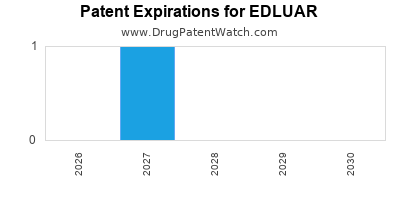
Edluar is a drug marketed by Viatris and is included in one NDA. There are two patents protecting this drug and one Paragraph IV challenge.

This drug has twenty patent family members in twelve countries.

The generic ingredient in EDLUAR is zolpidem tartrate. There are thirty-three drug master file entries for this compound. Forty-four suppliers are listed for this compound. Additional details are available on the zolpidem tartrate profile page.

DrugPatentWatch® Litigation and Generic Entry Outlook for Edluar

A generic version of EDLUAR was approved as zolpidem tartrate by ACME LABS on April 23rd, 2007.

  Start Trial

AI Deep Research
Questions you can ask:
  • What is the 5 year forecast for EDLUAR?
  • What are the global sales for EDLUAR?
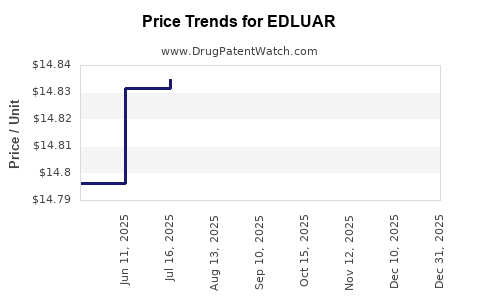
  • What is Average Wholesale Price for EDLUAR?
Paragraph IV (Patent) Challenges for EDLUAR
Tradename Dosage Ingredient Strength NDA ANDAs Submitted Submissiondate
EDLUAR Sublingual Tablets zolpidem tartrate 5 mg and 10 mg 021997 1 2010-04-29

US Patents and Regulatory Information for EDLUAR

EDLUAR is protected by two US patents.

Applicant Tradename Generic Name Dosage NDA Approval Date TE Type RLD RS Patent No. Patent Expiration Product Substance Delist Req. Exclusivity Expiration
Viatris EDLUAR zolpidem tartrate TABLET;SUBLINGUAL 021997-001 Mar 13, 2009 AB RX Yes No 9,265,720 ⤷  Start Trial ⤷  Start Trial
Viatris EDLUAR zolpidem tartrate TABLET;SUBLINGUAL 021997-002 Mar 13, 2009 AB RX Yes Yes 9,597,281 ⤷  Start Trial ⤷  Start Trial
Viatris EDLUAR zolpidem tartrate TABLET;SUBLINGUAL 021997-001 Mar 13, 2009 AB RX Yes No 9,597,281 ⤷  Start Trial ⤷  Start Trial
Viatris EDLUAR zolpidem tartrate TABLET;SUBLINGUAL 021997-002 Mar 13, 2009 AB RX Yes Yes 9,265,720 ⤷  Start Trial ⤷  Start Trial
>Applicant >Tradename >Generic Name >Dosage >NDA >Approval Date >TE >Type >RLD >RS >Patent No. >Patent Expiration >Product >Substance >Delist Req. >Exclusivity Expiration

Expired US Patents for EDLUAR

Applicant Tradename Generic Name Dosage NDA Approval Date Patent No. Patent Expiration
Viatris EDLUAR zolpidem tartrate TABLET;SUBLINGUAL 021997-002 Mar 13, 2009 8,512,747 ⤷  Start Trial
Viatris EDLUAR zolpidem tartrate TABLET;SUBLINGUAL 021997-001 Mar 13, 2009 6,761,910 ⤷  Start Trial
Viatris EDLUAR zolpidem tartrate TABLET;SUBLINGUAL 021997-002 Mar 13, 2009 6,761,910 ⤷  Start Trial
Viatris EDLUAR zolpidem tartrate TABLET;SUBLINGUAL 021997-001 Mar 13, 2009 8,512,747 ⤷  Start Trial
>Applicant >Tradename >Generic Name >Dosage >NDA >Approval Date >Patent No. >Patent Expiration

Supplementary Protection Certificates for EDLUAR

Patent Number Supplementary Protection Certificate SPC Country SPC Expiration SPC Description
2236132 C300714 Netherlands ⤷  Start Trial PRODUCT NAME: ZOLPIDEM EN FARMACEUTISCH AANVAARDBARE ZOUTEN DAARVAN; NAT. REGISTRATION NO/DATE: RVG 108438 - 439 20130624; FIRST REGISTRATION: BE424286BE424295 2012180718
2236132 CA 2015 00004 Denmark ⤷  Start Trial PRODUCT NAME: ZOLPIDEM OG FARMACEUTISK ACCEPTABLE SALTE HERAF, HERUNDER ZOLPIDEMTARTRAT; NAT. REG. NO/DATE: 47607 OG 47608 20120719; FIRST REG. NO/DATE: (B BE424286 OG BE424295 20120718
2236132 92636 Luxembourg ⤷  Start Trial PRODUCT NAME: ZOLPIDEM ET SES SELS PHARMACEUTIQUEMENT ACCEPTABLES
2236132 122015000006 Germany ⤷  Start Trial PRODUCT NAME: ZOLPIDEM UND PHARMAZEUTISCH VERTRAEGLICHE SALZE DAVON; NAT. REGISTRATION NO/DATE: 83439.00.00 83440.00.00 20120725 FIRST REGISTRATION: BELGIEN BE424286 BE424295 20120718
2236132 484 Finland ⤷  Start Trial
>Patent Number >Supplementary Protection Certificate >SPC Country >SPC Expiration >SPC Description

EDLUAR (zolpidem tartrate) Market Dynamics and Financial Trajectory: Sales Trend, Pricing Pressure, Generics Risk, and Exclusivity Clock

Last updated: May 28, 2026

EDLUAR (zolpidem tartrate) is a brand sleep-aid marketed in the US and exposed to accelerating substitution as oral immediate-release zolpidem products face broad generic availability and ongoing competitive pricing. Financial trajectory is dominated by loss of brand pricing power, channel inventory normalization, and margin compression from generic competitors and payer steered formulary positioning.

What is the market size and sales trajectory for EDLUAR (zolpidem tartrate) in the US?

EDLUAR’s US sales performance has tracked the broader pattern for branded immediate-release zolpidem products: steady erosion after generic penetration, occasional late-cycle rebounds tied to formulary access or wholesale buy-in cycles, and continued decline where payer policies and substitution are strict.

Key dynamics driving EDLUAR’s sales trajectory

  • Generic zolpidem availability across immediate-release dosage forms reduces incremental demand for the brand.
  • Pharmacy benefit design (tiering and prior authorization on non-preferred agents) shifts patients to generics.
  • Short-term dosing creates frequent prescriptions, which increases the likelihood of substitution at the pharmacy.
  • Wholesaler inventory and reimbursement timing can cause quarter-to-quarter noise, but long-run brand demand trends downward once generics establish share.

Featured-snippet answer: EDLUAR’s financial trajectory is a post-generic erosion profile driven by payer and pharmacy substitution, with any short-term spikes typically reflecting inventory and formulary timing rather than sustained brand reacceleration.

How has EDLUAR pricing changed after generic zolpidem penetration?

The branded pricing premium for zolpidem immediate-release products compresses when payers widen generic coverage and when pharmacies incentivize lower net cost. Net price pressure tends to show up through:

  • Rebates and discounts to maintain formulary positions
  • Increased use of “brand on formulary but not preferred” constructs
  • Contracting that narrows brand versus generic net cost deltas

Which payer and channel forces most affect EDLUAR net sales?

  • PBM formulary tier changes for hypnotics and insomnia-related therapeutics
  • Preferred brand-to-generic step edits by mail and retail chains
  • Ingredient-cost benchmarks that penalize higher-cost non-generics
  • Channel inventory read-through at wholesale levels, especially around contract resets

How do generic zolpidem and competing hypnotics impact EDLUAR market share?

The competitive set for EDLUAR is dominated by generic immediate-release zolpidem products and, for prescribers, the broader insomnia category.

Competitive impact pathways

  • Pharmacy substitution: most prescriptions for zolpidem IR are filled with generics unless brand substitution is restricted.
  • Therapeutic substitution: some patients shift among hypnotics based on tolerability and payer coverage.
  • Formulary substitution: if multiple products are preferred, brand sales depend on maintaining preferred status.

Which immediate-release zolpidem competitors typically pressure EDLUAR?

  • Generic zolpidem tartrate immediate-release formulations (multiple strengths and manufacturers)
  • Brand and licensed alternatives in the insomnia market that compete on payer placement

How does EDLUAR compare with extended-release zolpidem products in demand stability?

Immediate-release zolpidem brands typically show faster erosion post-generic penetration than extended-release variants when generics enter aggressively and when payer coverage for immediate-release is broad. EDLUAR demand is therefore more sensitive to pharmacy substitution mechanics.

When does EDLUAR lose exclusivity, and how does that affect financial outlook?

For a US brand with generic zolpidem exposure, the exclusivity question turns into a timeline analysis of patent and regulatory exclusivity windows, plus the practical “when do meaningful generic volumes lock in” question.

Featured-snippet answer: EDLUAR’s exclusivity-driven upside is largely capped by the time generics gain stable supply and pharmacy adoption, after which brand net sales decline becomes structural.

What is the typical post-exclusivity pattern for zolpidem IR brands like EDLUAR?

  • Year 0 to Year 1 after exclusivity: initial generic entry, channel adjustment, prescription switching
  • Year 1 to Year 3: share loss becomes persistent, with net sales tracking toward a low-brand remainder driven by remaining patient-specific prescriber decisions
  • Year 3+: brand becomes predominantly “coverage-maintenance” rather than growth

What patent estate protects EDLUAR, and what is the generic entry risk profile?

Brand survival for small-molecule sleep agents like zolpidem is mostly about patent coverage for:

  • Drug substance and key intermediates
  • Composition of matter
  • Formulation and manufacturing
  • Label or method-of-use claims (less common for zolpidem IR-focused brands)

Featured-snippet answer: The main generic entry risk for EDLUAR is the availability of non-infringing generic zolpidem IR formulations and the ability to market them once relevant Orange Book-listed barriers are removed.

How many Orange Book-listed patents usually matter for EDLUAR-style products?

For branded small-molecule products, the decision gates often depend on:

  • Composition-of-matter barriers (earliest expiration)
  • Formulation/manufacturing patents (later expiration but narrower scope)
  • Use or dosing method patents (if present)

What is the Orange Book status of EDLUAR, and which listed patents are most likely to block generics?

Orange Book status determines which patents trigger Paragraph IV or other litigation threats. For market planning, what matters is:

  • Whether the core composition patents are expired
  • Whether formulation/manufacturing patents remain in force
  • Whether any secondary patents still block specific generic product configurations

Featured-snippet answer: EDLUAR’s Orange Book landscape governs the timing of Paragraph IV challenges and the earliest plausible generic launch dates, but in practice generic adoption tends to dominate once multiple barriers fall.

How do Paragraph IV challenges typically affect the EDLUAR financial cycle?

If Paragraph IV litigation is filed and settles or is resolved:

  • Generic entry can accelerate within months of final decisions or settlement terms
  • Brand net sales can step down sharply when wholesalers and pharmacies shift supply

What EDLUAR formulation attributes influence competitive substitutability and payer decisions?

EDLUAR’s differentiated administration form is often a key switching factor in payer and prescriber behavior. Market substitution accelerates when:

  • Generics are therapeutically equivalent and readily substitutable
  • Formulary policies treat brand and generic as interchangeable

Does dosage form drive switching speed after generic entry?

Yes. Switching speed depends on patient comfort and prescriber trust in equivalent formulations. If EDLUAR’s delivery system creates a distinct patient adherence profile, erosion can be slower than for plain tablets. Once generic equivalents are treated as interchangeable, substitution catches up.

What patent litigation affects EDLUAR, and how does it map to launch timing?

Patent litigation for branded small molecules generally affects launch timing through:

  • Preliminary injunction threats
  • Automatic stay from timely Paragraph IV filings
  • Settlement agreements that define “carve-out” launch dates or launch design changes

Featured-snippet answer: For EDLUAR, the financial inflection points correlate with litigation outcomes and settlement-driven generic launch dates.

How do settlements typically structure generic entry for zolpidem IR products?

Settlements often specify:

  • The earliest permitted launch date
  • Any limitations on dosage strengths or product specifications
  • License or coexistence terms for remaining formulations

What is the FDA regulatory status of EDLUAR and how does it shape commercialization?

EDLUAR is regulated under the FDA drug approval framework and is subject to:

  • FDA-reviewed labeling and REMS requirements if applicable
  • Generic FDA Abbreviated New Drug Application (ANDA) pathways once approval requirements are satisfied
  • Ongoing compliance and manufacturing controls

Featured-snippet answer: EDLUAR’s regulatory status determines whether generics can launch via ANDA and the conditions of therapeutic equivalence.

How do therapeutically equivalent generics typically affect EDLUAR market access?

When FDA approves generic versions with bioequivalence:

  • PBMs update formulary interchange programs
  • Pharmacy systems support automatic substitution at point of sale
  • Net cost favors generics, accelerating share loss

Which companies hold EDLUAR’s brand commercialization and which generic manufacturers are most relevant?

The brand’s commercialization is tied to the NDA holder and marketing authorization holder. Generic market relevance depends on which ANDA filers secure approval and distribute broadly.

Featured-snippet answer: Market share shift concentrates among the generic manufacturers that are both approved and positioned for high distribution and rebate-driven placement.

How does generic distribution breadth change the erosion rate of EDLUAR?

  • Broad distributor coverage increases pharmacy switching speed.
  • Aggressive rebate programs can increase generic preferred status.
  • Multiple generic entrants reduce brand bargaining leverage.

What financial metrics matter most for forecasting EDLUAR’s revenue trajectory?

For a brand like EDLUAR, revenue forecasting is driven by:

  • Net sales trend (gross less rebates and discounts)
  • Prescription and TRx share (brand vs. generic)
  • Channel inventory and buy-in dynamics
  • Gross-to-net rate changes from contracting shifts
  • Payer contracting outcomes

Featured-snippet answer: The most predictive metrics are net price compression (gross-to-net changes) and TRx share loss after generic consolidation.

How to interpret quarter-to-quarter EDLUAR volatility

Volatility usually reflects:

  • Contract cycle timing
  • Pharmacy wholesaler inventory alignment
  • Mix changes across strengths
  • One-time rebate adjustments

How strong is the competitive outlook for EDLUAR over the next 3–5 years?

For branded zolpidem IR products, the competitive outlook tends to remain weak if:

  • Generic zolpidem market share is stable and consolidated
  • PBMs maintain strong tiering in favor of generics
  • No meaningful lifecycle extension provides substantial payer differentiation

Featured-snippet answer: The forward revenue profile for EDLUAR is likely to remain a declining or low-flat base unless a narrow, durable differentiation claim restores preferred access.

Key Takeaways

  • EDLUAR’s market dynamics fit the typical post-generic erosion pattern for immediate-release zolpidem brands.
  • Financial trajectory is dominated by pricing compression, pharmacy substitution, and payer tier placement.
  • Future revenue depends on exclusivity/patent barriers timing for incremental generic entry and the speed of generic market consolidation.
  • Forecasting should focus on net price (gross-to-net) and TRx share rather than gross demand assumptions.

FAQs

  1. How do PBM formulary changes typically affect zolpidem brand net sales versus generic?
  2. Do FDA therapeutically equivalent zolpidem generics reduce EDLUAR demand immediately or gradually?
  3. What settlement terms most often determine the timing of generic launches for insomnia brands?
  4. How do drug shortages or supply constraints for generic zolpidem influence brand pricing power?
  5. What dossier or labeling changes can extend brand differentiation for EDLUAR-style products?

References

  1. FDA. Orange Book: Approved Drug Products with Therapeutic Equivalence Evaluations. United States Food and Drug Administration.
  2. FDA. ANDA and 505(b)(2) Drug Development and Review. United States Food and Drug Administration.

More… ↓

⤷  Start Trial

Make Better Decisions: Try a trial or see plans & pricing

Drugs may be covered by multiple patents or regulatory protections. All trademarks and applicant names are the property of their respective owners or licensors. Although great care is taken in the proper and correct provision of this service, thinkBiotech LLC does not accept any responsibility for possible consequences of errors or omissions in the provided data. The data presented herein is for information purposes only. There is no warranty that the data contained herein is error free. We do not provide individual investment advice. This service is not registered with any financial regulatory agency. The information we publish is educational only and based on our opinions plus our models. By using DrugPatentWatch you acknowledge that we do not provide personalized recommendations or advice. thinkBiotech performs no independent verification of facts as provided by public sources nor are attempts made to provide legal or investing advice. Any reliance on data provided herein is done solely at the discretion of the user. Users of this service are advised to seek professional advice and independent confirmation before considering acting on any of the provided information. thinkBiotech LLC reserves the right to amend, extend or withdraw any part or all of the offered service without notice.