You're using a free limited version of DrugPatentWatch: Upgrade for Complete Access

Last Updated: December 15, 2025

DIFICID Drug Patent Profile


✉ Email this page to a colleague

« Back to Dashboard


When do Dificid patents expire, and what generic alternatives are available?

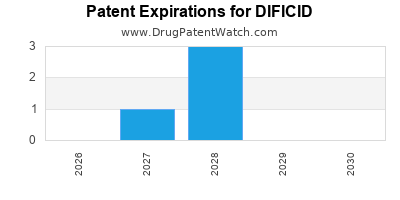
Dificid is a drug marketed by Cubist Pharms Llc and is included in two NDAs. There are five patents protecting this drug and one Paragraph IV challenge.

This drug has one hundred and fifty-eight patent family members in thirty-six countries.

The generic ingredient in DIFICID is fidaxomicin. There are two drug master file entries for this compound. Two suppliers are listed for this compound. Additional details are available on the fidaxomicin profile page.

DrugPatentWatch® Litigation and Generic Entry Outlook for Dificid

A generic version of DIFICID was approved as fidaxomicin by ACTAVIS LABS FL on January 16th, 2024.

  Get Started Free

AI Deep Research
Questions you can ask:
  • What is the 5 year forecast for DIFICID?
  • What are the global sales for DIFICID?
  • What is Average Wholesale Price for DIFICID?
Drug patent expirations by year for DIFICID
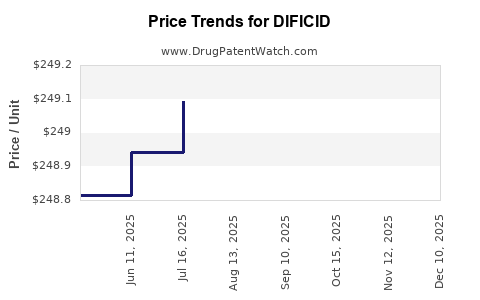
Drug Prices for DIFICID

See drug prices for DIFICID

Recent Clinical Trials for DIFICID

Identify potential brand extensions & 505(b)(2) entrants

SponsorPhase
University of AlbertaPhase 2
Vancouver Island Health AuthorityPhase 3
McMaster UniversityPhase 3

See all DIFICID clinical trials

Pharmacology for DIFICID
Paragraph IV (Patent) Challenges for DIFICID
Tradename Dosage Ingredient Strength NDA ANDAs Submitted Submissiondate
DIFICID Tablets fidaxomicin 200 mg 201699 1 2015-05-27

US Patents and Regulatory Information for DIFICID

DIFICID is protected by five US patents and one FDA Regulatory Exclusivity.

Applicant Tradename Generic Name Dosage NDA Approval Date TE Type RLD RS Patent No. Patent Expiration Product Substance Delist Req. Exclusivity Expiration
Cubist Pharms Llc DIFICID fidaxomicin FOR SUSPENSION;ORAL 213138-001 Jan 24, 2020 RX Yes Yes 9,808,530*PED ⤷  Get Started Free Y ⤷  Get Started Free
Cubist Pharms Llc DIFICID fidaxomicin TABLET;ORAL 201699-001 May 27, 2011 AB RX Yes Yes 7,378,508*PED ⤷  Get Started Free Y ⤷  Get Started Free
Cubist Pharms Llc DIFICID fidaxomicin FOR SUSPENSION;ORAL 213138-001 Jan 24, 2020 RX Yes Yes 7,863,249*PED ⤷  Get Started Free Y ⤷  Get Started Free
Cubist Pharms Llc DIFICID fidaxomicin TABLET;ORAL 201699-001 May 27, 2011 AB RX Yes Yes 7,863,249*PED ⤷  Get Started Free Y ⤷  Get Started Free
Cubist Pharms Llc DIFICID fidaxomicin FOR SUSPENSION;ORAL 213138-001 Jan 24, 2020 RX Yes Yes 7,378,508*PED ⤷  Get Started Free Y ⤷  Get Started Free
Cubist Pharms Llc DIFICID fidaxomicin FOR SUSPENSION;ORAL 213138-001 Jan 24, 2020 RX Yes Yes 7,906,489*PED ⤷  Get Started Free Y ⤷  Get Started Free
>Applicant >Tradename >Generic Name >Dosage >NDA >Approval Date >TE >Type >RLD >RS >Patent No. >Patent Expiration >Product >Substance >Delist Req. >Exclusivity Expiration

EU/EMA Drug Approvals for DIFICID

Company Drugname Inn Product Number / Indication Status Generic Biosimilar Orphan Marketing Authorisation Marketing Refusal
Tillotts Pharma GmbH Dificlir fidaxomicin EMEA/H/C/002087Dificlir film-coated tablets is indicated for the treatment of Clostridioides difficile infections (CDI) also known as C. difficile-associated diarrhoea (CDAD) in adult and paediatric patients with a body weight of at least 12.5 kg.Consideration should be given to official guidelines on the appropriate use of antibacterial agents.Dificlir granules for oral suspension is indicated for the treatment of Clostridioides  difficile infections (CDI) also known as C. difficile-associated diarrhoea (CDAD) in adults and paediatric patients from birth to < 18 years of age.Consideration should be given to official guidelines on the appropriate use of antibacterial agents. Authorised no no no 2011-12-05
>Company >Drugname >Inn >Product Number / Indication >Status >Generic >Biosimilar >Orphan >Marketing Authorisation >Marketing Refusal

International Patents for DIFICID

See the table below for patents covering DIFICID around the world.

Country Patent Number Title Estimated Expiration
European Patent Office 2125850 ⤷  Get Started Free
New Zealand 601347 Macrocyclic polymorphs, compositions comprising such polymorphs, and methods of use and manufacture thereof ⤷  Get Started Free
New Zealand 601347 ⤷  Get Started Free
Mexico 340742 ⤷  Get Started Free
Mexico 2007009196 ⤷  Get Started Free
Canada 2494742 ⤷  Get Started Free
>Country >Patent Number >Title >Estimated Expiration

Supplementary Protection Certificates for DIFICID

Patent Number Supplementary Protection Certificate SPC Country SPC Expiration SPC Description
1539977 C 2015 015 Romania ⤷  Get Started Free PRODUCT NAME: FIDAXOMICIN; NATIONAL AUTHORISATION NUMBER: EU/1/11/733/001, EU/1/11/733/002, EU/1/11/733/003, EU/1/11/733/004; DATE OF NATIONAL AUTHORISATION: 20111205; NUMBER OF FIRST AUTHORISATION IN EUROPEAN ECONOMIC AREA (EEA): EU/1/11/733/001, EU/1/11/733/002, EU/1/11/733/003, EU/1/11/733/004; DATE OF FIRST AUTHORISATION IN EEA: 20111205
1539977 C201530022 Spain ⤷  Get Started Free PRODUCT NAME: FIDAXOMICINA; NATIONAL AUTHORISATION NUMBER: EU/1/11/733/001-004; DATE OF AUTHORISATION: 20111207; NUMBER OF FIRST AUTHORISATION IN EUROPEAN ECONOMIC AREA (EEA): EU/1/11/733/001-004; DATE OF FIRST AUTHORISATION IN EEA: 20111207
1539977 C20150013 00220 Estonia ⤷  Get Started Free PRODUCT NAME: FIDAKSOMITSIIN;REG NO/DATE: EU/1/11/733 07.12.2011
1539977 122015000026 Germany ⤷  Get Started Free PRODUCT NAME: FIDAXOMICIN; REGISTRATION NO/DATE: EU/1/11/733/001-004 20111205
1539977 C300727 Netherlands ⤷  Get Started Free PRODUCT NAME: FIDAXOMICINE OF EEN FARMACEUTISCH AANVAARDBAAR ZOUT DAARVAN; REGISTRATION NO/DATE: EU/1/11/733/001-004 20111205
1539977 366 50006-2015 Slovakia ⤷  Get Started Free OWNER(S): MERCK SHARP & DOHME LLC, RAHWAY, NJ, US; PREDCHADZAJUCI MAJITEL: MERCK SHARP & DOHME CORP., RAHWAY, NJ, US; DATUM ZAPISU DO REGISTRA: 7.10.2022
>Patent Number >Supplementary Protection Certificate >SPC Country >SPC Expiration >SPC Description

Market Dynamics and Financial Trajectory for DIFICID (Fidaxomicin)

Last updated: July 27, 2025

Introduction

DIFICID (fidaxomicin), marketed by Merck & Co., Inc., is an oral macrocyclic antibiotic specifically approved for the treatment of Clostridioides difficile infection (CDI). Since its FDA approval in 2011, DIFICID has garnered a significant niche within the CDI treatment landscape, driven by its targeted efficacy and favorable safety profile compared to traditional therapies like vancomycin and metronidazole. This analysis explores the evolving market dynamics, competitive landscape, regulatory influences, and financial performance trajectory influencing DIFICID’s commercial outlook.

Market Landscape of CDI Treatment

Prevalence and Unmet Need

Clostridioides difficile infection remains a prevalent healthcare-associated infection, particularly among hospitalized and antibiotic-treated populations, with over 500,000 cases annually in the United States alone [1]. Despite multiple treatment options, recurrence rates remain high, around 20-25%, prompting continuous innovation in therapeutic strategies. DIFICID’s role emerged out of the need for an effective agent with reduced recurrence rates, heralding significant commercial potential.

Competitive Environment

Historically, vancomycin and metronidazole dominated CDI treatment. However, placebo-controlled trials and head-to-head studies have demonstrated fidaxomicin’s superior efficacy in reducing recurrence. Recently, newer agents like ridinilazole and bezlotoxumab (a monoclonal antibody targeting C. difficile toxins) have entered the ecosystem, aiming to further address recurrence issues [2].

Regulatory and Reimbursement Factors

Regulatory agencies in various jurisdictions have recognized fidaxomicin as a first-line treatment alternative due to its clinical advantages. Reimbursement strategies, particularly in the U.S., significantly influence market penetration. Payers often favor less expensive generic vancomycin but may reimburse fidaxomicin when clinical benefits justify higher costs, especially for high-risk or recurrent cases.

Market Penetration and Adoption Trends

Since launch, the adoption of DIFICID has been gradual, constrained by factors such as high drug acquisition costs (~$3,000 per course), limited formulary inclusion, and clinician familiarity with traditional therapies. However, its distinctive efficacy profile and reduced recurrence have facilitated increased prescribing, notably in recurrent CDI and immunocompromised patient subsets.

Market Dynamics Influencing DIFICID’s Trajectory

Clinical Evidence and Guideline Integration

Multiple clinical trials have demonstrated fidaxomicin’s reduced recurrence and comparable initial cure rates. Incorporation into guidelines such as the Infectious Diseases Society of America (IDSA) and Society for Healthcare Epidemiology (SHEA) has bolstered its credibility, leading to increased prescriptions. For example, the 2021 IDSA guidelines endorse fidaxomicin as a preferred option in recurrent CDI cases [3].

Pricing Strategies and Payer Negotiations

Merck’s pricing strategies, including patient assistance programs and formulary negotiations, directly impact market access. The high cost remains a barrier, but payers increasingly recognize cost offsets stemming from reduced recurrence and hospitalization rates, enabling broader acceptance.

Innovation and Pipeline Outlook

While the current formulation remains the primary revenue driver, ongoing research into novel fidaxomicin formulations and adjunctive therapies could extend its lifecycle. The development of generic versions post-patent expiry (expected around 2026 or later) is likely to expand market access by reducing costs.

Regional Market Diversification

While the U.S. remains the dominant market, fidaxomicin’s presence in Europe, Asia, and other regions shows variable uptake influenced by regulatory approval timelines, pricing policies, and local CDI prevalence. The European Medicines Agency (EMA) approved fidaxomicin in 2012, with subsequent adoption rates varying by country.

Post-Pandemic Healthcare Trends

The COVID-19 pandemic impacted healthcare delivery, delaying elective procedures and routine treatments, including CDI management. Recovery phases are expected to stabilize and potentially accelerate CDI treatment demand, with an emphasis on outpatient and antimicrobial stewardship efforts fostering fidaxomicin’s role.

Financial Trajectory and Revenue Outlook

Historical Sales Performance

Since its launch, DIFICID’s sales have grown steadily but modestly—reflecting cautious adoption. Merck’s fiscal reports indicate annual sales in the range of approximately $300-400 million [4]. The initial uptake was hampered by high pricing and conservative prescribing habits, but the accumulation of clinical evidence has contributed to upward trends.

Future Revenue Drivers

  • Market Penetration in Recurrent CDI: As clinicians increasingly recognize the benefits in recurrence prevention, prescribing is expected to expand.
  • Guideline Endorsements: Further updates to clinical guidelines supporting fidaxomicin use may provide a significant boost.
  • Expansion into New Markets: Regulatory approvals in emerging markets and increased awareness could catalyze growth.
  • Biopharmaceutical Innovations: Development of combination therapies or novel formulations may open new therapeutic avenues, stabilizing or increasing revenue streams.

Challenges and Risks

  • Patent Expiry and Generics: The expiration of patent protection is projected around 2026, introducing generic competition likely to halve prices and erode margins.
  • Pricing and Reimbursement Constraints: Pressure to reduce drug prices may limit revenue growth, especially where cost-effectiveness evidence is weak.
  • Emergence of Competitors: Innovative agents targeting CDI could displace fidaxomicin or diminish its market share.

Regulatory and Policy Impact on Financial Outlook

Regulatory bodies continue to influence DIFICID’s revenue trajectory through approvals, labels, and clinical guidelines. Governments and payers increasingly favor antimicrobial stewardship, favoring agents reducing recurrence, which benefits fidaxomicin. However, strict cost-containment policies could restrict access, impacting sales projections.

Summary of Financial Trajectory

Overall, DIFICID’s financial outlook remains cautiously optimistic. The drug will likely sustain steady revenue growth through the next five years driven by clinical evidence, guideline recommendations, and regional expansion, though the impending patent expiry and generic entry pose significant challenges. Strategic positioning, cost-effective pricing, and innovation will be critical to sustain its market share and profitability.

Key Takeaways

  • Strong Clinical Value: Fidaxomicin’s proven efficacy in reducing recurrent CDI enhances its clinical appeal, shaping favorable sales trends.
  • Pricing and Access Narrative: High acquisition costs hinder broader adoption; negotiations and patient assistance programs are vital to expanding reach.
  • Impact of Patent Expiry: Anticipated around 2026, generic entry will significantly influence revenue, necessitating strategic diversification.
  • Regulatory Endorsements: Guideline inclusion and approvals in multiple regions will continue to catalyze market growth.
  • Competition and Innovation: Emerging therapies targeting CDI and recurrence will shape the competitive landscape, requiring continuous adaptation.

FAQs

1. When will DIFICID face generic competition, and how will it impact sales?
Patent expiration, expected around 2026, will allow generic manufacturers to produce fidaxomicin. This will likely lead to significant price erosion, reducing profitability but expanding access and potentially increasing volume sales in price-sensitive markets.

2. How do clinical guidelines influence DIFICID’s market performance?
Guideline endorsements from organizations like IDSA and SHEA elevate fidaxomicin’s status as a preferred treatment in certain CDI cases, directly impacting prescribing behaviors and sales trajectories.

3. What regions offer the highest growth potential for DIFICID?
North America remains the core market due to high CDI prevalence and established regulatory pathways. Europe and Asia present high growth potential, driven by increasing CDI awareness, expanding healthcare infrastructure, and evolving regulatory approvals.

4. How does the recurrence rate of CDI affect DIFICID’s financial prospects?
Fidaxomicin’s ability to reduce recurrence distinguishes it from older therapies, making it attractive for recurrent CDI management. This feature justifies higher pricing and reimbursement, supporting continued revenue streams.

5. What strategic considerations should Merck pursue to maximize DIFICID’s market potential?
Strategies include clinical trial investments to deepen evidence base, engaging payers for favorable formulary placements, pursuing regional approvals, and preparing for post-patent generic competition through product pipeline development or lifecycle management.


References:

[1] Lessa FC, et al. "Burden of Clostridium difficile infection in the United States." N Engl J Med. 2015.
[2] Fang, H., et al. "Novel agents for recurrent Clostridioides difficile infection." Curr Opin Infect Dis. 2021.
[3] Gupta, A., et al. "2019 IDSA guidelines for CDI." Clin Infect Dis. 2021.
[4] Merck & Co., Inc. Fiscal Reports 2022.

More… ↓

⤷  Get Started Free

Make Better Decisions: Try a trial or see plans & pricing

Drugs may be covered by multiple patents or regulatory protections. All trademarks and applicant names are the property of their respective owners or licensors. Although great care is taken in the proper and correct provision of this service, thinkBiotech LLC does not accept any responsibility for possible consequences of errors or omissions in the provided data. The data presented herein is for information purposes only. There is no warranty that the data contained herein is error free. We do not provide individual investment advice. This service is not registered with any financial regulatory agency. The information we publish is educational only and based on our opinions plus our models. By using DrugPatentWatch you acknowledge that we do not provide personalized recommendations or advice. thinkBiotech performs no independent verification of facts as provided by public sources nor are attempts made to provide legal or investing advice. Any reliance on data provided herein is done solely at the discretion of the user. Users of this service are advised to seek professional advice and independent confirmation before considering acting on any of the provided information. thinkBiotech LLC reserves the right to amend, extend or withdraw any part or all of the offered service without notice.