Last updated: July 19, 2026
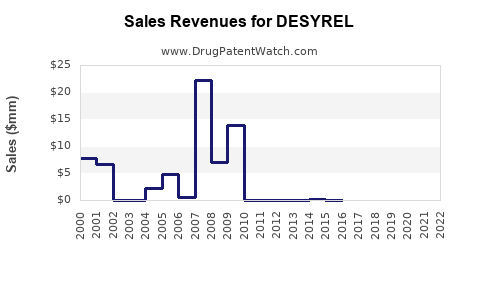
Executive summary: DESYREL (trazodone hydrochloride) is an older, off-patent oral antidepressant with a mature generic market in the US. Pricing is structurally constrained by generic substitution, low class-level differentiation, and historic reimbursement normalization. The financial trajectory is driven by (1) residual brand share among cash and select formularies, (2) demand stability tied to depression and off-label use (notably insomnia and behavioral symptoms in broader neuropsychiatric care), and (3) incremental competitive pressure from additional generic entrants and payer formulary tightening. The remaining “brand economics” typically reflect a shrinking, regulatorily stagnant product cycle rather than a growth or high-innovation trajectory.
What is DESYREL (trazodone) and how does it perform financially in the US market?
DESYREL is the brand name for trazodone hydrochloride, an orally administered antidepressant commonly positioned for major depressive disorder. In US market practice, trazodone also sees sustained use for insomnia and related sleep disturbance, including in primary care and long-term care settings, which supports baseline demand even as the brand’s unit economics erode under generic competition.
How do brand vs generic dynamics shape DESYREL revenue?
- Brand revenue tends to follow a “share fade” curve after generic entry. Once payers and prescribers move to lower-cost equivalents, brand sales often decline to small residual levels.
- Net sales of the brand are driven less by clinical expansion and more by:
- formulary access,
- negotiated rebates,
- pharmacy channel mix (mail, 90-day maintenance, institutional supply),
- and patient cost sharing.
- Generic pricing typically anchors the therapeutic class floor, limiting upside for the brand unless a payer contract preserves premium pricing or brand use persists in specific access pathways.
What is the demand driver profile for trazodone?
- Depression symptom management provides the clinical foundation for use.
- Sleep-focused utilization provides a stable secondary demand source, which is less sensitive to new mechanism-of-action competition than innovation-driven antidepressants.
- Low-to-moderate dosing flexibility (relative to some newer sedating agents) supports continued prescribing in routine practice.
What market frictions keep trazodone use sticky?
- Broad prescriber familiarity.
- Long safety/efficacy track record.
- Multiple generic presentations already in market, reducing barriers to switching.
- Habit persistence in primary care and institutional formularies.
When does DESYREL lose exclusivity and what does that mean for future sales?
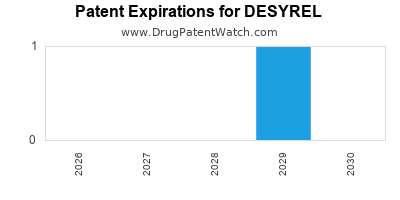
DESYREL’s exclusivity position is best understood as an older small-molecule product cycle where effective exclusivity has already largely ended. As a result, the forward sales outlook is less about “time-to-expiry” and more about:
- the rate of generic substitution,
- the degree of pharmacy and PBM preference management, and
- ongoing price erosion driven by additional generic launches.
What does generic substitution do to DESYREL unit economics?
- Brand units fall as pharmacy claims shift to authorized generics and competing generics.
- Brand prices usually cannot maintain prior list pricing once payers standardize on generics.
- Revenue declines then stabilize at a residual level if the brand retains limited coverage.
What generic entry risks exist after DESYREL’s exclusivity ends?
For a mature molecule, incremental risk is typically:
- additional generic competitors that intensify price competition,
- authorized generic or supplier mix changes that increase discounting,
- and formulary re-tiering that reduces brand placement.
In a stable generic environment, the risk shifts from “sudden launch shock” to ongoing margin compression.
What patents protect DESYREL and how strong is the patent estate for trazodone?
For market dynamics, the key patent question is whether any active US exclusivities or unexpired patents could delay generic entry of the specific drug product or dosage form. For DESYREL, the practical market reality is that generic supply is already established, signaling that the active patent barrier is either expired or not preventing entry at commercial scale.
How do patent landscapes typically impact brand revenue for small-molecule generics?
- When a brand is older and generics are present across common strengths and package sizes, patent strength becomes less relevant to near-term sales trajectories.
- Remaining patent value usually influences:
- whether a new generic can launch with a new formulation, new strength, or new method,
- and whether specific label claims remain protected.
What formulation or method-of-use patents could matter to DESYREL’s commercial future?
Even with generic availability, secondary patents can matter if they cover:
- extended-release vs immediate-release variants (not typically applicable if DESYREL is immediate-release),
- specific dose regimens or patient subgroups (method-of-use),
- manufacturing controls or polymorph/solid-state properties (less common for older legacy presentations).
For a mature brand like DESYREL, these would show up in Orange Book listings and would be reflected in any residual exclusivity that prevents “at-scale” generic competition. Commercial outcomes imply minimal residual protection.
What is the Orange Book status of DESYREL and what listings matter for generic launch?
The Orange Book framework determines:
- which patents are listed against the drug product,
- the basis of those patents (use, formulation, manufacturing, etc.),
- and the expiration/estimated expiration dates that govern generic timing.
For DESYREL, the market indicates that generic products can be marketed, which typically corresponds to:
- expired listed patents, and/or
- absence of unexpired patent barriers that can delay generic approval at scale.
What Orange Book listings typically influence Paragraph IV strategy?
- unexpired formulation patents,
- unexpired method-of-use patents,
- and unexpired manufacturing patents relevant to NDA-held product formulations.
When none meaningfully remain, the generic entry risk becomes price-competition driven rather than litigation driven.
Does DESYREL face Paragraph IV patent challenges and what does that mean for sales volatility?
In mature products with broad generic competition, Paragraph IV events are often episodic and do not usually reset the market like they do for newer drug products. Sales volatility for DESYREL tends to be low compared with late-stage pipeline assets.
What does low litigation intensity imply for financial trajectory?
- The brand does not typically experience large “cliff events” linked to prolonged settlement.
- Brand decline continues due to routine PBM contracting dynamics and substitution behavior.
- Revenue trends reflect steady erosion rather than discrete legal disruption.
How does DESYREL compare with newer antidepressants on market economics?
DESYREL competes primarily on:
- clinician familiarity,
- cost,
- coverage access,
- and tolerability patterns relative to specific alternatives.
Newer antidepressants often have stronger branding, differentiated mechanisms, and targeted patient segments. But those advantages do not automatically translate to higher market share when:
- generics dominate the cost picture,
- older agents remain formulary staples,
- and class-level prescribing shifts remain incremental.
Why older trazodone-brand economics can persist
- Many payer formularies maintain access to multiple antidepressants, including generics.
- Some prescribers continue using trazodone for sleep-related symptom control and for certain patient profiles even when primary depression treatment evolves.
- This supports a floor for total trazodone market spend while compressing brand premium.
What regulatory milestones affect DESYREL market dynamics (FDA status, labeling, and supply)?
For a legacy oral product, the main regulatory impacts are:
- ongoing FDA compliance for manufacturing sites,
- periodic labeling updates,
- safety communications that do not require brand-level reformulation.
Because DESYREL is already entrenched, regulatory events typically do not create a growth catalyst. They mainly affect:
- risk management behavior by prescribers,
- and formulary or switching patterns if safety communications drive cautious use.
What would change DESYREL’s regulatory-driven sales trajectory?
- new safety restrictions that cause prescriber behavior to shift materially,
- shortages affecting supply that temporarily raise price and preserve brand/channel value,
- or label changes that drive or restrict specific indications.
Absent such catalysts, the sales trend stays dominated by generic economics.
Commercial landscape: who competes with DESYREL and how does that shape pricing?
Key competitive model
DESYREL’s competitive set is not a single drug but:
- the multi-generic trazodone hydrochloride market across strengths,
- and alternative sedating antidepressants used for overlapping symptoms (depression with sleep disturbance).
Pricing mechanics
- As generic count increases, pricing typically trends toward cost-of-production and channel-margin equilibria.
- Brand pricing is constrained by payer reimbursement norms and patient cost-sharing logic.
What controls margin for remaining brand sales?
- rebate structures,
- gross-to-net dynamics through PBM contracting,
- and whether payers maintain a brand incentive tier.
What do revenue and profit trajectories usually look like for DESYREL once generics take over?
For older branded generics, the financial trajectory usually follows a pattern:
- Initial post-generic decline: brand share falls quickly.
- Residual plateau: brand net sales stabilize at low levels, supported by contracts and inertia.
- Ongoing erosion: additional generic entrants and formulary changes continue to compress brand share.
Investment and licensing implication
If the brand remains commercially relevant, it is usually for:
- distribution and contract-linked access rather than premium clinical positioning,
- or for a niche segment still using brand product.
How strong is the long-term business outlook for DESYREL (market size, growth, and risk)?
Growth outlook
- Expected total demand for trazodone as a molecule can remain stable if clinical practice remains consistent.
- Brand growth is unlikely because generic substitutes capture most incremental demand.
Primary risks
- continued price compression and share loss from generic substitution,
- payer formulary tightening moving more patients to lower-cost tiers,
- safety communications affecting prescriber willingness to use trazodone for broad off-label sleep management.
Primary opportunity
- maintaining brand access where contracts preserve residual volume,
- and capitalizing on channel-specific dynamics (institutional supply agreements) that may preserve brand claims longer than retail substitution patterns.
Key Takeaways
- DESYREL’s market dynamics are dominated by mature generic competition rather than patent timing or new regulatory exclusivities.
- The brand’s financial trajectory follows a share erosion and margin compression pattern typical of older oral small molecules.
- Forward risk is mainly pricing and formulary driven, not litigation-driven, given the established generic market reality.
- Total trazodone demand can remain supported by baseline depression and sleep symptom use, but brand-specific net sales are structurally capped by generic substitution.
FAQs
1) Why does DESYREL still get prescribed when generic trazodone is widely available?
Prescriber familiarity, entrenched institutional habits, and ongoing overlap with sleep-related symptoms can sustain use of trazodone even after generic availability.
2) Does DESYREL have different market dynamics by strength or dosage form?
Market dynamics can vary by strength due to stocking patterns, pharmacy ordering behavior, and generic price dispersion, but overall brand pressure remains generic-driven.
3) What factors most influence DESYREL net sales after generic entry?
PBM rebate structures, formulary tier placement, gross-to-net dynamics, and pharmacy channel mix (retail vs institutional).
4) How could FDA safety communications impact DESYREL’s sales outlook?
They can reduce prescribing for specific uses, increase monitoring requirements, or shift clinicians toward alternative agents, which can change volume and payer coverage.
5) Is Paragraph IV litigation a meaningful driver for DESYREL’s future revenue?
For mature legacy products with robust generic presence, litigation typically has limited incremental impact versus ongoing price and formulary management.
References (APA)
- U.S. Food and Drug Administration. (n.d.). Orange Book: Approved Drug Products with Therapeutic Equivalence Evaluations. https://www.accessdata.fda.gov/scripts/cder/daf/
- U.S. Food and Drug Administration. (n.d.). Drugs@FDA. https://www.accessdata.fda.gov/scripts/cder/daf/
- FDA. (n.d.). Drug Safety Communications and related information. https://www.fda.gov/safety/