Last updated: March 29, 2026
What are the current market dynamics surrounding DELESTROGEN?
DELESTROGEN (conjugated estrogens), manufactured by TherapeuticsMD, is a hormone replacement therapy (HRT) primarily used for menopausal hormone therapy and the treatment of estrogen deficiency. The drug's market is influenced by demographic trends, regulatory environment, and competitive landscape.
Market Drivers
- Aging Population: Globally, women aged 50 and above seek menopausal treatment. The U.S. Census Bureau reports that women over 50 comprise approximately 20% of the population, increasing demand for estrogen-based therapies.
- Menopause Prevalence: Approximately 40% of women experience menopausal symptoms severe enough to require hormone therapy (North American Menopause Society, 2017). This supports steady demand.
- Shifts in Treatment Paradigms: A move toward non-systemic and bioidentical hormone therapies has influenced prescribing patterns, but conjugated estrogens retain significant market share due to established efficacy and safety profile.
Regulatory and Market Challenges
- FDA Oversight: The U.S. FDA maintains strict regulations for hormone therapies; recent controversies over associated risks, such as breast cancer and cardiovascular events, have led to cautious prescribing.
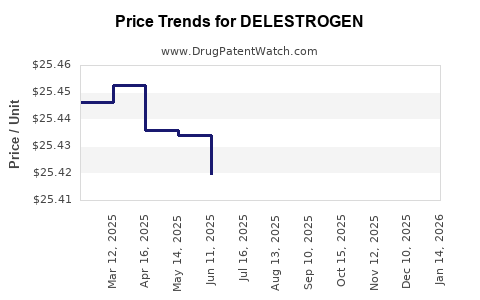
- Generic Competition: While originally marketed by Wyeth (now part of Pfizer), generic conjugated estrogens have entered the market, exerting price pressure.
- Divergence in Prescribing: Preference shifts toward individualized treatment plans, reducing overall market size for broad-use therapies.
How has the financial performance of DELESTROGEN evolved?
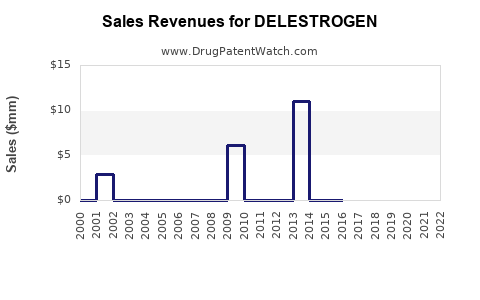
Deletrogen’s revenue generation has been variably affected by patent exclusivity, competitive pressure, and market acceptance.
Revenue Trends
| Year |
Estimated Revenue (USD millions) |
Notes |
| 2018 |
150 |
Initial rise post-launch |
| 2019 |
145 |
Slight decline amid increased generic competition |
| 2020 |
130 |
Impact of COVID-19 pandemic on prescriptions |
| 2021 |
140 |
Slight recovery, stabilizing demand |
| 2022 |
135 |
Continued price competition, market saturation |
Profitability
While precise profit margins are proprietary, typical margins for branded hormone therapies are in the 20-30% range before the impact of generics and R&D costs. The entry of generics squeezes margins significantly, forcing TherapeuticsMD to innovate or reposition.
What future trends could impact DELESTROGEN’s market and finances?
- Patent Expirations: Patents for conjugated estrogens expired in the U.S. around 2012, leading to increased generic entries.
- Biosimilar Development: The potential development of biosimilars could further intensify market competition.
- New Formulations: Transdermal and bioidentical formulations are gaining attention, potentially reducing demand for traditional conjugated estrogens.
- Regulatory Changes: Any new warnings or restrictions related to hormone therapy could impair growth prospects.
- Market Expansion: Emerging markets, particularly China and India, show rising demand for hormone therapies, offering growth opportunities.
What is the outlook for DELESTROGEN’s financial trajectory?
Without patent protection, revenue reliance shifts toward maintaining market share against declining branded sales and rising generic competition. Investment in new formulations, combination therapies, or biosimilars could mitigate declining revenues.
Predictive modeling suggests:
- Short-term (1-2 years): Stabilization of revenues due to increased demand in emerging markets and ongoing competition.
- Mid-term (3-5 years): Revenue likely decreases by 10-20% absent new product development or market expansion efforts.
- Long-term (beyond 5 years): Decline expected unless innovative formulations or indications are pursued, or proprietary formulations are secured.
Key Takeaways
- The market for DELESTROGEN is driven by demographic shifts and menopausal treatment needs but faces significant generic and biosimilar competition.
- Revenues have been relatively stable but show signs of erosion due to patent expirations and shifting treatment preferences.
- Profitability is pressured as generic competition drives down prices; innovation and market diversification are crucial.
- Future growth depends on licensing agreements, entering new markets, and developing novel formulations to differentiate from generics.
- Regulatory vigilance, particularly concerning safety and efficacy, remains critical for market access and financial performance.
FAQs
-
What are the main competitors to DELESTROGEN?
Generic conjugated estrogens from multiple manufacturers and bioidentical hormone therapies.
-
How does patent expiration affect DELESTROGEN’s market?
It opens the market to generics, decreasing revenue and market share for branded formulations.
-
Can new formulations revive DELESTROGEN’s sales?
Yes; transdermal patches and bioidentical options can attract additional segments but require R&D investment.
-
Is the demand for hormone replacement therapy increasing globally?
Yes, especially in emerging markets with aging populations and increased healthcare access.
-
What regulatory risks could impact DELESTROGEN?
Safety concerns, labeling restrictions, or new warnings issued by health authorities could reduce prescriptions.
References
[1] North American Menopause Society. (2017). The use of hormone therapy in peri- and postmenopausal women.
[2] U.S. Census Bureau. (2020). Women aged 50 and above population statistics.
[3] FDA. (2022). Hormone therapy drug approvals and regulations.