Last updated: September 7, 2026
Bisoprolol fumarate is a mature, globally marketed generic beta blocker with stable demand, low unit pricing, and limited patent risk. The commercial opportunity is driven by prescription volume, cardiovascular disease prevalence, public tenders, and fixed-dose combinations rather than premium pricing or exclusivity.
The molecule has no meaningful U.S. regulatory exclusivity remaining. Generic competition is established, biosimilar risk is irrelevant, and molecule-level revenue is rarely disclosed because manufacturers report bisoprolol within broader generic portfolios. The financial profile is therefore a high-volume, low-margin mature-product business.
What is bisoprolol fumarate used for?
Bisoprolol fumarate is a beta-1 selective adrenergic blocker used primarily to treat hypertension and, in many non-U.S. markets, chronic heart failure and angina. The drug lowers heart rate, myocardial contractility, and blood pressure by selectively blocking beta-1 receptors at therapeutic doses.
| Attribute |
Bisoprolol fumarate |
| Drug class |
Beta-1 selective beta blocker |
| Common dosage forms |
Immediate-release tablets |
| Common strengths |
5 mg and 10 mg; other strengths vary by market |
| U.S. brand |
Zebeta |
| Combination product |
Bisoprolol fumarate/hydrochlorothiazide, historically marketed as Ziac |
| U.S. indication |
Hypertension |
| International indications |
Hypertension, angina, and chronic heart failure in selected jurisdictions |
| ATC classification |
C07AB07 |
| Regulatory type |
Small-molecule prescription drug |
| Biosimilar exposure |
None |
The U.S. label for Zebeta identifies bisoprolol fumarate as an oral treatment for hypertension. European and other national labels may include chronic heart failure, with dosing and titration requirements varying by jurisdiction.[1,2]
When did bisoprolol fumarate lose exclusivity?
Bisoprolol fumarate lost meaningful commercial exclusivity years ago. The product is now in the mature generic phase in the United States, Europe, and major international markets.
The original innovator product was marketed as Zebeta in the United States and Concor in several international markets. The core small-molecule protection associated with the original product has expired. Current commercial barriers are primarily manufacturing scale, regulatory compliance, distribution access, and tender pricing.
| Exclusivity category |
Current position |
| New chemical entity exclusivity |
Expired |
| Original compound patent protection |
Expired |
| U.S. Orange Book exclusivity |
No material active exclusivity identified |
| Pediatric exclusivity |
No current commercial relevance |
| Orphan-drug exclusivity |
Not applicable |
| Generic entry |
Established |
| Biosimilar exclusivity |
Not applicable |
The FDA Orange Book identifies approved drug products and relevant listed patents and exclusivities. For a mature product such as bisoprolol fumarate, the commercial question is no longer whether generic entry is legally possible but how many suppliers can compete at sustainable prices.[3]
What patents protect bisoprolol fumarate?
No active, commercially significant composition-of-matter patent is expected to block ordinary generic bisoprolol fumarate tablets in the United States. The original patent estate is historical rather than a current barrier to entry.
Potentially relevant intellectual-property categories include:
- Original bisoprolol compound and salt patents.
- Process patents covering synthesis or salt formation.
- Formulation patents for specific release profiles or combinations.
- Method-of-use patents for disease-specific treatment.
- Combination-product patents involving hydrochlorothiazide or other antihypertensive agents.
The ordinary immediate-release tablet market has limited patent differentiation. A company could still assert a formulation or manufacturing patent, but such rights would need to cover a commercially meaningful product feature and remain enforceable in the target jurisdiction.
What formulations are protected by bisoprolol patents?
The main commercial formulation is an immediate-release tablet. The formulation itself is generally easy to manufacture using conventional tableting processes, which limits the value of formulation patents.
Potentially differentiated products include:
- Modified-release tablets.
- Fixed-dose bisoprolol/hydrochlorothiazide combinations.
- Alternative salt or dosage forms.
- Specialty formulations designed to improve dissolution or reduce dosing frequency.
These products do not automatically create broad protection for standard bisoprolol fumarate tablets. A patent covering a specific combination or release profile would not necessarily prevent approval of a conventional immediate-release generic.
What is the FDA regulatory status of bisoprolol fumarate?
Bisoprolol fumarate is an FDA-approved prescription drug with multiple generic products. The U.S. regulatory pathway is an abbreviated new drug application, or ANDA, for products demonstrating pharmaceutical equivalence and bioequivalence to the reference product.
The principal U.S. regulatory characteristics are:
- Reference product: Zebeta tablets.
- Active ingredient: bisoprolol fumarate.
- Dosage form: oral tablet.
- Primary U.S. indication: hypertension.
- Generic pathway: ANDA.
- Regulatory exclusivity: expired.
- OTC status: prescription-only.
- Biosimilar pathway: not applicable.
FDA-approved generic products are listed in FDA drug databases and marketed by multiple manufacturers or distributors. Product availability can change as suppliers discontinue products, transfer approvals, or exit low-margin categories.[3,4]
What is the Orange Book status of bisoprolol fumarate?
The Orange Book status is consistent with a mature generic market. The reference product and approved generic equivalents have no practical market exclusivity comparable to a recently approved branded drug.
For commercial diligence, the relevant Orange Book questions are:
| Issue |
Bisoprolol fumarate assessment |
| Active listed patent blocking generic entry |
No material barrier expected for standard tablets |
| Current exclusivity period |
Expired |
| Reference listed drug |
Zebeta |
| Generic approvals |
Established |
| Paragraph IV significance |
Historically relevant, but not a current market blocker |
| Combination-product exposure |
Separate analysis required for bisoprolol/hydrochlorothiazide |
Orange Book review remains necessary for a product-specific launch because patents and approvals can differ by strength, dosage form, and combination. The existence of a listed patent does not by itself establish infringement risk, and the absence of a blocking patent does not eliminate regulatory or manufacturing risk.
Which companies manufacture or market bisoprolol fumarate?
Bisoprolol is supplied by a broad group of generic manufacturers, contract manufacturers, and national distributors. Market participation varies by country. Common commercial participants in the broader bisoprolol market have included:
- Teva Pharmaceutical Industries.
- Sandoz.
- Viatris and legacy Mylan businesses.
- Dr. Reddy’s Laboratories.
- Cipla.
- Torrent Pharmaceuticals.
- Lupin.
- Sun Pharmaceutical Industries.
- Zentiva.
- Accord Healthcare.
- Regional European and Asian generic suppliers.
- Merck KGaA for branded Concor markets.
The specific supplier set differs by jurisdiction. A manufacturer may hold an approval without maintaining continuous commercial supply. Hospital tenders and pharmacy reimbursement systems can also change supplier rankings rapidly.
How strong is the bisoprolol fumarate patent estate?
The patent estate is weak as a barrier to standard generic entry but can remain relevant in narrow product segments.
Composition-of-matter protection
Composition-of-matter protection is expired. It does not prevent generic development or marketing of conventional bisoprolol fumarate tablets.
Formulation protection
Formulation protection is limited unless tied to a specific modified-release profile, delivery system, or combination. Standard immediate-release tablets generally have low technical complexity.
Manufacturing protection
Manufacturing patents could affect process freedom to operate, particularly where a supplier uses a proprietary intermediate, chiral-resolution step, or high-purity process. The commercial impact is usually manageable because generic manufacturers can qualify alternative processes.
Method-of-use protection
Method-of-use patents may have greater relevance in markets where bisoprolol is approved for chronic heart failure. Their practical value is reduced where physicians prescribe the drug for multiple established cardiovascular indications and generic labels omit protected language where permitted.
Are there Paragraph IV challenges to bisoprolol fumarate?
Paragraph IV litigation is not a current central risk for standard bisoprolol fumarate tablets. The drug has been generic for many years, and the original U.S. exclusivity period has ended.
Historical Paragraph IV filings may have addressed listed patents associated with Zebeta or combination products. Those disputes had commercial importance during the initial generic-entry period but do not create a present-day barrier comparable to active litigation involving a recently launched branded medicine.
A current launch assessment should distinguish:
- Standard bisoprolol fumarate tablets.
- Bisoprolol/hydrochlorothiazide combinations.
- Any modified-release product.
- Any product relying on a narrow method-of-use certification.
The legal risk is highest for a differentiated formulation or combination, not for ordinary immediate-release tablets.
What patent litigation affects bisoprolol fumarate?
No major active U.S. patent litigation is central to the current ordinary-tablet market based on the mature status of the product and available regulatory records. Historical disputes involving the reference product or generic entry are unlikely to determine present market access.
The more relevant legal risks are commercial:
- Product liability claims.
- Manufacturing deviations.
- Recalls.
- Supply-contract disputes.
- Patent disputes involving combination products.
- Regulatory challenges concerning labeling or bioequivalence.
For investors and licensees, supply continuity and quality-system performance are more material than composition-of-matter litigation.
How does bisoprolol compare with competing beta blockers?
Bisoprolol competes with metoprolol, carvedilol, atenolol, nebivolol, propranolol, and other beta blockers. It also competes indirectly with ACE inhibitors, angiotensin receptor blockers, calcium-channel blockers, and thiazide diuretics.
| Drug |
Main commercial position |
Patent status |
Competitive implication |
| Bisoprolol |
Selective beta blocker; hypertension and heart failure in selected markets |
Mature generic |
Low price, broad supplier base |
| Metoprolol |
High-volume beta blocker with immediate- and extended-release products |
Mature generic; formulation differences matter |
Stronger product segmentation |
| Carvedilol |
Nonselective beta and alpha blocker; heart failure |
Mature generic |
Competes in heart failure |
| Nebivolol |
Beta-1 selective product with nitric-oxide-related positioning |
Generic in major markets |
Higher differentiation in some markets |
| Atenolol |
Older low-cost beta blocker |
Mature generic |
Price competition |
| Propranolol |
Nonselective beta blocker with broad indications |
Mature generic |
Indication breadth rather than direct interchangeability |
Bisoprolol is commercially strongest where prescribers value once-daily dosing, beta-1 selectivity, and established heart-failure use. It is weaker where guidelines favor ACE inhibitors, ARBs, angiotensin receptor-neprilysin inhibitors, or newer heart-failure therapies.
What drives the bisoprolol fumarate market?
The market is volume-led and relatively defensive. Key demand drivers include:
- Aging populations.
- Rising hypertension prevalence.
- Continued use of beta blockers in selected cardiovascular patients.
- Chronic heart-failure treatment.
- Low-cost access in public health systems.
- Established physician familiarity.
- Broad generic reimbursement.
- Fixed-dose combination prescribing.
The main constraints are:
- Price erosion from multiple generic suppliers.
- Substitution by ARBs, ACE inhibitors, calcium-channel blockers, and other beta blockers.
- Guideline limitations on routine beta-blocker use for uncomplicated hypertension.
- Tender concentration among a small number of winning suppliers.
- Periodic supply interruptions caused by low margins.
- Limited clinical differentiation between suppliers.
The World Health Organization’s ATC/DDD system classifies bisoprolol within selective beta-blockers, reflecting its established role in cardiovascular pharmacotherapy.[5]
What is the financial trajectory for bisoprolol fumarate?
Bisoprolol’s financial trajectory follows the standard lifecycle of an oral small-molecule generic:
| Lifecycle phase |
Financial profile |
| Innovator launch |
High price and exclusivity-supported margins |
| Early generic entry |
Rapid price decline and volume expansion |
| Mature generic phase |
Stable or rising volume with low unit pricing |
| Late mature phase |
Tender-driven pricing, supplier exits, intermittent shortages |
Molecule-level revenue is not normally disclosed by generic manufacturers. Public companies report bisoprolol within broader geographic, therapeutic, or generic portfolios. Merck KGaA has reported branded cardiovascular products such as Concor within broader business reporting, but public filings generally do not provide a standalone global bisoprolol revenue line.[6]
Financial value is concentrated in:
- Manufacturing cost advantage.
- Reliable regulatory supply.
- High-volume pharmacy contracts.
- Hospital and government tenders.
- Geographic markets where branded Concor retains share.
- Combination products.
- Portfolio bundling with other cardiovascular medicines.
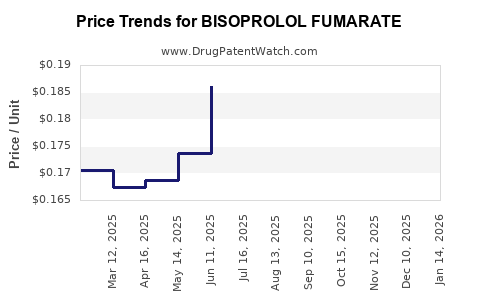
The product has limited ability to support premium pricing. A supplier with efficient API access, automated tableting, low recall exposure, and strong tender execution can earn acceptable returns. A high-cost producer facing several equivalent competitors is exposed to margin compression.
What generic launch scenarios exist for bisoprolol fumarate?
Standard immediate-release tablets
A new entrant would face low legal barriers but intense price competition. Approval timing would depend primarily on ANDA review, manufacturing readiness, bioequivalence documentation, and supply-chain qualification.
Bisoprolol/hydrochlorothiazide combinations
Combination products can offer modest differentiation and higher portfolio value. They also create additional formulation, labeling, and bioequivalence requirements.
Modified-release products
Modified-release products could support stronger pricing if clinically differentiated and protected by enforceable patents. They would carry higher development and regulatory risk than standard tablets.
Branded generic strategy
A branded generic may retain share through physician familiarity, pharmacy relationships, or local distribution, but sustained price premiums are difficult in highly competitive markets.
What licensing deals affect bisoprolol fumarate?
Licensing activity is more likely to involve regional commercialization, contract manufacturing, or distribution than innovative molecule licensing. The original branded Concor business has had greater strategic value than the generic molecule itself because of brand recognition and geographic market access.
Potential transaction structures include:
- Regional rights to branded Concor.
- Generic distribution agreements.
- Contract manufacturing and supply agreements.
- Portfolio acquisitions involving cardiovascular products.
- Co-marketing of fixed-dose combinations.
Standalone licensing economics are generally modest unless the agreement includes a strong regional brand, a differentiated formulation, or guaranteed institutional volume.
What geographic markets have the greatest commercial potential?
The strongest opportunities are not necessarily in the largest developed markets. They are often in countries where:
- Hypertension prevalence is increasing.
- Generic substitution is established.
- Public procurement uses cardiovascular tenders.
- Local manufacturing receives policy support.
- Branded products retain meaningful share.
- Distribution networks are fragmented.
Western Europe and the United States are mature and price-sensitive. Emerging markets may offer better volume growth but carry currency, reimbursement, regulatory, tender, and collection risks.
Regional commercial profiles differ:
| Region |
Market profile |
| United States |
Mature generic market, low pricing, multiple ANDA suppliers |
| Western Europe |
Strong generic penetration, national reimbursement and tender pressure |
| Central and Eastern Europe |
Mix of branded generics and public reimbursement |
| India |
Large generic manufacturing base and competitive domestic pricing |
| China |
Tender reforms and volume-based procurement pressure |
| Latin America |
Variable generic penetration and strong local distributor influence |
| Middle East and Africa |
Import dependence, tender access, and supply reliability are central |
What manufacturing and intellectual-property barriers exist?
The manufacturing barrier is low to moderate for standard tablets. Bisoprolol fumarate does not require sterile production, complex delivery technology, or biologic manufacturing.
Important operational barriers include:
- API sourcing and qualification.
- Control of impurity profiles.
- Consistent dissolution and content uniformity.
- Stability data across climate zones.
- GMP compliance.
- Regulatory inspection history.
- Packaging and serialization requirements.
- Reliable supply of multiple strengths.
The strongest competitive moat is operational execution. A company that can supply multiple markets continuously may outperform a technically equivalent competitor despite having no patent advantage.
What is the outlook for bisoprolol fumarate?
Bisoprolol fumarate should remain a stable mature generic with modest volume growth and persistent price pressure. Revenue growth is more likely to come from market expansion, new tenders, and combination products than from price increases.
The base-case outlook is:
- Stable global demand.
- Low or declining unit prices.
- Continued generic supplier turnover.
- Limited patent litigation.
- No biosimilar disruption.
- Moderate opportunity in emerging markets.
- Higher margin potential in branded or combination products than in plain tablets.
Key Takeaways
- Bisoprolol fumarate is a mature generic beta blocker with no meaningful remaining U.S. exclusivity.
- Standard immediate-release tablets face low patent risk and intense competition.
- Biosimilar risk does not apply because bisoprolol is a small molecule.
- Revenue is driven by prescription volume, tenders, branded market share, and manufacturing efficiency.
- Molecule-level sales are generally not disclosed by major manufacturers.
- Combination products and differentiated formulations offer more commercial upside than ordinary tablets.
- Generic price erosion, reimbursement pressure, and supplier concentration are the main financial risks.
- The strongest business case is a low-cost, multi-market supply strategy supported by reliable GMP performance.
FAQs About Bisoprolol Fumarate Market and Patent Risk
Is bisoprolol fumarate still a profitable drug?
It can be profitable at scale, but ordinary tablets usually generate generic rather than specialty-pharmaceutical margins. Profitability depends on manufacturing cost, tender wins, volume, and supply reliability.
Can a new company launch generic bisoprolol fumarate?
Yes. A company can generally pursue an ANDA or equivalent national generic pathway for standard tablets, subject to regulatory approval, bioequivalence, GMP compliance, and market-specific requirements.
Does bisoprolol fumarate have orphan-drug protection?
No. Bisoprolol fumarate is not an orphan drug, and orphan exclusivity does not provide a commercial barrier.
Is Concor protected by patents?
The original broad patent protection for bisoprolol has expired. Concor may retain commercial value through brand recognition, local registrations, distribution, and physician loyalty rather than broad molecule-level patent exclusivity.
Which bisoprolol product has the greatest commercial potential?
Branded products, fixed-dose combinations, and differentiated formulations generally have greater commercial potential than standard immediate-release bisoprolol fumarate tablets, which are subject to intense generic price competition.
References
- U.S. Food and Drug Administration. (2011). Zebeta (bisoprolol fumarate) prescribing information. FDA.
- European Medicines Agency. (n.d.). Bisoprolol-containing medicinal products and product information. EMA.
- U.S. Food and Drug Administration. (n.d.). Approved drug products with therapeutic equivalence evaluations, Orange Book. FDA.
- U.S. Food and Drug Administration. (n.d.). Drugs@FDA: FDA-approved drugs database. FDA.
- World Health Organization Collaborating Centre for Drug Statistics Methodology. (2024). ATC/DDD index: Bisoprolol. WHO.
- Merck KGaA. (2023). Annual report 2023. Merck KGaA.