Last updated: July 31, 2026
Bactroban is the branded formulation of mupirocin, a topical antibiotic used primarily for localized bacterial skin infections and, in selected formulations, nasal decolonization of Staphylococcus aureus. Its original composition, formulation, and regulatory exclusivities have expired. The commercial market is now driven by generic mupirocin ointment, cream, and nasal products, while the Bactroban brand has limited strategic value and no publicly reported standalone revenue.
The principal economic risks are generic substitution, low manufacturing complexity, formulary pressure, and competition from alternative topical antibiotics. The principal residual opportunities are brand recognition, hospital decolonization protocols, and differentiated formulations or delivery systems.
What is Bactroban and who owns the brand?
Bactroban contains mupirocin, formerly known as pseudomonic acid A. The antibiotic is derived from Pseudomonas fluorescens and inhibits bacterial isoleucyl-tRNA synthetase, disrupting protein synthesis. It is active against many strains of Staphylococcus aureus and Streptococcus pyogenes, including some methicillin-resistant S. aureus strains.
| Product |
Active ingredient |
Route |
Main use |
Commercial status |
| Bactroban ointment 2% |
Mupirocin |
Topical |
Impetigo and localized skin infections |
Brand and generic versions |
| Bactroban cream 2% |
Mupirocin calcium |
Topical |
Secondary infected traumatic skin lesions |
Brand and generic versions |
| Bactroban Nasal ointment 2% |
Mupirocin calcium |
Intranasal |
Nasal decolonization of S. aureus |
Brand availability has declined; generic products exist in some markets |
Bactroban originated with Beecham, which later became part of GlaxoSmithKline. Historical U.S. labeling identifies GlaxoSmithKline as the sponsor of Bactroban products. The U.S. commercial supply chain has since shifted toward generic manufacturers, including companies marketing mupirocin under abbreviated new drug applications.
Bactroban is not a biologic. Biosimilar regulation does not apply. Its competitive set consists of generic topical antibiotics, branded topical anti-infectives, antiseptics, and institutional decolonization products.
What patents protect Bactroban?
No material U.S. composition-of-matter patent protection remains for mupirocin. The original patent estate predates the modern generic market and has expired.
The principal historical patent was U.S. Patent No. 4,524,015, which covered mupirocin-related antibiotic compounds and was assigned to Beecham Group. The patent was issued in 1985 and expired before the product’s current commercial period. Any patent-term adjustment or extension did not preserve meaningful exclusivity for the modern Bactroban market.
| Patent category |
Historical position |
Current commercial effect |
| Mupirocin composition patent |
Expired |
No composition exclusivity |
| Topical ointment formulation patents |
Expired or commercially exhausted |
Generic substitution permitted |
| Cream formulation protection |
Expired |
Generic cream competition |
| Nasal formulation protection |
Expired or no longer commercially decisive |
Generic and institutional alternatives |
| Method-of-use patents |
No known active estate that materially blocks routine generic use |
Limited barrier |
| Manufacturing patents |
Potentially relevant at process level |
Do not prevent sale of approved generic products |
The absence of active composition protection means that a competitor does not need to invent around the mupirocin molecule. It must satisfy FDA requirements for pharmaceutical equivalence, bioequivalence where applicable, quality, stability, manufacturing controls, and labeling.
When did Bactroban lose exclusivity?
Bactroban lost practical market exclusivity many years ago. Its U.S. patents expired before the current generic-dominated market, and FDA-approved generic mupirocin products are widely available.
The relevant exclusivity timeline is:
| Milestone |
Approximate timing |
Impact |
| Original mupirocin patent issued |
1985 |
Created historical composition protection |
| Bactroban ointment introduced |
Late 1980s |
Established the branded market |
| Bactroban cream and nasal products introduced |
1990s |
Expanded formulation and route coverage |
| Original patent protection ended |
Early 2000s or earlier for key rights |
Removed molecule-level barrier |
| Generic mupirocin expansion |
2000s onward |
Reduced brand pricing power |
| Current market |
2020s |
Primarily generic and contract-manufactured supply |
FDA regulatory exclusivity periods also have expired. Bactroban does not have a current new chemical entity exclusivity period, orphan-drug exclusivity period, or other meaningful FDA exclusivity protection.
What is the Orange Book status of Bactroban?
Bactroban’s Orange Book position does not provide a current barrier to abbreviated new drug application competition. The Orange Book records approved prescription drug products and any listed patents or exclusivity associated with them. Legacy Bactroban listings may remain in FDA databases even when the commercial brand has limited distribution or a particular presentation has been discontinued.
For practical market analysis, the important points are:
- Mupirocin is available through abbreviated new drug applications.
- No active composition patent blocks generic entry.
- Any residual listed patent would need to be evaluated by dosage form and reference-listed drug.
- Formulation or manufacturing differences generally do not restore molecule-level exclusivity.
- Brand discontinuation of a presentation does not eliminate generic demand if an equivalent reference product or approved generic pathway remains.
FDA’s Drugs@FDA and Orange Book databases should be used to confirm the current marketing status of each Bactroban presentation and the active reference-listed drug designation [1, 2].
Which companies are challenging Bactroban through generic competition?
Bactroban has already experienced the principal form of competition that Paragraph IV litigation is designed to delay: generic entry.
Generic mupirocin products have been marketed by multiple manufacturers over time, including large generic suppliers and specialty dermatology companies. The competitive field has included manufacturers such as Taro Pharmaceuticals, Fougera Pharmaceuticals, Perrigo, Glenmark, Actavis, and other ANDA sponsors, depending on formulation and market period.
Because the core patents are expired, Paragraph IV certification is no longer the central commercial issue. A generic applicant can rely on an expired reference product and seek approval through the standard ANDA pathway. The remaining competitive variables are:
- Manufacturing cost.
- Product availability.
- Retail and institutional contracting.
- Formulary placement.
- Authorized-generic or branded-generic pricing.
- Supply reliability.
What patent litigation affects Bactroban?
Bactroban does not have a current litigation profile comparable with protected small-molecule products such as immunology, oncology, or diabetes drugs. There is no known active patent dispute that materially protects Bactroban from generic competition.
Historical patent disputes may have involved generic mupirocin entrants, product equivalence, or formulation issues. Those disputes do not alter the present commercial conclusion: the main barriers are regulatory execution and manufacturing economics, not enforceable patent rights.
A new litigation risk could arise from a next-generation mupirocin product, such as:
- A modified nasal delivery system.
- A combination with an antiseptic or barrier agent.
- A controlled-release topical vehicle.
- A hospital-use decolonization kit.
- A new method of treating a defined resistant bacterial population.
Such rights would protect the new product only if the claims covered a patentable formulation, method, device, or combination. They would not restore exclusivity to conventional mupirocin ointment.
How strong is the Bactroban patent estate?
The legacy patent estate is weak for present-day commercial defense.
| Patent-strength factor |
Assessment |
| Composition protection |
None of practical current value |
| Remaining patent term |
No material term for the original product |
| Formulation differentiation |
Limited for conventional ointment and cream |
| Method-of-use protection |
Limited |
| Manufacturing know-how |
Moderate operational value, low blocking value |
| Regulatory exclusivity |
Expired |
| Generic entry exposure |
High |
| Litigation leverage |
Low |
Manufacturing know-how can still affect gross margin and supply stability. Mupirocin is produced through fermentation and downstream purification, which can create quality-control and scale-up requirements. That does not amount to a strong patent barrier. Qualified suppliers with appropriate chemistry, manufacturing, and controls systems can compete once they obtain approval.
What formulations are protected by Bactroban?
The original commercial franchise included ointment, cream, and nasal formulations. Conventional versions are no longer protected by enforceable exclusivity.
Bactroban ointment
The 2% ointment uses a polyethylene glycol-based vehicle. It is the most commercially established presentation and has a broad generic market. Ointment products are relatively difficult to differentiate clinically when the active ingredient, concentration, route, and labeling are equivalent.
Bactroban cream
The cream contains mupirocin calcium and has a different vehicle from the ointment. Cream products may receive separate regulatory treatment because formulation, inactive ingredients, and performance characteristics differ. That distinction can support separate ANDA development but does not create durable brand exclusivity.
Bactroban Nasal
The nasal product was developed for intranasal use and institutional decolonization. It has greater operational importance in hospitals than in routine retail dermatology. Nasal formulations can face more complex equivalence and usability requirements, but the original product’s exclusivity has expired.
What is the FDA regulatory status of Bactroban?
Bactroban is an FDA-approved prescription topical antibiotic. Its principal approved uses include treatment of impetigo caused by susceptible strains of S. aureus and S. pyogenes, with product-specific labeling for other localized skin infections and nasal decolonization applications [3].
The FDA label warns against indiscriminate use because excessive topical antibiotic exposure can promote resistance. Topical mupirocin is not intended for ophthalmic use, and the ointment and cream formulations are not interchangeable across all administration sites.
Regulatory considerations affecting market demand include:
- Antimicrobial stewardship programs.
- Restrictions on routine long-term use.
- Increasing concern over mupirocin resistance.
- Hospital protocols for MRSA decolonization.
- Product-specific labeling and route limitations.
- Supply interruptions involving generic manufacturers.
Resistance can create a paradoxical market effect. It may reduce use in routine skin infections while sustaining demand for targeted hospital protocols where mupirocin remains clinically appropriate.
How large is the Bactroban market?
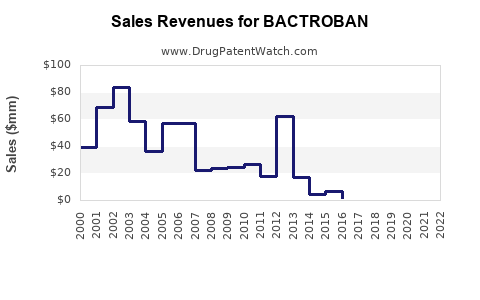
No current public filing provides a reliable standalone global revenue figure for Bactroban. GlaxoSmithKline and successor corporate disclosures have generally reported commercial performance at broader business-unit or therapeutic-area levels rather than separately identifying Bactroban sales.
The market is best characterized as a mature, low-cost prescription topical market:
- Unit demand is supported by impetigo, infected wounds, minor skin infections, and hospital decolonization.
- Revenue has declined from the branded peak because generic substitution is extensive.
- Average selling prices are constrained by multiple suppliers.
- Retail sales are exposed to pharmacy benefit-manager and payer substitution.
- Institutional sales are exposed to tenders and hospital purchasing groups.
- Product shortages can temporarily improve pricing or shift market share.
Mupirocin’s revenue trajectory is therefore different from that of a recently genericized oral drug. The product does not rely on a large patent-cliff event in the current period. Its commercial decline has occurred over a long period through gradual generic erosion.
What is the financial trajectory for Bactroban?
The financial trajectory has four phases.
| Phase |
Commercial economics |
| Branded launch |
High gross margins and strong pricing power |
| Franchise expansion |
Revenue growth from cream and nasal formulations |
| Patent expiry and generic entry |
Rapid price compression and brand share loss |
| Mature generic market |
Stable or declining unit demand, low per-unit margins |
Bactroban’s current financial value is likely concentrated in residual brand sales, licensing rights, supply arrangements, and manufacturing relationships rather than in a high-margin proprietary franchise.
The product has several structural limits:
- Conventional topical mupirocin is easy for payers to substitute.
- Treatment courses are short.
- The product is not a chronic therapy.
- Competing topical antibiotics are available.
- Hospitals can switch suppliers through procurement contracts.
- Generic price competition limits the value of brand promotion.
Potential sources of upside include a supply-constrained market, a premium nasal product, a combination decolonization regimen, or a licensed delivery technology. None of those opportunities would be equivalent to the economics of an active composition patent.
How does Bactroban compare with competing topical antibiotics?
| Product or class |
Main active ingredient |
Patent position |
Competitive effect |
| Bactroban/mupirocin |
Mupirocin |
Expired |
Generic price competition |
| Neosporin-type products |
Bacitracin, neomycin, polymyxin B |
Mature or over-the-counter markets |
Broad substitution |
| Fusidic acid products |
Fusidic acid |
Market-dependent |
Stronger outside the U.S. |
| Retapamulin |
Retapamulin |
Mature patent position |
Narrower, less common use |
| Ozenoxacin |
Ozenoxacin |
Newer product-specific rights may apply |
Premium branded alternative |
| Chlorhexidine products |
Chlorhexidine |
Antiseptic market |
Important in institutional decolonization |
Bactroban retains clinical relevance because mupirocin has a defined role in S. aureus treatment and decolonization. Its commercial position is weaker because the product does not control a protected market.
What generic launch scenarios exist for Bactroban?
The most likely commercial scenario is continued generic substitution with periodic supplier changes. Generic launch risk is already realized rather than prospective.
Base case
Multiple generic manufacturers continue supplying ointment and cream. Prices remain low, and brand sales decline gradually.
Upside case
A shortage, manufacturing withdrawal, or hospital decolonization demand increase temporarily lifts volumes or prices. The effect would likely be short-lived because other approved suppliers can expand production.
Downside case
Mupirocin resistance, antimicrobial-stewardship restrictions, or substitution by antiseptic protocols reduces utilization. Brand sales would decline faster than generic volume because payers preferentially remove the branded premium.
What licensing deals affect Bactroban?
No major current licensing transaction has been publicly associated with a new Bactroban exclusivity platform. Historical commercialization involved corporate ownership and licensing arrangements connected to Beecham and GlaxoSmithKline, but those arrangements do not create present-day patent protection.
A potential licensing transaction would be more commercially credible if it covered a differentiated product rather than conventional mupirocin. Relevant assets could include:
- A novel nasal delivery device.
- A combination product for MRSA decolonization.
- A resistance-sparing formulation.
- A hospital diagnostic-plus-treatment protocol.
- A long-acting topical delivery platform.
What geographic coverage does Bactroban have?
Mupirocin is marketed in multiple jurisdictions under Bactroban and local generic names. The exact regulatory and patent position varies by country, but the broad pattern is consistent:
- United States: mature generic market.
- Europe: generic competition and country-specific reimbursement.
- Japan: established prescription market with local regulatory requirements.
- Emerging markets: brand and generic availability varies by national registration and procurement channels.
- Hospital markets: purchasing contracts often matter more than brand promotion.
International revenue is affected by local prescription rules, reimbursement, antibiotic stewardship, tender systems, and the availability of alternative topical antibiotics.
Key Takeaways
- Bactroban is the branded form of mupirocin, a topical antibiotic used in skin infection treatment and selected nasal decolonization protocols.
- The original mupirocin composition patent and related exclusivity have expired.
- Generic mupirocin is widely available, making the current market highly price competitive.
- Bactroban has no meaningful biosimilar issue because it is a small-molecule drug, not a biologic.
- The Orange Book and FDA approval records remain relevant by formulation, but no active patent estate materially blocks generic entry.
- No current patent litigation or Paragraph IV dispute is known to provide meaningful commercial protection.
- Standalone Bactroban revenue is not publicly disclosed in current corporate filings.
- Financial value is concentrated in residual brand demand, institutional use, supply reliability, and potential differentiated delivery systems.
- The primary downside risks are generic substitution, antimicrobial resistance, stewardship restrictions, and low manufacturing barriers.
- A new commercial opportunity would require a differentiated formulation, device, combination, or institutional-use model.
FAQs About Bactroban Patent and Market Risk
Is Bactroban still under patent?
No material original-product patent protection remains for conventional mupirocin ointment, cream, or nasal formulations.
Can a generic company launch mupirocin without a license from the Bactroban brand owner?
Yes. An approved generic manufacturer can rely on the ANDA pathway and expired reference-product rights. A license is not generally required for conventional mupirocin products.
Is Bactroban a biologic eligible for biosimilar competition?
No. Bactroban is a small-molecule prescription drug. Competition occurs through generic drug applications, not biosimilar applications.
Does Bactroban have exclusivity for MRSA treatment?
No current product-wide exclusivity covers routine mupirocin use against MRSA. Clinical use remains limited by labeling, susceptibility, stewardship policies, and resistance patterns.
Could a new mupirocin nasal product obtain patent protection?
Yes. A genuinely novel delivery device, formulation, combination, or treatment method could support new patent claims. Those rights would protect the new technology, not the expired mupirocin molecule.
References
-
U.S. Food and Drug Administration. (n.d.). Drugs@FDA: FDA-approved drugs. https://www.accessdata.fda.gov/scripts/cder/daf/
-
U.S. Food and Drug Administration. (n.d.). Approved drug products with therapeutic equivalence evaluations, Orange Book. https://www.accessdata.fda.gov/scripts/cder/ob/
-
U.S. Food and Drug Administration. (2017). Bactroban ointment prescribing information. GlaxoSmithKline.
-
U.S. Patent No. 4,524,015. (1985). Antibiotic compounds. U.S. Patent and Trademark Office.