Last updated: October 15, 2026
Avinza, an extended-release morphine sulfate capsule, is a mature opioid product with no meaningful remaining exclusivity advantage. King Pharmaceuticals commercialized Avinza after FDA approval in 2002. Pfizer acquired King in 2010, bringing Avinza into Pfizer's established hospital and specialty pharmaceutical portfolio. The product later lost commercial relevance as generic morphine sulfate extended-release products entered the market, opioid prescribing contracted, and manufacturers faced tighter FDA controls and litigation exposure.
Avinza's current financial contribution is not separately disclosed by Pfizer. Its commercial trajectory is best understood as a transition from a branded controlled-release opioid product to a genericized, low-growth market with limited strategic value.
What is Avinza and how was the drug commercialized?
Avinza is morphine sulfate extended-release capsules for oral administration. The product uses extended-release technology to deliver morphine over an extended dosing interval and was approved for the management of pain severe enough to require an opioid analgesic and for which alternative treatments were inadequate.
| Attribute |
Avinza |
| Active ingredient |
Morphine sulfate |
| Dosage form |
Extended-release capsules |
| Original sponsor |
King Pharmaceuticals |
| FDA application |
NDA 21-260 |
| FDA approval |
2002 |
| Therapeutic class |
Opioid analgesic |
| Primary market |
Chronic, severe pain |
| Controlled-substance schedule |
Schedule II |
| Current commercial status |
Mature and largely displaced by generic products |
Avinza was positioned as a long-acting oral morphine product. Its competitive set included MS Contin, Kadian, generic extended-release morphine, and later abuse-deterrent opioid formulations. The product competed on dosing convenience and formulation characteristics rather than on a novel active ingredient.
The product was not an abuse-deterrent formulation under the FDA's current abuse-deterrent labeling framework. That distinction became commercially important after the FDA and public payers increased scrutiny of long-acting opioids.
When did Avinza lose exclusivity?
Avinza lost practical market exclusivity after the expiration or weakening of its principal patent protections and the launch of generic extended-release morphine products. FDA approval in 2002 provided five years of new chemical entity exclusivity, but morphine itself was an established active ingredient and Avinza's protection depended primarily on formulation and other patent claims.
The relevant commercial sequence was:
| Period |
Commercial event |
| 2002 |
FDA approved Avinza |
| 2007 onward |
Core FDA drug exclusivity no longer protected the product |
| Late 2000s to early 2010s |
Generic and patent challenges reduced brand protection |
| 2010 |
Pfizer acquired King Pharmaceuticals |
| 2010s |
Opioid prescribing restrictions and litigation pressure weakened demand |
| Late 2010s onward |
Avinza became a low-priority mature product with limited standalone financial visibility |
The effective loss of exclusivity occurred through a combination of patent expiry, generic entry, payer substitution, and declining demand. For mature opioid products, commercial erosion did not depend solely on a single patent expiration date. Generic substitution and institutional purchasing pressure could reduce brand sales rapidly once an ANDA-approved competitor became available.
What patents protected Avinza?
Avinza's patent estate covered extended-release morphine formulations and related delivery technology rather than a new chemical entity. Public patent records and FDA Orange Book materials associated Avinza with formulation and dosage-form protection, including patents directed to controlled-release oral dosage forms.
Reported Avinza-related patents included the following families:
| Patent or patent family |
General subject matter |
Commercial relevance |
| U.S. Patent No. 5,478,577 |
Controlled-release opioid dosage technology |
Early formulation protection |
| U.S. Patent No. 6,254,887 |
Extended-release morphine formulation technology |
Product protection and generic-entry barrier |
| U.S. Patent No. 6,340,475 |
Controlled-release oral dosage formulation |
Later formulation protection |
Patent numbers and expiration dates should be read together with terminal disclaimers, patent-term adjustment, pediatric extensions, reexamination history, and Orange Book listing status. The practical conclusion is clearer than the historical patent record: Avinza no longer has a durable, enforceable patent position capable of supporting a branded premium market.
The Avinza estate was also narrower than a chemical patent estate. Formulation patents can delay entry by forcing an ANDA applicant to design around specific release profiles, excipients, pellet structures, or manufacturing steps. They rarely preserve long-term pricing power after multiple generic entrants establish therapeutic equivalence.
How many patents currently cover Avinza?
Avinza does not have a commercially meaningful active patent estate comparable to a protected specialty drug or biologic. Its historic protection consisted primarily of formulation and controlled-release technology patents. The product's commercial exposure is now determined by generic availability, manufacturing economics, opioid regulation, and demand rather than by a live exclusivity moat.
The FDA Orange Book is the central source for determining current listed patents and regulatory exclusivity. For a discontinued or inactive branded product, historical listings can remain relevant to litigation history even when they no longer block market entry. Orange Book listing status also does not establish that every patent claim is valid or enforceable.
What was the financial trajectory of Avinza?
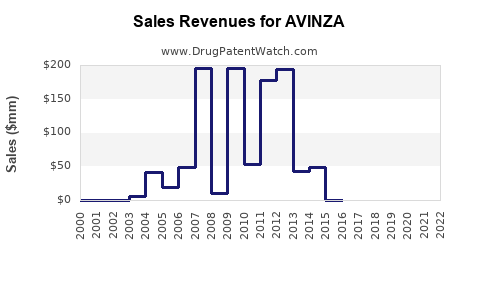
King Pharmaceuticals did not consistently report Avinza as a separately disclosed, fully transparent revenue line in the manner of a large standalone public-company franchise. Product-level figures were often presented within broader product or business-segment disclosures. Pfizer also reported the acquired King portfolio at an aggregate level after the 2010 transaction.
As a result, Avinza's financial trajectory is more reliably characterized directionally:
- Initial growth followed FDA approval and adoption of long-acting morphine for chronic pain.
- Revenue pressure increased as generic morphine products and competing long-acting opioids expanded.
- King benefited from portfolio scale, but Avinza was smaller than the company's highest-value assets, including Embeda, Fentora, and other branded products.
- Pfizer's acquisition reduced the strategic importance of Avinza because Pfizer had a much broader pharmaceutical portfolio and did not depend on one mature opioid product.
- Sales declined as opioid prescribing fell and payers shifted patients toward lower-cost alternatives.
- The product eventually became commercially immaterial relative to Pfizer's major medicines.
| Financial driver |
Effect on Avinza |
| Brand launch and physician adoption |
Supported initial revenue growth |
| Generic morphine entry |
Reduced price and volume |
| Long-acting opioid scrutiny |
Reduced prescribing and formulary access |
| FDA opioid-label changes |
Increased compliance and regulatory pressure |
| Government and private litigation |
Raised expected liability and transaction costs |
| Pfizer acquisition |
Improved corporate scale but did not restore product growth |
| Mature-product economics |
Reduced promotional and manufacturing priority |
Avinza's revenue exposure was therefore concentrated in the early and middle stages of its lifecycle. Once generic equivalents became available, a branded extended-release morphine product had limited ability to maintain premium pricing.
What generic entry risks affected Avinza?
Generic entry was the central commercial risk. An ANDA applicant could pursue approval by demonstrating bioequivalence rather than repeating the full clinical development program required for an NDA. The applicant could certify that listed patents were expired, invalid, unenforceable, or would not be infringed under a Paragraph IV certification.
Potential entry mechanisms included:
- Paragraph III certification after patent expiry.
- Paragraph IV certification challenging formulation patents.
- Label carve-outs for protected method-of-use claims.
- Design-around formulations with different release mechanisms.
- Approval of generic extended-release morphine products after resolution or settlement of litigation.
For Avinza, the market impact of generic entry was amplified by the product's limited differentiation. Morphine sulfate was a well-established opioid, and prescribers and payers had access to other extended-release morphine products. A generic entrant did not need to displace a uniquely differentiated therapy. It only needed to establish equivalent therapeutic performance and acceptable manufacturing quality.
What Paragraph IV challenges and litigation affected Avinza?
Avinza faced the standard litigation risk associated with a branded formulation drug. Generic applicants could challenge listed patents in federal court after submitting Paragraph IV certifications. A patent-holder lawsuit generally triggered a 30-month stay of FDA approval under the Hatch-Waxman framework, unless the court resolved the case earlier or the stay was otherwise terminated.
Historical Avinza-related litigation involved generic manufacturers seeking approval for extended-release morphine products. The principal commercial issues were:
- Whether generic release profiles infringed formulation claims.
- Whether listed patents were valid and enforceable.
- Whether generic products could use the same dosing and labeling structure.
- Whether settlement terms delayed generic launch.
- Whether a generic applicant could enter before all historical patents expired.
The litigation value of the estate declined over time. Once multiple formulations and generic products reached the market, the incremental value of additional patent challenges diminished. Any settlement that permitted an early launch would have accelerated revenue erosion, while a late settlement would have had limited economic value because natural patent expiry was approaching.
What is the FDA regulatory status of Avinza?
Avinza was approved under the FDA's conventional NDA pathway for an extended-release opioid formulation. Its regulatory profile later became less favorable as the FDA strengthened opioid labeling, risk-management, postmarket surveillance, and prescribing controls.
Key regulatory factors included:
- Schedule II controlled-substance restrictions.
- Extended-release and long-acting opioid labeling requirements.
- Risk Evaluation and Mitigation Strategy obligations applying to extended-release and long-acting opioids.
- FDA scrutiny of misuse, abuse, addiction, overdose, and diversion.
- Postmarket safety requirements.
- Manufacturing controls for controlled substances.
- Increasing requirements for accurate dissolution and dose-release performance.
Avinza was not the principal product associated with the FDA's abuse-deterrent opioid approvals. The absence of an abuse-deterrent claim weakened its competitive positioning as regulators and health plans favored products with stronger abuse-mitigation profiles or imposed additional utilization controls.
What formulation patents protected Avinza?
Avinza's formulation value arose from controlled release of morphine rather than from morphine itself. Relevant patent concepts included:
- Extended-release particles or pellets.
- Polymer or matrix systems controlling morphine release.
- Oral capsules containing multiple controlled-release units.
- Release profiles intended to maintain analgesic exposure over an extended period.
- Manufacturing processes that produced consistent dissolution behavior.
These claims created a technical barrier for ANDA applicants, but they also introduced regulatory and manufacturing complexity. A generic developer had to demonstrate bioequivalence while matching the required release characteristics. The resulting barrier was meaningful during the early generic-development period but weakened as formulation know-how spread and multiple manufacturers entered the extended-release morphine category.
How strong is the Avinza patent estate?
The Avinza patent estate is weak as a current commercial asset and historically moderate as a formulation barrier.
| Patent-estate factor |
Assessment |
| New chemical entity protection |
None of current commercial importance |
| Formulation protection |
Historically relevant |
| Method-of-use protection |
Limited economic value after generic substitution |
| Patent duration |
Expired or no longer commercially decisive |
| Design-around risk |
Material |
| Generic substitution risk |
High |
| Litigation leverage |
Low in the current market |
| Geographic value |
Primarily U.S.-focused and limited by mature-market status |
The estate's strongest period was before generic competitors had established alternative extended-release morphine formulations. Its weakest period began when generic products achieved broad payer and pharmacy acceptance.
What licensing deals affected Avinza?
Avinza's main strategic transaction was Pfizer's acquisition of King Pharmaceuticals in 2010. Pfizer agreed to acquire King in a transaction valued at approximately $3.6 billion, including assumed debt, according to Pfizer's transaction announcement and public filings.[1]
The acquisition gave Pfizer control of King's branded products, manufacturing capabilities, and controlled-substance portfolio. It did not create a new licensing-based growth model for Avinza. Avinza was an acquired mature product rather than the centerpiece of a major external licensing platform.
No later licensing transaction is broadly identified as having materially changed Avinza's commercial trajectory. Pfizer's economic rationale for the King transaction rested on the aggregate portfolio, including products with greater strategic or growth value than Avinza alone.
What competitive landscape affected Avinza?
Avinza competed against both branded and generic long-acting opioids.
| Competitor |
Competitive effect |
| MS Contin and generic morphine ER |
Direct therapeutic and pricing competition |
| Kadian |
Direct extended-release morphine alternative |
| OxyContin and generic oxycodone ER |
Stronger commercial alternative in some pain settings |
| Opana ER |
Competing long-acting opioid before market withdrawal |
| Exalgo |
Hydromorphone ER alternative |
| Fentanyl transdermal systems |
Non-oral long-acting opioid option |
| Immediate-release morphine |
Lower-cost alternative for some patients |
| Non-opioid analgesics |
Expanded under opioid-sparing prescribing policies |
The competitive environment changed after the FDA requested withdrawal of Opana ER because of public-health risks and as opioid manufacturers faced extensive federal, state, and private litigation. These events did not restore Avinza's growth. They reinforced the broader movement away from long-acting opioids and toward restrictive prescribing, multimodal pain management, and non-opioid therapies.
What revenue exposure and generic launch scenarios remain?
Avinza's current revenue exposure is low relative to Pfizer's overall business. Pfizer does not present Avinza as a material standalone growth asset in current financial reporting. Its remaining value is more likely associated with residual branded demand, legacy supply arrangements, or generic-market participation than with sustained premium pricing.
The relevant launch scenarios are:
| Scenario |
Market impact |
| Continued generic availability |
Persistent price compression and minimal brand recovery |
| Additional generic entrants |
Lower average selling price and further pharmacy substitution |
| Manufacturing interruption |
Temporary price volatility but limited long-term brand upside |
| Regulatory tightening |
Lower prescription volume and higher compliance costs |
| Product discontinuation |
Transfer of demand to generic morphine or other opioids |
| Litigation revival |
Low probability of meaningful commercial reversal |
The principal financial risk is not a sudden patent cliff. It is continued structural erosion from generic substitution, declining opioid utilization, and regulatory cost.
How does Avinza compare with newer opioid products?
Avinza has less commercial defensibility than products protected by an abuse-deterrent formulation patent, a novel delivery platform, or a strong method-of-use estate. Its active ingredient is old, its formulation claims are mature, and its therapeutic category faces declining demand.
Compared with newer specialty pharmaceuticals, Avinza has:
- Lower clinical differentiation.
- Lower pricing power.
- Higher regulatory burden.
- Greater generic substitution risk.
- Limited evidence of current revenue materiality.
- No biologic exclusivity or biosimilar framework.
- No meaningful remaining FDA exclusivity advantage.
Biosimilar risk is not applicable because Avinza is a small-molecule morphine product, not a biologic. The relevant competitive threat is generic substitution under the ANDA pathway.
Key Takeaways
- Avinza is an extended-release morphine sulfate capsule approved by the FDA in 2002.
- King Pharmaceuticals developed and commercialized the product; Pfizer acquired King in 2010.
- The product's protection depended on formulation patents rather than a new chemical entity patent.
- FDA exclusivity and the practical value of the historic patent estate have expired.
- Generic entry, payer substitution, opioid prescribing restrictions, and litigation pressure drove the financial decline.
- Pfizer does not separately disclose Avinza as a material current revenue product.
- Avinza's patent estate has low current defensive value.
- Paragraph IV litigation and settlement economics were most relevant before generic competition became established.
- Biosimilar risk does not apply; generic morphine is the relevant competitive threat.
- Avinza's remaining commercial value is limited and does not support a meaningful branded growth outlook.
FAQs
Is Avinza still sold as a brand-name drug?
Avinza has no meaningful current branded-market position. Extended-release morphine demand is primarily served by generic products and other long-acting opioid alternatives.
Who owns the Avinza rights?
Pfizer obtained Avinza through its 2010 acquisition of King Pharmaceuticals. Current commercial rights and supply status depend on the relevant product, market, and regulatory record.
Did Avinza have abuse-deterrent labeling?
Avinza was not broadly positioned as an FDA-designated abuse-deterrent opioid. Its extended-release design did not provide the same regulatory or commercial positioning as later abuse-deterrent formulations.
Can a generic manufacturer launch an Avinza equivalent?
Generic manufacturers can pursue approval through the ANDA pathway, subject to bioequivalence, manufacturing, labeling, and any remaining applicable patent obligations. The commercial market is already characterized by generic substitution.
Is Avinza a biologic exposed to biosimilar competition?
No. Avinza is a small-molecule morphine sulfate product. Its competitive exposure is to generic drugs, not biosimilars.
References
-
Pfizer Inc. (2010). Pfizer to acquire King Pharmaceuticals. Pfizer investor relations and transaction announcement.
-
U.S. Food and Drug Administration. (2002). Avinza prescribing information and NDA approval materials. FDA.
-
U.S. Food and Drug Administration. (2024). Approved drug products with therapeutic equivalence evaluations: Orange Book. FDA.
-
U.S. Food and Drug Administration. (2014). Extended-release and long-acting opioid analgesics: Risk evaluation and mitigation strategy. FDA.
-
U.S. Food and Drug Administration. (2017). FDA requests removal of Opana ER for risks related to opioid misuse. FDA.
-
U.S. Securities and Exchange Commission. (2010). Pfizer Inc. reports and filings relating to the acquisition of King Pharmaceuticals. SEC.