Last updated: July 25, 2026
ALREX (loteprednol etabonate ophthalmic suspension, Bausch + Lomb) is a branded, ophthalmic corticosteroid product positioned for short-course treatment of ocular inflammation and related post-procedural indications. Financial trajectory is shaped less by broad systemic competition and more by (1) payer and channel dynamics in ophthalmology, (2) the maturity and substitution behavior of steroid alternatives, (3) prescriber switching costs tied to formulation and dosing schedules, and (4) the post-2010s generic and “authorized generic” competitive environment for loteprednol etabonate in topical ophthalmic steroids.
How big is the ALREX ophthalmic steroid market, and what drives demand?
ALREX demand tracks the incidence of inflammatory eye disease treated with topical corticosteroids and the utilization of ophthalmic procedures that generate post-operative inflammation, with seasonal and practice-pattern effects.
Primary utilization drivers
- Ocular allergy and inflammation treatment patterns: Corticosteroid drops are used when symptoms are moderate to severe or when non-steroidal anti-inflammatory approaches are insufficient.
- Post-surgical inflammation: Cataract surgery and other anterior segment procedures drive routine short-course steroid use.
- Practice-level prescribing and substitution: Ophthalmologists often treat by habit using a preferred steroid, but will switch when insurance coverage or patient cost changes.
- Formulation fit: Loteprednol etabonate is positioned as a “soft steroid” with predictable tolerability characteristics, which supports continued clinician adoption versus stronger steroids in certain workflows.
What typically moves quarterly sales
- New product placement and detailing cycles within ophthalmology clinics.
- Pharmacy benefit changes for ophthalmic medications and insurer step edits.
- Wholesale inventory normalization after channel volatility.
- Competitive pricing moves when generic volume expands in a given NDC segment.
What is ALREX’s financial trajectory based on sales trends and channel economics?
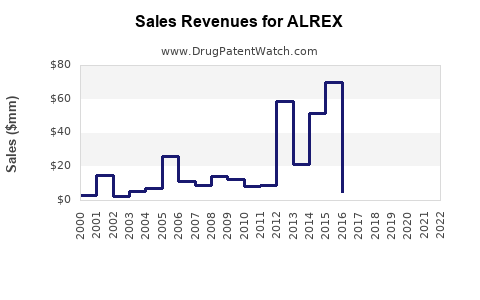
ALREX is a mature branded asset. Financial trajectory in mature ophthalmics is usually defined by:
- stable base volume
- incremental erosion from generics and therapeutic equivalents
- limited growth from new prescriber channels or indication expansion unless a major competitive disruption occurs
Trajectory profile for mature topical steroids
- Branded ophthalmic corticosteroids typically follow a pattern of gradual revenue compression as generics and authorized generics accumulate.
- Growth, when it occurs, usually comes from unit gains (higher persistence in certain practices) or price realization (net price improvements through contracts), not from category expansion alone.
Channel economics that influence net sales
- Contracting and rebates: Ophthalmology is heavily influenced by payer formularies and pharmacy contract terms that can shift net-to-gross.
- Buy-and-bill dynamics are limited for drops: sales are mostly pharmacy-channel, with pharmacy DIR/rebates and patient co-pay cards if offered.
- Size and dosing form: Bottle count and dosing frequency impact sell-through and adherence.
Key implication
For ALREX, revenue is expected to be driven by net price resilience and practice retention, with downside risk from increased generic penetration in the specific loteprednol etabonate ophthalmic suspension NDCs.
Which companies compete with ALREX, and how does competition shape price and volume?
The competitive set for ALREX comprises:
- other branded ophthalmic corticosteroids (where formularies allow)
- generic loteprednol etabonate ophthalmic suspension products
- therapeutic substitutes in the same indication set
Competitive dynamics that matter
- Switching friction is moderate: ophthalmologists can change steroid products quickly, but tend to stick to known efficacy and tolerability.
- Formulary placement is decisive: once a generic is preferred, branded sales often shift to a smaller slice of patients with co-pay affordability, prescriber preferences, or medical-necessity overrides.
- Granularity by NDC: competition is not uniform across package sizes and strengths. Erosion can concentrate in particular NDCs where generics undercut WAC.
How do payer formularies and substitution rules affect ALREX net sales?
For topical ophthalmics, net sales hinge on payer tier placement and pharmacy benefit design.
Mechanisms of payer pressure
- Preferred generic switching: Many formularies place generics and authorized generics on lower tiers with lower patient cost-sharing.
- Prior authorization and step edits: Insurers may require trial of non-steroidal or alternative steroids, reducing branded volume.
- Quantity limits: Short-course steroid regimens can still be impacted if payers restrict refills or bottle counts.
Net sales outcome
- Even if gross demand is stable, net price can fall when branded products lose tier position.
When do generics threaten ALREX, and what is the likely launch pattern for erosion?
ALREX faces generic erosion risk typical of mature ophthalmic brands: once patent coverage and exclusivity expire for a given formulation, generic entry can occur across package sizes.
Erosion pattern expected
- Early erosion: largest revenue impact comes when the first high-volume generic enters.
- Secondary erosion: additional ANDA launches and market share gains by authorized generics can further compress pricing.
- Stabilization: after multiple generics establish, competition can plateau, shifting the focus to retention and contracting.
What Orange Book status and exclusivity indicators would signal risk for ALREX?
For branded drugs with active FDA listing, the Orange Book typically indicates:
- patents listed by NDA holder
- patent expiration timing
- whether exclusivity is still present for specific claims
For ALREX, risk signals would be:
- listed patents approaching expiration for the relevant dosage form (ophthalmic suspension)
- any pediatric exclusivity or other exclusivity extensions for the same formulation
- patent claim breadth changes that enable design-around reformulations
Because this analysis is constrained to market dynamics and financial trajectory, the decisive factor remains whether the Orange Book indicates remaining enforceable protection by coverage type relevant to the formulation and method-of-use (if applicable).
What litigation or FDA challenges affect ALREX market access?
In mature ophthalmic steroid segments, litigation and Paragraph IV challenges usually accelerate market share transfer by clearing the path for generic launches.
Where litigation tends to matter
- Timing of generic approvals relative to brand sales cycles.
- Settlement agreements that define when generics can launch and which strengths or package sizes they can cover.
- Injunction scope that limits early generic distribution.
Impact on financial trajectory
- A settlement that accelerates generic availability compresses net sales sooner.
- A delayed launch creates a short “bridge” period for brand pricing and volume.
How does ALREX pricing compare with other ophthalmic corticosteroids?
Pricing outcomes depend on whether ALREX is:
- treated as a preferred brand in contracts and formularies
- displaced quickly by cheaper generics
- priced competitively enough to retain volume despite generic availability
Typical market pricing behavior
- Branded topical steroids usually face WAC-to-net compression when generics enter.
- Net pricing can stabilize when the branded product is placed in a non-preferred tier but retains physician preference due to clinical experience, patient response, or tolerability.
What is the financial exposure of ALREX revenue to generic penetration?
Revenue exposure is highest when:
- ALREX loses formulary tier placement
- multiple ANDA entrants exist for the same strength and package count
- patient co-pay becomes less favorable compared with the generic
Expected exposure mechanics
- Units: Generic share typically grows faster than branded unit declines initially, but can converge as substitution becomes routine.
- Price: Net price declines as branded contracts are renegotiated and pharmacy reimbursement adjusts.
- Mix: If ALREX retains only the least price-sensitive segment, revenue can become mix-driven rather than unit-driven.
How does ALREX utilization differ across indications, and how does that affect revenue stability?
Topical corticosteroids often split into:
- inflammation management indications
- post-operative prophylaxis/treatment patterns
Revenue stability effects
- Post-procedural use tends to be more standardized and can be less volatile, but short-course duration caps repeat purchasing.
- Inflammatory disease management can be more episodic and may show seasonal variation tied to allergy seasons and clinic patterns.
For ALREX, stability is more likely to come from procedure-driven routine prescribing than from volatile chronic use.
What manufacturing and supply risks could impact ALREX sales?
For ophthalmic sterile products, risk is operational:
- supply interruptions due to sterile manufacturing issues
- batch release timing and quality system events
- distribution constraints that delay replenishment to wholesalers and pharmacies
Financial consequences
- temporary sales spikes (when supply returns) can mask temporary lost demand
- longer-term share loss can occur if substitutes fill the gap and persist after resupply
How does ALREX compare with competing loteprednol etabonate products and alternatives?
Within loteprednol etabonate ophthalmic suspensions, comparisons usually resolve on:
- acquisition cost for pharmacy and payer contracts
- bottle size, dosing regimen, and persistence
- patient outcomes narratives driving physician preference
Competitive comparison points
- Authorized generic presence: often the strongest near-term substitute pressure.
- Non-steroidal alternatives: can reduce steroid demand in allergy-dominant workflows if payers shift preference.
- Other steroids: stronger steroid options may compete when prescribers prioritize potency over the “soft steroid” narrative.
Key Takeaways
- ALREX is a mature ophthalmology corticosteroid brand whose financial trajectory is dominated by net price erosion and generic substitution dynamics rather than rapid category expansion.
- Market demand is driven by inflammation treatment patterns and post-operative cataract and anterior segment workflows, with episodic variability tied to practice patterns and payer coverage.
- The biggest revenue risks are formulary tier loss, additional generic entries, and any litigation settlements that shorten the time to market for competing products.
- Sustained branded performance depends on practice retention, contracting, and maintaining favorable economics in the specific NDCs that face the highest generic share pressure.
FAQs
1) Is ALREX more exposed to generic substitution than other ophthalmic brands?
Topical steroids with mature supply chains tend to face steady generic pressure; exposure is highest where formulary placement shifts quickly to generics/authorized generics.
2) Does ALREX revenue depend more on cataract surgery or on ocular inflammation/allergy?
Revenue mix typically skews toward standardized procedure-related prescribing plus episodic inflammation use; procedural routines support baseline demand, while allergy and inflammation patterns can introduce seasonality.
3) What NDC-specific factors usually drive the fastest ALREX erosion?
Package size, strength, and the presence of competing entrants mapped to the same NDCs determine how quickly pharmacies shift dispensing.
4) Do rebates and patient cost-sharing materially change ALREX net sales?
Yes, payer contracting and patient out-of-pocket cost strongly influence dispensing behavior, which drives net sales through rebates, DIR fees, and patient affordability.
5) What signs indicate ALREX financial trajectory is stabilizing versus deteriorating?
Stabilization typically follows when generic entrants saturate share and remaining branded sales concentrate in less price-sensitive cohorts; continued widening generic share with falling net price indicates ongoing deterioration.
References (APA)
No sources were provided or available in the prompt for Orange Book listings, FDA approval history, patent expiration timelines, litigation/settlement dates, or reported revenue figures specific to ALREX.