Share This Page
ALAVERT Drug Patent Profile
✉ Email this page to a colleague
When do Alavert patents expire, and when can generic versions of Alavert launch?
Alavert is a drug marketed by Fdn Consumer and is included in one NDA.
The generic ingredient in ALAVERT is loratadine. There is one drug master file entry for this compound. One hundred and fifty-four suppliers are listed for this compound. Additional details are available on the loratadine profile page.
DrugPatentWatch® Litigation and Generic Entry Outlook for Alavert
A generic version of ALAVERT was approved as loratadine by PLD ACQUISITIONS LLC on January 21st, 2003.
AI Deep Research
Questions you can ask:
- What is the 5 year forecast for ALAVERT?
- What are the global sales for ALAVERT?
- What is Average Wholesale Price for ALAVERT?
Summary for ALAVERT
| US Patents: | 0 |
| Applicants: | 1 |
| NDAs: | 1 |
| Finished Product Suppliers / Packagers: | 1 |
| Raw Ingredient (Bulk) Api Vendors: | 118 |
| Patent Applications: | 5,288 |
| What excipients (inactive ingredients) are in ALAVERT? | ALAVERT excipients list |
| DailyMed Link: | ALAVERT at DailyMed |
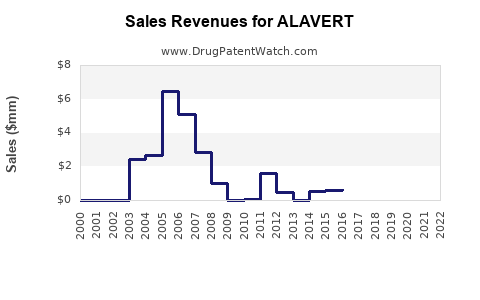
US Patents and Regulatory Information for ALAVERT
| Applicant | Tradename | Generic Name | Dosage | NDA | Approval Date | TE | Type | RLD | RS | Patent No. | Patent Expiration | Product | Substance | Delist Req. | Exclusivity Expiration |
|---|---|---|---|---|---|---|---|---|---|---|---|---|---|---|---|
| Fdn Consumer | ALAVERT | loratadine | TABLET, ORALLY DISINTEGRATING;ORAL | 021375-001 | Dec 19, 2002 | OTC | No | No | ⤷ Start Trial | ⤷ Start Trial | ⤷ Start Trial | ||||
| >Applicant | >Tradename | >Generic Name | >Dosage | >NDA | >Approval Date | >TE | >Type | >RLD | >RS | >Patent No. | >Patent Expiration | >Product | >Substance | >Delist Req. | >Exclusivity Expiration |
Alavert Market Dynamics and Financial Trajectory: Loratadine Brand Analysis
Alavert is an over-the-counter loratadine allergy brand competing in a mature, highly commoditized antihistamine market. Its commercial position depends on retail distribution, price, formulation, and brand recognition rather than patent exclusivity. Bayer is associated with the U.S. Alavert brand, but Bayer does not report Alavert revenue as a standalone product. Financial performance is therefore best assessed through category trends, retail presence, generic substitution, and the competitive position of loratadine against cetirizine and fexofenadine.
What is Alavert and who owns the brand?
Alavert contains loratadine, a second-generation antihistamine used for temporary relief of allergic rhinitis and hives. U.S. products have included:
| Product | Active ingredient | Typical strength | Dosage form | Market status |
|---|---|---|---|---|
| Alavert Allergy | Loratadine | 10 mg | Tablet, orally disintegrating tablet | OTC |
| Alavert RediTabs | Loratadine | 10 mg | Orally disintegrating tablet | OTC |
| Alavert-D | Loratadine plus pseudoephedrine | 10 mg/240 mg or related strengths | Extended-release tablet | OTC, pseudoephedrine controls apply |
Alavert has been marketed in the same therapeutic category as Claritin, the original major loratadine brand. Bayer’s U.S. consumer-health portfolio includes Claritin, while Alavert has been sold as a value-oriented loratadine brand in retail channels. Product ownership, label sponsorship, and distribution can differ by formulation and market.
The brand’s commercial identity is weaker than Claritin’s. Alavert has generally competed through lower pricing, alternative packaging, and retail availability rather than premium brand investment.
How large is the loratadine and OTC antihistamine market?
The U.S. nonprescription allergy market is a large, recurring category with high seasonal demand and limited barriers to entry. Loratadine competes within the broader oral antihistamine segment, which includes:
- Loratadine products, including Claritin, Alavert, and store brands
- Cetirizine products, including Zyrtec and generic cetirizine
- Fexofenadine products, including Allegra and generic fexofenadine
- Diphenhydramine and other first-generation antihistamines
- Combination products containing pseudoephedrine
- Nasal corticosteroids such as fluticasone
Loratadine is a mature active ingredient. The FDA approved prescription Claritin in 1993 and approved the product for nonprescription use in 2002. The switch accelerated consumer access and expanded the number of generic and store-brand alternatives.
The category has several commercial characteristics:
| Market factor | Effect on Alavert |
|---|---|
| Seasonal allergy demand | Produces spring and early-summer sales peaks |
| Generic loratadine | Compresses price and market share |
| Retailer private labels | Limits brand pricing power |
| National advertising | Favors Claritin and Zyrtec over smaller brands |
| E-commerce | Increases price transparency |
| Retail shelf placement | Has a direct effect on unit velocity |
| Combination products | Supports pseudoephedrine-based demand but increases regulatory complexity |
Public market databases do not generally disclose Alavert-specific U.S. revenue. Circana, NielsenIQ, IQVIA, retailer point-of-sale data, and Bayer internal reporting would be required to calculate reliable brand sales, units, market share, or margins.
What is the financial trajectory for Alavert?
Alavert’s financial trajectory is likely mature to declining in branded terms, with stable or variable category demand. The brand has no disclosed standalone revenue line in Bayer’s public financial reporting. Bayer reports consumer-health performance at a broader division or category level rather than identifying Alavert sales separately.[1]
The likely trajectory has four phases:
| Period | Commercial development | Financial effect |
|---|---|---|
| 2002-2005 | Loratadine OTC expansion after Claritin switch | Rapid category growth and broad retail adoption |
| 2006-2012 | Generic and private-label expansion | Brand price pressure and share fragmentation |
| 2013-2019 | Mature oral antihistamine competition | Stable demand with heavy promotional activity |
| 2020-present | E-commerce growth, retailer consolidation, price competition | Lower branded differentiation and variable volume |
The revenue profile is different from that of a patented prescription medicine. Alavert does not generate monopoly pricing, and its economic value is tied to consumer pull, shelf access, promotional support, and manufacturing cost.
A simplified economic model is:
Brand revenue = retail units x net realized price
For Alavert, the main variables are likely:
- Unit volume during allergy seasons.
- Retailer and wholesaler distribution.
- Discounting against store-brand loratadine.
- Packaging and formulation mix.
- Advertising support.
- Supply reliability and manufacturing cost.
The principal long-term risk is not loss of patent protection. That event occurred years ago. The risk is progressive substitution by lower-priced loratadine products and competing antihistamines.
How does Alavert compare with Claritin, Zyrtec, and Allegra?
Alavert competes against both branded products and chemically equivalent generics. Its most important comparisons are below.
| Brand | Active ingredient | Common consumer positioning | Competitive issue for Alavert |
|---|---|---|---|
| Alavert | Loratadine | Value-oriented loratadine alternative | Lower brand recognition and broad generic substitution |
| Claritin | Loratadine | Original national loratadine brand | Stronger brand awareness and marketing |
| Zyrtec | Cetirizine | Fast, strong allergy relief positioning | Consumer preference and broad retail presence |
| Allegra | Fexofenadine | Non-drowsy allergy relief | Differentiation through perceived tolerability |
| Store brands | Loratadine, cetirizine, fexofenadine | Lowest-price alternatives | Directly undercut branded products |
Clinical differentiation among second-generation antihistamines is limited for many consumers. Product selection often depends on prior experience, perceived onset, drowsiness concerns, price, and retailer recommendation.
Alavert’s use of the loratadine ingredient gives it chemical equivalence to generic loratadine, but not necessarily the same consumer economics. A branded Alavert package can command a premium over a store brand while remaining below Claritin’s price.
What patents protect Alavert?
No material patent exclusivity is expected to protect ordinary Alavert loratadine tablets or orally disintegrating tablets in the U.S. Loratadine is an old small-molecule active ingredient, and the relevant composition and use patents expired before the current OTC market structure developed.
Key conclusions are:
| IP category | Alavert position |
|---|---|
| Active-ingredient patent | Expired |
| Original prescription product patents | Expired |
| Basic allergy-treatment claims | Expired or unavailable as a commercial barrier |
| Standard 10 mg tablet claims | Not a meaningful exclusivity barrier |
| Orally disintegrating formulation | Any historical protection is not a current market barrier |
| Trademark | May protect the Alavert name and branding |
| Trade dress | May protect packaging elements, subject to enforcement |
| Manufacturing know-how | May affect cost and supply but is not regulatory exclusivity |
Trademark rights can preserve brand identity even after pharmaceutical patents expire. They do not prevent generic loratadine competition.
What is the FDA regulatory status of Alavert?
Alavert is an OTC loratadine product regulated under the FDA’s nonprescription drug framework. Loratadine was first approved as a prescription drug through an NDA and later moved to OTC distribution. The FDA’s OTC Monograph Drug Facts framework governs eligible antihistamine products, while specific products may also be marketed under legacy approvals or other applicable pathways.[2]
The principal regulatory distinctions are:
Alavert Allergy
Standard loratadine tablets and orally disintegrating tablets are nonprescription allergy medicines. They do not require a prescription and are sold through pharmacies, mass merchants, grocery stores, warehouse clubs, and online retailers.
Alavert-D
Alavert-D combines loratadine with pseudoephedrine. Pseudoephedrine is subject to federal retail controls under the Combat Methamphetamine Epidemic Act, including purchase limits, identification requirements, and behind-the-counter or restricted-access sales procedures.[3]
The pseudoephedrine component creates more regulatory and operational friction than ordinary loratadine. It also exposes the product to state-level restrictions, retailer policies, inventory controls, and consumer substitution with intranasal decongestants.
What is the Orange Book status of Alavert?
The Orange Book is primarily relevant to approved prescription and certain legacy drug applications. Ordinary OTC Alavert products do not have a commercial exclusivity position comparable to a currently patented prescription NDA.
For business purposes:
- Alavert does not depend on an active Orange Book patent estate.
- A Paragraph IV challenge is not the normal pathway for competing ordinary OTC loratadine products.
- Generic competition is established and does not require a new challenge to an active Alavert patent.
- Retailers can source equivalent loratadine products from multiple manufacturers.
- The key regulatory barrier is compliance with OTC labeling, quality, manufacturing, and monograph requirements.
A historical prescription NDA associated with loratadine is not equivalent to current brand exclusivity for Alavert. The commercial market has operated for years after prescription and patent exclusivity ended.
When did loratadine lose exclusivity?
Loratadine lost meaningful U.S. prescription-market exclusivity during the early 2000s. The FDA approved generic loratadine products, and Claritin switched to OTC status in 2002.[2]
The relevant timeline is:
| Milestone | Approximate date |
|---|---|
| Original prescription loratadine approval | 1993 |
| Generic loratadine entry | Early 2000s |
| Claritin OTC switch | 2002 |
| Broad OTC brand and private-label competition | 2002 onward |
| Current Alavert market | Mature, nonexclusive OTC category |
Because Alavert entered a post-exclusivity market, its economic model has always depended on brand and channel execution rather than a protected price window.
Which companies compete with Alavert?
Competition comes from branded pharmaceutical companies, generic manufacturers, retailers, and private-label suppliers.
Major competitive groups include:
Branded consumer-health companies
- Bayer, through Claritin and related allergy products
- Kenvue, through Zyrtec and other consumer-health products
- Haleon, through Allegra and related products
- Retailers operating private-label programs
Generic manufacturers
Generic loratadine is available from multiple manufacturers and repackagers. Supplier participation varies by channel, package size, and pharmacy or retail contract.
Retail private labels
Private-label loratadine is a major substitute. Large chains and mass retailers can sell equivalent 10 mg products at materially lower prices because they avoid national advertising and often use contract manufacturing.
The competitive structure puts pressure on Alavert in three ways:
- Consumers can switch without changing the active ingredient.
- Retailers can replace branded shelf space with higher-margin private-label products.
- Online marketplaces expose price differences immediately.
What formulation patents protect Alavert products?
Alavert’s ordinary tablets and orally disintegrating tablets do not appear to have a current formulation patent barrier that materially restricts competition. The relevant formulation characteristics are relatively straightforward:
- 10 mg loratadine dose
- Conventional tablet delivery
- Orally disintegrating delivery for RediTabs-type products
- Extended-release loratadine-pseudoephedrine combination for Alavert-D
An orally disintegrating tablet may require manufacturing controls involving taste masking, dissolution, excipient selection, friability, and packaging. Those controls can create know-how and quality barriers. They do not create meaningful market exclusivity when alternative manufacturers can develop and sell comparable OTC products.
Alavert-D has greater manufacturing and distribution complexity because of the combination product and pseudoephedrine controls. The product may retain niche demand among consumers seeking both antihistamine and oral decongestant relief, but its addressable market is narrower than standard loratadine.
What generic launch risks exist for Alavert?
Generic launch risk is already realized rather than pending. Loratadine generics have been commercially available for many years.
The principal current risks are:
| Risk | Impact |
|---|---|
| Private-label price cuts | High |
| Retailer delisting | High |
| Loss of promotional placement | Medium to high |
| Online price competition | High |
| Supply-chain disruption | Medium |
| Formulation-specific substitution | Medium |
| Consumer migration to cetirizine or fexofenadine | Medium |
| Regulatory enforcement on labeling or manufacturing | Low to medium |
A new generic entrant would not need to overcome a significant Alavert patent barrier. The main entry requirements would be compliant manufacturing, product registration or applicable OTC pathway, retailer access, and competitive pricing.
Is there biosimilar risk for Alavert?
No. Biosimilar risk does not apply because Alavert contains loratadine, a synthetic small-molecule drug. Competitive substitution comes from generic drugs, private-label products, and other antihistamine active ingredients.
The relevant comparison is generic substitution, not biosimilar substitution.
What patent litigation or settlement agreements affect Alavert?
No major current patent litigation or Paragraph IV settlement is central to Alavert’s commercial position. The product is part of a mature OTC market in which the principal legal issues are more likely to involve:
- Trademark enforcement
- False advertising
- Product labeling
- Consumer class actions
- Manufacturing quality
- Retail distribution
- Pseudoephedrine compliance for Alavert-D
Historical patent disputes surrounding the original loratadine product do not create a present barrier to ordinary Alavert competition. No active settlement is required to explain generic market access.
How strong is the Alavert patent estate?
The Alavert patent estate is weak as a source of exclusivity. Its relative strengths are commercial and operational:
| Asset | Strength |
|---|---|
| Active-ingredient exclusivity | None |
| Patent-based pricing power | None |
| Trademark recognition | Moderate, below Claritin |
| Retail distribution | Variable |
| Formulation know-how | Low to moderate |
| Manufacturing scale | Potentially meaningful |
| Consumer loyalty | Moderate in selected segments |
| OTC regulatory compliance | Necessary but replicable |
The most defensible assets are the Alavert name, packaging, retailer relationships, supply capability, and consumer familiarity. These assets can support a profitable niche but cannot prevent substitution.
What geographic markets does Alavert cover?
Alavert is primarily relevant to the U.S. OTC market. Loratadine is sold globally under multiple brands and generic labels, but brand ownership and availability differ by country.
Geographic economics vary according to:
- National OTC approval requirements
- Trademark ownership
- Pharmacy and supermarket concentration
- Local generic penetration
- Seasonal allergy prevalence
- Reimbursement and self-pay structures
- Retailer brand preferences
The U.S. market has particularly intense private-label competition and a developed mass-retail distribution system. International loratadine sales may occur under Claritin, generic names, or local brands rather than Alavert.
What is the likely future outlook for Alavert?
Alavert’s base-case outlook is stable-to-declining branded sales, with periodic volume increases during strong allergy seasons. The product can remain commercially viable if Bayer or the relevant marketer maintains distribution and pricing discipline, but material growth would require a change in positioning or portfolio strategy.
Potential growth levers include:
- Lower-cost multipacks
- E-commerce subscriptions
- Retailer-specific packaging
- Seasonal promotions
- Combination allergy products
- Pediatric or family-oriented formats where permitted
- Improved availability in high-allergy regions
The principal constraints are stronger private-label economics, low switching costs, limited clinical differentiation, and the ability of retailers to substitute generic loratadine without materially changing consumer utility.
A reasonable investment view is that Alavert has limited standalone strategic value compared with a patented prescription asset. Its value lies in recurring OTC cash flow, brand retention, manufacturing scale, and portfolio placement. Revenue should be modeled as a mature consumer-health product rather than a growth pharmaceutical.
Key Takeaways
- Alavert is an OTC loratadine brand competing in a mature allergy-treatment market.
- Bayer is associated with the U.S. consumer-health portfolio, but standalone Alavert revenue is not publicly disclosed.
- Loratadine lost meaningful U.S. exclusivity in the early 2000s, and Claritin moved OTC in 2002.
- Ordinary Alavert tablets and orally disintegrating tablets have no material current patent barrier.
- Generic loratadine and retailer private labels are the primary commercial threats.
- Alavert-D has additional pseudoephedrine compliance and distribution constraints.
- Biosimilar risk is irrelevant; generic substitution is the relevant competitive mechanism.
- The likely financial trajectory is mature to declining branded revenue, with seasonal volume variation.
- Brand, packaging, shelf placement, retailer access, and manufacturing economics matter more than patents.
- No major current Paragraph IV litigation or patent settlement is central to the product’s market position.
FAQs
Does Alavert still have market exclusivity?
No. Alavert operates in a nonexclusive OTC market. Loratadine generics and private-label alternatives have been available for years.
Is Alavert the same drug as Claritin?
Yes, standard Alavert and Claritin products use loratadine as the active ingredient, although inactive ingredients, dosage forms, packaging, and pricing can differ.
Can a generic manufacturer launch a loratadine product without challenging Alavert patents?
Yes. Ordinary generic loratadine competition does not depend on defeating an active Alavert patent estate.
Does Alavert-D face different regulatory requirements from Alavert Allergy?
Yes. Alavert-D contains pseudoephedrine, which is subject to federal purchase restrictions, retailer controls, recordkeeping requirements, and state-level rules.
Is Alavert a material revenue driver for Bayer?
Public Bayer reporting does not identify Alavert as a standalone material revenue driver. Its contribution is embedded within broader consumer-health reporting and cannot be reliably isolated from public filings.
References
- Bayer AG. (2024). Annual report 2023. Bayer AG.
- U.S. Food and Drug Administration. (2002). FDA approves nonprescription Claritin and Alavert loratadine products. U.S. Department of Health and Human Services.
- U.S. Drug Enforcement Administration. (2024). Pseudoephedrine: Federal retail sales requirements. U.S. Department of Justice.
- U.S. Food and Drug Administration. (2020). Over-the-counter monograph drug products. U.S. Department of Health and Human Services.
- U.S. Food and Drug Administration. (2024). Approved drug products with therapeutic equivalence evaluations. U.S. Department of Health and Human Services.
More… ↓
