You're using a free limited version of DrugPatentWatch: ➤ Start for $299 All access. No Commitment.

Last Updated: December 31, 2025

NASCOBAL Drug Patent Profile


✉ Email this page to a colleague

« Back to Dashboard


When do Nascobal patents expire, and what generic alternatives are available?

Nascobal is a drug marketed by Endo Operations and is included in two NDAs.

The generic ingredient in NASCOBAL is cyanocobalamin. There are nine drug master file entries for this compound. Twenty-four suppliers are listed for this compound. Additional details are available on the cyanocobalamin profile page.

DrugPatentWatch® Litigation and Generic Entry Outlook for Nascobal

A generic version of NASCOBAL was approved as cyanocobalamin by PADAGIS ISRAEL on September 9th, 2020.

  Get Started Free

AI Deep Research
Questions you can ask:
  • What is the 5 year forecast for NASCOBAL?
  • What are the global sales for NASCOBAL?
  • What is Average Wholesale Price for NASCOBAL?
Drug patent expirations by year for NASCOBAL
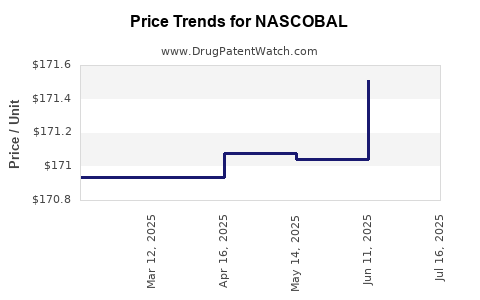
Drug Prices for NASCOBAL

See drug prices for NASCOBAL

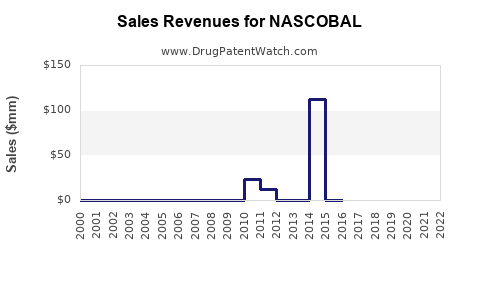
Drug Sales Revenue Trends for NASCOBAL

See drug sales revenues for NASCOBAL

Recent Clinical Trials for NASCOBAL

Identify potential brand extensions & 505(b)(2) entrants

SponsorPhase
Swedish Orphan BiovitrumPhase 1

See all NASCOBAL clinical trials

Pharmacology for NASCOBAL
Drug ClassVitamin B12
Paragraph IV (Patent) Challenges for NASCOBAL
Tradename Dosage Ingredient Strength NDA ANDAs Submitted Submissiondate
NASCOBAL Nasal Spray cyanocobalamin 500 mcg/spray 021642 1 2017-04-28

US Patents and Regulatory Information for NASCOBAL

Applicant Tradename Generic Name Dosage NDA Approval Date TE Type RLD RS Patent No. Patent Expiration Product Substance Delist Req. Exclusivity Expiration
Endo Operations NASCOBAL cyanocobalamin GEL, METERED;NASAL 019722-001 Nov 5, 1996 DISCN No No ⤷  Get Started Free ⤷  Get Started Free ⤷  Get Started Free
Endo Operations NASCOBAL cyanocobalamin SPRAY, METERED;NASAL 021642-001 Jan 31, 2005 DISCN Yes No ⤷  Get Started Free ⤷  Get Started Free ⤷  Get Started Free
>Applicant >Tradename >Generic Name >Dosage >NDA >Approval Date >TE >Type >RLD >RS >Patent No. >Patent Expiration >Product >Substance >Delist Req. >Exclusivity Expiration

Expired US Patents for NASCOBAL

Applicant Tradename Generic Name Dosage NDA Approval Date Patent No. Patent Expiration
Endo Operations NASCOBAL cyanocobalamin GEL, METERED;NASAL 019722-001 Nov 5, 1996 ⤷  Get Started Free ⤷  Get Started Free
Endo Operations NASCOBAL cyanocobalamin SPRAY, METERED;NASAL 021642-001 Jan 31, 2005 ⤷  Get Started Free ⤷  Get Started Free
>Applicant >Tradename >Generic Name >Dosage >NDA >Approval Date >Patent No. >Patent Expiration

International Patents for NASCOBAL

See the table below for patents covering NASCOBAL around the world.

Country Patent Number Title Estimated Expiration
Norway 865010 ⤷  Get Started Free
Norway 174182 ⤷  Get Started Free
Japan S62500789 ⤷  Get Started Free
Canada 1300014 COMPOSITIONS NASAUX CONTENANT LA VITAMINE B (NASAL COMPOSITIONS CONTAINING VITAMIN B) ⤷  Get Started Free
Spain 8800047 ⤷  Get Started Free
>Country >Patent Number >Title >Estimated Expiration

Market Dynamics and Financial Trajectory for NASCOBAL

Last updated: July 29, 2025

Introduction

NASCOBAL, a proprietary formulation of cyanocobalamin (Vitamin B12), has gained prominence within the global supplement and pharmaceutical sectors. The drug’s unique positioning addresses vitamin B12 deficiency—a widespread health issue—making it a significant player within the nutraceutical and pharmaceutical landscapes. This analysis examines the market dynamics shaping NASCOBAL's growth trajectory, alongside key financial considerations influencing its future prospects.

Market Overview

Vitamin B12 deficiency affects an estimated 1.5 billion individuals globally, driven by dietary habits, malabsorption syndromes, and increasing prevalence among aging populations [1]. Consequently, demand for effective supplementation like NASCOBAL remains robust. The market classifies into prescription-based pharmaceuticals and over-the-counter (OTC) supplements, with growing emphasis on bioavailability, safety, and ease of administration.

Key Drivers

  • Rising Incidence of Deficiency
    Age-related declines in absorption, vegetarian diets, and certain medical conditions have expanded the candidate pool for Vitamin B12 therapies.
  • Enhanced Bioavailability
    NASCOBAL’s formulation, optimized for absorption and retention, offers advantages over traditional cyanocobalamin products, aligning with consumer preferences for efficacious supplements.
  • Regulatory Support
    Regulations across the US, EU, and Asia increasingly recognize Vitamin B12's role in preventing neurological and hematological disorders, facilitating market entry and expansion.

Market Challenges

  • Market Saturation
    The proliferation of B12 supplements, both generic and branded, increases competition.
  • Pricing Pressures
    Mergers, generics, and healthcare cost-containment policies exert downward pressure on prices, potentially impacting revenue margins.
  • Clinical Evidence and Acceptance
    While well-established, ongoing clinical research is necessary to differentiate premium formulations like NASCOBAL amid increasing evidence-based expectations.

Competitive Landscape

Global vitamin B12 markets are dominated by multinationals such as Pfizer, Merck, and Schering-Plough, along with regional players. NASCOBAL's distinguishing features—such as patent protections, advanced delivery systems, and targeted marketing—are vital for delineating market share. Furthermore, biosimilar and innovative oral formulations are emerging competitors.

Key Market Segments

  • Oral Tablets and Capsules
    Majority of global sales due to convenience and cost-effectiveness.
  • Injectable Forms
    Preferred in severe deficiency or malabsorption cases; however, less favored for routine supplementation.
  • Nasal Sprays and Transdermal Patches
    Emerging delivery systems promising improved compliance.

Financial Trajectory

Research and Development (R&D)

Investment into R&D remains critical for NASCOBAL to sustain its competitive edge—particularly in developing proprietary delivery systems or combination therapies. According to industry reports, pharmaceutical companies allocate 15-20% of revenue to R&D, emphasizing innovation's role in future growth [2].

Market Penetration Strategies

  • Geographical Expansion
    Navigating regulatory landscapes tailored to key markets such as North America, Europe, and Asia-Pacific provides significant revenue opportunities.
  • Partnerships and Licensing
    Forming alliances with regional distributors accelerates market access and scaling.
  • Brand Differentiation
    Positioning NASCOBAL as a premium, bioavailable option leverages consumer trends favoring scientifically validated supplements.

Revenue Projections

Based on market growth rates, compounded annually at approximately 7%, and considering NASCOBAL’s differentiated positioning, revenues could expand significantly over the next five years. The global B12 market was valued at approximately USD 2.3 billion in 2022, with an expected CAGR of 6.5% from 2023 to 2030 [3]. If NASCOBAL captures even a modest 2-3% share of this market, its financial performance could be robust, particularly with strategic investments and market expansion.

Profitability Outlook

Margins depend on manufacturing efficiencies, regulatory costs, and competitive pricing. As a high-value, differentiated product, NASCOBAL could command premium pricing, bolstering profit margins. Additionally, economies of scale from broader adoption could offset initial R&D expenditures, enhancing overall profitability.

Regulatory and Economic Influences

Regulatory environments significantly impact NASCOBAL’s financial trajectory. Approvals from agencies like the FDA and EMA facilitate market entry, while ongoing compliance costs influence profitability. Regional economic conditions—such as healthcare expenditure trends, disease prevalence, and import/export tariffs—also shape market potential.

Emerging Trends and Future Outlook

  • Personalized Medicine
    Integration with blood screening and genetic testing could tailor supplementation regimens, expanding market applicability.
  • Technological Innovations
    Nanoparticle delivery systems and sustained-release formulations could improve efficacy, user compliance, and pricing strategies.
  • Digital Marketing and Direct-to-Consumer Campaigns
    Enhanced consumer engagement will augment market share and brand recognition.

Risk Factors

  • Regulatory Delays
    Prolonged approval processes may hinder timely market entry.
  • Market Volatility
    Economic downturns or policy shifts could reduce healthcare spending, impacting sales.
  • Intellectual Property Challenges
    Patent expirations and litigation pose potential risks to exclusivity and profitability.

Conclusion

The future of NASCOBAL hinges on robust clinical validation, strategic expansion into high-growth regions, and continuous innovation. With an increasing global emphasis on addressing vitamin B12 deficiency, its market dynamics suggest a promising growth trajectory. However, the competitive environment and regulatory complexities necessitate proactive strategies to secure and augment market share.


Key Takeaways

  • NASCOBAL’s market prospects are bolstered by the rising global prevalence of vitamin B12 deficiency and demand for bioavailable formulations.
  • Differentiation through advanced delivery systems and clinical validation remains essential to sustain competitive advantage.
  • Strategic global expansion, licensing agreements, and technological innovation are key drivers of financial growth.
  • Market risks include regulatory hurdles, competitive pressures, and variability in healthcare investments.
  • An emphasis on personalized treatment and innovative delivery mechanisms will shape future revenue streams.

FAQs

1. What makes NASCOBAL different from other Vitamin B12 supplements?
NASCOBAL utilizes proprietary bioavailability-enhanced formulations, including innovative delivery methods, offering improved absorption, retention, and patient compliance compared to traditional cyanocobalamin products.

2. Which markets present the most growth opportunities for NASCOBAL?
Emerging markets in Asia-Pacific, coupled with North America and Europe, represent substantial expansion potential due to high prevalence rates of deficiency and established healthcare infrastructure.

3. How does regulatory approval impact NASCOBAL's market success?
Regulatory approvals facilitate market access, ensure safety standards, and foster consumer trust. Delays or restrictions can impede product launch timelines and profitability.

4. What are the primary challenges facing NASCOBAL’s financial growth?
Market saturation, pricing pressures, and intense competition from both generic and innovative formulations pose significant challenges, necessitating continuous innovation and strategic marketing.

5. What technological innovations could influence NASCOBAL’s future sales?
Advancements such as sustained-release patches, nasal sprays, and nanoparticle delivery systems could enhance efficacy, compliance, and premium positioning, driving higher revenues.


References

[1] World Health Organization. (2022). Vitamin B12 deficiency: global prevalence and health implications. WHO.

[2] Deloitte. (2022). Global R&D Investment Trends in the Pharmaceutical Industry.

[3] Grand View Research. (2023). Vitamin B12 Market Size, Share & Trends Analysis.

More… ↓

⤷  Get Started Free

Make Better Decisions: Try a trial or see plans & pricing

Drugs may be covered by multiple patents or regulatory protections. All trademarks and applicant names are the property of their respective owners or licensors. Although great care is taken in the proper and correct provision of this service, thinkBiotech LLC does not accept any responsibility for possible consequences of errors or omissions in the provided data. The data presented herein is for information purposes only. There is no warranty that the data contained herein is error free. We do not provide individual investment advice. This service is not registered with any financial regulatory agency. The information we publish is educational only and based on our opinions plus our models. By using DrugPatentWatch you acknowledge that we do not provide personalized recommendations or advice. thinkBiotech performs no independent verification of facts as provided by public sources nor are attempts made to provide legal or investing advice. Any reliance on data provided herein is done solely at the discretion of the user. Users of this service are advised to seek professional advice and independent confirmation before considering acting on any of the provided information. thinkBiotech LLC reserves the right to amend, extend or withdraw any part or all of the offered service without notice.