Last updated: August 11, 2026
Omega-3-acid ethyl esters is a mature prescription lipid-lowering product class whose commercial peak was driven by GlaxoSmithKline's Lovaza in the United States. The market changed after generic entry, lower-cost alternatives, limited cardiovascular-outcome evidence, and competition from icosapent ethyl products such as Vascepa. Current commercial value is concentrated in low-cost generic prescriptions, while branded growth has shifted toward differentiated omega-3 formulations and outcome-supported products.
What is omega-3-acid ethyl esters and how is it used?
Omega-3-acid ethyl esters is a prescription mixture of ethyl esters derived primarily from eicosapentaenoic acid and docosahexaenoic acid. The principal branded product was Lovaza, formerly marketed as Omacor outside the United States.
The FDA-approved indication is treatment of severe hypertriglyceridemia, generally defined as triglycerides of at least 500 mg/dL, as an adjunct to diet. The usual dose is 4 grams daily, administered as four 1-gram capsules or two capsules twice daily. The product lowers triglycerides but can increase low-density lipoprotein cholesterol in some patients. The FDA label does not establish cardiovascular-event reduction for omega-3-acid ethyl esters [1].
| Product |
Active ingredient |
Main indication |
Commercial status |
| Lovaza |
Omega-3-acid ethyl esters |
Severe hypertriglyceridemia |
Branded product; generic competition |
| Omtryg |
Omega-3-acid ethyl esters |
Severe hypertriglyceridemia |
Limited commercial presence |
| Generic omega-3-acid ethyl esters |
Omega-3-acid ethyl esters |
Severe hypertriglyceridemia |
Multiple approved manufacturers |
| Vascepa |
Icosapent ethyl |
Hypertriglyceridemia and cardiovascular-risk reduction in specified patients |
Different active ingredient and patent estate |
| OTC fish-oil products |
Variable EPA and DHA mixtures |
Dietary supplementation |
Non-equivalent to FDA-approved prescription products |
Prescription omega-3 products are not interchangeable with over-the-counter fish oil. OTC products have different concentrations, purity standards, labeling, and clinical evidence.
When did Lovaza lose exclusivity and generic competition begin?
Lovaza lost its commercial protection in stages rather than through a single event. The core product patents expired or reached the end of their enforceable life before broad generic entry, while FDA regulatory exclusivity had already lapsed.
GlaxoSmithKline received FDA approval for Lovaza in 2004. The company later faced abbreviated new drug application, or ANDA, challenges from generic manufacturers. FDA approval of generic omega-3-acid ethyl ester products expanded materially around 2014, creating direct substitution pressure in the United States [1][2].
Key exclusivity timeline
| Event |
Approximate timing |
Commercial effect |
| Lovaza FDA approval |
2004 |
U.S. branded launch |
| Initial regulatory exclusivity period |
2004-2007 |
Delayed generic FDA approval |
| Paragraph IV patent challenges |
Late 2000s to early 2010s |
Litigation and launch uncertainty |
| Generic approvals and launches |
2014 onward |
Rapid price and share pressure |
| Broad generic availability |
Mid-2010s onward |
Lovaza shifted from growth product to legacy brand |
The exact patent position depended on the patent listed for the relevant NDA, the challenger, settlement terms, and whether a court found the patent valid, infringed, and enforceable. Patent expiration dates should be verified against the FDA Orange Book and individual court dockets because Orange Book listings and enforcement positions changed over time [2][3].
What patents protected Lovaza and omega-3-acid ethyl esters?
The original Lovaza estate relied on patents covering the composition, purity, concentration, and pharmaceutical use of omega-3 ethyl ester mixtures. The product did not depend on a single novel molecular entity patent because EPA and DHA are naturally occurring fatty acids converted into ethyl ester forms.
The commercial barriers were therefore based on formulation and product-quality characteristics:
- High concentrations of EPA and DHA ethyl esters.
- Purification and removal of contaminants.
- Defined ratios or ranges of omega-3 components.
- Soft-gel capsule formulations.
- Treatment of severe hypertriglyceridemia.
- Manufacturing processes for producing pharmaceutical-grade material.
U.S. Patent No. 5,502,077 was among the historically important patents associated with highly purified omega-3 formulations and was cited in the commercial patent history of Lovaza-related products. The broader estate included continuation and related patents, with enforceable terms affected by filing dates, patent-term adjustments, patent-term extension, and litigation outcomes.
How strong was the Lovaza patent estate?
The estate was commercially effective during the initial branded period but had limited long-term durability. Its strength was moderate for a natural-product-derived mixture because:
- The active ingredients were not compositionally unique in the way a synthetic small molecule is unique.
- Generic manufacturers could challenge formulation and purity claims.
- The product had limited differentiation from lower-cost fish-oil alternatives in the eyes of some prescribers.
- The absence of cardiovascular-outcome evidence weakened premium positioning against newer products.
- Generic manufacturers could enter once key claims expired or were successfully challenged.
The most defensible claims were product-quality and manufacturing claims that imposed technical requirements on generic applicants. Those claims were less effective once FDA-approved generic products demonstrated pharmaceutical equivalence and satisfied manufacturing standards.
What was the financial trajectory of Lovaza?
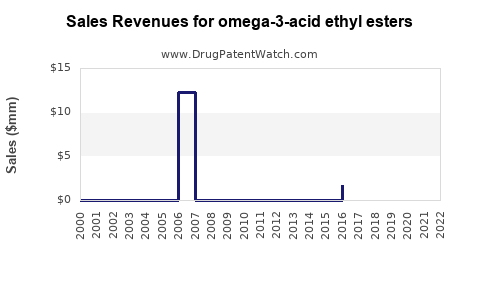
Lovaza became a blockbuster product before generic entry. U.S. sales approached or exceeded $1 billion annually during the product's peak period, depending on the reporting year and whether sales were reported as gross or net revenue. GlaxoSmithKline's annual reports showed a sharp decline after generic competition entered the market [4][5].
Commercial trajectory
| Phase |
Period |
Financial profile |
| Launch and adoption |
2004-2007 |
Rapid uptake for severe hypertriglyceridemia |
| Blockbuster phase |
Approximately 2008-2012 |
Annual sales around the billion-dollar level in peak years |
| Pre-generic erosion |
2012-2013 |
Pricing and litigation risk increased |
| Generic entry |
2014-2015 |
Branded revenue fell sharply |
| Mature generic phase |
2016 onward |
Low-price, high-volume market with limited brand economics |
The product's revenue model was exposed to a classic small-molecule patent cliff. Before generic launch, Lovaza benefited from branded pricing and physician familiarity. After entry, pharmacy benefit managers and wholesalers shifted volume toward generic products. The resulting price decline was faster than any underlying change in the prevalence of severe hypertriglyceridemia.
The commercial decline also reflected therapeutic substitution. Some patients moved to:
- Fenofibrate and other fibrates.
- High-intensity statins where appropriate.
- Icosapent ethyl.
- Other prescription omega-3 products.
- OTC fish-oil products, despite their lack of equivalence to the prescription product.
The largest financial risk was not demand elimination. It was loss of branded price capture.
How does omega-3-acid ethyl esters compare with Vascepa?
Vascepa contains icosapent ethyl, a purified ethyl ester of EPA. It is not the same active ingredient as omega-3-acid ethyl esters, which contain both EPA and DHA ethyl esters.
| Attribute |
Omega-3-acid ethyl esters |
Icosapent ethyl |
| Principal components |
EPA and DHA ethyl esters |
EPA ethyl ester |
| LDL effect |
May increase LDL cholesterol |
Generally no meaningful LDL increase |
| Cardiovascular-outcome evidence |
Not established for Lovaza indication |
REDUCE-IT supported cardiovascular-risk reduction in a defined population |
| Main FDA use |
Severe hypertriglyceridemia |
Hypertriglyceridemia and cardiovascular-risk reduction in eligible patients |
| Patent position |
Mature and largely generic |
Later-expiring branded estate |
| Pricing power |
Low after generic entry |
Higher while branded protection remains |
| Main commercial risk |
Generic substitution and OTC substitution |
Patent litigation, generic timing, and payer scrutiny |
The REDUCE-IT results materially changed the competitive landscape for prescription omega-3 products. In 2019, the FDA approved an expanded Vascepa indication to reduce cardiovascular risk in specified adults receiving statin therapy and having elevated triglycerides plus established cardiovascular disease or diabetes with additional risk factors [6][7].
Omega-3-acid ethyl esters retain a role in severe hypertriglyceridemia, especially where a low-cost prescription product is preferred. They have less ability to command a premium for cardiovascular prevention because the relevant outcome evidence is associated with icosapent ethyl rather than the EPA/DHA mixture.
What is the FDA and Orange Book status of omega-3-acid ethyl esters?
Lovaza is associated with FDA NDA 021654. The FDA approved generic versions through the ANDA pathway after the relevant exclusivity and patent barriers no longer prevented approval. The Orange Book historically listed Lovaza patents and related exclusivity information, while current listings should be assessed at the individual NDA and patent level [2].
The FDA regulatory position has four commercial implications:
- Generic products can rely on the reference product's established safety and efficacy framework.
- Generic manufacturers compete primarily on price, supply reliability, and contracting.
- New formulations require separate regulatory support if they make materially different claims.
- Cardiovascular-risk claims cannot be transferred from Vascepa to mixed EPA/DHA products without product-specific evidence.
Regulatory differentiation remains possible through capsule size, dosing convenience, formulation stability, tolerability, and supply quality. Those characteristics generally provide weaker protection than a new indication supported by prospective clinical-outcome data.
Which companies have challenged or competed with Lovaza?
Competition came from both generic manufacturers and branded prescription omega-3 companies. Companies associated with generic omega-3-acid ethyl ester products included Teva and other ANDA sponsors. The market also included manufacturers of alternative prescription omega-3 products, including Amarin for Vascepa and companies involved in Omtryg development and commercialization.
The strategic pattern was consistent:
- ANDA sponsors targeted price-sensitive pharmacy volume.
- Branded competitors sought differentiation through purified EPA, cardiovascular evidence, or formulation claims.
- Contract manufacturers competed on pharmaceutical-grade fish-oil supply.
- OTC companies competed for patients and physicians who viewed prescription and nonprescription fish oil as substitutes.
What manufacturing and intellectual-property barriers remain?
Manufacturing remains a meaningful barrier even after core patents expire. Pharmaceutical-grade omega-3 products require:
- Reliable marine or other lipid feedstock.
- Removal of oxidation products and environmental contaminants.
- Control of peroxide and anisidine values.
- Consistent EPA/DHA composition.
- Stable encapsulation and storage.
- Batch-to-batch quality testing.
- Compliance with FDA current good manufacturing practice requirements.
These requirements create operational barriers but do not necessarily create durable pricing power. A manufacturer with dependable raw-material sourcing can win contracts, yet the market remains vulnerable to commodity pricing and procurement pressure.
Geographic protection is also uneven. U.S. generic entry does not determine exclusivity in Europe, Japan, Canada, or emerging markets. Patent terms, regulatory exclusivity, prescription reimbursement, and OTC substitution rules vary by jurisdiction. The greatest commercial exposure historically was the U.S. market because of its high branded price and rapid generic substitution.
What generic entry risks exist for omega-3-acid ethyl esters?
The generic launch scenario is structurally unfavorable to branded omega-3-acid ethyl ester products:
| Risk |
Probability in mature markets |
Impact |
| Multiple ANDA approvals |
High |
Severe price erosion |
| Pharmacy substitution |
High |
Rapid volume migration |
| OTC substitution |
Moderate |
Demand leakage |
| Raw-material shortages |
Moderate |
Temporary supply disruption |
| New branded formulation entry |
Moderate |
Segment fragmentation |
| Cardiovascular-label expansion for mixed EPA/DHA |
Low without new trials |
Limited near-term risk |
A new branded product would need a defensible advantage such as superior tolerability, lower pill burden, improved stability, a novel delivery system, or clinical-outcome evidence. A simple reformulation of the same EPA/DHA mixture would face limited reimbursement leverage.
How does the market outlook affect investors and licensors?
The legacy omega-3-acid ethyl ester market is a low-growth generic opportunity rather than a conventional branded-growth platform. Attractive opportunities are more likely to involve:
- Cost-efficient pharmaceutical-grade manufacturing.
- Regional generic supply agreements.
- Private-label or authorized-generic distribution.
- Specialty formulations with lower capsule burden.
- Products targeting severe hypertriglyceridemia in underpenetrated markets.
- Combination products with differentiated regulatory claims.
Revenue exposure to the original Lovaza franchise is now structurally limited. The largest value drivers are manufacturing cost, market share, supply continuity, payer contracts, and regulatory execution rather than patent exclusivity.
Key Takeaways
- Lovaza established omega-3-acid ethyl esters as a blockbuster prescription product for severe hypertriglyceridemia.
- Generic entry beginning in the mid-2010s destroyed most branded pricing power.
- The core patent estate protected formulation, purity, use, and manufacturing characteristics rather than a novel molecular entity.
- Generic omega-3-acid ethyl esters remain commercially relevant, but the market is mature and price-driven.
- Vascepa is a direct therapeutic competitor but contains a different active ingredient, icosapent ethyl.
- Cardiovascular-outcome evidence supports Vascepa, not the mixed EPA/DHA omega-3-acid ethyl ester product.
- The remaining commercial barriers are manufacturing quality, supply reliability, formulation differentiation, and regulatory execution.
- Financial upside is more likely in efficient generic supply or differentiated next-generation products than in the legacy Lovaza brand.
FAQs
Is omega-3-acid ethyl esters the same as fish oil?
No. Prescription omega-3-acid ethyl esters are purified, standardized EPA/DHA ethyl esters manufactured under pharmaceutical controls. OTC fish-oil products vary in concentration, composition, oxidation, and quality.
Does omega-3-acid ethyl esters reduce cardiovascular events?
The FDA-approved Lovaza indication is severe hypertriglyceridemia. Cardiovascular-event reduction has not been established for the mixed EPA/DHA product in the same manner as for icosapent ethyl in the REDUCE-IT population.
Can generic omega-3-acid ethyl esters be substituted for Lovaza?
FDA-approved generic products are intended to be therapeutically equivalent to the reference product, subject to state substitution rules, payer policies, and the specific prescription.
Why did Lovaza sales fall after generic approval?
Generic substitution reduced branded volume and price. Pharmacy benefit managers and insurers shifted prescriptions toward lower-cost products, producing a rapid patent-cliff effect.
Is there still patent value in omega-3-acid ethyl ester formulations?
Yes, but value is concentrated in narrowly drafted formulation, purity, manufacturing, delivery, or new-use claims. Broad protection for the legacy product is limited after generic entry.
References
- U.S. Food and Drug Administration. (2023). Lovaza prescribing information.
- U.S. Food and Drug Administration. (2024). Approved drug products with therapeutic equivalence evaluations: Orange Book.
- U.S. Patent and Trademark Office. (2024). Patent term adjustment and patent term extension resources.
- GlaxoSmithKline plc. (2012). Annual report 2011.
- GlaxoSmithKline plc. (2015). Annual report 2014.
- U.S. Food and Drug Administration. (2019). FDA approves use of drug Vascepa to reduce cardiovascular risk in certain patients.
- Bhatt, D. L., Steg, P. G., Miller, M., Brinton, E. A., Jacobson, T. A., Ketchum, S. B., Doyle, R. T., Juliano, R. A., Jiao, L., Granowitz, C., Tardif, J.-C., & Ballantyne, C. M. (2019). Cardiovascular risk reduction with icosapent ethyl for hypertriglyceridemia. New England Journal of Medicine, 380(1), 11-22. https://doi.org/10.1056/NEJMoa1812792