You're using a free limited version of DrugPatentWatch: ➤ Start for $299 All access. No Commitment.

Last Updated: December 15, 2025

SCOPOLAMINE - Generic Drug Details


✉ Email this page to a colleague

« Back to Dashboard


What are the generic sources for scopolamine and what is the scope of freedom to operate?

Scopolamine is the generic ingredient in two branded drugs marketed by Actavis Labs Ut Inc, Amneal, Mylan Technologies, Padagis Us, Rhodes Pharms, Riconpharma Llc, Zydus Pharms, and Baxter Hlthcare Corp, and is included in eight NDAs. Additional information is available in the individual branded drug profile pages.

There are twenty-one drug master file entries for scopolamine. Eleven suppliers are listed for this compound.

Summary for SCOPOLAMINE
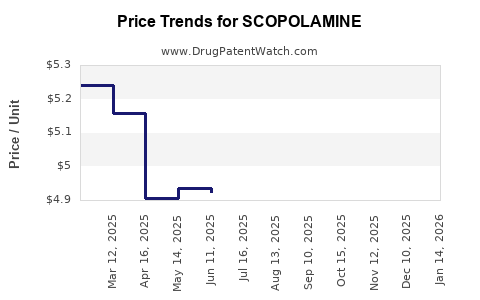
Drug Prices for SCOPOLAMINE

See drug prices for SCOPOLAMINE

Recent Clinical Trials for SCOPOLAMINE

Identify potential brand extensions & 505(b)(2) entrants

SponsorPhase
Texas Scottish Rite Hospital for ChildrenPHASE2
Zhejiang Cancer HospitalNA
Janssen Scientific Affairs, LLCPhase 1

See all SCOPOLAMINE clinical trials

Pharmacology for SCOPOLAMINE
Drug ClassAnticholinergic
Mechanism of ActionCholinergic Antagonists

US Patents and Regulatory Information for SCOPOLAMINE

Applicant Tradename Generic Name Dosage NDA Approval Date TE Type RLD RS Patent No. Patent Expiration Product Substance Delist Req. Exclusivity Expiration
Baxter Hlthcare Corp TRANSDERM SCOP scopolamine SYSTEM;TRANSDERMAL 017874-001 Approved Prior to Jan 1, 1982 AB RX Yes No ⤷  Get Started Free ⤷  Get Started Free ⤷  Get Started Free
Actavis Labs Ut Inc SCOPOLAMINE scopolamine SYSTEM;TRANSDERMAL 208769-001 Jan 10, 2022 AB RX No No ⤷  Get Started Free ⤷  Get Started Free ⤷  Get Started Free
Zydus Pharms SCOPOLAMINE scopolamine SYSTEM;TRANSDERMAL 217893-001 Aug 29, 2024 AB RX No No ⤷  Get Started Free ⤷  Get Started Free ⤷  Get Started Free
Mylan Technologies SCOPOLAMINE scopolamine SYSTEM;TRANSDERMAL 203753-001 Jun 19, 2019 AB RX No No ⤷  Get Started Free ⤷  Get Started Free ⤷  Get Started Free
>Applicant >Tradename >Generic Name >Dosage >NDA >Approval Date >TE >Type >RLD >RS >Patent No. >Patent Expiration >Product >Substance >Delist Req. >Exclusivity Expiration

Expired US Patents for SCOPOLAMINE

Applicant Tradename Generic Name Dosage NDA Approval Date Patent No. Patent Expiration
Baxter Hlthcare Corp TRANSDERM SCOP scopolamine SYSTEM;TRANSDERMAL 017874-001 Approved Prior to Jan 1, 1982 4,031,894 ⤷  Get Started Free
Baxter Hlthcare Corp TRANSDERM SCOP scopolamine SYSTEM;TRANSDERMAL 017874-001 Approved Prior to Jan 1, 1982 4,436,741 ⤷  Get Started Free
Baxter Hlthcare Corp TRANSDERM SCOP scopolamine SYSTEM;TRANSDERMAL 017874-001 Approved Prior to Jan 1, 1982 4,262,003 ⤷  Get Started Free
>Applicant >Tradename >Generic Name >Dosage >NDA >Approval Date >Patent No. >Patent Expiration

Market Dynamics and Financial Trajectory for Scopolamine in the Pharmaceutical Sector

Last updated: July 27, 2025

Introduction

Scopolamine, a tropane alkaloid derived primarily from Scopolamine alkaloid plants like Datura and Hyoscyamus, has historically been utilized for its anticholinergic properties. While originally employed for motion sickness and nausea, recent developments and expanding clinical applications have driven renewed interest in its pharmaceutical market potential. This article explores the dynamic market landscape, evolving therapeutic indications, regulatory factors, and financial trajectories shaping Scopolamine's role within the pharmaceutical industry.

Pharmacological Profile and Therapeutic Applications

Scopolamine functions as an anticholinergic agent, blocking acetylcholine receptors to exert effects on the central and peripheral nervous systems. Its most established application remains as a transdermal patch for motion sickness prophylaxis. Additionally, it finds use in postoperative nausea and vomiting (PONV), anticipatory nausea in chemotherapy, and as part of anesthesia management. Emerging research investigates its utility in neurodegenerative disorders, alcohol dependence, and psychiatric conditions, broadening its therapeutic scope and impacting overall market dynamics.

Market Size and Growth Drivers

Established Markets

The global motion sickness and PONV segments comprising Scopolamine use generated estimated revenues upward of US$400 million in 2022, with steady compound annual growth rates (CAGR) of approximately 4%. The widespread adoption of transdermal patches as non-invasive alternatives has sustained demand (IQVIA, 2022). The aging population, increased prevalence of nausea-related conditions, and advancing healthcare infrastructure in emerging markets further sustain growth.

Emerging Indications

Research into neuropsychiatric applications, such as depression and substance abuse disorders, is promising but remains in early phases. If validated through clinical trials, revenue streams could expand substantially, especially considering the limited options for these conditions, which currently have unmet therapeutic needs.

Key Market Drivers

  • Rising aging population increasing susceptibility to nausea and sensory disorders.
  • Advancements in drug delivery, notably transdermal patches enhancing compliance.
  • Growing research investments into novel indications.
  • Regulatory support in certain jurisdictions for new formulations and uses.

Competitive Landscape

Several pharmaceutical companies occupy the current market for Scopolamine-based products, primarily focusing on transdermal patches (e.g., Transderm Scop by Mylan). The market remains characterized by limited players, largely due to high regulatory entry barriers and complex manufacturing processes. Patent protections for certain formulations have historically limited generic competition; however, patent expirations, such as in the US (2014), have led to increased generic options, exerting downward pressure on prices.

The entry of biosimilars or new delivery systems could shift the competitive dynamics by offering more convenient or cost-effective alternatives. Additionally, biotech firms exploring innovative derivatives may disrupt traditional offerings.

Regulatory and Patent Considerations

Regulatory approval remains rigorous, especially for novel indications. The FDA has approved transdermal Scopolamine patches since the 1970s, with current indications remaining largely unchanged. However, exploring expanded uses requires extensive clinical trials and approval pathways, influencing the time-to-market and associated costs.

Patent landscapes show expiration of key formulations, leading to increased generics. Companies investing in innovative delivery mechanisms and new therapeutic applications can secure patent protections longer, ensuring market exclusivity and higher margins.

Financial Trajectory and Investment Outlook

Historical Financial Performance

The vanilla market for transdermal Scopolamine has been relatively stable but modest, with revenues peaking in traditional indications. Patent expirations and generic proliferation have contributed to price erosion, constraining growth but maintaining steady cash flows for dominant players.

Future Revenue Projections

If ongoing research validates alternative indications, such as treatment of neurodegeneration or substance dependence, revenue potential could expand significantly. Industry forecasts suggest compound annual growth rates (CAGR) of approximately 6-8% for the broader therapeutic areas containing Scopolamine, contingent on successful clinical development and regulatory approval.

Investment Risks and Opportunities

Risks include clinical trial failures, regulatory hurdles, and market penetration challenges from existing rivals, especially generics. Conversely, investments into novel formulations, such as nasal sprays or implantables, could command premium pricing and market share, offering lucrative prospects.

Market Challenges

  • Limited pipeline development compared to other neuroactive agents.
  • Side effects and safety concerns, such as dry mouth, blurred vision, and cognitive impairment, may hinder broader use.
  • Pricing pressures due to increased generic availability and healthcare cost containment efforts.
  • Regulatory hurdles for expanding indications necessitate rigorous, costly trials.

Strategic Outlook

Pharmaceutical companies pursuing Scopolamine’s potential should focus on:

  1. Innovative delivery systems (e.g., nasal sprays, long-acting implants) that enhance user compliance and efficacy.
  2. Repurposing strategies to establish efficacy in neuropsychiatric and addiction treatment markets.
  3. Partnerships and licensing agreements for research validation and market expansion.
  4. Navigating patent landscapes to maximize exclusivity periods and protect investments.

Conclusion

The pharmaceutical landscape for Scopolamine remains nuanced, characterized by stable traditional markets and significant upside potential through emerging indications and innovative formulations. Companies with strategic investments in research, regulatory navigation, and delivery innovations stand to capitalize on Clinically validated new uses and market expansion opportunities. Overall, the financial trajectory for Scopolamine exhibits moderate resilience with prospects for growth driven by unmet medical needs and technological advancements.


Key Takeaways

  • Market stability is driven by established use in motion sickness and PONV, with revenues around US$400 million annually.
  • Emerging indications such as neuropsychiatric disorders could unlock new revenue streams upon successful clinical validation.
  • Patent expirations have increased generic competition, exerting downward pressure on prices, but innovative delivery methods could mitigate this impact.
  • Investment opportunities predominantly revolve around novel formulations and expanded therapeutic indications.
  • Regulatory strategies and intellectual property protections will be critical in maintaining market share and profitability.

FAQs

1. What are the primary current uses of Scopolamine in the pharmaceutical industry?
Scopolamine is primarily used as a transdermal patch for preventing motion sickness and postoperative nausea and vomiting. Emerging research suggests potential applications in neuropsychiatric disorders, but these are not yet mainstream.

2. How does patent expiration affect the Scopolamine market?
Patent expirations open markets to generic competitors, reducing prices and profit margins for brand-name producers. This has increased competition in established indications, though innovation in delivery systems offers a pathway to regain exclusivity.

3. Are there significant risks associated with investing in Scopolamine-based therapies?
Yes. Clinical failures, regulatory delays, side effect profiles, and competitive pressure from generics pose risks. Additionally, shifting regulatory landscapes and limited pipeline diversification can impact long-term prospects.

4. What future opportunities exist for expanding Scopolamine's therapeutic applications?
Research into its use for neurodegenerative diseases, addiction treatment, and psychiatric disorders offers promising avenues. Successful clinical trials could lead to new approvals and revenue streams.

5. How do regulatory hurdles influence the financial prospects of Scopolamine developments?
Extensive clinical validation and approval processes require significant investment and time. Regulatory success is essential for market entry, especially for new indications, impacting timelines and potential financial returns.


Sources:
[1] IQVIA, "Global Pharmaceuticals Market Trends," 2022.
[2] U.S. Food and Drug Administration, "Drug Approvals and Patents," 2022.
[3] Market Research Future, "Pharma Market Analysis on Antiemetics," 2021.

More… ↓

⤷  Get Started Free

Make Better Decisions: Try a trial or see plans & pricing

Drugs may be covered by multiple patents or regulatory protections. All trademarks and applicant names are the property of their respective owners or licensors. Although great care is taken in the proper and correct provision of this service, thinkBiotech LLC does not accept any responsibility for possible consequences of errors or omissions in the provided data. The data presented herein is for information purposes only. There is no warranty that the data contained herein is error free. We do not provide individual investment advice. This service is not registered with any financial regulatory agency. The information we publish is educational only and based on our opinions plus our models. By using DrugPatentWatch you acknowledge that we do not provide personalized recommendations or advice. thinkBiotech performs no independent verification of facts as provided by public sources nor are attempts made to provide legal or investing advice. Any reliance on data provided herein is done solely at the discretion of the user. Users of this service are advised to seek professional advice and independent confirmation before considering acting on any of the provided information. thinkBiotech LLC reserves the right to amend, extend or withdraw any part or all of the offered service without notice.