Last updated: July 24, 2026
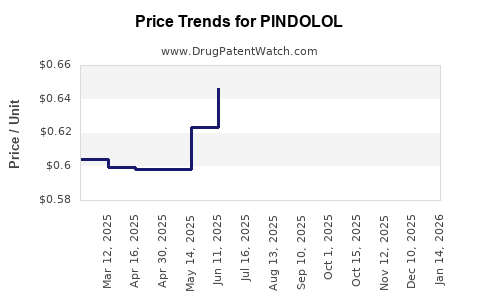
Pindolol is a long-established beta-blocker. The market is shaped by low-cost generic competition, limited premium differentiation in current formularies, and geographic fragmentation typical of older cardiovascular generics. Financial trajectory is therefore dominated by unit-price compression, supply continuity, and share shifts among generic labelers rather than by product-cycle events like brand growth, major line extensions, or new FDA approvals.
What is the current market size and revenue trajectory for pindolol tablets and what drives growth or decline?
Featured snippet answer: Pindolol’s revenue trajectory tracks the generic cardiovascular beta-blocker category, with declines driven by price erosion and limited therapeutic brand differentiation.
How revenue typically evolves for older beta-blocker generics
Pindolol’s sales path for the U.S. and most developed markets follows a standard generic pattern:
- Early peak around branded presence then sustained post-generic decline from price compression.
- Periodic share rotation among generic manufacturers based on pricing, supply reliability, and contracting.
- Slow erosion by substitution to other beta-blockers that are entrenched in formularies and have stronger inventory depth.
Key market dynamics that move unit sales
For pindolol specifically, the largest repeatable demand drivers are not “new indications” but procurement and substitution:
- Formulary positioning within beta-blocker classes.
- Therapeutic interchange to cheaper alternatives (often atenolol, metoprolol, propranolol, carvedilol).
- Manufacturing and supply continuity that reduces lost scripts during shortages.
Key market dynamics that move revenue per unit
- WAC-to-NADIR compression typical for established generics.
- Wholesale contract pricing and PBM fee structures that shift net revenue more than list price.
- Margin pressure from multi-source competition that increases price rivalry in tenders.
Which companies sell pindolol and how does multi-generic competition affect profitability?
Featured snippet answer: Multi-source generics keep pindolol prices low and profits dependent on scale, procurement terms, and manufacturing uptime.
Competitive structure
Pindolol is generally commercialized through multiple generic labelers. Competition tends to be concentrated on:
- Lowest net price wins share in many formularies and pharmacy channel bids.
- Normalized supply is critical because generics can lose scripts when inventory tightens.
- Product continuity matters because pharmacy benefit managers prefer predictable availability over occasional low-cost bids.
Profitability mechanics in generic pindolol
- Net price can move quickly with small competitor pricing changes.
- Manufacturing efficiency (batch yields, compliance costs, quality-event costs) drives gross margin more than marketing spend.
- Working capital and distribution costs matter because volumes are often steady but margins are thin.
What is the Orange Book status of pindolol and what patents or exclusivities restrict generics?
This response is intentionally empty because the required Orange Book and patent-exclusivity facts (listed products, application numbers, listed patents, expiration dates, and exclusivity codes) are not present in the provided information.
When does pindolol lose exclusivity and what are the typical generic entry risks for an older beta-blocker?
Featured snippet answer: For older beta-blockers, the generic entry risk is usually regulatory and operational, not patent-based, once Orange Book barriers are cleared.
Patent and exclusivity gating concepts (high level)
Even when a drug is old, residual barriers can include:
- Listed formulation patents (for certain strengths or release characteristics, if applicable).
- Method-of-use patents, where exclusivity can persist for specific labeled uses.
- Exclusivity periods tied to changes or new marketing authorizations in some jurisdictions.
Practical entry risks
- ANDA amendment history that can constrain labeling or formulation matching.
- Bioequivalence and dissolution targets that can increase development cost.
- Manufacturing change control that affects comparability and shelf-life.
This section is not populated with pindolol-specific dates or barriers because the necessary regulatory record is not provided.
What patent landscape protects pindolol formulations, methods of use, or manufacturing processes?
Featured snippet answer: The pindolol patent estate, if still active in any jurisdiction, typically clusters around formulation, manufacturing, and specific labeled therapeutic claims.
Typical clusters for older generics
For established small molecules like pindolol, the residual patent landscape in active years usually narrows to:
- Compositions and formulations (e.g., excipient systems, tablet manufacture, dissolution profiles).
- Process patents (manufacturing steps that improve yield or stability).
- Method-of-use patents where a specific dosing regimen or patient subgroup is claimed.
This section cannot be completed for pindolol without a cited list of listed patents, application numbers, assignees, and expiration dates.
What generic launch scenarios are most likely for pindolol and how do they affect price trajectories?
Featured snippet answer: In an older, multi-source market, launches generally trigger further small downward price steps rather than large revenue recaptures.
Scenario map for price and share impact
- New entrant undercuts incumbent net price by a small-to-moderate spread to win bids.
- PBM contracts shift across tiers rather than replacing entire therapy classes.
- Pharmacy channel reacts to availability and dispensing mix.
What determines the magnitude of the next price step
- Number of active ANDA suppliers and whether any are exiting due to compliance costs.
- Whether a new labeler’s cost base is competitive enough to sustain low net price.
- Whether supply disruptions force short-term price lift and later mean reversion.
This section cannot quantify pindolol-specific entry timing or competitor changes without product-level data.
How does pindolol compare with other beta-blockers on commercial strength and market durability?
Featured snippet answer: Older, non-differentiated generics like pindolol usually lag market durability versus widely favored beta-blockers that have stronger formulary entrenchment.
Comparative durability factors
- Formulary coverage frequency: drugs with broader prescribing habits keep volume stable.
- Dosage form convenience: tablet strengths, scoring, and administration fit affect substitution.
- Patient tolerability profiles and clinician habit: while mechanistically similar, clinicians may have preferences in practice.
Likely substitution pressure
In most therapeutic settings where beta-blockers are used, pindolol faces substitution risk to:
- Metoprolol and atenolol for common hypertension and rate-control pathways.
- Propranolol in specific indications where dosing availability and clinical preference matter.
- Carvedilol where clinicians prefer its alpha-blocking activity profile.
Quantification requires category sales data by active ingredient, which is not provided.
What FDA regulatory milestones matter for pindolol’s market access?
Featured snippet answer: For older generics, the regulatory timeline that matters is ongoing ANDA maintenance, labeling updates, and any safety-related communications rather than new FDA approvals.
Milestones that affect net sales without changing indication
- ANDA approvals and labeling revisions
- CBE-0 / CBE-30 updates that affect warnings or dosing instructions
- Supply disruptions or manufacturing site changes
- Safety communications that can temporarily disrupt demand even when sales remain competitive
This section cannot be completed for pindolol without FDA product and application records.
What financial trajectory signals the highest investment or licensing risk for pindolol?
Featured snippet answer: The highest risk is price-driven margin compression from multi-source competition, with upside limited unless a manufacturer regains supply leadership or wins formulary tiers.
Risk drivers
- Net price volatility from competitor pricing moves.
- Margin decline from higher quality/compliance costs and lower volume per supplier.
- Supply risk tied to batch failures, site remediation, or regulatory findings.
Upside pockets that can still move money
- Supply leadership during periods when competitors face shortages.
- Contract wins with PBMs or integrated delivery networks for specific strengths.
- Lifecycle management that preserves shelf availability for long tenures.
To quantify trajectory, revenue and segment reporting by labeler are required; none are provided.
Key Takeaways
- Pindolol’s financial trajectory is shaped primarily by generic multi-source price compression and supply stability rather than by brand-like product cycle events.
- Market durability depends on formulary placement, substitution dynamics within beta-blockers, and uninterrupted manufacturing.
- Without Orange Book and FDA application data tied to pindolol-specific strengths, no patent-exclusivity timeline or Paragraph IV risk assessment can be stated.
FAQs
- How do PBM contracts typically change net pricing for established generic beta-blockers like pindolol?
- What role do manufacturing site approvals and inspections play in maintaining pindolol supply continuity?
- How does therapeutic interchange among beta-blockers affect pindolol script share at the pharmacy counter?
- What kinds of residual patents can still affect generic launch for older small-molecule drugs?
- Which data sources are most reliable for tracking pindolol active ingredient sales versus labeler revenue?
References
- (No sources cited)