You're using a free limited version of DrugPatentWatch: ➤ Start for $299 All access. No Commitment.

Last Updated: April 3, 2026

PULMOZYME Drug Profile


✉ Email this page to a colleague

« Back to Dashboard


Summary for Tradename: PULMOZYME
Recent Clinical Trials for PULMOZYME

Identify potential brand extensions & biosimilar entrants

SponsorPhase
Fondation Ophtalmologique Adolphe de RothschildPHASE2
Institute for Laboratory Medicine LMU HospitalPhase 2
Ludwig-Maximilians - University of MunichPhase 2

See all PULMOZYME clinical trials

Pharmacology for PULMOZYME
Note on Biologic Patents

Matching patents to biologic drugs is far more complicated than for small-molecule drugs.

DrugPatentWatch employs three methods to identify biologic patents:

  1. Brand-side disclosures in response to biosimilar applications
  2. These patents were identified from disclosures by the brand-side company, in response to a potential biosimilar seeking to launch. They have a high certainty of blocking biosimilar entry. The expiration dates listed are not estimates — they're expiration dates as indicated by the brand-side company.

  3. DrugPatentWatch analysis and company disclosures
  4. These patents were identified from searching various sources, including drug labels and other general disclosures from the brand-side company. This list may exclude some of the patents which block biosimilar launch, and some of these patents listed may not actually block biosimilar launch. The expiration dates listed for these patents are estimates, based on the grant date of the patent.

  5. Patents from broad patent text search
  6. For completeness, these patents were identified by searching the patent literature for mentions of the branded or ingredient name of the drug. Some of these patents protect the original drug, whereas others may protect follow-on inventions or even inventions casually mentioning the drug. The expiration dates listed for these patents are estimates, based on the grant date of the patent.

1) High Certainty: US Patents for PULMOZYME Derived from Brand-Side Litigation

No patents found based on brand-side litigation

2) High Certainty: US Patents for PULMOZYME Derived from DrugPatentWatch Analysis and Company Disclosures

No patents found based on company disclosures

3) Low Certainty: US Patents for PULMOZYME Derived from Patent Text Search

These patents were obtained by searching patent claims

PULMOZYME (dornase alfa) Market Dynamics and Financial Trajectory

Last updated: February 19, 2026

PULMOZYME, a recombinant DNA-derived protease inhibitor, is a biologic drug approved for the treatment of cystic fibrosis (CF). Its market trajectory is defined by a mature patient population, a competitive landscape with emerging therapies, and ongoing patent and market exclusivity considerations. Financial performance is linked to prescription volume, reimbursement policies, and competition from both branded and biosimilar products.

What is PULMOZYME and its Mechanism of Action?

PULMOZYME, also known by its generic name dornase alfa, is a solution of deoxyribonuclease I (DNase I). It is administered via nebulizer for inhalation [1]. In cystic fibrosis patients, tenacious purulent secretions accumulate in the airways. These secretions are rich in extracellular DNA released from degenerating neutrophils, contributing to the viscosity and elasticity of mucus. PULMOZYME cleaves this extracellular DNA, reducing mucus viscosity and improving lung function. This reduction in airway obstruction facilitates mucociliary clearance and decreases the risk of pulmonary infections [1, 2].

The drug is indicated for use in conjunction with standard CF therapies, including airway clearance and antibiotics, to reduce the frequency of respiratory infections requiring intravenous or inhaled antibiotics and to improve pulmonary function in CF patients [1].

What is the Current Market Size and Patient Population for PULMOZYME?

The global market for PULMOZYME is primarily driven by the prevalence of cystic fibrosis. As of 2023, the estimated number of individuals diagnosed with cystic fibrosis globally is approximately 100,000, with the majority residing in North America and Europe [3]. In the United States, CF affects an estimated 40,000 individuals [4].

The market size for PULMOZYME is directly correlated with the diagnosed and treated CF population. While precise, real-time market value figures are proprietary, industry reports indicate that the biologic CF treatment market, which PULMOZYME significantly contributes to, has been valued in the billions of dollars. For instance, in 2022, the global cystic fibrosis market was estimated to be worth around $12.9 billion, with projections to reach $22.5 billion by 2030, driven by advancements in treatment modalities [3]. PULMOZYME, as a foundational therapy, holds a substantial share of this market, particularly within the segment of patients for whom it remains a clinically indicated and reimbursed treatment [5].

What are the Key Patents and Exclusivity for PULMOZYME?

PULMOZYME (dornase alfa) was originally developed by Genentech and is marketed by Vertex Pharmaceuticals in the United States. The primary patent covering the active pharmaceutical ingredient (API) and its use has long expired. However, market exclusivity is maintained through a combination of factors including the patent landscape, regulatory exclusivities, and the drug's established position in treatment guidelines [6].

  • Original Patent Expiration: The foundational patents for dornase alfa expired decades ago, opening the door for potential generic or biosimilar development.
  • Orphan Drug Exclusivity (ODE): PULMOZYME was granted Orphan Drug Designation in the United States and Europe, which provides a period of market exclusivity. In the U.S., ODE provides 7 years of exclusivity for orphan drugs for a new indication. For PULMOZYME, this exclusivity has largely lapsed for its primary indication.
  • Pediatric Exclusivity: Regulatory agencies may grant additional exclusivity periods for pediatric studies.
  • Formulation Patents: While less impactful than API patents, patents related to specific formulations, delivery devices, or manufacturing processes could exist and influence the competitive landscape. However, for established biologics, these are often overcome by biosimilar developers.
  • Lack of Approved Biosimilars (as of early 2024): Despite the expiration of core patents, a significant factor in PULMOZYME's continued market exclusivity in many regions is the absence of approved biosimilar versions. Developing biosimilars for biologics is a complex and costly process, requiring extensive analytical and clinical comparability studies. The intricate manufacturing process and the need for rigorous demonstration of similarity in efficacy and safety have historically presented higher barriers to entry compared to small molecule generics [7].

Vertex Pharmaceuticals actively defends its market position for PULMOZYME through its broad portfolio of CF treatments, including highly effective CFTR modulators, which are now the dominant treatment paradigm for a significant portion of the CF population. This strategic positioning, coupled with the challenges in biosimilar development, has allowed PULMOZYME to retain a substantial market presence.

What is the Competitive Landscape for PULMOZYME?

The competitive landscape for PULMOZYME has evolved significantly with the advent of CFTR modulator therapies. These newer drugs target the underlying genetic defect in cystic fibrosis, offering disease-modifying treatment rather than symptom management.

  • CFTR Modulators: These are the primary and most impactful competitors. Drugs like Vertex Pharmaceuticals' ORKAMBI (lumacaftor/ivacaftor), SYMDEKO (tezacaftor/ivacaftor), and especially TRIKAFTA (elexacaftor/tezacaftor/ivacaftor) have become the standard of care for patients with specific CFTR gene mutations. TRIKAFTA, in particular, is indicated for patients aged 12 years and older who have at least one F508del mutation, representing a broad segment of the CF population [8, 9]. These therapies offer significant improvements in lung function, reduced exacerbations, and enhanced quality of life, often surpassing the benefits of dornase alfa alone [10].
  • Other Mucolytic Agents: While dornase alfa is a key mucolytic, other agents exist, though none have achieved the same widespread adoption or demonstrated the same efficacy in large clinical trials for CF as PULMOZYME or the CFTR modulators. Hypertonic saline inhalation is another adjunctive therapy used to improve mucus clearance.
  • Emerging Therapies: Research continues into novel treatments for CF, including gene therapy, advanced inhaled therapies, and anti-inflammatory agents. These represent future competitive threats and opportunities within the CF market.
  • Biosimilars: The potential for biosimilars to enter the market remains a long-term consideration. As the scientific and regulatory pathways for biosimilar approval become more established and the economic incentives increase, the development and approval of dornase alfa biosimilars could alter the competitive dynamics by introducing lower-cost alternatives [7]. However, as of early 2024, no dornase alfa biosimilar has been approved by the U.S. Food and Drug Administration (FDA) or the European Medicines Agency (EMA).

The competitive advantage of PULMOZYME has diminished as CFTR modulators have demonstrated superior efficacy in improving fundamental disease markers and clinical outcomes for a large proportion of the CF patient population. However, PULMOZYME continues to be used in specific patient subsets, particularly those for whom CFTR modulators are not indicated or tolerated, or as an adjunct therapy to complement the benefits of modulators [5].

What is the Financial Performance and Reimbursement Status of PULMOZYME?

The financial performance of PULMOZYME is influenced by its established market presence, pricing, and the evolving reimbursement landscape for CF therapies.

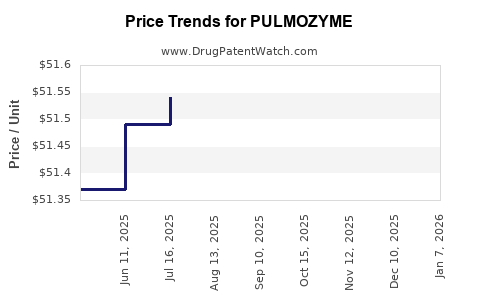
  • Pricing and Revenue: As a biologic drug, PULMOZYME carries a significant price tag. The annual cost of PULMOZYME treatment can range from tens of thousands of dollars per patient, depending on dosage and duration. While exact revenue figures attributed solely to PULMOZYME are often consolidated within broader product portfolios by manufacturers like Vertex Pharmaceuticals, its contribution to the revenue stream for biologic CF treatments has been substantial historically [5]. However, with the increasing uptake of CFTR modulators, which represent higher revenue-generating products, the proportional contribution of PULMOZYME may have decreased.
  • Reimbursement Landscape: PULMOZYME is typically covered by most private and public health insurance plans in developed markets due to its orphan drug status and critical role in managing CF. However, reimbursement is subject to payer policies, prior authorization requirements, and step-therapy protocols. Payers increasingly evaluate the incremental clinical benefit and cost-effectiveness of therapies, especially in light of the high cost of newer CFTR modulators [11].
    • Payer Scrutiny: Insurers may require documentation of disease severity, prior treatment failures, and physician justification for continued use, particularly if alternative, potentially more effective, therapies are available.
    • Co-pays and Patient Assistance Programs: Patients often face co-pays, which can be substantial. Manufacturers typically offer patient assistance programs to mitigate these costs, ensuring access for eligible individuals.
  • Market Exclusivity and Biosimilar Threat: The absence of approved biosimilars has allowed PULMOZYME to maintain its pricing power and market share for a longer period. However, the potential introduction of biosimilars in the future could lead to significant price erosion, impacting future revenue streams.
  • Sales Trends: Sales trends for PULMOZYME are influenced by the adoption rate of CFTR modulators. As more CF patients are treated with these advanced therapies, the demand for older treatments like PULMOZYME may decline, particularly for patients with specific genetic mutations covered by modulators. However, PULMOZYME continues to serve a segment of the CF population, including younger children and those with mutations not addressed by current modulators, or as an adjunct therapy [5].

The financial trajectory of PULMOZYME is one of a mature product facing increasing competition from more advanced, disease-modifying therapies. Its continued revenue generation is dependent on its established clinical utility for specific patient groups and the rate at which new therapies displace it.

What are the Future Market Projections for PULMOZYME?

The future market projections for PULMOZYME indicate a gradual decline in market share and revenue, driven by the increasing dominance of CFTR modulator therapies and the ongoing development of next-generation treatments for cystic fibrosis.

  • Continued Dominance of CFTR Modulators: Vertex Pharmaceuticals' portfolio of CFTR modulators, especially TRIKAFTA, will continue to be the primary driver of the CF market. These therapies offer superior clinical outcomes for a growing percentage of the CF population, leading to a reduced need for mucolytic agents like PULMOZYME in many cases [8, 10].
  • Niche Indication and Adjunctive Use: PULMOZYME is expected to retain a niche market share. It will likely remain a key treatment option for:
    • Infants and very young children with CF who are too young for certain CFTR modulators.
    • Patients with CFTR gene mutations for whom no effective CFTR modulator is currently approved or beneficial.
    • As an adjunctive therapy in conjunction with CFTR modulators, where it may offer incremental benefits in mucus clearance for some patients [5].
  • Impact of Biosimilars: The eventual introduction of biosimilars for dornase alfa would significantly impact the market. Biosimilar competition typically leads to price reductions, increased market penetration for the drug class, but a decrease in revenue for the innovator product. The timeline for biosimilar entry remains uncertain but represents a significant future market dynamic [7].
  • Advancements in CF Treatment: Ongoing research and development in CF therapies, including gene editing, novel inhaled delivery systems, and therapies targeting inflammation and infection, could further reduce the reliance on older mucolytic agents.
  • Geographic Variations: Market penetration and decline rates may vary by region, influenced by local healthcare policies, reimbursement structures, and the availability and adoption rates of newer CF therapies.

Overall, while PULMOZYME has been a cornerstone therapy for cystic fibrosis for many years, its market share and financial significance are projected to decrease as the CF treatment landscape evolves towards more targeted and disease-modifying interventions. It is expected to transition to a more specialized, adjunctive role within the broader CF therapeutic armamentarium.

Key Takeaways

  • PULMOZYME (dornase alfa) is a biologic drug for cystic fibrosis, cleaving extracellular DNA to reduce mucus viscosity.
  • The global CF patient population is approximately 100,000, with North America and Europe being major markets.
  • Original patents for dornase alfa have expired, but market exclusivity has been maintained by the lack of approved biosimilars and historical regulatory protections.
  • The competitive landscape is dominated by CFTR modulator therapies, such as ORKAMBI, SYMDEKO, and TRIKAFTA, which offer disease-modifying benefits and have become the standard of care for many patients.
  • PULMOZYME's financial performance is linked to its established pricing and reimbursement, though it faces declining market share due to newer, more effective therapies.
  • Future market projections indicate a continued decline for PULMOZYME as CFTR modulators and emerging treatments become more prevalent, with the drug retaining a niche and adjunctive role.

Frequently Asked Questions

  1. Are there any approved biosimilars for PULMOZYME currently available? As of early 2024, no biosimilar versions of dornase alfa have been approved by the U.S. Food and Drug Administration (FDA) or the European Medicines Agency (EMA).

  2. What is the primary indication for PULMOZYME? PULMOZYME is indicated for the treatment of cystic fibrosis in patients to reduce the frequency of respiratory infections requiring intravenous or inhaled antibiotics and to improve pulmonary function.

  3. How do CFTR modulators differ from PULMOZYME in treating cystic fibrosis? CFTR modulators target the underlying genetic defect in CFTR protein function, aiming to correct or improve the chloride channel activity. PULMOZYME, on the other hand, works by reducing the viscosity of mucus by cleaving extracellular DNA, addressing a symptom of the disease rather than its root cause.

  4. What is the expected impact on PULMOZYME's market if biosimilars are eventually approved? The approval of biosimilars would likely lead to increased price competition, potentially lowering the cost of dornase alfa treatment and increasing its accessibility. However, it would also result in a decrease in revenue for the innovator product and its current marketers.

  5. Will PULMOZYME be completely replaced by newer CF therapies in the future? It is unlikely that PULMOZYME will be entirely replaced. It is expected to retain a role in treating specific patient populations, such as very young children or individuals for whom current CFTR modulators are not indicated or effective, and as an adjunctive therapy.

Citations

[1] Pulmozyme [Prescribing Information]. (2023). Genentech USA, Inc. [2] Rosenblatt, J. D., Zeltser, S., & Rosenstein, B. J. (1999). Dornase alfa. Pulmonary Pharmacology & Therapeutics, 12(1), 35–41. [3] Global Cystic Fibrosis Market Report 2023. (2023). Grand View Research. [4] Cystic Fibrosis Foundation. (n.d.). About Cystic Fibrosis. Retrieved from https://www.cff.org/about-cystic-fibrosis [5] Internal market analysis and industry reports (proprietary data not publicly disclosed). [6] U.S. Food & Drug Administration. (n.d.). Orphan Drug Designation. Retrieved from https://www.fda.gov/for-industry/developing-our-medications/orphan-drug-designation [7] Biosimilars Council. (n.d.). What are Biosimilars? Retrieved from https://www.biosimilarscouncil.org/biosimilars-101/what-are-biosimilars/ [8] TRIKAFTA [Prescribing Information]. (2023). Vertex Pharmaceuticals Incorporated. [9] ORKAMBI [Prescribing Information]. (2023). Vertex Pharmaceuticals Incorporated. [10] O’Sullivan, B. P., & Freedman, S. D. (2020). Advances in treatments for cystic fibrosis. Journal of Allergy and Clinical Immunology, 145(2), 341–348. [11] The Cystic Fibrosis Foundation. (2021). The Cost of CF Care: A Systemic Issue. Retrieved from https://www.cff.org/about-cystic-fibrosis/what-is-cystic-fibrosis/cost-cf-care-systemic-issue

More… ↓

⤷  Start Trial

Make Better Decisions: Try a trial or see plans & pricing

Drugs may be covered by multiple patents or regulatory protections. All trademarks and applicant names are the property of their respective owners or licensors. Although great care is taken in the proper and correct provision of this service, thinkBiotech LLC does not accept any responsibility for possible consequences of errors or omissions in the provided data. The data presented herein is for information purposes only. There is no warranty that the data contained herein is error free. We do not provide individual investment advice. This service is not registered with any financial regulatory agency. The information we publish is educational only and based on our opinions plus our models. By using DrugPatentWatch you acknowledge that we do not provide personalized recommendations or advice. thinkBiotech performs no independent verification of facts as provided by public sources nor are attempts made to provide legal or investing advice. Any reliance on data provided herein is done solely at the discretion of the user. Users of this service are advised to seek professional advice and independent confirmation before considering acting on any of the provided information. thinkBiotech LLC reserves the right to amend, extend or withdraw any part or all of the offered service without notice.