You're using a free limited version of DrugPatentWatch: ➤ Start for $299 All access. No Commitment.

Last Updated: March 26, 2026

PFIZER Company Profile


✉ Email this page to a colleague

« Back to Dashboard


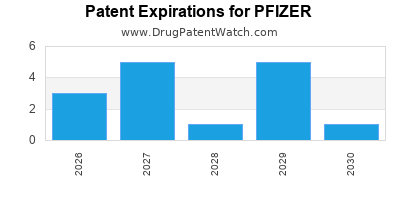
Summary for PFIZER

Drugs and US Patents for PFIZER

Applicant Tradename Generic Name Dosage NDA Approval Date TE Type RLD RS Patent No. Patent Expiration Product Substance Delist Req. Exclusivity Expiration
Pfizer PSORCON diflorasone diacetate OINTMENT;TOPICAL 019260-001 Aug 28, 1985 DISCN Yes No ⤷  Start Trial ⤷  Start Trial
Pfizer VELSIPITY etrasimod arginine TABLET;ORAL 216956-001 Oct 12, 2023 RX Yes Yes ⤷  Start Trial ⤷  Start Trial
Pfizer ATARAX hydroxyzine hydrochloride TABLET;ORAL 010392-004 Approved Prior to Jan 1, 1982 DISCN Yes No ⤷  Start Trial ⤷  Start Trial
Pfizer FRAGMIN dalteparin sodium INJECTABLE;SUBCUTANEOUS 020287-011 May 1, 2007 RX Yes No ⤷  Start Trial ⤷  Start Trial
Pfizer GEOCILLIN carbenicillin indanyl sodium TABLET;ORAL 050435-001 Approved Prior to Jan 1, 1982 DISCN No No ⤷  Start Trial ⤷  Start Trial
Pfizer PFIZERPEN-A ampicillin/ampicillin trihydrate CAPSULE;ORAL 062050-001 Approved Prior to Jan 1, 1982 DISCN No No ⤷  Start Trial ⤷  Start Trial
Pfizer PFIZERPEN VK penicillin v potassium TABLET;ORAL 061836-001 Approved Prior to Jan 1, 1982 DISCN No No ⤷  Start Trial ⤷  Start Trial
>Applicant >Tradename >Generic Name >Dosage >NDA >Approval Date >TE >Type >RLD >RS >Patent No. >Patent Expiration >Product >Substance >Delist Req. >Exclusivity Expiration

Expired US Patents for PFIZER

Applicant Tradename Generic Name Dosage NDA Approval Date Patent No. Patent Expiration
Pfizer Pharms REZULIN troglitazone TABLET;ORAL 020720-001 Jan 29, 1997 5,478,852 ⤷  Start Trial
Pfizer ZINECARD dexrazoxane hydrochloride INJECTABLE;INJECTION 020212-002 May 26, 1995 4,275,063 ⤷  Start Trial
Pfizer Pharms REZULIN troglitazone TABLET;ORAL 020720-002 Jan 29, 1997 5,104,888 ⤷  Start Trial
Pfizer Pharms LOPID gemfibrozil CAPSULE;ORAL 018422-001 Approved Prior to Jan 1, 1982 3,674,836 ⤷  Start Trial
Pfizer ARTHROTEC diclofenac sodium; misoprostol TABLET, DELAYED RELEASE;ORAL 020607-001 Dec 24, 1997 5,601,843 ⤷  Start Trial
Pfizer COVERA-HS verapamil hydrochloride TABLET, EXTENDED RELEASE;ORAL 020552-002 Feb 26, 1996 6,146,662 ⤷  Start Trial
Pfizer Pharms ACCUPRIL quinapril hydrochloride TABLET;ORAL 019885-003 Nov 19, 1991 4,743,450*PED ⤷  Start Trial
>Applicant >Tradename >Generic Name >Dosage >NDA >Approval Date >Patent No. >Patent Expiration
Paragraph IV (Patent) Challenges for PFIZER drugs
Drugname Dosage Strength Tradename Submissiondate
➤ Subscribe Injection 2 mg/mL, 100 mL bag ➤ Subscribe 2009-12-29
➤ Subscribe Tablets 5 mg ➤ Subscribe 2016-11-07
➤ Subscribe Delayed-release Tablets 50 mg/0.2 mg ➤ Subscribe 2009-06-29
➤ Subscribe Extended-release Tablets 11 mg ➤ Subscribe 2016-11-07
➤ Subscribe Capsules 20 mg, 40 mg, 60 mg and 80 mg ➤ Subscribe 2005-02-07
➤ Subscribe Capsules 75 mg, 100 mg and 125 mg ➤ Subscribe 2019-02-04
➤ Subscribe Capsules 0.125 mg, 0.25 mg, and 0.5 mg ➤ Subscribe 2014-05-01
➤ Subscribe Tablets 600 mg ➤ Subscribe 2005-12-21
➤ Subscribe Injection 2 mg/mL, 300 mL bag ➤ Subscribe 2009-09-01
➤ Subscribe Tablets 1 g ➤ Subscribe 2005-08-23
➤ Subscribe Delayed-release Tablets 75 mg/0.2 mg ➤ Subscribe 2008-11-28
➤ Subscribe Extended-release Tablets 4 mg and 8 mg ➤ Subscribe 2012-10-31
➤ Subscribe Injection 20 mg/mL, 2 mL and 5 mL vials ➤ Subscribe 2004-07-26
➤ Subscribe Capsules 5 mg and 10 mg ➤ Subscribe 2005-06-21
➤ Subscribe For Injection 500 mg/vial ➤ Subscribe 2011-06-17
➤ Subscribe Oral Suspension 100 mg/5 mL ➤ Subscribe 2009-08-03

Supplementary Protection Certificates for PFIZER Drugs

Patent Number Supplementary Protection Certificate SPC Country SPC Expiration SPC Description
3185856 2024C/535 Belgium ⤷  Start Trial PRODUCT NAME: COMBINATIE VAN DOXYLAMINE, OF EEN FARMACEUTISCH AANVAARDBAAR ZOUT DAARVAN, EN PYRIDOXINE, OF EEN FARMACEUTISCH AANVAARDBAAR ZOUT DAARVAN; AUTHORISATION NUMBER AND DATE: BE662396 20240321
1304992 PA2013025,C1304992 Lithuania ⤷  Start Trial PRODUCT NAME: CLINDAMYCINUM + TRETINOINUM; REGISTRATION NO/DATE: LT/1/13/3279/001, 2013 04 26 LT/1/13/3279/002, 2013 04 26 PA1332/043/001 20130323
2326621 2490310-6 Sweden ⤷  Start Trial PRODUCT NAME: ETRASIMOD, ELLER ETT FARMACEUTISKT ACCEPTABELT SALT DAERAV, SASOM ETRASIMODARGININ; REG. NO/DATE: EU/1/23/1790 20240219
2822953 132019000000116 Italy ⤷  Start Trial PRODUCT NAME: LORLATINIB(LORVIQUA); AUTHORISATION NUMBER(S) AND DATE(S): EU/1/19/1355, 20190508
2488512 C02488512/01 Switzerland ⤷  Start Trial PRODUCT NAME: RIMEGEPANT; REGISTRATION NO/DATE: SWISSMEDIC-ZULASSUNG 69035 18.10.2023
0398460 C300221 Netherlands ⤷  Start Trial PRODUCT NAME: DROSPIRENON EN ETHINYLESTRADIOL; REGISTRATION NO/DATE: RVG 23827 20000307
1666481 37/2017 Austria ⤷  Start Trial PRODUCT NAME: TOFACITINIB, GEGEBENENFALLS IN FORM EINES PHARMAZEUTISCH VERTRAEGLICHEN SALZES, EINSCHLIESSLICH DES CITRATS; REGISTRATION NO/DATE: EU/1/17/1178 (MITTEILUNG) 20170324
>Patent Number >Supplementary Protection Certificate >SPC Country >SPC Expiration >SPC Description
Similar Applicant Names
Applicants may be listed under multiple names.
Here is a list of applicants with similar names.

Pfizer: Market Position, Strengths & Strategic Insights

Last updated: February 19, 2026

This analysis examines Pfizer's current market standing, core competencies, and strategic directions within the pharmaceutical industry, focusing on patent expirations, pipeline developments, and recent M&A activity. Pfizer's portfolio, while facing patent cliffs for key products, is supported by a robust pipeline and strategic acquisitions aimed at future growth.

What is Pfizer's Current Market Position?

Pfizer is a leading global pharmaceutical company with a diversified portfolio across multiple therapeutic areas. Its market position is characterized by the significant revenue generated by its blockbuster drugs, alongside the ongoing challenge of managing patent expirations and the need to replenish its product offerings.

Key Revenue Drivers and Patent Expirations

Pfizer's top revenue-generating products, such as Comirnaty (COVID-19 vaccine) and Paxlovid (COVID-19 antiviral), have seen substantial sales but are subject to market fluctuations and evolving public health needs. The company is also navigating patent expirations for other significant drugs.

Product Name Therapeutic Area Estimated 2023 Revenue (USD Billion) Key Patent Expiration Year (US)
Comirnaty Infectious Disease ~20-25 (Varies significantly by quarter) Ongoing regulatory approvals and market demand
Paxlovid Infectious Disease ~10-15 (Varies significantly by quarter) Ongoing regulatory approvals and market demand
Eliquis (co-developed with Bristol Myers Squibb) Cardiovascular ~6.4 2031
Prevnar 13/Pneumococcal 13-valent Conjugate Vaccine Vaccine ~3.9 2026
Xeljanz Immunology ~2.5 2027

Source: Pfizer Investor Relations, internal estimates based on market trends.

The expiration of patents for major drugs exposes these products to generic competition, leading to significant revenue erosion. Pfizer's strategy involves a proactive approach to portfolio management, including the development of next-generation products and strategic acquisitions to mitigate these impacts.

Geographic Reach and Market Share

Pfizer operates in over 120 countries. Its market share varies by therapeutic area and region, with strong positions in oncology, inflammation and immunology, vaccines, and internal medicine. Emerging markets represent a growth opportunity, though penetration is influenced by pricing, regulatory environments, and healthcare infrastructure.

What are Pfizer's Core Strengths?

Pfizer's strengths lie in its extensive research and development capabilities, global commercial infrastructure, and a proven track record in bringing novel therapies to market.

Research and Development Prowess

Pfizer invests heavily in R&D, maintaining a broad pipeline across various therapeutic areas. The company employs a multi-pronged R&D strategy that includes internal discovery, external collaborations, and strategic acquisitions of innovative technologies and early-stage assets.

  • Pipeline Breadth: Pfizer's pipeline includes over 90 investigational medicines across 7 therapeutic areas. This diverse pipeline aims to address unmet medical needs and capitalize on emerging scientific advancements.
  • Advanced Modalities: The company is actively developing therapies using novel modalities such as mRNA, gene therapy, and antibody-drug conjugates (ADCs), positioning it for future market leadership in innovative treatments.
  • Clinical Trial Expertise: Pfizer has extensive experience in conducting large-scale global clinical trials, enabling efficient development and regulatory approval processes.

Global Commercial Infrastructure

The company possesses a formidable global commercial infrastructure, which is critical for the successful launch and widespread adoption of new medicines.

  • Sales and Marketing Network: A vast network of sales representatives and marketing teams in key markets ensures effective product promotion and physician engagement.
  • Supply Chain and Distribution: Pfizer's robust supply chain and distribution capabilities enable the timely and reliable delivery of its products worldwide, a critical factor in market access and patient care.
  • Market Access and Reimbursement: Extensive experience in navigating complex market access and reimbursement landscapes in different countries facilitates patient access to its medicines.

Strategic Acquisitions and Partnerships

Pfizer has a history of leveraging acquisitions and partnerships to enhance its portfolio and pipeline.

  • Seagen Acquisition: The acquisition of Seagen Inc. for approximately $43 billion (announced March 2023) significantly bolsters Pfizer's oncology pipeline with Seagen's leading antibody-drug conjugate (ADC) technology. This move is central to Pfizer's strategy to establish leadership in oncology.
  • BioNTech Partnership: The long-standing collaboration with BioNTech SE for the development and commercialization of the COVID-19 vaccine has been a major success and serves as a model for future partnerships.
  • Other Strategic Deals: Pfizer has engaged in numerous smaller collaborations and licensing agreements to access novel drug candidates and technologies.

What are Pfizer's Strategic Imperatives?

Pfizer's strategic focus is on achieving sustainable growth by capitalizing on its R&D investments, expanding its oncology business, and navigating the evolving healthcare landscape.

Oncology as a Growth Engine

Oncology is a key strategic priority for Pfizer, driven by the high unmet need and the potential for significant market growth. The acquisition of Seagen is instrumental in this strategy.

  • ADC Expansion: Pfizer aims to become a leader in ADCs, a class of drugs that targets cancer cells with high precision, minimizing damage to healthy tissues. Seagen's portfolio includes approved ADCs and a promising pipeline.
  • Portfolio Diversification: Beyond ADCs, Pfizer is investing in other oncology modalities, including small molecules, biologics, and immunotherapy combinations, to create a comprehensive oncology offering.
  • Targeted Therapies: The company is focused on developing targeted therapies that address specific genetic mutations or biomarkers in cancer, offering personalized treatment approaches.

Portfolio Renewal and Pipeline Acceleration

Pfizer is committed to accelerating the development and commercialization of its R&D pipeline to offset revenue losses from patent expirations.

  • Focus on High-Unmet-Need Areas: R&D efforts are concentrated on therapeutic areas with significant unmet medical needs, such as rare diseases, autoimmune disorders, and neurodegenerative diseases, alongside oncology and infectious diseases.
  • Speed to Market: Pfizer emphasizes efficiency in clinical development and regulatory submissions to ensure timely access to new therapies for patients.
  • Biologics and Advanced Therapies: Continued investment in the development of complex biologics, including gene therapies and cell therapies, is a cornerstone of its long-term innovation strategy.

Navigating the Evolving Healthcare Landscape

Pfizer is adapting its strategies to address challenges and opportunities presented by changes in healthcare policy, market access, and the competitive environment.

  • Value-Based Pricing and Outcomes: The company is increasingly exploring value-based pricing models and demonstrating the real-world value of its medicines to payers and healthcare systems.
  • Digital Health Integration: Pfizer is investing in digital health solutions to enhance patient engagement, improve treatment adherence, and gather real-world evidence for its products.
  • Geographic Expansion: Strategic efforts are in place to expand its presence and market access in key emerging markets where significant patient populations and growth potential exist.

What are the Key Risks and Challenges?

Pfizer faces several risks and challenges, including intensifying competition, regulatory hurdles, and the inherent uncertainties of drug development.

Patent Expirations and Generic Competition

The expiration of patents for major revenue-generating drugs remains a significant threat.

  • Revenue Erosion: Generic entry typically leads to a rapid and substantial decline in sales for originator drugs.
  • Market Share Loss: Generic competitors often offer lower prices, making it difficult for originator products to maintain market share.
  • Mitigation Strategies: Pfizer's strategy relies on launching "next-generation" products or biosimil versions before patent expiry and leveraging its pipeline to fill the revenue gap.

Clinical Trial Success and Regulatory Approval

The success of drug development is not guaranteed, with a high rate of attrition in clinical trials.

  • High Failure Rates: Many drug candidates fail to demonstrate efficacy or safety in clinical trials, leading to significant R&D investment losses.
  • Regulatory Scrutiny: Regulatory agencies worldwide are increasingly stringent in their review of new drug applications, requiring robust data and evidence.
  • Post-Market Surveillance: Even after approval, drugs can face challenges related to unexpected side effects or safety concerns identified in post-market surveillance.

Competitive Landscape and Pricing Pressures

The pharmaceutical market is highly competitive, with significant pricing pressures from governments and payers.

  • Rival Companies: Major pharmaceutical companies and emerging biotechs are actively developing therapies for the same diseases, intensifying competition.
  • Government Regulations: Healthcare systems globally are implementing measures to control drug spending, leading to price negotiations and rebate systems.
  • Public Scrutiny: Pharmaceutical pricing practices are often subject to public and political scrutiny, which can influence pricing strategies and market access.

Key Takeaways

Pfizer is navigating a dynamic market characterized by significant opportunities and challenges. Its strengths in R&D and global commercialization provide a solid foundation. The strategic acquisition of Seagen signals a strong commitment to oncology leadership. However, managing patent expirations and ensuring pipeline productivity remain critical for sustained long-term growth. The company's ability to innovate, adapt to evolving healthcare policies, and execute its strategic initiatives will determine its future market position.

Frequently Asked Questions

  1. What is Pfizer's strategy for addressing upcoming patent cliffs on its key products? Pfizer aims to mitigate the impact of patent expirations through the development and launch of "next-generation" therapies, biosimil products, and by strategically acquiring companies with promising pipelines, as exemplified by the Seagen acquisition in oncology.

  2. How diversified is Pfizer's current R&D pipeline? Pfizer's R&D pipeline is diversified across more than seven therapeutic areas, including oncology, immunology, internal medicine, vaccines, and rare diseases, with a significant focus on advanced modalities like mRNA and antibody-drug conjugates.

  3. What are the primary therapeutic areas targeted by Pfizer's recent major acquisitions? Pfizer's most significant recent acquisition, Seagen, is focused on bolstering its oncology portfolio, specifically in the area of antibody-drug conjugates.

  4. What impact is the COVID-19 pandemic and its associated products having on Pfizer's long-term strategy? While Comirnaty and Paxlovid provided significant revenue and accelerated the company's mRNA capabilities, Pfizer's long-term strategy is focused on diversifying beyond COVID-19 products, leveraging its R&D expertise in other therapeutic areas and advanced platforms for sustainable growth.

  5. How is Pfizer addressing global pricing pressures and market access challenges? Pfizer is adapting by focusing on value-based pricing models, demonstrating the clinical and economic benefits of its therapies, and engaging with payers and policymakers to navigate complex reimbursement landscapes in different global markets.

Citations

[1] Pfizer Investor Relations. (n.d.). Investor presentations and financial reports. Retrieved from [Official Pfizer Investor Relations Website]

[2] Bloomberg Terminal. (various dates). Company financial data and market analysis for Pfizer Inc.

[3] SEC Filings. (various dates). Pfizer Inc. Form 10-K and 10-Q filings. U.S. Securities and Exchange Commission.

[4] Press Releases. (various dates). Pfizer Inc. Official Press Releases.

More… ↓

⤷  Start Trial

Make Better Decisions: Try a trial or see plans & pricing

Drugs may be covered by multiple patents or regulatory protections. All trademarks and applicant names are the property of their respective owners or licensors. Although great care is taken in the proper and correct provision of this service, thinkBiotech LLC does not accept any responsibility for possible consequences of errors or omissions in the provided data. The data presented herein is for information purposes only. There is no warranty that the data contained herein is error free. We do not provide individual investment advice. This service is not registered with any financial regulatory agency. The information we publish is educational only and based on our opinions plus our models. By using DrugPatentWatch you acknowledge that we do not provide personalized recommendations or advice. thinkBiotech performs no independent verification of facts as provided by public sources nor are attempts made to provide legal or investing advice. Any reliance on data provided herein is done solely at the discretion of the user. Users of this service are advised to seek professional advice and independent confirmation before considering acting on any of the provided information. thinkBiotech LLC reserves the right to amend, extend or withdraw any part or all of the offered service without notice.