Last updated: August 23, 2026
Zonegran, the branded formulation of zonisamide, is a mature antiepileptic drug with limited remaining exclusivity and substantial generic competition. Eisai retains commercial rights in key markets, but the product’s financial profile has shifted from protected branded growth to recurring maintenance revenue, regional licensing income, and low-cost generic competition. The primary commercial risks are price erosion, substitution by newer antiseizure medicines, and declining branded prescriptions rather than a future patent cliff.
What is Zonegran and how is it used?
Zonegran contains zonisamide, a small-molecule antiseizure medicine used primarily as adjunctive treatment for partial-onset seizures. The drug is available as oral capsules, generally in 25 mg, 50 mg, and 100 mg strengths, depending on jurisdiction.
In the United States, the FDA approved Zonegran capsules under NDA 20-789 on March 27, 2000. The labeled indication is adjunctive therapy for adults with partial seizures.[1] Zonisamide is also marketed in several countries for broader epilepsy indications, including monotherapy or adjunctive treatment in selected adult and pediatric populations.
Zonegran product profile
| Attribute |
Product information |
| Active ingredient |
Zonisamide |
| Brand |
Zonegran |
| Drug class |
Antiseizure medicine; sulfonamide derivative |
| U.S. dosage form |
Oral capsules |
| U.S. NDA |
20-789 |
| Original U.S. approval |
March 27, 2000 |
| Primary U.S. indication |
Adjunctive therapy for partial seizures in adults |
| U.S. sponsor |
Eisai Inc. |
| Generic status |
Multiple approved zonisamide capsule products |
| Biosimilar exposure |
None; Zonegran is a small molecule |
| Main therapeutic alternatives |
Lamotrigine, levetiracetam, topiramate, lacosamide, carbamazepine, oxcarbazepine, valproate |
Zonisamide has a differentiated pharmacologic profile, including effects on sodium and T-type calcium channels and carbonic anhydrase inhibition. Its long half-life supports once- or twice-daily dosing, but adverse effects such as somnolence, appetite loss, cognitive effects, metabolic acidosis, kidney stones, and hypersensitivity reactions constrain use in some patients.[1]
When did Zonegran lose exclusivity?
Zonegran lost effective U.S. market exclusivity years ago. Generic zonisamide capsules are approved and widely available, so the brand does not have a viable U.S. patent-based barrier to generic substitution.
The original compound and early product protection date from the development period before U.S. approval. Any primary compound patent protection has expired. Later U.S. patents, if listed during the product’s commercial life, have not prevented generic availability.
Zonegran exclusivity timeline
| Event |
Date |
Commercial effect |
| U.S. FDA approval |
March 27, 2000 |
Established the branded U.S. market |
| Generic development period |
Early-to-mid 2000s |
ANDA-based competition became commercially feasible |
| Generic zonisamide entry |
Mid-2000s |
Reduced branded pricing and volume |
| Current market position |
2024-2025 |
Mature generic market with limited brand leverage |
The central point for investors and licensing teams is that Zonegran has no meaningful remaining U.S. regulatory exclusivity. Any commercial value is based on brand recognition, physician familiarity, supply reliability, regional reimbursement, and continued prescribing in patients stabilized on zonisamide.
What is the Orange Book status of Zonegran?
The FDA Orange Book identifies Zonegran as an approved reference-listed drug for zonisamide capsules. Generic applicants can rely on the reference product through the abbreviated new drug application pathway.
The Orange Book framework is commercially important because it determines whether an ANDA applicant must certify against listed patents. For a mature product such as Zonegran, generic competition is no longer dependent on resolving a forward-looking patent dispute. The market has already moved into post-exclusivity competition.[2]
Does Zonegran have active Orange Book patents?
Zonegran does not have an Orange Book patent position capable of blocking ordinary generic zonisamide capsule competition in the United States. The relevant commercial landscape is therefore different from protected products such as newer branded antiseizure agents with active formulation, method-of-use, or device patents.
A patent analyst should distinguish between:
- Historical patents associated with zonisamide development.
- Patents that may have been listed during the product’s protected period.
- Current Orange Book patents capable of delaying ANDA approval.
- Non-Orange Book patents involving manufacturing, trademarks, or non-U.S. formulations.
For current U.S. revenue forecasting, the fourth category is more relevant than patent-based exclusivity.
Which companies are challenging Zonegran?
Generic competition comes from manufacturers of zonisamide capsules rather than from a single pending Paragraph IV challenger. FDA-approved or historically marketed generic suppliers have included large generic manufacturers such as Teva, Mylan/Viatris, and other ANDA holders, depending on strength, market period, and supply status.[2]
A conventional Paragraph IV event is not the primary market catalyst for Zonegran. The relevant competitive process occurred when generic applicants entered after the expiration of effective branded protection. Current competition is based on price, formulary placement, pharmacy substitution, manufacturing capacity, and wholesaler contracts.
What is the Paragraph IV risk for Zonegran?
The Paragraph IV risk is low as a forward-looking investment issue because generic entry has already occurred. A new Paragraph IV challenge would not materially change the structure of a market that already contains generic zonisamide products.
Potential litigation could still arise over:
- A new dosage form.
- An abuse-deterrent or modified-release formulation.
- A pediatric formulation.
- A manufacturing process.
- A newly approved method of use.
Those scenarios would concern a new product strategy, not the established Zonegran capsule franchise.
What formulations are protected by Zonegran patents?
The commercial Zonegran franchise is centered on immediate-release oral capsules. That dosage form has no practical remaining U.S. exclusivity barrier.
Zonisamide formulation opportunities are limited by the maturity of the molecule and the availability of low-cost capsules. A new formulation could seek protection through:
- Extended-release delivery.
- Oral suspension or liquid dosing.
- Sprinkle capsules.
- Pediatric-friendly dosage forms.
- Combination products.
- Improved tolerability or pharmacokinetic profiles.
A formulation patent would need to create measurable clinical, adherence, or pharmacokinetic value. A reformulated product without meaningful therapeutic differentiation would face rapid substitution pressure from inexpensive generic capsules.
Are there method-of-use patents for Zonegran?
The core Zonegran business is not supported by a current U.S. method-of-use exclusivity strategy. Some jurisdictions have recognized additional zonisamide uses, including monotherapy or pediatric treatment, but regulatory labeling and patent scope differ by country.
Method-of-use patents would have limited commercial impact unless they cover a clinically important indication with narrow generic labeling or enforceable prescribing restrictions. For a widely used generic antiseizure ingredient, off-label prescribing and physician choice reduce the practical value of narrow use claims.
How strong is the Zonegran patent estate?
The current patent estate is weak from a market-exclusion perspective.
| Patent factor |
Assessment |
| Core compound protection |
Expired |
| U.S. capsule protection |
No meaningful current barrier |
| Method-of-use protection |
Limited commercial significance |
| Formulation protection |
No established barrier to standard capsules |
| Manufacturing patents |
Potentially relevant to cost, but not a generic-market block |
| Trademark protection |
Brand protection remains, but does not prevent generic substitution |
| Biosimilar protection |
Not applicable |
| Overall estate strength |
Low for exclusivity; modest for brand and supply-chain value |
The brand still has non-patent assets. These include clinical familiarity, prescribing history, established pharmacovigilance data, and physician comfort in patients who have responded to zonisamide. Those assets support residual demand but do not sustain premium pricing against generic substitution.
What is the FDA regulatory status of Zonegran?
Zonegran remains an FDA-approved prescription product. The reference product is an immediate-release oral capsule for adjunctive treatment of partial seizures in adults.[1]
The FDA regulatory status supports continued commercial supply, but it does not provide current market exclusivity. Generic zonisamide products are approved through ANDAs and can be substituted under applicable state pharmacy laws and payer rules.
Regulatory issues that can affect the franchise include:
- Labeling requirements for sulfonamide hypersensitivity.
- Warnings concerning metabolic acidosis and renal calculi.
- Pediatric safety and dosing considerations.
- Manufacturing compliance.
- Drug shortages or supply interruptions.
- Changes in formulary substitution policies.
For investors, manufacturing reliability may matter more than FDA exclusivity. A mature antiseizure medicine can retain demand during a temporary generic shortage, but that benefit typically accrues to whichever supplier has available inventory.
How does Zonegran compare with competing antiseizure drugs?
Zonegran competes in a crowded market. Generic levetiracetam, lamotrigine, topiramate, carbamazepine, and oxcarbazepine exert substantial pricing pressure. Newer branded products such as Fycompa, Briviact, and Xcopri compete for patients requiring differentiated efficacy, tolerability, or dosing.
| Drug |
Active ingredient |
Brand status |
Main competitive position |
| Zonegran |
Zonisamide |
Mature brand with generic competition |
Low-cost adjunctive therapy |
| Keppra/Spritam |
Levetiracetam |
Generic-dominated |
Broad use and low price |
| Lamictal |
Lamotrigine |
Generic-dominated |
Broad epilepsy and bipolar use |
| Topamax |
Topiramate |
Generic-dominated |
Epilepsy and migraine |
| Fycompa |
Perampanel |
Branded, newer product |
Differentiated mechanism and adjunctive use |
| Briviact |
Brivaracetam |
Branded, newer product |
Selective SV2A mechanism |
| Xcopri |
Cenobamate |
Branded, newer product |
Newer focal-seizure treatment with premium pricing |
Zonegran’s advantages are familiarity, generic affordability, and established use in focal epilepsy. Its disadvantages include adverse-effect concerns and the absence of current patent-supported premium pricing.
What is the financial trajectory for Zonegran?
Zonegran’s financial trajectory is consistent with a mature branded medicine: declining branded revenue after generic entry, continued regional sales, and limited contribution to consolidated corporate growth.
Eisai’s growth strategy is concentrated in products such as Lenvima, Leqembi, Dayvigo, and other newer therapies. Zonegran is not a major driver of Eisai’s current revenue outlook. Eisai’s annual reports discuss product revenue and strategic priorities, but Zonegran is generally not presented as a principal growth product in the company’s recent financial communications.[3]
Revenue trajectory
| Period |
Financial interpretation |
| Before generic entry |
Branded pricing and protected-market economics |
| After U.S. generic entry |
Rapid price and share erosion |
| Mature post-exclusivity period |
Residual branded demand and regional revenue |
| Current period |
Low-growth or declining product contribution |
| Long-term outlook |
Stable niche demand, limited upside, high substitution risk |
The brand’s financial exposure is best modeled as a residual annuity rather than a growth asset. Revenue can remain durable where physicians prefer the branded product, where reimbursement does not force substitution, or where Eisai has favorable regional distribution arrangements. The U.S. contribution is structurally constrained by generic substitution.
What drives remaining Zonegran revenue?
Remaining revenue depends on:
- Number of patients maintained on zonisamide.
- Brand-to-generic substitution rates.
- Country-specific reimbursement.
- Distributor and license arrangements.
- Supply continuity.
- Local labeling for monotherapy or pediatric use.
- Generic price competition.
- Prescriber preference in refractory epilepsy.
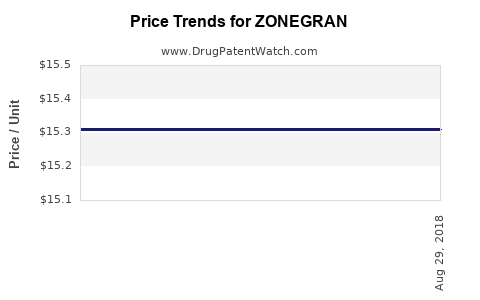
Price increases are unlikely to offset volume erosion for long because payers and pharmacies can substitute generic zonisamide. Revenue stability therefore depends more on patient retention and geographic mix than on pricing power.
Does biosimilar risk affect Zonegran?
No. Biosimilar risk does not apply because Zonegran is a chemically synthesized small molecule, not a biologic. The relevant competitors are generic zonisamide products approved under ANDA procedures.
This distinction matters for forecasting. Biosimilar launches can generate complex interchangeability and switching dynamics, while Zonegran faces the simpler and more aggressive substitution economics of a mature small-molecule generic market.
What patent litigation affects Zonegran?
No major current U.S. patent litigation appears to be a central commercial issue for the established Zonegran capsule business. Historical disputes may have accompanied generic entry, but they no longer define the product’s market position.
The litigation risk profile is now concentrated in ordinary commercial and regulatory matters:
- Product liability claims.
- Manufacturing and quality disputes.
- Trademark or trade-dress issues.
- Contract disputes with distributors.
- Pricing and reimbursement investigations.
- Supply and distribution disagreements.
These matters can create isolated liabilities but are unlikely to restore branded exclusivity.
Are there Zonegran licensing deals?
Zonisamide originated with Dainippon Pharmaceutical, now part of Sumitomo Pharma, while Eisai has been associated with Zonegran commercialization in major markets. The product’s international history reflects regional development, licensing, and distribution arrangements rather than a single uniform global commercialization structure.[4]
Licensing economics are more important in Japan and selected international markets than in the U.S. Generic penetration, local brand ownership, and reimbursement rules vary by country. Any valuation of Zonegran rights should therefore separate:
- U.S. branded and generic economics.
- Japanese zonisamide products and local rights.
- European Zonegran sales.
- Distributor or licensee payments.
- Manufacturing and supply obligations.
- Trademark ownership by territory.
What generic launch scenarios exist for Zonegran?
The principal launch scenario has already occurred: multiple manufacturers sell generic zonisamide capsules. Future scenarios are incremental.
Base case
Generic prices remain low, branded volume continues to decline gradually, and Eisai retains a small residual franchise in selected markets.
Downside case
Additional generic suppliers enter, reimbursement becomes more restrictive, and branded prescriptions shift rapidly to low-cost zonisamide. Revenue falls faster than the mature-product baseline.
Upside case
A supply interruption affects one or more generic competitors, or a regional market maintains brand preference. Eisai receives temporary volume support, but the effect is unlikely to change the long-term trajectory.
Reformulation case
A differentiated liquid, extended-release, or adherence-focused product receives approval. Commercial success would depend on clinical differentiation and payer coverage. A reformulation could create a new patent estate, but it would not automatically restore Zonegran capsule economics.
What geographic markets remain important for Zonegran?
The product’s commercial value is geographically uneven.
| Region |
Market condition |
| United States |
Generic-dominated; low branded pricing power |
| Europe |
Country-specific generic penetration and reimbursement |
| Japan |
Important zonisamide market with local product and licensing dynamics |
| Other markets |
Variable brand recognition, local registration, and distribution economics |
Japan has particular strategic relevance because zonisamide has a long clinical history there and is marketed in local products, including Excegran. The legal owner, commercial partner, and formulation can differ from the Zonegran structure used in the United States and Europe.
What manufacturing and intellectual-property barriers remain?
Manufacturing barriers are limited for standard zonisamide capsules because the active ingredient and dosage form are mature. Generic manufacturers can compete through established API sourcing, formulation know-how, regulatory filings, and scale.
Potential barriers include:
- API qualification and supplier reliability.
- Impurity control.
- Process validation.
- Stability data.
- Regulatory approval in individual countries.
- Capacity for multiple capsule strengths.
- Compliance with current good manufacturing practices.
These barriers can affect the number of active suppliers and create temporary pricing changes, but they do not amount to durable patent exclusivity.
Key Takeaways
- Zonegran is the branded zonisamide capsule product commercialized by Eisai.
- The FDA approved Zonegran in the United States on March 27, 2000.
- U.S. generic zonisamide competition has existed since the mid-2000s.
- The core patent estate is expired or commercially ineffective against standard generic capsules.
- There is no meaningful current Paragraph IV catalyst for the established product.
- Biosimilar competition is irrelevant because zonisamide is a small molecule.
- Zonegran is a mature, low-growth product rather than a strategic revenue driver for Eisai.
- Remaining value comes from residual brand demand, regional rights, physician familiarity, and supply reliability.
- Generic substitution, payer pressure, and newer antiseizure medicines will continue to constrain revenue.
- Any material upside would require a differentiated reformulation or favorable regional licensing economics.
FAQs
Is Zonegran still sold under the brand name?
Yes. Zonegran remains an approved branded zonisamide product in relevant markets, although generic zonisamide capsules are widely available and commonly substituted.
Is zonisamide a controlled substance?
Zonisamide is not generally classified as a controlled substance in the United States. It is a prescription antiseizure medicine with safety warnings and monitoring requirements.
Can generic manufacturers substitute zonisamide for Zonegran?
Yes, subject to state pharmacy laws, payer rules, and product-specific substitution requirements. FDA-approved generic zonisamide capsules are therapeutically equivalent to the reference product for the approved dosage form and strengths.[2]
Does Zonegran have orphan-drug exclusivity?
Zonegran’s original U.S. approval for adjunctive treatment of partial seizures was not dependent on a current orphan-drug exclusivity period. Any historical regulatory exclusivity has expired.
Is a new extended-release zonisamide product commercially attractive?
Potentially, but the opportunity would require evidence of better adherence, tolerability, pharmacokinetics, or clinical convenience. Generic immediate-release capsules create a low-cost benchmark that makes payer and prescriber adoption difficult without measurable differentiation.
References
-
U.S. Food and Drug Administration. (2000). Zonegran (zonisamide) capsules: Prescribing information and approval history. FDA.
-
U.S. Food and Drug Administration. (2024). Orange Book: Approved drug products with therapeutic equivalence evaluations. FDA.
-
Eisai Co., Ltd. (2024). Integrated report 2024 and financial results materials. Eisai Co., Ltd.
-
Sumitomo Pharma Co., Ltd. (2024). Corporate and product information: Zonisamide and Excegran. Sumitomo Pharma Co., Ltd.