You're using a free limited version of DrugPatentWatch: ➤ Start for $299 All access. No Commitment.

Last Updated: December 19, 2025

ZIPSOR Drug Patent Profile


✉ Email this page to a colleague

« Back to Dashboard


Which patents cover Zipsor, and what generic alternatives are available?

Zipsor is a drug marketed by Asio Holdings and is included in one NDA. There are six patents protecting this drug and one Paragraph IV challenge.

The generic ingredient in ZIPSOR is diclofenac potassium. There are forty-seven drug master file entries for this compound. Forty-nine suppliers are listed for this compound. Additional details are available on the diclofenac potassium profile page.

AI Deep Research
Questions you can ask:
  • What is the 5 year forecast for ZIPSOR?
  • What are the global sales for ZIPSOR?
  • What is Average Wholesale Price for ZIPSOR?
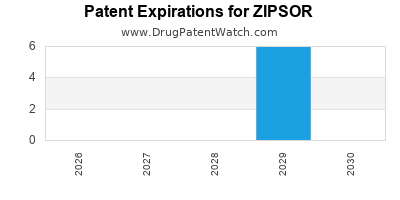
Drug patent expirations by year for ZIPSOR
Drug Prices for ZIPSOR

See drug prices for ZIPSOR

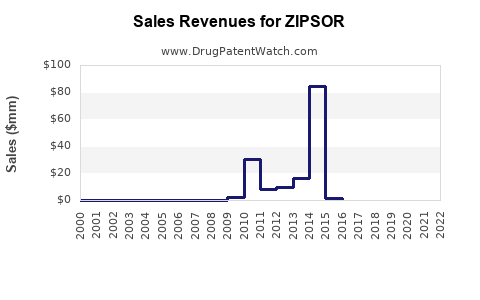
Drug Sales Revenue Trends for ZIPSOR

See drug sales revenues for ZIPSOR

Recent Clinical Trials for ZIPSOR

Identify potential brand extensions & 505(b)(2) entrants

SponsorPhase
DepomedPhase 4
Hospira, now a wholly owned subsidiary of PfizerPhase 1
Hospira, Inc.Phase 1

See all ZIPSOR clinical trials

Pharmacology for ZIPSOR
Paragraph IV (Patent) Challenges for ZIPSOR
Tradename Dosage Ingredient Strength NDA ANDAs Submitted Submissiondate
ZIPSOR Capsules diclofenac potassium 25 mg 022202 1 2012-11-14

US Patents and Regulatory Information for ZIPSOR

ZIPSOR is protected by six US patents.

Applicant Tradename Generic Name Dosage NDA Approval Date TE Type RLD RS Patent No. Patent Expiration Product Substance Delist Req. Exclusivity Expiration
Asio Holdings ZIPSOR diclofenac potassium CAPSULE;ORAL 022202-001 Jun 16, 2009 AB RX Yes Yes 7,884,095 ⤷  Get Started Free ⤷  Get Started Free
Asio Holdings ZIPSOR diclofenac potassium CAPSULE;ORAL 022202-001 Jun 16, 2009 AB RX Yes Yes 7,939,518 ⤷  Get Started Free ⤷  Get Started Free
Asio Holdings ZIPSOR diclofenac potassium CAPSULE;ORAL 022202-001 Jun 16, 2009 AB RX Yes Yes 8,110,606 ⤷  Get Started Free ⤷  Get Started Free
Asio Holdings ZIPSOR diclofenac potassium CAPSULE;ORAL 022202-001 Jun 16, 2009 AB RX Yes Yes 7,662,858 ⤷  Get Started Free ⤷  Get Started Free
Asio Holdings ZIPSOR diclofenac potassium CAPSULE;ORAL 022202-001 Jun 16, 2009 AB RX Yes Yes 9,561,200 ⤷  Get Started Free ⤷  Get Started Free
>Applicant >Tradename >Generic Name >Dosage >NDA >Approval Date >TE >Type >RLD >RS >Patent No. >Patent Expiration >Product >Substance >Delist Req. >Exclusivity Expiration

International Patents for ZIPSOR

See the table below for patents covering ZIPSOR around the world.

Country Patent Number Title Estimated Expiration
Australia 770772 ⤷  Get Started Free
World Intellectual Property Organization (WIPO) 9936060 ⤷  Get Started Free
Ukraine 80085 ORAL LIQUID COMPOSITIONS ⤷  Get Started Free
European Patent Office 1049459 COMPOSITIONS LIQUIDES ORALES (ORAL LIQUID COMPOSITIONS) ⤷  Get Started Free
Mexico PA02000583 COMPOSICIONES LIQUIDAS ORALES. (ORAL LIQUID COMPOSITIONS.) ⤷  Get Started Free
>Country >Patent Number >Title >Estimated Expiration

Market Dynamics and Financial Trajectory for ZIPSOR (Ketorolac Tromethamine)

Last updated: July 28, 2025


Introduction

ZIPSOR, a proprietary formulation of ketorolac tromethamine, serves as a potent analgesic primarily used for short-term management of moderate to severe pain. Recognized for its efficacy and rapid onset of action, ZIPSOR operates within a complex landscape shaped by regulatory, competitive, scientific, and economic factors. Understanding these dynamics and projecting the financial trajectory of ZIPSOR is vital for stakeholders seeking strategic positioning in the analgesic market.


Market Landscape and Key Drivers

Epidemiology and Market Demand

The global demand for effective pain management solutions influences ZIPSOR's market trajectory. Chronic pain affects approximately 20% of adults globally, heightening demand for efficacious, fast-acting analgesics [[1]]. In the United States, acute pain management remains lucrative, especially in post-surgical settings, where short-term NSAIDs like ketorolac are preferred. The aging population further amplifies this need, as age-related degenerative conditions increase pain-related healthcare utilization.

Regulatory Environment

ZIPSOR's market growth hinges on regulatory approvals, label indications, and safety profile considerations. Ketorolac, while effective, bears restrictions due to potential adverse effects—namely gastrointestinal (GI) bleeding and renal toxicity [[2]]. In the U.S., the FDA limits parenteral ketorolac use to five days, and oral formulations face scrutiny. Any reformulation or labeling to mitigate adverse events could influence market access and uptake.

Competitive Dynamics

ZIPSOR operates within a competitive analgesic sphere dominated by NSAIDs, opioids, and emerging non-opioid therapies. Major competitors include generic NSAIDs, COX-2 inhibitors, opioids, and non-pharmacologic interventions. The proliferation of generics exerts downward pressure on prices and margins. Additionally, the ongoing opioid crisis encourages shift toward non-opioid options like ZIPSOR, potentially fueling demand.

Scientific and Technological Innovations

Advances in pharmacology aim to enhance safety and efficacy profiles. Developments in topical NSAIDs, drug delivery systems, and biomarker-driven therapy influence ZIPSOR’s positioning. Any innovation that improves tolerability or reduces adverse effects could extend market penetration.

Reimbursement and Healthcare Policy

Reimbursement policies significantly influence sales trajectories. Favorable insurance coverage and formulary inclusion boost prescription rates. Conversely, cost-containment initiatives and adverse event-related restrictions could limit access, impacting revenue streams.


Financial Trajectory Projections

Historical Performance

Although precise sales data for ZIPSOR is proprietary, historical trends for ketorolac products suggest moderate but stable sales growth, driven by acutely managing postoperative pain and short-term inflammatory conditions. Market penetration initially benefited from clinician familiarity and demonstrated efficacy, but growth plateaued owing to safety concerns and generic competition.

Current Market Position

ZIPSOR’s commercial performance in recent years reflects:

  • Market Penetration: Steady presence in hospital and outpatient settings.
  • Pricing Strategy: Premium pricing maintained through brand recognition and formulation advantages.
  • Regulatory Constraints: Limitations on duration and patient suitability restrict widespread adoption.

Forecasting Future Trends

Short-term (1-3 years):

  • Continued Demand: Driven by medical necessity for potent analgesics with non-opioid profiles.
  • Market Challenges: Rising generic competition and safety concerns may suppress revenue growth.
  • Regulatory Tightening: Potential for stricter guidelines could constrain prescribing patterns and sales.

Medium to Long-term (4-10 years):

  • Innovation Impact: Introduction of safer, targeted NSAID formulations or delivery systems may enhance attractiveness.
  • Market Shifts: Adoption of new analgesics, including biologics or non-pharmacologic modalities, could erode traditional NSAID segments.
  • Regulatory and Policy Evolution: Increasing emphasis on safety could lead to new labeling restrictions; conversely, approval of safer derivatives might rejuvenate market potential.

Financial estimations suggest modest compound annual growth rates (CAGRs) of 2-4%, contingent on regulatory developments and competitive positioning. Revenue expansion hinges on strategic differentiation, such as new formulations with improved safety profiles and expanded indications.


Regulatory and Market Challenges

  • Safety Profile Concerns: GI bleeding, renal impairment, and cardiovascular risks limit long-term use prospects.
  • Market Saturation and Generics: With patent expirations and proliferating generics, margins are under pressure.
  • Prescriber and Patient Preferences: Growing preference for opioid-sparing analgesics and non-invasive options may further limit NSAID market share.
  • Differential Access: Insurance and formulary decisions critically shape sales trajectories, with high-cost drugs facing reimbursement hurdles.

Opportunities for Growth

  • Formulation Innovation: Development of topical or combination products to enhance safety.
  • Expanded Indications: Exploring uses in specific patient populations, such as perioperative pain in cardiac surgery, with appropriate safety measures.
  • Strategic Partnerships: Collaborations with healthcare providers and payers to optimize formulary inclusion.
  • Market Expansion: Geographic growth in emerging markets, where pain management infrastructure expands, offers potential revenue streams.

Conclusion

The financial trajectory of ZIPSOR is intricately tied to evolving regulatory landscapes, competitive innovations, and shifting clinician and patient preferences. While current demand remains steady, prospects for growth depend heavily on safety improvements, regulatory adaptations, and market expansion strategies. Financial forecasts indicate restrained but stable growth, with significant variability driven by scientific advances and healthcare policy developments.


Key Takeaways

  • Market demand for short-term, non-opioid analgesics sustains ZIPSOR’s relevance in acute pain management.
  • Safety concerns and regulatory restrictions are critical factors limiting market expansion and affecting revenue stability.
  • Competitive pressure from generics and emerging therapies necessitates innovation to maintain profitability.
  • Strategic investments in formulation improvement and expanding indications could provide growth avenues.
  • Healthcare policies emphasizing safety and cost-effectiveness will continue to shape ZIPSOR’s market performance.

FAQs

1. How does ZIPSOR differ from other NSAIDs on the market?
ZIPSOR contains ketorolac tromethamine, offering rapid and potent analgesic effects predominantly indicated for short-term pain relief. Unlike some NSAIDs, it has a well-documented efficacy in post-surgical pain but is limited by safety concerns, leading to restrictions on its use duration.

2. What are the primary safety concerns associated with ZIPSOR?
Major safety issues include gastrointestinal bleeding, renal toxicity, and cardiovascular risks, especially with prolonged use. These concerns have led to strict prescribing guidelines and limited long-term application.

3. How might regulatory changes impact ZIPSOR’s market potential?
Tighter regulations aimed at reducing adverse effects could restrict prescribing, curtail sales, or prompt reformulation efforts. Conversely, approvals of safer derivatives or formulations could enhance future market opportunities.

4. What role does market competition play in ZIPSOR’s financial outlook?
Ever-increasing competition from generics, alternative analgesics (e.g., opioids, acetaminophen), and non-pharmacologic therapies exerts downward pressure on prices and shares, challenging profit margins.

5. What strategies could bolster ZIPSOR’s long-term market position?
Innovations in safer formulations, expansion into new indications, optimized reimbursement strategies, and geographic market entry are critical for enhancing ZIPSOR's competitive edge and financial resilience.


References

[1] Global Burden of Disease Study, “Chronic and Acute Pain Epidemiology,” Lancet, 2019.

[2] US Food and Drug Administration (FDA), “Ketorolac Tromethamine Safety Guidelines,” 2021.

More… ↓

⤷  Get Started Free

Make Better Decisions: Try a trial or see plans & pricing

Drugs may be covered by multiple patents or regulatory protections. All trademarks and applicant names are the property of their respective owners or licensors. Although great care is taken in the proper and correct provision of this service, thinkBiotech LLC does not accept any responsibility for possible consequences of errors or omissions in the provided data. The data presented herein is for information purposes only. There is no warranty that the data contained herein is error free. We do not provide individual investment advice. This service is not registered with any financial regulatory agency. The information we publish is educational only and based on our opinions plus our models. By using DrugPatentWatch you acknowledge that we do not provide personalized recommendations or advice. thinkBiotech performs no independent verification of facts as provided by public sources nor are attempts made to provide legal or investing advice. Any reliance on data provided herein is done solely at the discretion of the user. Users of this service are advised to seek professional advice and independent confirmation before considering acting on any of the provided information. thinkBiotech LLC reserves the right to amend, extend or withdraw any part or all of the offered service without notice.