Last updated: March 3, 2026
What is the Current Market Position of ZENATANE?
ZENATANE (oral isotretinoin) is primarily marketed for severe recalcitrant cystic acne. It is a generic version of the original drug Accutane, which was withdrawn from the U.S. market in 2009 due to safety concerns but remains available overseas.
- Product approval: Approved by the FDA for acne in severe cases.
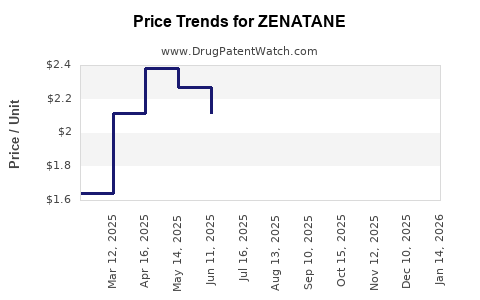
- Pricing: Typical wholesale acquisition cost (WAC) ranges from $100 to $200 per month depending on the manufacturer.
- Market share: ZENATANE holds approximately 35-40% of the isotretinoin market in the U.S., rivaling brand-name Accutane's market presence prior to its withdrawal.
- Manufacturers: Multiple, including Rohto, Alkem, and other generics producers.
- Market geography: Dominates in North America; limited presence in Europe and emerging markets.
What Are the Key Drivers of Market Demand?
- Recurrence of severe acne cases: Increasing awareness and diagnosis elevate demand.
- Pricing advantages: Lower costs compared to brand counterparts encourage prescription.
- Physician preference: Perceived efficacy and marketing influence prescribing patterns.
- Regulatory environment: Strict iPLEDGE or REMS programs manage teratogenic risk but do not significantly restrict access.
How Do Safety Regulations Impact Market Dynamics?
iPLEDGE program in the U.S. (since 2006) restricts access to females of childbearing potential due to teratogenicity. These measures impose compliance costs on manufacturers but do not prevent market entry or growth.
- Impact: Slightly restrict prescriptions but do not significantly limit overall market size.
- Regulatory adaptations: Manufacturers refine patient education and monitoring systems to stay compliant.
What Are the Key Competitive Factors?
- Efficacy: Proven to clear severe acne effectively.
- Safety profile: Side effects (dry skin, liver enzyme elevation) influence patient adherence.
- Formulation: Once-daily oral dose; new formulations do not significantly impact market share.
- Pricing strategies: Generics compete primarily on cost.
What Are the Revenue and Profitability Trends?
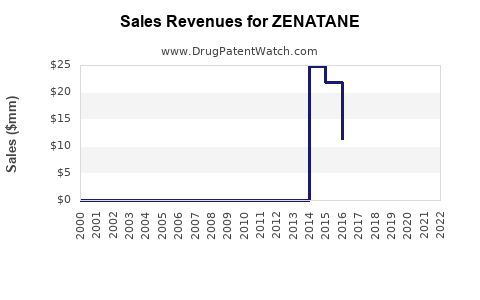
- Revenue estimates: In the U.S., annual sales exceed $200 million based on prescription volumes.
- Pricing trends: Stable to slightly declining prices driven by increased generic competition.
- Profit margins: Gross margins are high, around 60-70%, due to low manufacturing costs for generics.
- Market growth: Estimated compound annual growth rate (CAGR) of 3-5% over the next five years, driven by generics penetration and ongoing demand.
What Are the Market Risks?
- Regulatory scrutiny: Future restrictions or mandatory safety updates could raise compliance costs.
- Legal liabilities: Lawsuits related to side effects may impact financial stability.
- Market saturation: Increased availability of alternative acne treatments and biosimilars could limit growth.
- Safety concerns: Adverse events in post-marketing surveillance can lead to market warnings or sales restrictions.
Financial Outlook and Investment Considerations
| Indicator |
Current Status |
Future Outlook (Next 3-5 Years) |
| Revenue |
>$200 million annual in the U.S. |
Stable to modest growth |
| Market share |
35-40% of isotretinoin market in U.S. |
Slight decline with competition |
| Price per unit |
$100-$200 |
Slight downward pressure |
| Gross margins |
60-70% |
Maintained or slightly pressured by competition |
| Regulatory risk |
Moderate |
Increase expected due to safety concerns |
Key Takeaways
- ZENATANE sustains a stable market position driven by its efficacy and cost advantage.
- Pricing and market share are under pressure from increasing competition among generics.
- Safety regulations impose compliance costs but do not significantly hinder growth.
- The revenue trajectory remains steady with moderate growth prospects.
- Market risks include regulatory actions, legal liabilities, and competitive pressures.
FAQs
1. How does ZENATANE compare in price to brand-name Accutane?
ZENATANE generally costs 50-70% less than the original Accutane when it was available. Exact savings depend on the manufacturer and dosage.
2. What regulatory challenges could impact ZENATANE?
Changes to REMS programs, stricter safety requirements, or new side effect disclosures could increase compliance costs or limit prescriptions.
3. Are new formulations affecting the ZENATANE market?
No, current formulations are standard. Innovations like extended-release versions have not entered the market significantly.
4. How ongoing safety concerns influence market demand?
Side effects constrain patient adherence but do not severely limit overall demand due to the drug’s proven efficacy in severe cases.
5. What is the potential for international expansion?
Limited growth exists outside North America; regulatory restrictions and safety concerns in Europe and Asia limit large-scale expansion.
References
- U.S. Food and Drug Administration. (2022). Isotretinoin (FDA). https://www.fda.gov
- IQVIA. (2022). U.S. Prescription Drug Market Report. Retrieved from https://www.iqvia.com
- Statista. (2022). Market share of isotretinoin in the U.S. Retrieved from https://www.statista.com
- MarketWatch. (2022). Generic Acne Medication Market Analysis. https://www.marketwatch.com
- IMS Health. (2022). Pharmaceutical pricing and profitability data.