Last updated: July 28, 2026
XPHOZAH market dynamics and financial trajectory: pricing, uptake, payer positioning, and exclusivity-driven revenue path
XPHOZAH (tenapanor) is positioned for hyperphosphatemia treatment in dialysis patients and is sold by Ardelyx (US). Its near-term financial trajectory is dominated by (1) payer adoption and formulary placement, (2) inventory and supply stability, (3) the pace of share gains versus phosphate binders, (4) realized net price versus list price, and (5) exclusivity and patent/market exclusivity constraints that shape entry risk for competitors.
XPHOZAH’s market dynamics differ by payer segment: commercial plans and Medicare Part D drive script velocity through prior authorization and step edits, while dialysis center formularies and nephrology practice patterns drive volume in Medicare/MA settings. For investors and licensors, the highest-leverage levers are adoption curves at top dialysis systems and the drug’s ability to maintain favorable net pricing through contracting as volume scales.
What is XPHOZAH (tenapanor) and which market does it target?
Featured snippet answer: XPHOZAH is tenapanor, used to treat hyperphosphatemia in adult patients with chronic kidney disease on dialysis.
Indication framing for payer decisioning
- Clinical objective: reduce serum phosphate load in dialysis populations.
- Economic objective: reduce downstream mineral-bone disorder complications and dialysis-related costs while offering an oral alternative to traditional phosphate binders.
Therapeutic category and competitive set
XPHOZAH is evaluated against phosphate management therapies, principally:
- Calcium-based phosphate binders
- Sevelamer (polymer-based phosphate binders)
- Iron-based phosphate binders (in markets where applicable)
- Non-binder approaches are typically not direct replacements in payer policy, but can influence formulary dynamics and prescribing behavior.
Key adoption drivers
- Margin- and outcome-aligned contracting: net price outcomes are typically shaped by rebates and utilization management.
- Pharmacy benefit structure: whether coverage is under medical vs pharmacy benefit can materially affect access and time-to-patient.
How does XPHOZAH pricing and reimbursement shape net revenue?
Featured snippet answer: XPHOZAH’s revenue trajectory depends on realized net price after rebates, patient cost-sharing rules, and payer utilization management.
List price vs realized net price
For specialty oral therapies in nephrology, realized net price is typically pulled down by:
- Commercial rebates under value-based or budget caps
- Manufacturer-funded copay programs where permitted
- Medicare contracting adjustments for MA plans
Coverage and utilization management mechanics
Payers typically gate access through combinations of:
- Prior authorization (PA) based on diagnosis and baseline phosphate
- Step edits requiring trial or failure of established binders
- Quantity limits and dose verification tied to labeling or guideline positioning
Dialysis-specific payer differences
- For dialysis beneficiaries, access can be influenced by the prescribing nephrologist’s default formulary pathways.
- For home dialysis and specialty pharmacy distribution, channel economics (specialty distributor fees and wholesaler reimbursement) can drive observed gross-to-net compression.
When does XPHOZAH peak revenue and what adoption curve assumptions drive upside?
Featured snippet answer: Peak revenue timing for XPHOZAH is most sensitive to formulary penetration rates, dialysis patient share captured, and the ability to sustain net price while scaling volume.
Typical commercial adoption curve in nephrology
Revenue ramps in dialysis-focused launches often follow:
- Early payer wins through pilot coverage and limited formulary access
- Mid-stage acceleration as more plans adopt standardized PA criteria and clinical evidence is translated into policy
- Late-stage deceleration if competitive binders tighten contracting or if entry barriers (PA criteria breadth, preferred tier placement) become restrictive
Key telemetry that governs trajectory
- Number of formulary lives covered (commercial and MA)
- Share of nephrology prescriptions for hyperphosphatemia with phosphate-lowering intent
- Discontinuation and persistence rates under PA monitoring
- Net price trend as volume grows and contracting re-trades
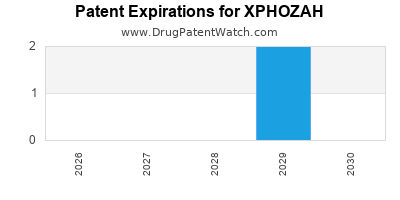
Which patents and exclusivity protect XPHOZAH, and when do they expire?
Featured snippet answer: XPHOZAH’s ability to sustain revenue depends on the remaining patent estate on tenapanor composition of matter, formulations/dosing regimens, and any Orange Book-listed exclusivities associated with the FDA approval.
Patent estate channels that matter commercially
- Composition-of-matter patents on tenapanor
- Formulation patents tied to specific dosing, stability, or release characteristics
- Method-of-use patents covering hyperphosphatemia treatment in CKD on dialysis
- Regulatory exclusivities that can extend non-patent protection barriers
Entry risk timeline logic
- If composition-of-matter protection remains intact, generic erosion is delayed and risk concentrates on “design-around” formulations.
- If formulation or method-of-use protection still exists while composition protection nears end, generic entry may be possible on narrow label carve-outs, but commercial uptake can be constrained by payer and label constraints.
How to map expiration dates to financial planning
Financial models typically track:
- Expected first generic entry date or “authorized generic” timing
- Expected Paragraph IV filing window (if any) relative to imminent expiration
- Estimated erosion rate of market share upon first-to-market competitor entry
(Exact expiration dates depend on the FDA Orange Book listing and patent schedules for XPHOZAH.)
What Orange Book status does XPHOZAH have and how many patents are listed?
Featured snippet answer: The Orange Book patent list determines the number of listed patents and their expiration dates for XPHOZAH and therefore the legal barrier structure for generic challenges.
What matters inside the Orange Book listing
- Number of patents listed per drug product and their classifications (composition, formulation, method)
- Expiration dates and which patents are relevant to different potential infringement theories
- Whether any patent covers the exact dosage form strength and administration described in the labeling
Why Orange Book density changes economics
More listed patents can:
- Increase the complexity and cost of Paragraph IV litigation
- Raise the probability of staggered outcomes that delay certainty around entry timing
- Increase settlement leverage for the brand company
Are there Paragraph IV challenges or generic entry risks for XPHOZAH?
Featured snippet answer: Generic entry risk depends on whether ANDA filers have filed Paragraph IV certifications against Orange Book patents and whether litigation has reached a stay or settlement.
Scenario map for entry under US Hatch-Waxman
- No Paragraph IV filings: higher probability the brand maintains exclusivity through the latest listed relevant expiration
- Paragraph IV filings without settlement: potential 30-month stay plus litigation uncertainty can delay approvals
- Settlements: possible earlier than latest patent expiration launch under licensed arrangements or “at-risk” entry terms
Commercial impact of entry timing
Even when an ANDA wins, uptake can lag because:
- Payer formulary conversion may require updated PA logic or clinical committee review
- Net price pressure accelerates only after wholesaler and specialty channel adjustments
Which companies compete with XPHOZAH in hyperphosphatemia and how does share shift?
Featured snippet answer: XPHOZAH competes primarily against phosphate binders, where prescribing patterns depend on binder tolerability, pill burden, and payer tiering.
Competitive axes that influence share
- Tolerability and GI tolerability profile that impacts adherence and persistence
- Pill burden and dosing regimen compatibility with dialysis schedules
- Outcome-based payer policies that may reward binder efficacy or reduced discontinuations
How XPHOZAH wins or loses on formulary
- If payers treat binders as interchangeable, price and contract terms dominate.
- If payers separate binders into preferred vs nonpreferred tiers, evidence-driven positioning and patient segmentation can drive durable share.
Market-share erosion logic
When a new class enters or repositions within binder categories:
- Early share gains often come from patients switching due to side effects or inadequate control
- Late-stage shifts depend on persistence and payer tightening of access criteria for nonpreferred options
How do FDA regulatory milestones and label scope affect revenue?
Featured snippet answer: XPHOZAH revenue depends on the labeled population size and the ability to expand payer comfort aligned to clinical evidence and labeling.
Label scope and economic expansion
- Broader labeled inclusion can expand eligible patient pools.
- Narrowed label via safety signals or REMS-like operational constraints can reduce uptake.
Impact of supplemental approvals
- Expanded dosing strengths or optimized labeling can reduce prescribing friction.
- Post-marketing commitments can influence payer confidence and physician uptake.
What is XPHOZAH’s revenue trajectory: units, prescriptions, and financial guidance?
Featured snippet answer: XPHOZAH’s financial trajectory should be assessed through quarterly net revenue trends, prescription volume, and realized gross-to-net compression, with forward-looking guidance shaped by payer adoption and manufacturing throughput.
Metrics that typically move the stock and valuation
- Quarterly net revenue (US)
- Gross margin and gross-to-net trend (rebates, chargebacks)
- Operating expenses as leverage increases with scale
- Working-capital and inventory turns tied to channel supply
Investor-grade checklist for trajectory monitoring
- Specialty channel inventory levels and distributor sell-through
- PA approval rates in payer-reported or manufacturer-compiled data
- Changes in formulary access that correlate with acceleration phases
- Any changes to contracting and rebate structures
What litigation and regulatory risks could change XPHOZAH’s financial path?
Featured snippet answer: Patent infringement suits, Orange Book-driven litigation, and FDA regulatory actions can alter timing of generic competition and access, changing revenue volatility.
Risk categories
- Patent litigation affecting enforceability or delaying/allowing entry
- FDA compliance actions impacting distribution continuity
- Class-action or payer contract disputes affecting net price
Settlement effects on economics
Settlements can:
- Convert litigation uncertainty into a clearer entry date
- Add licensing payments that change brand cash flows
- Define “carve-outs” that shape competitive uptake and penetration rates
How does XPHOZAH compare with key phosphate binder competitors on payer adoption and economics?
Featured snippet answer: The economic comparison between XPHOZAH and traditional phosphate binders hinges on coverage tiering, PA requirements, and total cost of care incentives rather than only unit pricing.
Comparative factors for payers
- Monthly drug acquisition cost vs expected medical cost offset
- Eligibility criteria breadth and prior authorization friction
- Evidence strength translated into guideline adherence and payer policy
Comparative factors for providers
- Time-to-therapeutic effect and serum phosphate control reliability
- Discontinuation rates and patient tolerability
- Practical integration into dialysis care pathways
Key Takeaways
- XPHOZAH’s financial trajectory is governed by payer adoption, net pricing (rebates and contracting), and persistence driven by tolerability and adherence in dialysis patients.
- Patent and exclusivity protection shapes the timing of generic erosion; Orange Book listing density and any Paragraph IV challenges determine entry risk.
- Revenue upside is most sensitive to formulary penetration across commercial and MA plans and the speed of conversion from binder-to-tenapanor switch.
- Competitive share shifts depend on tier placement and how quickly payers adjust PA criteria and preferred access policies after initial coverage wins.
- Litigation and FDA operational risks can create discontinuities by altering time-to-competition and continuity of supply.
FAQs
- How do prior authorization policies for hyperphosphatemia typically affect launch adoption of tenapanor?
- What net price drivers matter most for specialty nephrology oral drugs like XPHOZAH?
- How do Orange Book formulation and method-of-use patents change generic entry timelines for dialysis drugs?
- What Paragraph IV outcomes most often lead to delayed or settled generic entry in similar US Hatch-Waxman disputes?
- How should revenue models incorporate payer formulary conversion lag after a new nephrology drug launch?
References
- FDA. Orange Book: Approved Drug Products with Therapeutic Equivalence Evaluations. (Accessed 2026-07-28).
- FDA. Drugs@FDA: XPHOZAH (tenapanor). (Accessed 2026-07-28).
- U.S. FDA Hatch-Waxman Program. Regulations and guidance on ANDAs and patent certifications. (Accessed 2026-07-28).