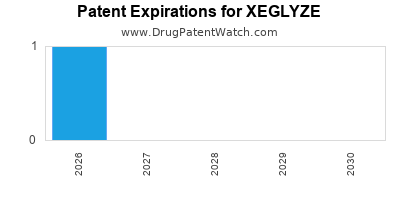
Last updated: February 19, 2026
XEGLYZE (daxibotulinumtoxinA-gcrl) for injection, approved by the U.S. Food and Drug Administration (FDA) on December 17, 2021, targets the cosmetic treatment of moderate to severe glabellar lines in adults. The drug is manufactured by Revance Therapeutics. Its market entry positions it within the highly competitive neurotoxin market, dominated by established players such as Botox (onabotulinumtoxinA), Dysport (abobotulinumtoxinA), Xeomin (incobotulinumtoxinA), and Jeuveau (prabotulinumtoxinA-xvfs).
What is XEGLYZE's Approved Indication and Mechanism of Action?
XEGLYZE is indicated for the temporary improvement in the appearance of moderate to severe glabellar lines associated with procerus and corrugator muscle activity in adults. The drug is a botulinum neurotoxin type A, a purified protein that works by blocking the nerve signals that cause muscle contractions. This blockade leads to a temporary reduction in muscle activity, thereby smoothing the overlying skin and reducing the appearance of wrinkles. The onset of action for XEGLYZE is observed as early as one day after treatment, with maximum effect typically seen at two weeks [1]. The duration of effect is claimed to be up to 24 weeks in clinical trials [1].
What is the Competitive Landscape for XEGLYZE?
The aesthetic neurotoxin market is characterized by high brand recognition, established physician adoption, and significant marketing investment by incumbent products.
- Botox (onabotulinumtoxinA): Developed by AbbVie (formerly Allergan), Botox is the longest-standing and most recognized neurotoxin in the market. It has a broad range of indications beyond cosmetic use, contributing to its market dominance and extensive physician familiarity. Its market share remains substantial despite increased competition.
- Dysport (abobotulinumtoxinA): Owned by Ipsen, Dysport is a direct competitor to Botox, offering a similar mechanism of action. It is known for a potentially faster onset of action in some patients and a broader diffusion, which can be advantageous for certain treatment areas.
- Xeomin (incobotulinumtoxinA): Manufactured by Merz Aesthetics, Xeomin is marketed as a "naked" neurotoxin, meaning it does not contain accessory proteins. This is presented as a potential benefit for patients who may develop antibodies to the accessory proteins in other formulations, though clinical significance is debated.
- Jeuveau (prabotulinumtoxinA-xvfs): Launched by Evolus, Jeuveau is one of the newer entrants, specifically targeting the cosmetic market. It has actively pursued a direct-to-consumer marketing strategy and emphasizes its advanced manufacturing process.
XEGLYZE's competitive positioning relies on differentiating factors such as its claimed duration of effect and potentially its onset. However, capturing market share requires overcoming the established brand loyalty, physician preferences, and extensive educational infrastructure built by competitors over decades.
What are the Key Differentiating Features of XEGLYZE?
Revance Therapeutics has positioned XEGLYZE based on specific clinical attributes:
- Duration of Effect: Clinical studies have reported a duration of effect of up to 24 weeks for moderate to severe glabellar lines [1]. This is longer than the typical 12-16 week duration associated with some competitors, representing a potential value proposition for patients seeking extended wrinkle reduction.
- Onset of Action: XEGLYZE demonstrates an early onset of action, with visible results seen as early as one day post-treatment [1]. While many neurotoxins achieve peak effect in 7-14 days, the rapid initial improvement may appeal to certain patient segments.
- Formulation: XEGLYZE is a liquid formulation, which differs from the powder formulations of many other botulinum neurotoxins that require reconstitution prior to injection. This liquid-to-liquid formulation is presented as a convenience factor for healthcare providers, potentially reducing preparation time and variability.
The impact of these differentiating features on market penetration and pricing strategies is a critical element of XEGLYZE's financial trajectory.
What is XEGLYZE's Clinical Trial Data and Efficacy Profile?
The FDA approval of XEGLYZE was based on data from two pivotal Phase 3 clinical trials, DWP-001 and DWP-002, which enrolled over 600 participants [1].
- Efficacy Endpoints: The primary efficacy endpoint in these trials was the proportion of subjects achieving a 2-grade improvement or better on the Glabellar Line and Muscle Assessment Scale (GLAMAS) at Week 4.
- In DWP-001, 75.1% of subjects achieved this endpoint [1].
- In DWP-002, 71.4% of subjects achieved this endpoint [1].
- Duration of Response: Subjects who responded to treatment at Week 4 maintained their response for up to 24 weeks [1].
- Safety Profile: The most common adverse events reported in clinical trials included injection site pain (4.2%), headache (8.7%), and ptosis (2.7%) [1]. Serious adverse events were rare.
The robust efficacy and safety data are foundational for physician adoption and patient demand. However, real-world effectiveness and patient satisfaction can diverge from clinical trial results.
What is Revance Therapeutics' Financial Position and Commercialization Strategy for XEGLYZE?
Revance Therapeutics is a biotechnology company focused on aesthetic and therapeutic applications of botulinum toxin. The commercialization of XEGLYZE is a key pillar of its growth strategy.
- Revenue Generation: As of the latest available financial reporting, Revance Therapeutics has been in the early stages of monetizing XEGLYZE. The company has focused on building its sales force and establishing key opinion leader relationships. Revenue from XEGLYZE will directly contribute to Revance's top line, aiming to achieve profitability and fund further R&D.
- Sales and Marketing Investments: Revance has invested significantly in commercial infrastructure, including sales representatives and marketing campaigns, to support the launch and adoption of XEGLYZE. This includes educating healthcare providers about the product's benefits and differentiating factors.
- Partnerships and Distribution: Revance has entered into agreements to support the commercialization of XEGLYZE. For example, a partnership with VTRAC was established to support specialty pharmacy distribution for the product in the U.S. [2].
- Pricing Strategy: The pricing of XEGLYZE is expected to reflect its premium attributes, particularly its claimed longer duration of effect. Competitive pricing analysis will be crucial to capture market share without triggering aggressive price wars with established players. The average price per unit and per treatment session will be key indicators of market acceptance and Revance's pricing power.
Detailed financial statements from Revance Therapeutics will be necessary to track actual revenue, cost of goods sold, and operating expenses related to XEGLYZE. This will provide insight into the drug's financial performance and Revance's ability to achieve its profitability targets.
What is the Projected Market Growth and Revenue for XEGLYZE?
The global aesthetic neurotoxin market is projected to grow steadily, driven by increasing consumer demand for minimally invasive cosmetic procedures, an aging global population, and rising disposable incomes in emerging markets.
- Market Size: The global neurotoxin market for aesthetic applications was valued at approximately USD 4.5 billion in 2022 and is projected to grow at a compound annual growth rate (CAGR) of 7.5% to 9.0% through 2030 [3, 4].
- XEGLYZE's Market Share Potential: Capturing a meaningful share of this market will depend on effective differentiation and physician adoption. If XEGLYZE can achieve a 5-10% market share within the next 3-5 years, this could translate to annual revenues in the hundreds of millions of dollars for Revance Therapeutics.
- Factors Influencing Growth:
- Physician Education and Adoption: Continued investment in training and education for aesthetic practitioners will be paramount.
- Patient Awareness and Demand: Marketing efforts that highlight XEGLYZE's unique benefits, such as its extended duration, can drive patient inquiries and demand.
- Reimbursement and Payer Landscape: While primarily an elective cosmetic procedure, understanding any potential for formulary considerations or patient financing programs can influence access.
- Competitive Responses: Aggressive marketing and pricing strategies from competitors could impact XEGLYZE's growth trajectory.
Accurate revenue projections will require ongoing monitoring of sales data, market penetration rates, and competitive dynamics.
What are the Key Regulatory Considerations for XEGLYZE?
The regulatory pathway for botulinum toxins is stringent, involving rigorous clinical trials to demonstrate safety and efficacy.
- FDA Approval: The initial approval for moderate to severe glabellar lines was a critical milestone. Revance Therapeutics has also pursued regulatory pathways for other indications.
- Post-Market Surveillance: Like all approved drugs, XEGLYZE is subject to post-market surveillance by the FDA to monitor for any emerging safety concerns.
- Labeling and Marketing Restrictions: Regulatory bodies impose strict rules on how drugs can be marketed, particularly concerning claims of efficacy and safety. Revance must adhere to these guidelines to avoid regulatory action.
- International Approvals: For global market expansion, XEGLYZE will require separate approvals from regulatory agencies in other regions, such as the European Medicines Agency (EMA) and others. This involves navigating different regulatory requirements and timelines.
What are the Potential Risks and Challenges for XEGLYZE?
Despite its promising clinical profile, XEGLYZE faces several challenges:
- Market Saturation and Established Competition: The neurotoxin market is mature and highly competitive. Incumbents have strong brand loyalty and established distribution channels.
- Physician Inertia: Healthcare providers may be reluctant to switch from products they are familiar with and have integrated into their practice routines.
- Cost-Effectiveness Perceptions: While XEGLYZE claims longer duration, its price point relative to competitors will be scrutinized by both providers and patients in terms of overall cost-effectiveness per treatment or per month of effect.
- Adverse Event Profile: While generally safe, any unexpected or severe adverse events in the real-world setting could negatively impact adoption and create regulatory scrutiny. Specific concerns include potential for ptosis (drooping eyelid) and brow ptosis, common to all botulinum neurotoxins.
- Manufacturing and Supply Chain: Ensuring consistent high-quality manufacturing and a robust supply chain is critical, especially as demand scales.
- Reimbursement Uncertainty: As a cosmetic procedure, reimbursement is typically out-of-pocket. Any shifts in patient willingness to spend on elective procedures could impact sales.
Key Takeaways
XEGLYZE enters a competitive aesthetic neurotoxin market, vying for share against established brands like Botox. Its primary differentiating factors are a claimed duration of effect up to 24 weeks and a liquid-to-liquid formulation designed for practitioner convenience. Revance Therapeutics is investing in sales and marketing infrastructure to drive adoption, positioning XEGLYZE for growth within a steadily expanding global market. Success will depend on its ability to overcome physician inertia, effectively communicate its value proposition, and navigate competitive pressures.
Frequently Asked Questions
-
What is the primary competitive advantage of XEGLYZE compared to other neurotoxins like Botox?
XEGLYZE's primary claimed advantage is its duration of effect, which clinical trials indicate can last up to 24 weeks for glabellar lines, potentially longer than many competitors. Its liquid formulation is also cited as a convenience for healthcare providers.
-
What is the expected timeline for XEGLYZE to capture a significant market share?
Market share capture is a multi-year process in the established aesthetic neurotoxin market. Significant market penetration is expected to be a gradual build, dependent on physician adoption rates and sustained marketing efforts over 3-5 years.
-
Are there any specific patient populations for whom XEGLYZE is particularly well-suited?
Patients seeking longer-lasting results from their glabellar line treatments and those who may benefit from the convenience of a pre-mixed liquid formulation could find XEGLYZE suitable. Individual patient responses and practitioner recommendations will ultimately guide suitability.
-
What is Revance Therapeutics' strategy for expanding XEGLYZE's indications beyond glabellar lines?
Revance Therapeutics has indicated it is pursuing further clinical trials and regulatory submissions for other aesthetic and therapeutic indications for daxibotulinumtoxinA. Specific targets and timelines will be announced as development progresses.
-
How does the pricing of XEGLYZE compare to its competitors, and what is the rationale?
While specific pricing varies by provider and location, XEGLYZE's pricing is positioned to reflect its premium attributes, particularly its extended duration of effect. The rationale is to align price with the perceived value of longer-lasting results.
Citations
[1] Revance Therapeutics. (2021). XEGLYZE™ (daxibotulinumtoxinA-gcrl) for injection Prescribing Information. U.S. Food & Drug Administration.
[2] Revance Therapeutics. (2023, October 26). Revance Therapeutics Announces VTRAC Partnership to Support Specialty Pharmacy Distribution of XEGLYZE™ (daxibotulinumtoxinA-gcrl). [Press Release].
[3] Grand View Research. (2023). Neurotoxin Market Size, Share & Trends Analysis Report By Type (Botulinum Toxin Type A, Botulinum Toxin Type B), By Application (Cosmetic, Therapeutic), By End-use, By Region, And Segment Forecasts, 2023-2030.
[4] Market Research Future. (2023). Neurotoxins Market Analysis Report.