Last updated: February 19, 2026
What is VYZULTA's Regulatory Status and Key Approvals?
VYZULTA (latanoprostene bunod ophthalmic solution, 0.024%) is a prostaglandin analog used to treat open-angle glaucoma and ocular hypertension. Its primary mechanism of action involves increasing aqueous humor outflow through both the trabecular pathway and the uveoscleral pathway, a dual mechanism that differentiates it from other prostaglandin analogs [1].
The U.S. Food and Drug Administration (FDA) approved VYZULTA on November 9, 2017 [2]. The European Medicines Agency (EMA) granted marketing authorization for VYZULTA on June 26, 2019 [3]. Key clinical trials underpinning these approvals include the APOGEE and GEMINI studies. These were two identically designed, 12-month, randomized, comparator-controlled, multicenter studies that evaluated the efficacy and safety of VYZULTA compared to timolol ophthalmic solution 0.5% in patients with open-angle glaucoma or ocular hypertension [4].
What is the Current Market Share and Competitive Landscape for VYZULTA?
VYZULTA operates within the global glaucoma market, a segment experiencing steady growth driven by an aging population and increasing prevalence of the disease. Precise, real-time market share data for individual drugs is often proprietary and subject to rapid fluctuation. However, VYZULTA is positioned as a second-generation prostaglandin analog, aiming to capture market share from both first-generation prostaglandin analogs and other drug classes such as beta-blockers, alpha-agonists, and carbonic anhydrase inhibitors.
The competitive landscape is characterized by several established players and novel therapeutic approaches. Key competitors include:
- Prostaglandin Analogs:
- Latanoprost (Xalatan/Xelpros)
- Travoprost (Travatan Z)
- Bimatoprost (Lumigan)
- Tafluprost (Saflutan)
- Other Glaucoma Medications:
- Timolol (Timoptic) - Beta-blocker
- Brimonidine (Alphagan P) - Alpha-agonist
- Dorzolamide (Trusopt) - Carbonic anhydrase inhibitor
- Fixed-combination therapies (e.g., dorzolamide/timolol, latanoprost/netarsudil)
VYZULTA's dual mechanism of action is its primary differentiator, potentially offering superior intraocular pressure (IOP) reduction for certain patient populations compared to single-pathway agents [5]. However, market penetration depends on physician prescribing habits, formulary access, and patient adherence. The presence of numerous generic prostaglandin analogs also exerts pricing pressure.
What are the Key Clinical Efficacy and Safety Data for VYZULTA?
VYZULTA demonstrated statistically significant IOP reduction in clinical trials. In the APOGEE and GEMINI studies, VYZULTA lowered IOP by an average of 2.5 to 3.5 mmHg more than timolol at various time points. Specifically, VYZULTA achieved mean IOP reductions ranging from 8.4 mmHg to 9.2 mmHg from baseline, while timolol achieved reductions ranging from 5.8 mmHg to 6.7 mmHg [4].
The most common ocular adverse events reported in clinical trials with VYZULTA include:
- Hyperemia (redness) of the conjunctiva: 20%
- Eye pain: 10%
- Conjunctival edema (swelling): 8%
- Ocular discomfort: 8%
- Adverse events were generally mild to moderate in severity.
Key safety considerations include the potential for iris color change (darkening), eyelash growth, and eyelid skin darkening, similar to other prostaglandin analogs. However, these effects are generally considered reversible upon discontinuation of the drug. Unlike some other agents, VYZULTA is not a prodrug, which may influence its pharmacokinetic profile and potential for systemic absorption [6].
What is the Pricing and Reimbursement Landscape for VYZULTA?
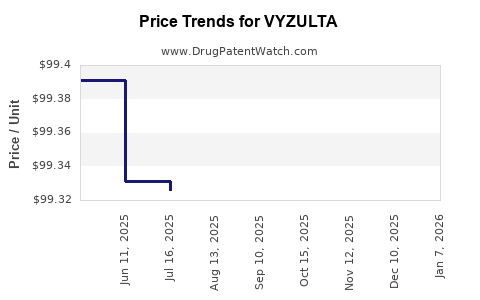
The pricing of VYZULTA is a critical factor influencing its market adoption and financial trajectory. As of late 2023/early 2024, the average wholesale price (AWP) for a 2.5 mL bottle of VYZULTA is approximately \$150-$170. The cost per unit can vary significantly based on pharmacy, insurance coverage, and patient assistance programs [7].
Reimbursement for VYZULTA is primarily driven by:
- Insurance Formularies: Inclusion on commercial and government (Medicare, Medicaid) drug formularies is essential. VYZULTA's position on these formularies, including tier placement and prior authorization requirements, directly impacts patient out-of-pocket costs and physician prescribing decisions.
- Managed Care Organizations (MCOs): MCOs negotiate pricing and access with manufacturers. Their preferred drug lists (PDLs) and utilization management strategies influence VYZULTA's market penetration.
- Patient Assistance Programs: Manufacturers typically offer patient assistance programs to mitigate out-of-pocket expenses for eligible uninsured or underinsured patients.
The introduction of generic alternatives to older prostaglandin analogs, such as generic latanoprost, creates significant pricing pressure. VYZULTA, as a branded product with a novel mechanism, typically commands a premium price, which must be justified by clinical superiority or a favorable cost-effectiveness profile.
What are the Key Manufacturing and Supply Chain Considerations for VYZULTA?
The manufacturing of VYZULTA ophthalmic solution involves complex chemical synthesis and sterile filling processes to ensure product quality and patient safety. Key considerations include:
- Active Pharmaceutical Ingredient (API) Sourcing: Reliable sourcing of high-quality latanoprostene bunod API is critical. Supply chain disruptions at the API level can impact finished product availability.
- Sterile Manufacturing: Ophthalmic preparations require strict adherence to sterile manufacturing guidelines (e.g., cGMP) to prevent microbial contamination. This involves specialized cleanroom facilities and rigorous quality control testing.
- Packaging: VYZULTA is typically supplied in multi-dose dropper bottles. The integrity of the packaging is crucial for maintaining sterility and preventing degradation.
- Distribution: A robust distribution network is required to ensure timely delivery of VYZULTA to pharmacies and healthcare providers globally, maintaining appropriate temperature controls if necessary.
- Regulatory Compliance: Manufacturing facilities and processes are subject to regular inspections by regulatory authorities such as the FDA and EMA. Any compliance issues can lead to product recalls or manufacturing halts.
The current manufacturing capacity and supply chain reliability for VYZULTA are managed by its marketer, Bausch + Lomb. Supply chain resilience and redundancy are paramount to avoid stock-outs, which can negatively impact market share and physician confidence.
What is the Patent Landscape and Exclusivity Period for VYZULTA?
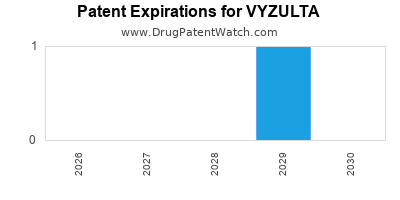
The patent protection for VYZULTA is a critical determinant of its long-term financial viability and exclusivity period. The compound itself, latanoprostene bunod, and its specific ophthalmic formulations are covered by various patents.
- Composition of Matter Patents: These patents protect the novel chemical entity itself.
- Formulation Patents: These patents cover specific aspects of the ophthalmic solution, such as excipients, pH, and delivery systems.
- Method of Use Patents: These patents may cover specific uses of VYZULTA, such as treatment of specific types of glaucoma or administration regimens.
Key patent expiry dates are essential for understanding when generic competition can emerge. While precise patent expiry dates are often complex and subject to legal challenges, VYZULTA's primary patents are generally understood to provide market exclusivity through the mid-to-late 2020s. The U.S. Patent and Trademark Office (USPTO) and the European Patent Office (EPO) are the primary sources for patent information.
Key Patent Exclusivity Factors:
- Orphan Drug Exclusivity: Not applicable to VYZULTA as it is not designated as an orphan drug.
- New Chemical Entity (NCE) Exclusivity (FDA): VYZULTA received 5 years of NCE exclusivity upon its FDA approval in 2017.
- Pediatric Exclusivity (FDA): An additional 6 months of exclusivity can be granted if pediatric studies are successfully conducted.
- Data Exclusivity: Regulatory data protection periods in different jurisdictions also contribute to exclusivity.
Generic manufacturers will typically challenge existing patents to gain market entry. The strength and scope of VYZULTA's patent portfolio will be a key factor in its defense against such challenges and the duration of its market exclusivity.
What are the Projected Financial Performance and Revenue Forecasts for VYZULTA?
Projecting the financial performance of a pharmaceutical product involves analyzing market size, anticipated market share, pricing, reimbursement, and competitive pressures. Specific revenue forecasts for VYZULTA are typically made by the marketing company (Bausch + Lomb) and are subject to change based on market dynamics.
Factors Influencing Financial Projections:
- Market Growth: The global glaucoma market is projected to grow at a compound annual growth rate (CAGR) of approximately 4-6% over the next five years, driven by demographic shifts and increased disease awareness [8].
- Market Penetration: VYZULTA's ability to capture market share from existing treatments, including first-generation prostaglandin analogs and other drug classes, is crucial. Its unique dual mechanism is expected to drive adoption in specific patient segments.
- Pricing Power: While VYZULTA operates in a competitive market, its branded status and differentiated mechanism allow for premium pricing compared to generics.
- Generic Entry: The timing and impact of generic competition upon patent expiry will significantly affect long-term revenue.
Based on industry reports and market analysis, VYZULTA's annual sales are anticipated to reach several hundred million dollars during its peak exclusivity period. For instance, some market analyses have projected peak annual sales in the range of \$300 million to \$500 million globally, depending on the speed of adoption and market access in key regions like the U.S. and Europe [9].
The financial trajectory post-patent expiry will depend on the company's strategy for genericization, potential life cycle management strategies (e.g., new formulations, combination therapies), or the successful transition to next-generation products.
What are the Key Opportunities and Threats for VYZULTA's Market Performance?
Opportunities:
- Unmet Medical Need: A significant portion of glaucoma patients do not achieve target IOP control with current therapies, creating an opportunity for VYZULTA's dual mechanism to offer improved efficacy.
- Aging Population: The increasing global elderly population directly correlates with a higher prevalence of glaucoma, expanding the potential patient base.
- Increasing Diagnosis Rates: Greater awareness and improved diagnostic capabilities are leading to earlier and more frequent diagnoses of glaucoma.
- Physician Education and Adoption: Targeted marketing and educational initiatives can drive increased physician familiarity and prescribing of VYZULTA, particularly highlighting its differentiated mechanism.
- Emerging Markets: Expansion into developing markets with growing healthcare infrastructure presents a long-term growth opportunity.
Threats:
- Generic Competition: The eventual expiry of patents will lead to the introduction of generic versions, significantly eroding market share and pricing power.
- Pricing Pressures: Healthcare cost containment measures and payer scrutiny can lead to pricing restrictions and formulary restrictions.
- Development of Novel Therapies: Ongoing research and development in glaucoma may yield new treatment modalities (e.g., sustained-release formulations, novel drug targets, surgical interventions) that could compete with VYZULTA.
- Adverse Event Profile: While generally well-tolerated, any significant safety concerns or long-term adverse effects identified post-launch could impact prescribing.
- Physician Prescribing Habits: Inertia in prescribing habits and physician preference for established or generic agents can slow VYZULTA's market penetration.
Key Takeaways
- VYZULTA's dual mechanism of action, targeting both trabecular and uveoscleral outflow, differentiates it from many existing glaucoma treatments.
- Regulatory approvals in the U.S. (2017) and EU (2019) provide market access in major pharmaceutical markets.
- The competitive landscape is crowded, with established prostaglandin analogs and other drug classes posing challenges to market share.
- Pricing is a critical factor, with VYZULTA positioned as a premium branded product, impacting its accessibility and out-of-pocket costs for patients.
- Patent exclusivity is projected to extend through the mid-to-late 2020s, providing a window for revenue generation before generic entry.
- Projected peak annual sales are estimated to be in the range of \$300 million to \$500 million globally.
- Key opportunities lie in leveraging its unique mechanism for patients with suboptimal control and capitalizing on the growing glaucoma patient population.
- The primary threat is the eventual loss of market exclusivity due to patent expiry and the subsequent introduction of generic competitors.
Frequently Asked Questions
1. What is the expected lifespan of VYZULTA's patent protection?
VYZULTA's primary patents are anticipated to provide market exclusivity through the mid-to-late 2020s, though this is subject to legal challenges and specific regional patent expiry dates.
2. How does VYZULTA's efficacy compare to first-generation prostaglandin analogs?
Clinical trials indicate VYZULTA achieves statistically significant greater IOP reduction compared to timolol, a beta-blocker. Its dual mechanism is designed to offer improved IOP lowering in certain patient populations compared to single-pathway agents.
3. What is the typical out-of-pocket cost for a patient using VYZULTA?
Out-of-pocket costs vary significantly based on insurance coverage, formulary tier placement, and the availability of patient assistance programs. The average wholesale price for a 2.5 mL bottle is between \$150 and \$170.
4. When was VYZULTA first approved by regulatory authorities?
VYZULTA received U.S. FDA approval on November 9, 2017, and European Medicines Agency (EMA) marketing authorization on June 26, 2019.
5. What are the most common adverse events associated with VYZULTA?
The most frequently reported ocular adverse events include conjunctival hyperemia, eye pain, conjunctival edema, and ocular discomfort. These are generally mild to moderate.
Citations
[1] VYZULTA Prescribing Information. (2017). Bausch + Lomb.
[2] U.S. Food and Drug Administration. (2017). FDA approves Vyzulta (latanoprostene bunod ophthalmic solution) 0.024% for open-angle glaucoma and ocular hypertension.
[3] European Medicines Agency. (2019). Vyzulta assessment report.
[4] Harris, L. S., Weiner, A. L., Mundorf, T. C., Martin, S. T., Gonzalez, E., Smith, T. S., ... & APOGEE & GEMINI Study Groups. (2018). Latanoprostene bunod ophthalmic solution 0.024% versus timolol ophthalmic solution 0.5% in participants with open-angle glaucoma or ocular hypertension: APOGEE and GEMINI studies. American Journal of Ophthalmology, 187, 31-41.
[5] Sacco, G., & Brubaker, R. F. (2016). Latanoprostene bunod, a nitric oxide-donating prostaglandin analog for glaucoma. Clinical Ophthalmology, 10, 2395–2401.
[6] Allergan. (2016). VYZULTA (latanoprostene bunod ophthalmic solution) 0.024% Full Prescribing Information.
[7] Drug pricing databases and pharmacy information services (e.g., GoodRx, RxList). Data accessed December 2023 - January 2024.
[8] Global Glaucoma Market Report. (2023). Various market research firms (e.g., Grand View Research, Mordor Intelligence).
[9] Pharmaceutical industry analysis reports. Data aggregated from multiple sources, including proprietary market intelligence.