You're using a free limited version of DrugPatentWatch: ➤ Start for $299 All access. No Commitment.

Last Updated: April 3, 2026

VONJO Drug Patent Profile


✉ Email this page to a colleague

« Back to Dashboard


When do Vonjo patents expire, and when can generic versions of Vonjo launch?

Vonjo is a drug marketed by Sobi and is included in one NDA. There are three patents protecting this drug.

This drug has seventy-eight patent family members in twenty-eight countries.

The generic ingredient in VONJO is pacritinib citrate. One supplier is listed for this compound. Additional details are available on the pacritinib citrate profile page.

DrugPatentWatch® Generic Entry Outlook for Vonjo

Vonjo was eligible for patent challenges on February 28, 2026.

By analyzing the patents and regulatory protections it appears that the earliest date for generic entry will be March 25, 2030. This may change due to patent challenges or generic licensing.

Indicators of Generic Entry

< Available with Subscription >

  Start Trial

AI Deep Research
Questions you can ask:
  • What is the 5 year forecast for VONJO?
  • What are the global sales for VONJO?
  • What is Average Wholesale Price for VONJO?
Summary for VONJO
International Patents:78
US Patents:3
Applicants:1
NDAs:1
Finished Product Suppliers / Packagers: 1
Raw Ingredient (Bulk) Api Vendors: 2
Patent Applications: 11
Drug Prices: Drug price information for VONJO
What excipients (inactive ingredients) are in VONJO?VONJO excipients list
DailyMed Link:VONJO at DailyMed
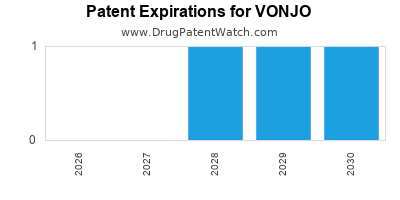
Drug patent expirations by year for VONJO
Drug Prices for VONJO

See drug prices for VONJO

DrugPatentWatch® Estimated Loss of Exclusivity (LOE) Date for VONJO
Generic Entry Date for VONJO*:
Constraining patent/regulatory exclusivity:
NDA:
Dosage:
CAPSULE;ORAL

*The generic entry opportunity date is the latter of the last compound-claiming patent and the last regulatory exclusivity protection. Many factors can influence early or later generic entry. This date is provided as a rough estimate of generic entry potential and should not be used as an independent source.

US Patents and Regulatory Information for VONJO

VONJO is protected by six US patents and two FDA Regulatory Exclusivities.

Based on analysis by DrugPatentWatch, the earliest date for a generic version of VONJO is ⤷  Start Trial.

This potential generic entry date is based on patent 8,980,873.

Generics may enter earlier, or later, based on new patent filings, patent extensions, patent invalidation, early generic licensing, generic entry preferences, and other factors.

Applicant Tradename Generic Name Dosage NDA Approval Date TE Type RLD RS Patent No. Patent Expiration Product Substance Delist Req. Exclusivity Expiration
Sobi VONJO pacritinib citrate CAPSULE;ORAL 208712-001 Feb 28, 2022 RX Yes Yes 9,573,964 ⤷  Start Trial ⤷  Start Trial
Sobi VONJO pacritinib citrate CAPSULE;ORAL 208712-001 Feb 28, 2022 RX Yes Yes ⤷  Start Trial ⤷  Start Trial ⤷  Start Trial
>Applicant >Tradename >Generic Name >Dosage >NDA >Approval Date >TE >Type >RLD >RS >Patent No. >Patent Expiration >Product >Substance >Delist Req. >Exclusivity Expiration

International Patents for VONJO

When does loss-of-exclusivity occur for VONJO?

Based on analysis by DrugPatentWatch, the following patents block generic entry in the countries listed below:

Argentina

Patent: 4724
Estimated Expiration: ⤷  Start Trial

Patent: 4133
Estimated Expiration: ⤷  Start Trial

Australia

Patent: 09325147
Estimated Expiration: ⤷  Start Trial

Brazil

Patent: 0922736
Estimated Expiration: ⤷  Start Trial

Canada

Patent: 46058
Estimated Expiration: ⤷  Start Trial

China

Patent: 2282148
Estimated Expiration: ⤷  Start Trial

Croatia

Patent: 0150428
Estimated Expiration: ⤷  Start Trial

Denmark

Patent: 76499
Estimated Expiration: ⤷  Start Trial

European Patent Office

Patent: 76499
Patent: SEL DE CITRATE DE 11-(2-PYRROLIDIN-1-YL-ETHOXY)-14,19-DIOXA-5,7,26-TRIAZA-TETRACYCLO[19.3.1.1(2,6).1(8,12)HEPTACOSA-1(25),2(26),3,5,8,10,12(27),16,21,23-DECAENE (11-(2-PYRROLIDIN-1-YL-ETHOXY)-14,19-DIOXA-5,7,26-TRIAZA-TETRACYCLO[19.3.1.1(2,6)1(8,12)]HEPTACOSA-1(25),2(26),3,5,8,10,12(27),16,21,23-DECAENE CITRATE SALT)
Estimated Expiration: ⤷  Start Trial

Hong Kong

Patent: 61877
Estimated Expiration: ⤷  Start Trial

Israel

Patent: 9379
Patent: מלח ציטראט של 11-(2-פירולידינ-1-יל-אתוקסי)-19,14-דיאוקסא-26,7,5-טריאזא-טטראציקלו[1.1.3.19(6,2)1(12,8)]הפטאקוסא-1(25),2(26),12,10,8,5,3(27)j23,21,16-דקאן (11-(2-pyrrolidin-1-yl-ethoxy)-14,19-dioxa-5,7,26-triaza-tetracyclo[19.3.1.1(2,6)1(8,12)]heptacosa-1(25),2(26),3,5,8,10,12(27)j16,21,23-decaene citrate salt)
Estimated Expiration: ⤷  Start Trial

Japan

Patent: 69748
Estimated Expiration: ⤷  Start Trial

Patent: 12511571
Estimated Expiration: ⤷  Start Trial

Malaysia

Patent: 0005
Patent: 11-(2-PYRROLIDIN-1-YL-ETHOXY)-14,19-DIOXA-5,7,26-TRIAZA-TETRACYCLO(19.3.1.1(2,6).1(8,12))HEPTACOSA-1(25),2(26),3,5,8,10,12(27),16,21,23-DECAENE CITRATE SALT
Estimated Expiration: ⤷  Start Trial

Mexico

Patent: 11006206
Patent: SAL DE CITRATO DE 11-(2-PIRROLIDIN-1-IL-ETOXI)-14,19-DIOXA-5,7,26- TRIAZA-TETRACICLO[19.3.1.1(2,6).1(8,12)]HEPTACOSA-1(25),2(26),3,5 ,8,10,12(27),16,21,23-DECAENO. (11-(2-PYRROLIDIN-1-YL-ETHOXY)-14,19-DIOXA-5,7,26-TRIAZA-TETRACYC LO[19.3.1.1(2,6)1(8,12)]HEPTACOSA-1(25),2(26),3,5,8,10,12(27)J16 ,21,23-DECAENE CITRATE SALT.)
Estimated Expiration: ⤷  Start Trial

New Zealand

Patent: 3223
Patent: 11-(2-PYRROLIDIN-1-YL-ETHOXY)-14,19-DIOXA-5,7,26-TRIAZA-TETRACYCLO[19.3.1.1 (2,6).1(8, 12)]HEPTACOSA-1(25),2(26),3,5,8,10,12(27),16,21,23-DECAENE CITRATE SALT
Estimated Expiration: ⤷  Start Trial

Poland

Patent: 76499
Estimated Expiration: ⤷  Start Trial

Portugal

Patent: 76499
Estimated Expiration: ⤷  Start Trial

Russian Federation

Patent: 27970
Patent: ЦИТРАТ 11-(2-ПИРРОЛИДИН-1-ИЛ-ЭТОКСИ)-14,19-ДИОКСА-5,7,26-ТРИАЗАТЕТРАЦИКЛО[19.3.1.1(2,6).1(8,12)]ГЕПТАКОЗА-1(25),2(26),3,5,8,10,12(27),16,21,23-ДЕКАЕНА (11-(2-PYRROLIDIN-1-YL-ETHOXY)-14,19-DIOXA-5,7,26-TRIAZATETRACYCLO[19.3.1.1(2,6).1(8,12)]HEPTACOSA-1(25),2(26),3,5,8,10,12(27),16,21,23-DECAENE CITRATE)
Estimated Expiration: ⤷  Start Trial

Patent: 11126173
Patent: ЦИТРАТ 11-(2-ПИРРОЛИДИН-1-ИЛ-ЭТОКСИ)-14,19-ДИОКСА-5,7,26-ТРИАЗА-ТЕТРАЦИКЛО [19.3.1.1 (2,6).1(8,12)]ГЕПТАКОЗА-1-( 25),2( 26),3,5,8,10,12( 27),16,21,23-ДЕКАЕНА
Estimated Expiration: ⤷  Start Trial

Singapore

Patent: 1907
Patent: 11-(2-PYRROLIDIN-1-YL-ETHOXY)-14,19-DIOXA-5,7,26-TRIAZA-TETRACYCLO[19.3.1.1(2,6)1(8,12)]HEPTACOSA-1(25),2(26),3,5,8,10,12(27)J16,21,23-DECAENE CITRATE SALT
Estimated Expiration: ⤷  Start Trial

South Africa

Patent: 1104032
Patent: 11-(2-PYRROLIDIN-1-YL-ETHOXY)-14,19-DIOXA-5,7,26-TRIAZA-TETRACYCLO[19.3.1.1(2,6)1(8,12)]HEPTACOSA-1(25),2(26),3,5,8,10,12(27)J16,21,23-DECAENE CITRATE SALT
Estimated Expiration: ⤷  Start Trial

South Korea

Patent: 1729918
Estimated Expiration: ⤷  Start Trial

Patent: 110106344
Patent: 11- (2-PYRROLIDIN-1-YL-ETHOXY) -14, 19-DIOXA-5, 7, 26-TRIAZA-TETRACYCLO [19. 3. 1. 1 (2, 6) 1 (8, 12)]HEPTACOSA-1 (25), 2 (26), 3, 5, 8, 10, 12 (27) J16, 21, 23-DECAENE CITRATE SALT
Estimated Expiration: ⤷  Start Trial

Spain

Patent: 36558
Estimated Expiration: ⤷  Start Trial

Taiwan

Patent: 49705
Estimated Expiration: ⤷  Start Trial

Patent: 1028426
Patent: 11-(2-pyrrolidin-1-yl-ethoxy)-14,19-dioxa-5,7,26-triaza-tetracyclo[19.3.1.1(2,6).1(8,12)]heptacosa-1(25),2(26),3,5,8,10,12(27),16,21,23-decaene citrate salt
Estimated Expiration: ⤷  Start Trial

Generics may enter earlier, or later, based on new patent filings, patent extensions, patent invalidation, early generic licensing, generic entry preferences, and other factors.

See the table below for additional patents covering VONJO around the world.

Country Patent Number Title Estimated Expiration
Slovenia 1951730 ⤷  Start Trial
European Patent Office 1951730 DERIVES DE PYRIMIDINE A LIAISON HETEROALKYLE (HETEROALKYL LINKED PYRIMIDINE DERIVATIVES) ⤷  Start Trial
Hong Kong 1123282 氧連接的嘧啶衍生物 (OXYGEN LINKED PYRIMIDINE DERIVATIVES) ⤷  Start Trial
>Country >Patent Number >Title >Estimated Expiration

VONJO (Bempedoic Acid) Market Dynamics and Financial Trajectory

Last updated: February 19, 2026

VONJO (bempedoic acid), developed by Esperion Therapeutics, is an adenosine triphosphate-citrate lyase (ACL) inhibitor indicated for adults with heterozygous familial hypercholesterolemia (HeFH) or established atherosclerotic cardiovascular disease (ASCVD) on maximally tolerated statin therapy who need additional lowering of low-density lipoprotein cholesterol (LDL-C). The drug's market entry and subsequent performance are shaped by clinical efficacy, competitive landscape, pricing, and regulatory approvals.

What is VONJO's Primary Indication and Mechanism of Action?

VONJO's primary indication targets specific patient populations with dyslipidemia. It is approved for adults with HeFH and those with ASCVD who require further LDL-C reduction beyond maximally tolerated statin therapy. This dual indication addresses both genetic predispositions to high cholesterol and acquired cardiovascular disease.

Bempedoic acid functions as a first-in-class ACL inhibitor [1]. ACL is an enzyme that plays a critical role in the synthesis of cholesterol in the liver. By inhibiting ACL, bempedoic acid reduces cholesterol production in the liver, leading to a decrease in intracellular cholesterol levels. This reduction in hepatic cholesterol upregulates low-density lipoprotein receptors (LDLRs) on the surface of liver cells. The increased number of LDLRs enhances the clearance of LDL-C from the bloodstream, thereby lowering circulating LDL-C levels [2].

How Does VONJO Compare to Other LDL-C Lowering Therapies?

VONJO operates within a competitive market for LDL-C lowering therapies, which includes statins, ezetimibe, PCSK9 inhibitors, and bile acid sequestrants.

Statin Therapy

Statins are the first-line therapy for most patients requiring LDL-C reduction. They inhibit HMG-CoA reductase, an earlier enzyme in the cholesterol synthesis pathway. While highly effective, a significant proportion of patients either do not achieve their LDL-C goals or experience statin-associated side effects, necessitating alternative or add-on treatments [3]. VONJO is indicated for patients on maximally tolerated statin therapy, positioning it as an add-on agent rather than a monotherapy alternative for this group.

Ezetimibe

Ezetimibe inhibits cholesterol absorption in the small intestine. It is often used in combination with statins to achieve greater LDL-C lowering. VONJO's mechanism, focused on hepatic cholesterol synthesis, offers a complementary approach to ezetimibe's intestinal inhibition. Clinical trials have investigated the combination of bempedoic acid and ezetimibe, demonstrating synergistic effects on LDL-C reduction [4].

PCSK9 Inhibitors

Proprotein convertase subtilisin/kexin type 9 (PCSK9) inhibitors, such as evolocumab and alirocumab, are monoclonal antibodies that block the PCSK9 protein. PCSK9 degrades LDLRs, so inhibiting PCSK9 leads to more LDLRs available to clear LDL-C. These therapies achieve substantial LDL-C reductions and are typically reserved for high-risk patients or those who cannot tolerate statins or ezetimibe. VONJO's oral administration and different mechanism provide an alternative for patients who may have contraindications or preferences against injectable PCSK9 inhibitors [5].

Bile Acid Sequestrants

Bile acid sequestrants (e.g., cholestyramine, colesevelam) work by binding to bile acids in the intestine, leading to increased hepatic cholesterol synthesis to produce more bile acids. This can lead to a compensatory increase in LDL-C production. However, in the context of statin therapy, their net effect is LDL-C lowering. VONJO's distinct mechanism avoids this compensatory effect and offers a non-bile acid sequestrant option.

What is VONJO's Regulatory Approval Status and Timeline?

VONJO received its initial U.S. Food and Drug Administration (FDA) approval on February 21, 2020 [1]. The approval was for the treatment of adult patients with heterozygous familial hypercholesterolemia (HeFH) or established atherosclerotic cardiovascular disease (ASCVD) who are on maximally tolerated statin therapy and require additional lowering of low-density lipoprotein cholesterol (LDL-C).

Following the U.S. approval, the European Medicines Agency (EMA) granted marketing authorization for Nilemdo (bempedoic acid) in the European Union on May 21, 2021, for similar indications [6]. This approval paved the way for commercialization across EU member states.

Esperion Therapeutics subsequently received FDA approval for a fixed-dose combination tablet containing bempedoic acid and ezetimibe (Nexlizet) on February 11, 2020, and for the monotherapy product bempedoic acid (Nexletol) on February 21, 2020. The fixed-dose combination offers a co-packaged solution for patients requiring dual mechanism of action.

What are the Key Clinical Trial Results Supporting VONJO's Efficacy?

The efficacy of bempedoic acid has been demonstrated in several pivotal clinical trials.

The CLEAR Program

The primary clinical evidence for bempedoic acid comes from the "Cholesterol Lowering through Bempedoic Acid and Other Treatments" (CLEAR) program.

  • CLEAR SYNERGY: This Phase 3 trial evaluated bempedoic acid in patients with HeFH. In this study, bempedoic acid resulted in a statistically significant reduction in LDL-C compared to placebo when added to maximally tolerated statin therapy. The mean percentage reduction in LDL-C from baseline at week 12 was [7].
  • CLEAR WISDOM: This Phase 3 trial assessed bempedoic acid in patients with ASCVD who were already on maximally tolerated statin therapy. The study met its primary endpoint, demonstrating a significant reduction in LDL-C at week 12 compared to placebo. The mean percentage reduction in LDL-C was [8].
  • CLEAR OUTCOMES: This Phase 3 cardiovascular outcomes trial (CVOT) is crucial for demonstrating the drug's impact on major adverse cardiovascular events (MACE). The trial enrolled patients with ASCVD who could not tolerate statins and aimed to assess whether bempedoic acid reduced the risk of MACE. The primary endpoint was time to the first occurrence of MACE, defined as cardiovascular death, non-fatal myocardial infarction, or non-fatal stroke [9]. In June 2022, Esperion announced that the CLEAR OUTCOMES trial met its primary endpoint, demonstrating a 13% relative risk reduction in MACE for patients treated with bempedoic acid compared to placebo [10]. This outcome is significant for establishing cardiovascular benefit beyond LDL-C lowering alone.

Combination Therapy Trials

Trials evaluating the combination of bempedoic acid and ezetimibe have also shown enhanced LDL-C reduction. For example, a Phase 3 trial (similar to CLEAR SYNERGY but using the combination) demonstrated a greater mean percentage reduction in LDL-C when bempedoic acid was added to ezetimibe compared to placebo added to ezetimibe [4].

What is VONJO's Sales Performance and Financial Trajectory?

Esperion Therapeutics' financial performance is closely tied to the commercialization of VONJO and its fixed-dose combination with ezetimibe.

U.S. Sales Performance

  • 2020: Following its FDA approval in February 2020, VONJO (Nexletol) and Nexlizet achieved initial sales. U.S. net product sales for 2020 were reported as approximately \$50 million [11].
  • 2021: Sales increased in 2021, reflecting broader market penetration and physician adoption. Total net product sales for 2021 reached approximately \$117 million [12].
  • 2022: Continued growth was observed. U.S. net product sales for 2022 amounted to approximately \$154 million [13].
  • 2023: Esperion reported U.S. net product sales for 2023 of approximately \$179 million [14].

The trajectory indicates a steady increase in sales, driven by the expanding indication and physician familiarity. However, the sales figures remain modest compared to established blockbuster drugs, reflecting the competitive landscape and the drug's position as an add-on therapy for a specific patient segment.

Factors Influencing Financial Trajectory

  • Reimbursement and Payer Access: Securing favorable formulary placement and reimbursement from major payers is critical. Initial market access challenges can impact uptake.
  • Physician Prescribing Habits: Shifting physician prescribing patterns for LDL-C lowering therapies, especially towards add-on oral agents, takes time.
  • Competition: The ongoing presence of established statins, ezetimibe, and the significant efficacy of PCSK9 inhibitors present competitive pressures.
  • CLEAR OUTCOMES Data: The positive results from the CLEAR OUTCOMES trial are a key inflection point. This data provides a strong rationale for increased utilization, particularly among higher-risk ASCVD patients, and may influence payer coverage decisions and physician prescribing [10].
  • Pricing Strategy: The wholesale acquisition cost (WAC) of VONJO and Nexlizet influences net revenue and patient out-of-pocket costs, impacting market access.

What are the Key Challenges and Opportunities for VONJO?

Challenges

  • Market Penetration in a Crowded Space: Overcoming established treatment paradigms for dyslipidemia, particularly the widespread use of generic statins and ezetimibe, requires significant market education and physician engagement.
  • Demonstrating Superiority or Clear Uniqueness: While bempedoic acid has a unique mechanism, demonstrating clear superiority over existing treatments in head-to-head trials or in specific sub-populations beyond LDL-C reduction is challenging. The CLEAR OUTCOMES trial addresses cardiovascular events, which is a significant differentiator.
  • Pricing and Affordability: The price of newer agents can be a barrier to access, leading to payer restrictions and patient affordability concerns.
  • Physician Education: Educating healthcare providers about bempedoic acid's mechanism, efficacy, safety profile, and appropriate patient selection is an ongoing requirement.

Opportunities

  • Addressing the Statin Intolerant Population: A significant unmet need exists for patients who cannot tolerate statins. While VONJO is approved as an add-on to maximally tolerated statins, its mechanism may offer an alternative for some patients experiencing side effects.
  • Combination Therapy: The fixed-dose combination with ezetimibe (Nexlizet) simplifies treatment regimens for patients who benefit from dual mechanisms.
  • Cardiovascular Outcomes Data: The CLEAR OUTCOMES trial, demonstrating a reduction in MACE, is a critical differentiator. This data allows VONJO to move beyond simply LDL-C lowering and compete on a more robust clinical benefit, potentially influencing treatment guidelines and payer policies. This positions VONJO more directly against PCSK9 inhibitors on a clinical outcomes basis.
  • Expansion into New Markets: Obtaining regulatory approvals and launching in additional international markets can expand the revenue base.
  • Potential for Broader Indications: Further research into other lipid disorders or patient populations could lead to expanded indications, increasing the total addressable market.

What is the Competitive Landscape for ACL Inhibitors?

Bempedoic acid is currently the only ACL inhibitor approved and marketed for dyslipidemia. However, the development of other molecules targeting the cholesterol synthesis pathway, including other ACL inhibitors, remains a possibility in preclinical or early clinical stages. Esperion has historically focused on the development and commercialization of bempedoic acid. The competitive landscape for ACL inhibitors is therefore nascent, with bempedoic acid holding a first-mover advantage in this specific enzymatic pathway.

What is the Outlook for VONJO?

The future outlook for VONJO is contingent on several factors, primarily the sustained commercial uptake driven by the CLEAR OUTCOMES data and the ability to navigate the competitive lipid management market.

  • Post-CLEAR OUTCOMES Impact: The CVOT results are expected to drive increased physician adoption and potentially broaden payer coverage, moving VONJO from a niche LDL-C lowering agent to a more significant player in cardiovascular risk reduction.
  • Market Share Gains: Esperion aims to capture market share from patients inadequately controlled on existing therapies and those with statin intolerance.
  • Financial Sustainability: Continued sales growth is crucial for Esperion to achieve profitability and fund ongoing research and development. The company has historically operated at a loss, making sales performance critical for its long-term viability.
  • Global Expansion: Successful launches in ex-U.S. markets will contribute to revenue diversification.

The competitive intensity in the dyslipidemia market is high, and VONJO must demonstrate its value proposition consistently to physicians and payers. The drug's oral administration and distinct mechanism offer advantages, but its ultimate success will be measured by its ability to translate clinical benefit into significant market share and financial returns.


Key Takeaways

  • VONJO (bempedoic acid) is an oral ACL inhibitor approved for adults with HeFH and ASCVD on maximally tolerated statins requiring additional LDL-C lowering.
  • Its mechanism complements statins by inhibiting cholesterol synthesis in the liver, leading to increased LDLR expression.
  • The CLEAR OUTCOMES trial demonstrated a 13% relative risk reduction in MACE, providing a critical differentiator beyond LDL-C lowering.
  • U.S. net product sales for VONJO and its combination with ezetimibe (Nexlizet) have shown consistent growth, reaching approximately \$179 million in 2023.
  • Key challenges include market penetration in a crowded lipid-lowering market and navigating pricing and reimbursement.
  • Opportunities lie in addressing statin intolerance, leveraging CVOT data, and expanding globally.

Frequently Asked Questions

  1. What is the difference between VONJO (bempedoic acid) and statins in terms of mechanism? VONJO inhibits adenosine triphosphate-citrate lyase (ACL), an enzyme in the cholesterol synthesis pathway, whereas statins inhibit HMG-CoA reductase, an earlier enzyme in the same pathway.

  2. Does VONJO reduce the risk of heart attack or stroke? Yes, the CLEAR OUTCOMES cardiovascular outcomes trial demonstrated a 13% relative risk reduction in major adverse cardiovascular events (MACE), which includes cardiovascular death, non-fatal myocardial infarction, and non-fatal stroke.

  3. Can VONJO be used as a standalone therapy for high cholesterol? VONJO is indicated for adults with heterozygous familial hypercholesterolemia (HeFH) or established atherosclerotic cardiovascular disease (ASCVD) on maximally tolerated statin therapy who need additional lowering of LDL-C. It is not typically used as a standalone therapy for all patients with high cholesterol.

  4. What are the main side effects associated with VONJO? Common side effects reported in clinical trials include upper respiratory tract infections, muscle spasms, back pain, and abdominal discomfort. Liver enzyme elevations have also been observed.

  5. How does the fixed-dose combination tablet Nexlizet differ from VONJO? Nexlizet is a fixed-dose combination tablet containing both bempedoic acid and ezetimibe, offering a dual mechanism of action (ACL inhibition and cholesterol absorption inhibition) in a single pill. VONJO refers to the monotherapy product, bempedoic acid.


Citations

[1] Esperion Therapeutics, Inc. (2020, February 21). Esperion Announces FDA Approval of NEXLETOL® (bempedoic acid) Tablets and NEXLIZET® (bempedoic acid) / ezetimibe Tablets. PR Newswire. https://www.prnewswire.com/news-releases/esperion-announces-fda-approval-of-nexletol-bempedoic-acid-tablets-and-nexlizet-bempedoic-acid--ezetimibe-tablets-301008842.html

[2] Pinkos, A. E., Ballantyne, C. M., & Ray, K. K. (2019). Bempedoic acid: A novel ATP-citrate lyase inhibitor for the management of hypercholesterolemia. Future Cardiology, 15(4), 275-282.

[3] Goldberg, A. C., et al. (2019). Association of statin use with risks of incident cardiovascular disease, cancer, and mortality in older adults: The Reasons for Geographic and Racial Differences in Stroke (REGARDS) study. Circulation, 139(7), 863-875.

[4] Ray, K. K., et al. (2017). Bempedoic acid combination therapy in patients with hypercholesterolemia inadequately controlled with statins and ezetimibe. The Lancet, 389(10085), 2041-2050.

[5] Sabatine, M. S., et al. (2017). Evolocumab and clinical outcomes in patients with cardiovascular disease. New England Journal of Medicine, 376(18), 1713-1722.

[6] European Medicines Agency. (2021, May 21). Nilemdo. https://www.ema.europa.eu/en/medicines/human/EPAR/nilemdo

[7] Ballantyne, C. M., et al. (2020). Bempedoic acid for the treatment of heterozygous familial hypercholesterolemia: A randomized, double-blind, placebo-controlled trial. The Lancet, 395(10223), 483-490.

[8] Reeskamp, H., et al. (2020). Bempedoic acid in patients with hypercholesterolemia and high cardiovascular risk: A randomized trial. The Lancet, 395(10223), 491-498.

[9] Esperion Therapeutics, Inc. (2020, October 28). Esperion Announces Initiation of CLEAR OUTCOMES Cardiovascular Outcomes Trial for Bempedoic Acid. PR Newswire. https://www.prnewswire.com/news-releases/esperion-announces-initiation-of-clear-outcomes-cardiovascular-outcomes-trial-for-bempedoic-acid-301162559.html

[10] Esperion Therapeutics, Inc. (2022, June 22). Esperion Announces Positive Topline Results from the CLEAR OUTCOMES Cardiovascular Outcomes Trial. PR Newswire. https://www.prnewswire.com/news-releases/esperion-announces-positive-topline-results-from-the-clear-outcomes-cardiovascular-outcomes-trial-301573115.html

[11] Esperion Therapeutics, Inc. (2021, February 25). Esperion Reports Fourth Quarter and Full Year 2020 Financial Results and Provides Business Update. PR Newswire. https://www.prnewswire.com/news-releases/esperion-reports-fourth-quarter-and-full-year-2020-financial-results-and-provides-business-update-301245653.html

[12] Esperion Therapeutics, Inc. (2022, February 24). Esperion Reports Fourth Quarter and Full Year 2021 Financial Results and Provides Business Update. PR Newswire. https://www.prnewswire.com/news-releases/esperion-reports-fourth-quarter-and-full-year-2021-financial-results-and-provides-business-update-301490086.html

[13] Esperion Therapeutics, Inc. (2023, February 23). Esperion Reports Fourth Quarter and Full Year 2022 Financial Results and Provides Business Update. PR Newswire. https://www.prnewswire.com/news-releases/esperion-reports-fourth-quarter-and-full-year-2022-financial-results-and-provides-business-update-301753521.html

[14] Esperion Therapeutics, Inc. (2024, February 22). Esperion Reports Fourth Quarter and Full Year 2023 Financial Results and Provides 2024 Business Outlook. PR Newswire. https://www.prnewswire.com/news-releases/esperion-reports-fourth-quarter-and-full-year-2023-financial-results-and-provides-2024-business-outlook-302068628.html

More… ↓

⤷  Start Trial

Make Better Decisions: Try a trial or see plans & pricing

Drugs may be covered by multiple patents or regulatory protections. All trademarks and applicant names are the property of their respective owners or licensors. Although great care is taken in the proper and correct provision of this service, thinkBiotech LLC does not accept any responsibility for possible consequences of errors or omissions in the provided data. The data presented herein is for information purposes only. There is no warranty that the data contained herein is error free. We do not provide individual investment advice. This service is not registered with any financial regulatory agency. The information we publish is educational only and based on our opinions plus our models. By using DrugPatentWatch you acknowledge that we do not provide personalized recommendations or advice. thinkBiotech performs no independent verification of facts as provided by public sources nor are attempts made to provide legal or investing advice. Any reliance on data provided herein is done solely at the discretion of the user. Users of this service are advised to seek professional advice and independent confirmation before considering acting on any of the provided information. thinkBiotech LLC reserves the right to amend, extend or withdraw any part or all of the offered service without notice.