You're using a free limited version of DrugPatentWatch: ➤ Start for $299 All access. No Commitment.

Last Updated: December 31, 2025

VIZAMYL Drug Patent Profile


✉ Email this page to a colleague

« Back to Dashboard


Which patents cover Vizamyl, and what generic alternatives are available?

Vizamyl is a drug marketed by Ge Healthcare and is included in one NDA. There are two patents protecting this drug.

This drug has eighty-two patent family members in twenty-four countries.

The generic ingredient in VIZAMYL is flutemetamol f-18. One supplier is listed for this compound. Additional details are available on the flutemetamol f-18 profile page.

DrugPatentWatch® Generic Entry Outlook for Vizamyl

Vizamyl was eligible for patent challenges on October 25, 2017.

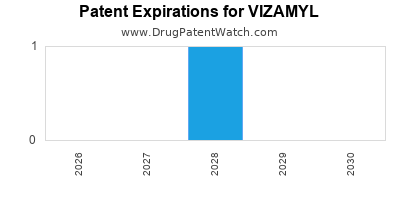
By analyzing the patents and regulatory protections it appears that the earliest date for generic entry will be September 16, 2028. This may change due to patent challenges or generic licensing.

Indicators of Generic Entry

< Available with Subscription >

  Get Started Free

AI Deep Research
Questions you can ask:
  • What is the 5 year forecast for VIZAMYL?
  • What are the global sales for VIZAMYL?
  • What is Average Wholesale Price for VIZAMYL?
Summary for VIZAMYL
International Patents:82
US Patents:2
Applicants:1
NDAs:1
Finished Product Suppliers / Packagers: 1
Raw Ingredient (Bulk) Api Vendors: 5
Clinical Trials: 6
Patent Applications: 141
Drug Prices: Drug price information for VIZAMYL
What excipients (inactive ingredients) are in VIZAMYL?VIZAMYL excipients list
DailyMed Link:VIZAMYL at DailyMed
Drug patent expirations by year for VIZAMYL
Drug Prices for VIZAMYL

See drug prices for VIZAMYL

DrugPatentWatch® Estimated Loss of Exclusivity (LOE) Date for VIZAMYL
Generic Entry Date for VIZAMYL*:
Constraining patent/regulatory exclusivity:
NDA:
Dosage:
INJECTABLE;INTRAVENOUS

*The generic entry opportunity date is the latter of the last compound-claiming patent and the last regulatory exclusivity protection. Many factors can influence early or later generic entry. This date is provided as a rough estimate of generic entry potential and should not be used as an independent source.

Recent Clinical Trials for VIZAMYL

Identify potential brand extensions & 505(b)(2) entrants

SponsorPhase
Yale UniversityPhase 1
University of UtahPhase 2
University Hospital, ToulouseEarly Phase 1

See all VIZAMYL clinical trials

Pharmacology for VIZAMYL

US Patents and Regulatory Information for VIZAMYL

VIZAMYL is protected by two US patents.

Based on analysis by DrugPatentWatch, the earliest date for a generic version of VIZAMYL is ⤷  Get Started Free.

This potential generic entry date is based on patent ⤷  Get Started Free.

Generics may enter earlier, or later, based on new patent filings, patent extensions, patent invalidation, early generic licensing, generic entry preferences, and other factors.

Applicant Tradename Generic Name Dosage NDA Approval Date TE Type RLD RS Patent No. Patent Expiration Product Substance Delist Req. Exclusivity Expiration
Ge Healthcare VIZAMYL flutemetamol f-18 INJECTABLE;INTRAVENOUS 203137-001 Oct 25, 2013 DISCN Yes No ⤷  Get Started Free ⤷  Get Started Free Y Y ⤷  Get Started Free
Ge Healthcare VIZAMYL flutemetamol f-18 INJECTABLE;INTRAVENOUS 203137-002 Oct 25, 2013 RX Yes Yes ⤷  Get Started Free ⤷  Get Started Free Y ⤷  Get Started Free
Ge Healthcare VIZAMYL flutemetamol f-18 INJECTABLE;INTRAVENOUS 203137-001 Oct 25, 2013 DISCN Yes No ⤷  Get Started Free ⤷  Get Started Free Y ⤷  Get Started Free
Ge Healthcare VIZAMYL flutemetamol f-18 INJECTABLE;INTRAVENOUS 203137-002 Oct 25, 2013 RX Yes Yes ⤷  Get Started Free ⤷  Get Started Free Y Y ⤷  Get Started Free
>Applicant >Tradename >Generic Name >Dosage >NDA >Approval Date >TE >Type >RLD >RS >Patent No. >Patent Expiration >Product >Substance >Delist Req. >Exclusivity Expiration

Expired US Patents for VIZAMYL

Applicant Tradename Generic Name Dosage NDA Approval Date Patent No. Patent Expiration
Ge Healthcare VIZAMYL flutemetamol f-18 INJECTABLE;INTRAVENOUS 203137-002 Oct 25, 2013 ⤷  Get Started Free ⤷  Get Started Free
Ge Healthcare VIZAMYL flutemetamol f-18 INJECTABLE;INTRAVENOUS 203137-001 Oct 25, 2013 ⤷  Get Started Free ⤷  Get Started Free
>Applicant >Tradename >Generic Name >Dosage >NDA >Approval Date >Patent No. >Patent Expiration

International Patents for VIZAMYL

When does loss-of-exclusivity occur for VIZAMYL?

Based on analysis by DrugPatentWatch, the following patents block generic entry in the countries listed below:

Australia

Patent: 08292201
Estimated Expiration: ⤷  Get Started Free

Brazil

Patent: 0815129
Estimated Expiration: ⤷  Get Started Free

Canada

Patent: 94084
Estimated Expiration: ⤷  Get Started Free

China

Patent: 1790387
Estimated Expiration: ⤷  Get Started Free

Denmark

Patent: 82988
Estimated Expiration: ⤷  Get Started Free

European Patent Office

Patent: 82988
Estimated Expiration: ⤷  Get Started Free

Hong Kong

Patent: 46710
Estimated Expiration: ⤷  Get Started Free

Hungary

Patent: 500007
Estimated Expiration: ⤷  Get Started Free

Israel

Patent: 3316
Estimated Expiration: ⤷  Get Started Free

Japan

Patent: 67708
Estimated Expiration: ⤷  Get Started Free

Patent: 10536931
Estimated Expiration: ⤷  Get Started Free

Mexico

Patent: 10002196
Estimated Expiration: ⤷  Get Started Free

New Zealand

Patent: 3616
Patent: RADIOPHARMACEUTICAL COMPOSITION
Estimated Expiration: ⤷  Get Started Free

Norway

Patent: 15006
Estimated Expiration: ⤷  Get Started Free

Poland

Patent: 82988
Estimated Expiration: ⤷  Get Started Free

Portugal

Patent: 82988
Estimated Expiration: ⤷  Get Started Free

Russian Federation

Patent: 75267
Patent: РАДИОФАРМАЦЕВТИЧЕСКАЯ КОМПОЗИЦИЯ (RADIOPHARMACEUTICAL COMPOSITION)
Estimated Expiration: ⤷  Get Started Free

Patent: 10101935
Patent: РАДИОФАРМАЦЕВТИЧЕСКАЯ КОМПОЗИЦИЯ
Estimated Expiration: ⤷  Get Started Free

South Africa

Patent: 1000718
Patent: Radiopharmaceutical composition
Estimated Expiration: ⤷  Get Started Free

South Korea

Patent: 1571572
Estimated Expiration: ⤷  Get Started Free

Patent: 100055440
Estimated Expiration: ⤷  Get Started Free

Spain

Patent: 64715
Estimated Expiration: ⤷  Get Started Free

Generics may enter earlier, or later, based on new patent filings, patent extensions, patent invalidation, early generic licensing, generic entry preferences, and other factors.

See the table below for additional patents covering VIZAMYL around the world.

Country Patent Number Title Estimated Expiration
Russian Federation 2475267 РАДИОФАРМАЦЕВТИЧЕСКАЯ КОМПОЗИЦИЯ (RADIOPHARMACEUTICAL COMPOSITION) ⤷  Get Started Free
China 102532055 Benzothiazole derivative compounds, compositions and uses ⤷  Get Started Free
Spain 2536449 ⤷  Get Started Free
Canada 2438032 DERIVES DE BENZOTHIAZOLE ET COMPOSITIONS ET UTILISATIONS CONNEXES (BENZOTHIAZOLE DERIVATIVE COMPOUNDS, COMPOSITIONS AND USES) ⤷  Get Started Free
World Intellectual Property Organization (WIPO) 2004083195 ⤷  Get Started Free
>Country >Patent Number >Title >Estimated Expiration

Supplementary Protection Certificates for VIZAMYL

Patent Number Supplementary Protection Certificate SPC Country SPC Expiration SPC Description
2182988 CR 2015 00008 Denmark ⤷  Get Started Free PRODUCT NAME: FLUTEMETAMOL (18F); REG. NO/DATE: EU/1/14/941 20140826
1611115 CR 2015 00009 Denmark ⤷  Get Started Free PRODUCT NAME: FLUTEMETAMOL (18F); REG. NO/DATE: EU/1/14/941 20140826
1334091 PA2015001,C1334091 Lithuania ⤷  Get Started Free PRODUCT NAME: FLUTEMETAMOLIS (18F); REGISTRATION NO/DATE: EU/1/14/941 20140822
2182988 122015000017 Germany ⤷  Get Started Free PRODUCT NAME: FLUTEMETAMOL (18F); REGISTRATION NO/DATE: EU/1/14/941 20140822
1611115 92634 Luxembourg ⤷  Get Started Free PRODUCT NAME: FLUTEMETAMOL (18F) ET SES DERIVES PHARMACEUTIQUEMENT ACCEPTABLES (VIZAMYL). FIRST REGISTRATION: 20140826
>Patent Number >Supplementary Protection Certificate >SPC Country >SPC Expiration >SPC Description

Market Dynamics and Financial Trajectory for VIZAMYL

Last updated: July 27, 2025

Introduction

VIZAMYL (flutemetamol F-18 injection) is a radiopharmaceutical used to detect Alzheimer’s disease through positron emission tomography (PET) imaging. Approved by the U.S. Food and Drug Administration (FDA) in 2018, VIZAMYL marks a significant advancement in neurodegenerative disease diagnostics, especially amid rising global prevalence of Alzheimer’s disease (AD). This report examines the current market landscape, competitive dynamics, regulatory environment, and financial projection for VIZAMYL, providing crucial insights for stakeholders in the pharmaceutical and healthcare sectors.

Market Overview

Alzheimer’s Disease Landscape

The Alzheimer’s epidemic is a growing global health concern. The World Health Organization estimates over 55 million people worldwide are affected by dementia, with AD accounting for 60-70% of cases [1]. The aging population, particularly in North America, Europe, and parts of Asia, propels the demand for precise diagnostic modalities. Early and accurate diagnosis has become critical, both for clinical management and for enrolling appropriate patients into trials for disease-modifying therapies.

VIZAMYL’s Medical and Commercial Role

VIZAMYL is a PET imaging agent that visualizes amyloid plaques—a hallmark of AD—enabling clinicians to confirm or exclude amyloid pathology in vivo. Its approval provided a non-invasive, reliable diagnostic option, complementing traditional approaches such as cognitive testing and other imaging modalities.

As a diagnostic aid, VIZAMYL’s market success depends heavily on its adoption by neurologists, imaging centers, and healthcare policymakers. Its distinct advantage over older technologies is higher specificity and the ability to detect amyloid burden at earlier disease stages.

Market Dynamics

Regulatory Environment and Reimbursement Trends

The FDA’s approval of VIZAMYL in 2018 catalyzed market entry, but widespread adoption is contingent upon reimbursement policies. In the U.S., CMS (Centers for Medicare & Medicaid Services) approved coverage for amyloid PET imaging, including VIZAMYL, in select clinical indications. Reimbursement is a key driver, with positive coverage decisions directly correlating to increased utilization.

Globally, regulatory approval varies, with Europe’s EMA and Asian authorities evaluating similar applications. Reimbursement frameworks remain inconsistent, impacting export opportunities and limiting growth in emerging markets.

Competition and Diagnostic Alternatives

VIZAMYL faces competition from other amyloid PET tracers such as Amyvid (florbetapir F-18) and Laconium (flutemetamol derivative by GE Healthcare). While VIZAMYL holds ownership by GE Healthcare, the competitive edge depends on factors like imaging efficacy, availability, regulatory approval, and cost.

Moreover, evolving diagnostic paradigms include plasma-based biomarkers and tau PET tracers, which may alter the traditional amyloid imaging landscape. These emerging diagnostics can influence VIZAMYL’s market share if they demonstrate superior sensitivity, cost-effectiveness, and ease of use.

Market Penetration and Adoption Rates

Despite FDA approval, VIZAMYL’s adoption remains gradual. Factors impacting uptake include limited awareness among clinicians, logistical challenges in handling radiopharmaceuticals, and reimbursement hurdles. GE Healthcare’s efforts in education, infrastructure expansion, and collaboration with healthcare providers are critical to accelerating penetration.

In the U.S., the diagnostic imaging market for amyloid PET is projected to grow at a compound annual growth rate (CAGR) of approximately 8-10% over the next five years, driven by increased recognition of amyloid pathology’s role in AD and advancements in neuroimaging technology [2].

Pricing Strategies and Revenue Streams

VIZAMYL is priced at a premium, typically costing between $3,500 and $5,000 per scan depending on regional regulatory fees and healthcare provider negotiations. The pricing reflects the complexity of production, radiotracer half-life constraints, and clinical value.

Revenue mainly derives from imaging centers and hospitals that conduct the scans, with potential for licensing agreements or direct sales. Volume growth hinges on expanding regional approvals, insurance reimbursement, and clinical acceptance.

Financial Trajectory

Historical Performance and Forecasting

Currently, VIZAMYL is in a growth phase, with revenues primarily from North America. Based on available data and industry reports, GE Healthcare’s neuroimaging segment anticipates that amyloid PET agents, including VIZAMYL, will witness revenue increases at a CAGR of 10-12% over the next five years [3].

Factors Influencing Financial Performance

  • Market Penetration: A primary driver for revenue growth. Accelerated adoption due to expanded regulatory approvals and insurance reimbursement will boost sales.
  • Clinical Guidelines: Inclusion of amyloid PET imaging in clinical diagnostic pathways influences utilization rates.
  • Healthcare Infrastructure: Expansion of imaging centers with PET capabilities supports higher scan volumes.
  • Competition and Alternatives: Emergence of plasma biomarkers and tau PET imaging could segment or diminish VIZAMYL’s market share.
  • Regulatory Approvals: Approvals in Europe, Asia, and other markets will diversify income streams and mitigate regional risks.

Projected Revenue Model

Conservatively, assuming a steady increase in US market share from 20% to 35% over five years and expansion into other geographies, VIZAMYL could generate annual revenues approaching $200 million globally by 2028. This projection accounts for market saturation, competitive pressures, and reimbursement challenges.

Profitability and Cost Considerations

Cost of goods sold (COGS), regulatory compliance, and marketing expenses influence profit margins. Given the high fixed costs associated with radiotracer production and distribution, economies of scale will significantly impact profitability. Strategic investments in supply chain and infrastructure are critical to optimize margins.

Market Risks and Opportunities

Risks

  • Regulatory Delays: Slower than anticipated approvals or reimbursement hurdles could hamper sales.
  • Competitive Innovation: New diagnostic technologies can erode market share.
  • Market Hesitation: Clinical inertia or skepticism about the utility of amyloid PET may delay adoption.
  • Pricing Pressures: Competitive offering at lower prices might intensify price competition.

Opportunities

  • Expanding Global Reach: Increasing approvals and reimbursement in emerging markets.
  • Integration into Clinical Trials: Growing use in drug development enhances visibility and demand.
  • Partnerships: Collaborations with healthcare providers can streamline distribution and education.
  • Emerging Indications: Potential use in other neurodegenerative diseases or co-pathologies.

Conclusion

VIZAMYL exhibits a compelling growth trajectory driven by demographic trends, evolving diagnostic standards, and increasing healthcare provider acceptance. While regulatory and reimbursement landscape challenges persist, strategic focus on expanding global access, technological improvements, and clinical evidence generation will profoundly influence its financial outlook.

Key Takeaways:

  • The global rise in Alzheimer’s disease prevalence underpins sustained demand for diagnostic tools like VIZAMYL.
  • Market expansion hinges on regulatory approvals, insurance coverage, and clinician awareness.
  • Competitive pressures from alternative biomarkers and imaging agents may influence market share.
  • Revenue growth is forecasted to approximate 10-12% CAGR over the next five years, reaching significant global market penetration.
  • Stakeholders should prioritize strategic collaborations and investment in infrastructure to maximize the commercial potential of VIZAMYL.

FAQs

1. How does VIZAMYL compare with its competitors in terms of efficacy and adoption?
VIZAMYL offers high specificity for amyloid plaques and has demonstrated comparable efficacy to other tracers like Amyvid. Adoption rates are currently limited but expected to grow as clinical guidelines increasingly endorse amyloid PET imaging.

2. What are the primary factors influencing reimbursement decisions for VIZAMYL?
Reimbursement depends on clinical evidence supporting its utility, cost-effectiveness analyses, and coverage policies by CMS and other payers. Strong data demonstrating improved diagnostic accuracy and patient management outcomes enhance reimbursement chances.

3. Are there any upcoming regulatory approvals that could impact VIZAMYL’s market share?
Yes. Ongoing submissions and approvals in Europe, Asia, and other regions will broaden access and potentially increase sales volume. Pending approvals can significantly alter demand forecasts.

4. What is the potential impact of novel biomarkers and imaging technologies on VIZAMYL?
Emerging plasma-based biomarkers and tau PET tracers could complement or replace amyloid imaging, introducing competition but also opportunities for integrated diagnostics strategies.

5. How can stakeholders maximize the financial benefits of VIZAMYL?
Focusing on expanding regional approvals, strengthening clinician education, establishing reimbursement pathways, and fostering strategic partnerships will optimize market penetration and revenue growth.


References

[1] World Health Organization. Dementia Fact Sheet. 2021.
[2] Market Research Future. Neuroimaging Market Analysis. 2022.
[3] GE Healthcare Investor Relations. Neuroimaging Segment Outlook. 2023.

More… ↓

⤷  Get Started Free

Make Better Decisions: Try a trial or see plans & pricing

Drugs may be covered by multiple patents or regulatory protections. All trademarks and applicant names are the property of their respective owners or licensors. Although great care is taken in the proper and correct provision of this service, thinkBiotech LLC does not accept any responsibility for possible consequences of errors or omissions in the provided data. The data presented herein is for information purposes only. There is no warranty that the data contained herein is error free. We do not provide individual investment advice. This service is not registered with any financial regulatory agency. The information we publish is educational only and based on our opinions plus our models. By using DrugPatentWatch you acknowledge that we do not provide personalized recommendations or advice. thinkBiotech performs no independent verification of facts as provided by public sources nor are attempts made to provide legal or investing advice. Any reliance on data provided herein is done solely at the discretion of the user. Users of this service are advised to seek professional advice and independent confirmation before considering acting on any of the provided information. thinkBiotech LLC reserves the right to amend, extend or withdraw any part or all of the offered service without notice.