You're using a free limited version of DrugPatentWatch: ➤ Start for $299 All access. No Commitment.

Last Updated: December 15, 2025

VIBATIV Drug Patent Profile


✉ Email this page to a colleague

« Back to Dashboard


When do Vibativ patents expire, and what generic alternatives are available?

Vibativ is a drug marketed by Cumberland and is included in one NDA. There is one patent protecting this drug.

This drug has thirty-three patent family members in eighteen countries.

The generic ingredient in VIBATIV is telavancin hydrochloride. One supplier is listed for this compound. Additional details are available on the telavancin hydrochloride profile page.

DrugPatentWatch® Generic Entry Outlook for Vibativ

Vibativ was eligible for patent challenges on September 11, 2013.

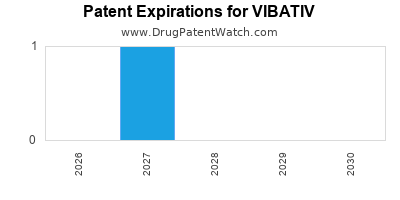
By analyzing the patents and regulatory protections it appears that the earliest date for generic entry will be January 1, 2027. This may change due to patent challenges or generic licensing.

Indicators of Generic Entry

< Available with Subscription >

  Get Started Free

AI Deep Research
Questions you can ask:
  • What is the 5 year forecast for VIBATIV?
  • What are the global sales for VIBATIV?
  • What is Average Wholesale Price for VIBATIV?
Summary for VIBATIV
International Patents:33
US Patents:1
Applicants:1
NDAs:1
Finished Product Suppliers / Packagers: 1
Raw Ingredient (Bulk) Api Vendors: 40
Clinical Trials: 14
Patent Applications: 399
Drug Prices: Drug price information for VIBATIV
What excipients (inactive ingredients) are in VIBATIV?VIBATIV excipients list
DailyMed Link:VIBATIV at DailyMed
Drug patent expirations by year for VIBATIV
Drug Prices for VIBATIV

See drug prices for VIBATIV

DrugPatentWatch® Estimated Loss of Exclusivity (LOE) Date for VIBATIV
Generic Entry Date for VIBATIV*:
Constraining patent/regulatory exclusivity:
NDA:
Dosage:
POWDER;INTRAVENOUS

*The generic entry opportunity date is the latter of the last compound-claiming patent and the last regulatory exclusivity protection. Many factors can influence early or later generic entry. This date is provided as a rough estimate of generic entry potential and should not be used as an independent source.

Recent Clinical Trials for VIBATIV

Identify potential brand extensions & 505(b)(2) entrants

SponsorPhase
Aaron CookPhase 4
Joseph KutiPhase 4
Theravance Biopharma, US, Inc.Phase 4

See all VIBATIV clinical trials

Pharmacology for VIBATIV

US Patents and Regulatory Information for VIBATIV

VIBATIV is protected by one US patents.

Based on analysis by DrugPatentWatch, the earliest date for a generic version of VIBATIV is ⤷  Get Started Free.

This potential generic entry date is based on patent 7,531,623.

Generics may enter earlier, or later, based on new patent filings, patent extensions, patent invalidation, early generic licensing, generic entry preferences, and other factors.

Applicant Tradename Generic Name Dosage NDA Approval Date TE Type RLD RS Patent No. Patent Expiration Product Substance Delist Req. Exclusivity Expiration
Cumberland VIBATIV telavancin hydrochloride POWDER;INTRAVENOUS 022110-001 Sep 11, 2009 DISCN Yes No 7,531,623 ⤷  Get Started Free Y ⤷  Get Started Free
Cumberland VIBATIV telavancin hydrochloride POWDER;INTRAVENOUS 022110-002 Sep 11, 2009 RX Yes Yes 7,531,623 ⤷  Get Started Free Y ⤷  Get Started Free
>Applicant >Tradename >Generic Name >Dosage >NDA >Approval Date >TE >Type >RLD >RS >Patent No. >Patent Expiration >Product >Substance >Delist Req. >Exclusivity Expiration

Expired US Patents for VIBATIV

Applicant Tradename Generic Name Dosage NDA Approval Date Patent No. Patent Expiration
Cumberland VIBATIV telavancin hydrochloride POWDER;INTRAVENOUS 022110-001 Sep 11, 2009 8,158,580 ⤷  Get Started Free
Cumberland VIBATIV telavancin hydrochloride POWDER;INTRAVENOUS 022110-002 Sep 11, 2009 7,544,364 ⤷  Get Started Free
Cumberland VIBATIV telavancin hydrochloride POWDER;INTRAVENOUS 022110-002 Sep 11, 2009 7,008,923 ⤷  Get Started Free
Cumberland VIBATIV telavancin hydrochloride POWDER;INTRAVENOUS 022110-001 Sep 11, 2009 7,208,471 ⤷  Get Started Free
>Applicant >Tradename >Generic Name >Dosage >NDA >Approval Date >Patent No. >Patent Expiration

Supplementary Protection Certificates for VIBATIV

Patent Number Supplementary Protection Certificate SPC Country SPC Expiration SPC Description
1292612 2011C/045 Belgium ⤷  Get Started Free PRODUCT NAME: VIBATIV - TELAVANCINE; AUTHORISATION NUMBER AND DATE: EU/1/11/705-001 20110902
1292612 132012902025885 Italy ⤷  Get Started Free PRODUCT NAME: TELAVANCINA(VIBATIV); AUTHORISATION NUMBER(S) AND DATE(S): EU/1/11/705/001-002, 20110902
1292612 36/2011 Austria ⤷  Get Started Free PRODUCT NAME: TELAVANCIN ODER EIN PHARMAZEUTISCH ANNEHMBARES SALZ HIEVON, EINSCHLIESSLICH TELAVANCINHYDROCHLORID; REGISTRATION NO/DATE: EU/1/11/705/001-002 20110902
1292612 SPC/GB11/056 United Kingdom ⤷  Get Started Free PRODUCT NAME: TELAVANCIN, OR A PHARMACEUTICALLY ACCEPTABLE SALT THEREOF, INCLUDING TELAVANCIN HYDROCHLORIDE; REGISTERED: UK EU/1/11/705/001 20110906; UK EU/1/11/705/002 20110906
>Patent Number >Supplementary Protection Certificate >SPC Country >SPC Expiration >SPC Description

Market Dynamics and Financial Trajectory for the Pharmaceutical Drug: VIBATIV

Last updated: July 28, 2025


Introduction

VIBATIV (oritavancin), an injectable lipoglycopeptide antibiotic, represents a significant development in the treatment of acute bacterial skin and skin structure infections (ABSSSI). Approved by the U.S. Food and Drug Administration (FDA) in 2014, VIBATIV has carved out a niche within the antimicrobial market, concurrently navigating evolving pathogen resistance, healthcare economics, and competitive pressures. Analyzing its market dynamics and financial trajectory provides insights into its current positioning and future prospects amid the broader pharmaceutical landscape.


Market Overview and Current Position

VIBATIV addresses a critical unmet need for a once-only, highly efficacious intravenous treatment for ABSSSI caused primarily by Gram-positive bacteria, including methicillin-resistant Staphylococcus aureus (MRSA). Its advantage lies in its single-dose administration, enabling outpatient treatment and reducing hospital stays. The global antibiotics market was valued at approximately $46.8 billion in 2020, with niche drugs like VIBATIV occupying a specialized segment focusing on multi-drug resistant infections [1].

As of 2023, VIBATIV remains a niche drug with limited but stable demand. Its sales derive predominantly from hospitals and specialized outpatient infusion centers that prioritize antimicrobial stewardship and outpatient care models. The drug's effective profile for resistant infections fosters strong prescriber confidence, yet its overall market penetration is constrained by factors such as pricing, competition, and the rising dominance of alternative therapies.


Market Drivers

1. Escalating Antibiotic Resistance

The proliferation of resistant pathogens, especially MRSA and vancomycin-resistant enterococci (VRE), sustains demand for potent alternative antibiotics. VIBATIV's mechanism of action—binding to D-Ala-D-Ala termini—offers substantial activity against resistant strains [2]. The CDC reports 94,000 MRSA-related deaths annually, underscoring the ongoing need for effective agents like VIBATIV.

2. Single-Dose Regimen Advantages

VIBATIV's single-dose regimen significantly reduces hospitalization costs and improves patient compliance—an attractive feature amid healthcare cost containment efforts. The shift towards outpatient parenteral antimicrobial therapy (OPAT) further bolsters its appeal.

3. Growing Outpatient Market

Healthcare systems worldwide are emphasizing outpatient treatment to cut costs and improve patient comfort. VIBATIV's suitability for outpatient administration aligns with this trend, potentially expanding its market footprint.

4. Regulatory and Clinical Endorsements

While primarily approved for ABSSSI, ongoing clinical trials hint at broader indications, such as bacteremia and infective endocarditis, contingent on further data. FDA labeling emphasizes its role in resistant infections, reinforcing its positioning in high-need cases.


Market Challenges and Constraints

1. Pricing and Reimbursement Dynamics

VIBATIV’s premium pricing relative to generic antibiotics presents a barrier to widespread adoption. Healthcare payers scrutinize cost-effectiveness, especially with alternative agents like dalbavancin and oritavancin (similar lipoglycopeptides), which also feature once-weekly dosing regimens.

2. Competitive Landscape

Key competitors include dalbavancin and oritavancin, both lipoglycopeptides with extended half-lives and similar administration profiles. Dalbavancin, approved in 2014, gained momentum due to its weekly dosing, capturing substantial market share [3]. Oral antibiotics for certain indications also threaten the relevance of IV therapies.

3. Limited Prescriber Awareness and Indications

Despite its FDA approval, prescriber familiarity remains limited. Additionally, its narrow approved indication constrains revenue potential unless new clinical data broaden its use.

4. Supply Chain and Manufacturing Considerations

VIBATIV's complex synthesis and manufacturing processes can impact supply stability and margins, influencing financial planning.


Financial Trajectory Analysis

1. Revenue Trends

Since its launch, VIBATIV has demonstrated steady but modest revenue growth. U.S. sales hovered around $60 million in 2021 and declined slightly in subsequent years due to increasing competition and payer pressures [4]. While off-label use and expanded indications could bolster revenue, such developments are pending further clinical validation.

2. R&D and Lifecycle Management

In efforts to sustain revenue, the manufacturer could invest in lifecycle management strategies, including exploring new indications or combination therapies. However, R&D expenditures on the drug’s pipeline may not be as high compared to blockbuster drugs, limiting aggressive investment.

3. Impact of Market Penetration and Pricing

The drug’s premium priced position limits volume growth, especially as price negotiations with payers tighten and competitive agents gain traction. Volume growth is expected to remain slow unless new indications or formulations emerge.

4. Impact of External Variables

Emerging antimicrobial stewardship policies, the COVID-19 pandemic’s influence on hospital workflows, and the rise of biosimilars or generics for comparable drugs could further reshape VIBATIV’s financial trajectory.


Future Outlook and Strategic Considerations

The prospects for VIBATIV hinge on strategic differentiation and expanding clinical utility. Potential avenues include:

  • Clinical Trials for Broader Indications: Evidence supporting use in bacteremia, endocarditis, or osteomyelitis could unlock new revenue streams.

  • Formulation Innovations: Developing oral formulations or extended-release versions could expand outpatient use and improve competitiveness.

  • Market Expansion: Entering emerging markets with rising antibiotic resistance may provide growth opportunities, especially where regulatory pathways are streamlined.

  • Partnerships and Licensing: Collaborations with larger pharma entities could facilitate commercialization, research, and wider acceptance.

However, the overall financial outlook remains cautious, emphasizing controlled growth amidst a highly competitive, cost-sensitive environment.


Key Takeaways

  • Market Position: VIBATIV holds a niche position in treating resistant Gram-positive infections with a unique single-dose IV regimen, but faces intense competition from similar agents like dalbavancin.

  • Growth Drivers: Increasing antibiotic resistance and outpatient treatment trends support steady demand, though constrained by pricing and limited indications.

  • Challenges: Market penetration is hindered by reimbursement complexities, competitive pressures, and prescriber awareness; supply chain considerations also influence financial stability.

  • Financial Outlook: Revenue growth remains modest; future expansion depends on clinical trial success, formulation innovation, and strategic partnerships.

  • Strategic Focus: Broadening indications, innovating formulations, and entering emerging markets are critical to enhancing VIBATIV’s long-term financial trajectory.


FAQs

1. How does VIBATIV compare to similar antibiotics like dalbavancin?
VIBATIV is administered as a single infusion for ABSSSI, similarly to dalbavancin, which allows weekly dosing. Dalbavancin has captured a larger share of outpatient markets due to its dosing convenience and broader approval scope, thus posing direct competitive pressure on VIBATIV.

2. What are the main factors limiting VIBATIV’s market expansion?
Key factors include high drug costs, limited indications, prescriber familiarity, payer reimbursement hurdles, and competition from alternative therapies with similar efficacy.

3. Are there ongoing efforts to expand VIBATIV’s approved indications?
Yes, clinical trials are exploring its potential for indications such as bacteremia and infective endocarditis, which could broaden its market applicability if successful.

4. What role does antimicrobial resistance play in VIBATIV’s market prospects?
The rise of resistant pathogens sustains demand for potent antibiotics. VIBATIV’s activity against resistant Gram-positive bacteria makes it valuable, especially in hospital settings facing multidrug-resistant infections.

5. How might emerging market trends influence VIBATIV's future?
Shifts towards outpatient care, outpatient parenteral antimicrobial therapy, and the development of oral formulations could expand VIBATIV’s market, provided it adapts through innovation and strategic positioning.


References

  1. MarketsandMarkets. "Antibiotics Market by Type, Application, and Region – Global Forecast to 2025." 2021.
  2. Sharma, G. et al. "Oritavancin: A Lipoglycopeptide for Multidrug-Resistant Gram-Positive Infections." Clin Infect Dis. 2015;60(3):414-420.
  3. Stryjewski, M. E., et al. "Dalbavancin for the Treatment of Acute Bacterial Skin and Skin Structure Infections." Lancet Infect Dis. 2014;14(7):629-639.
  4. IQVIA. "VIBATIV (oritavancin) US Sales Data." 2022.

Conclusion

VIBATIV remains a strategically significant yet niche antibiotic agent within the global antimicrobial market. Its future growth depends on clinical, regulatory, and market-driven developments that can expand its indications and improve its competitive positioning amid evolving healthcare landscapes. Business decisions should weigh its current limited but stable revenue base against opportunities for innovation and expansion to ensure a sustainable financial trajectory.

More… ↓

⤷  Get Started Free

Make Better Decisions: Try a trial or see plans & pricing

Drugs may be covered by multiple patents or regulatory protections. All trademarks and applicant names are the property of their respective owners or licensors. Although great care is taken in the proper and correct provision of this service, thinkBiotech LLC does not accept any responsibility for possible consequences of errors or omissions in the provided data. The data presented herein is for information purposes only. There is no warranty that the data contained herein is error free. We do not provide individual investment advice. This service is not registered with any financial regulatory agency. The information we publish is educational only and based on our opinions plus our models. By using DrugPatentWatch you acknowledge that we do not provide personalized recommendations or advice. thinkBiotech performs no independent verification of facts as provided by public sources nor are attempts made to provide legal or investing advice. Any reliance on data provided herein is done solely at the discretion of the user. Users of this service are advised to seek professional advice and independent confirmation before considering acting on any of the provided information. thinkBiotech LLC reserves the right to amend, extend or withdraw any part or all of the offered service without notice.