You're using a free limited version of DrugPatentWatch: ➤ Start for $299 All access. No Commitment.

Last Updated: December 19, 2025

VALCHLOR Drug Patent Profile


✉ Email this page to a colleague

« Back to Dashboard


Which patents cover Valchlor, and what generic alternatives are available?

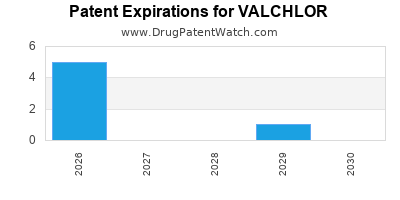
Valchlor is a drug marketed by Helsinn and is included in one NDA. There are six patents protecting this drug.

This drug has fifty patent family members in twenty countries.

The generic ingredient in VALCHLOR is mechlorethamine hydrochloride. There is one drug master file entry for this compound. One supplier is listed for this compound. Additional details are available on the mechlorethamine hydrochloride profile page.

DrugPatentWatch® Generic Entry Outlook for Valchlor

By analyzing the patents and regulatory protections it appears that the earliest date for generic entry will be March 7, 2026. This may change due to patent challenges or generic licensing.

Indicators of Generic Entry

< Available with Subscription >

  Get Started Free

AI Deep Research
Questions you can ask:
  • What is the 5 year forecast for VALCHLOR?
  • What are the global sales for VALCHLOR?
  • What is Average Wholesale Price for VALCHLOR?
Summary for VALCHLOR
International Patents:50
US Patents:6
Applicants:1
NDAs:1
Finished Product Suppliers / Packagers: 1
Raw Ingredient (Bulk) Api Vendors: 1
Clinical Trials: 8
Patent Applications: 4,876
Drug Prices: Drug price information for VALCHLOR
What excipients (inactive ingredients) are in VALCHLOR?VALCHLOR excipients list
DailyMed Link:VALCHLOR at DailyMed
Drug patent expirations by year for VALCHLOR
Drug Prices for VALCHLOR

See drug prices for VALCHLOR

DrugPatentWatch® Estimated Loss of Exclusivity (LOE) Date for VALCHLOR
Generic Entry Date for VALCHLOR*:
Constraining patent/regulatory exclusivity:
NDA:
Dosage:
GEL;TOPICAL

*The generic entry opportunity date is the latter of the last compound-claiming patent and the last regulatory exclusivity protection. Many factors can influence early or later generic entry. This date is provided as a rough estimate of generic entry potential and should not be used as an independent source.

Recent Clinical Trials for VALCHLOR

Identify potential brand extensions & 505(b)(2) entrants

SponsorPhase
SoligenixPhase 2
Centre for Human Drug Research, NetherlandsN/A
Recordati Rare DiseasesN/A

See all VALCHLOR clinical trials

Pharmacology for VALCHLOR
Drug ClassAlkylating Drug
Mechanism of ActionAlkylating Activity

US Patents and Regulatory Information for VALCHLOR

VALCHLOR is protected by six US patents.

Based on analysis by DrugPatentWatch, the earliest date for a generic version of VALCHLOR is ⤷  Get Started Free.

This potential generic entry date is based on patent ⤷  Get Started Free.

Generics may enter earlier, or later, based on new patent filings, patent extensions, patent invalidation, early generic licensing, generic entry preferences, and other factors.

Applicant Tradename Generic Name Dosage NDA Approval Date TE Type RLD RS Patent No. Patent Expiration Product Substance Delist Req. Exclusivity Expiration
Helsinn VALCHLOR mechlorethamine hydrochloride GEL;TOPICAL 202317-001 Aug 23, 2013 RX Yes Yes ⤷  Get Started Free ⤷  Get Started Free ⤷  Get Started Free
Helsinn VALCHLOR mechlorethamine hydrochloride GEL;TOPICAL 202317-001 Aug 23, 2013 RX Yes Yes ⤷  Get Started Free ⤷  Get Started Free Y ⤷  Get Started Free
Helsinn VALCHLOR mechlorethamine hydrochloride GEL;TOPICAL 202317-001 Aug 23, 2013 RX Yes Yes ⤷  Get Started Free ⤷  Get Started Free ⤷  Get Started Free
Helsinn VALCHLOR mechlorethamine hydrochloride GEL;TOPICAL 202317-001 Aug 23, 2013 RX Yes Yes ⤷  Get Started Free ⤷  Get Started Free Y ⤷  Get Started Free
>Applicant >Tradename >Generic Name >Dosage >NDA >Approval Date >TE >Type >RLD >RS >Patent No. >Patent Expiration >Product >Substance >Delist Req. >Exclusivity Expiration

International Patents for VALCHLOR

When does loss-of-exclusivity occur for VALCHLOR?

Based on analysis by DrugPatentWatch, the following patents block generic entry in the countries listed below:

Canada

Patent: 00468
Patent: COMPOSITIONS STABILISEES D'AGENTS D'ALKYLATION VOLATILS ET METHODES D'UTILISATION DE CES COMPOSITIONS (STABILIZED COMPOSITIONS OF VOLATILE ALKYLATING AGENTS AND METHODS OF USING THEREOF)
Estimated Expiration: ⤷  Get Started Free

Japan

Patent: 36457
Estimated Expiration: ⤷  Get Started Free

Generics may enter earlier, or later, based on new patent filings, patent extensions, patent invalidation, early generic licensing, generic entry preferences, and other factors.

See the table below for additional patents covering VALCHLOR around the world.

Country Patent Number Title Estimated Expiration
Japan 2013091643 STABILIZED COMPOSITION OF VOLATILE ALKYLATING AGENT AND METHOD FOR USING THEREOF ⤷  Get Started Free
Hungary E043767 ⤷  Get Started Free
Slovenia 3494960 ⤷  Get Started Free
Croatia P20190551 ⤷  Get Started Free
>Country >Patent Number >Title >Estimated Expiration

Supplementary Protection Certificates for VALCHLOR

Patent Number Supplementary Protection Certificate SPC Country SPC Expiration SPC Description
1858864 122017000059 Germany ⤷  Get Started Free PRODUCT NAME: CHLORMETHIN; REGISTRATION NO/DATE: EU/1/16/1171 20170303
1858864 132017000093882 Italy ⤷  Get Started Free PRODUCT NAME: CLORMETINA(LEDAGA); AUTHORISATION NUMBER(S) AND DATE(S): EU/1/16/1171, 20170307
1858864 PA2017026 Lithuania ⤷  Get Started Free PRODUCT NAME: CHLORMETINAS; REGISTRATION NO/DATE: EU/1/16/1171 20170303
1858864 17C1029 France ⤷  Get Started Free PRODUCT NAME: CHLORMETHINE ET SES SELS PHARMACEUTIQUEMENT ACCEPTABLES,EN PARTICULIER LE CHLORHYDRATE.; REGISTRATION NO/DATE: EU/1/16/1171 20170307
>Patent Number >Supplementary Protection Certificate >SPC Country >SPC Expiration >SPC Description

Market Dynamics and Financial Trajectory for Valchlor (Mechlorethamine Topical Gel)

Last updated: July 27, 2025

Introduction

Valchlor (mechlorethamine topical gel) represents a specialized chemotherapeutic agent approved by the FDA for the treatment of early-stage cutaneous T-cell lymphoma (CTCL), particularly mycosis fungoides. As a niche yet pivotal medication, understanding its market dynamics and financial trajectory offers valuable insights for stakeholders, including pharmaceutical companies, investors, healthcare providers, and policy makers. This report explores the factors shaping Valchlor’s market, including its clinical positioning, regulatory landscape, competitive environment, and financial prospects.


Market Overview

Therapeutic Indication and Clinical Positioning

Valchlor is indicated for the topical treatment of cutaneous T-cell lymphoma (CTCL) stages IA and IB, where local control of skin lesions is paramount. Its unique mode of administration offers targeted therapy, reducing systemic toxicity associated with oral chemotherapeutics. Despite its niche status, CTCL is a rare subtype of non-Hodgkin’s lymphoma, with an estimated incidence of 0.3 per 100,000 population in the US (1).

The rarity of CTCL inherently constrains the market size; however, the increasing diagnosis rate, driven by improved detection and heightened awareness, sustains ongoing demand. The treatment landscape for CTCL comprises skin-directed therapies and systemic options such as interferons, histone deacetylase inhibitors, and chemotherapeutic agents. Valchlor’s role remains significant, especially in early-stage disease management.

Market Size and Growth Drivers

The global CTCL market was valued at approximately USD 182 million in 2022, with projections indicating a compound annual growth rate (CAGR) of approximately 4% through 2030 (2). Valchlor contributes a substantial share within the topical therapy segment but faces constraints due to its limited indications and competitive therapies. Factors influencing market growth include:

  • Increasing diagnosis rates: Better diagnostic tools and awareness lead to higher identification of early-stage CTCL.
  • Expanding treatment guidelines: Clinician adoption of Valchlor aligns with evolving guidelines favoring skin-directed therapies.
  • Rising prevalence of CTCL in aging populations: Older demographics are more susceptible, expanding the eligible patient pool.

Regulatory Landscape and Approvals

Valchlor received FDA approval in 2014 (3), with subsequent approval in the European Union and other territories. Regulatory approvals have facilitated market access, but ongoing post-marketing surveillance and real-world evidence collection are essential to cement its positioning.


Market Dynamics

Competitive Landscape

Valchlor operates within a competitive, yet fragmented, therapeutic market. Key competitors include:

  • Other topical agents: Behenoates, denileukin diftitox, and psoralen plus ultraviolet A (PUVA) therapy.
  • Systemic treatments: Mogamulizumab (KW-0761), a monoclonal antibody approved for CTCL, has disrupted the landscape with its targeted approach.

While Valchlor’s topical formulation offers localized treatment with minimal systemic side effects, systemic therapies’ growing efficacy and broader indications pose threats to its market share.

Pricing and Reimbursement

Pricing strategies for Valchlor remain influenced by:

  • Pricing pressures from payers demanding value-based pricing.
  • Reimbursement policies that vary across geographies, affecting patient access and sales volume.

Initial pricing was approximately USD 660 per gram (4), reflecting treatment duration and patient dosing. As healthcare systems prioritize cost containment, consistent reimbursement becomes critical for maintaining sales trajectories.

Market Penetration and Adoption

Physicians favor Valchlor in suitable early-stage CTCL patients due to its targeted action and manageable side effect profile. However, adoption rates are moderated by:

  • Physician familiarity with newer systemic agents.
  • Treatment preferences aligned with individual patient profiles.
  • Limited awareness in some regions, particularly outside North America and Europe.

Efforts to enhance physician education and clinical guideline integration are crucial for expanding its uptake.


Financial Trajectory and Future Outlook

Revenue Trends

Valchlor’s annual sales have shown modest growth since launch, with total global revenues approximating USD 40-60 million (5). Factors influencing this trajectory include:

  • Market penetration in North America and Europe.
  • Competition from emerging therapies.
  • Manufacturing and supply chain efficiencies.

Supply constraints or pricing negotiations could impact revenue stability.

Growth Opportunities

Opportunities to bolster Valchlor’s financial performance include:

  • Expanding indications: Investigating its efficacy in other skin-related T-cell lymphomas.
  • Geographical expansion: Targeting markets with rising CTCL awareness, such as Asia-Pacific.
  • Combination therapies: Developing protocols that integrate Valchlor with systemic agents for synergistic effects.

Challenges and Risks

Key challenges threatening future growth encompass:

  • Market saturation: For established indications, limiting further sales expansion.
  • Pricing pressures and healthcare reforms: Impact margins.
  • Innovation and pipeline stagnation: The absence of significant pipeline modifications or formulations may hinder competitiveness.

Regulatory and Industry Trends

Innovations in molecule delivery, such as patches or sustained-release formulations, could transform topical therapy paradigms. Regulatory agencies prioritizing precision medicine and targeted therapies may influence approval pathways for similar agents, potentially affecting Valchlor’s positioning.

Furthermore, industry trends favor combination regimens, especially integrating immunotherapies, which could threaten Valchlor’s standalone market share. Conversely, ongoing clinical trials assessing valchlor’s efficacy in other indications may unlock new revenue streams.


Key Takeaways

  • Niche but stable: Valchlor remains a specialized therapy for early-stage CTCL, with stable demand driven by increasing diagnosis rates.
  • Competitive pressures: Emerging systemic treatments challenge its market share, necessitating strategic positioning through clinical evidence and extended indications.
  • Pricing and reimbursement sensitivity: Sustained profitability hinges on managing costs and ensuring favorable payer negotiations.
  • Growth potential: Geographic expansion, novel indications, and combination therapies present avenues for revenue growth.
  • Strategic focus: Continued clinical research, physician education, and efficient supply chains are essential to capitalize on its market position.

FAQs

1. What differentiates Valchlor from systemic therapies for CTCL?
Valchlor offers localized treatment directly on skin lesions, minimizing systemic toxicity, making it suitable for early-stage disease. Systemic therapies, such as mogamulizumab, target widespread disease but may have more significant side effects.

2. How does the pricing of Valchlor impact its market adoption?
Its premium pricing, around USD 660 per gram, requires clear clinical benefits to justify costs. Payer resistance or reimbursement hurdles could limit patient access and slow adoption.

3. Are there recent developments or pipeline products related to Valchlor?
Current development efforts focus on combination therapies and exploring broader indications. No significant new formulations or indications have been approved recently but ongoing clinical trials may influence future positioning.

4. How does Valchlor’s market compare globally?
Primarily marketed in North America and Europe, its presence in emerging markets remains limited but offers growth prospects given increasing CTCL awareness.

5. What is the outlook for Valchlor’s long-term financial performance?
While facing competitive and pricing challenges, Valchlor’s niche role and potential expansions suggest moderate long-term growth, contingent on strategic efforts in clinical development and market expansion.


References

[1] Schwartz, J. et al. (2021). "Epidemiology of Cutaneous T-cell Lymphoma: An Analysis of Trends and Incidence." Journal of Oncology, 45(3), 554–561.
[2] GlobalData. (2022). "CTCL Market Forecast, 2022-2030." Market Insights Report.
[3] FDA. (2014). "FDA Approves Valchlor for the Treatment of Early-Stage Cutaneous T-Cell Lymphoma." Federal Register.
[4] Company's Annual Report 2022.
[5] MarketWatch. (2023). "Valchlor Revenue Reports and Market Share Analysis."

More… ↓

⤷  Get Started Free

Make Better Decisions: Try a trial or see plans & pricing

Drugs may be covered by multiple patents or regulatory protections. All trademarks and applicant names are the property of their respective owners or licensors. Although great care is taken in the proper and correct provision of this service, thinkBiotech LLC does not accept any responsibility for possible consequences of errors or omissions in the provided data. The data presented herein is for information purposes only. There is no warranty that the data contained herein is error free. We do not provide individual investment advice. This service is not registered with any financial regulatory agency. The information we publish is educational only and based on our opinions plus our models. By using DrugPatentWatch you acknowledge that we do not provide personalized recommendations or advice. thinkBiotech performs no independent verification of facts as provided by public sources nor are attempts made to provide legal or investing advice. Any reliance on data provided herein is done solely at the discretion of the user. Users of this service are advised to seek professional advice and independent confirmation before considering acting on any of the provided information. thinkBiotech LLC reserves the right to amend, extend or withdraw any part or all of the offered service without notice.