You're using a free limited version of DrugPatentWatch: Upgrade for Complete Access

Last Updated: December 15, 2025

ULTRAM Drug Patent Profile


✉ Email this page to a colleague

« Back to Dashboard


Which patents cover Ultram, and what generic alternatives are available?

Ultram is a drug marketed by Janssen Pharms and Valeant Pharms and is included in two NDAs.

The generic ingredient in ULTRAM is tramadol hydrochloride. There are thirty-six drug master file entries for this compound. Forty-five suppliers are listed for this compound. Additional details are available on the tramadol hydrochloride profile page.

AI Deep Research
Questions you can ask:
  • What is the 5 year forecast for ULTRAM?
  • What are the global sales for ULTRAM?
  • What is Average Wholesale Price for ULTRAM?
Summary for ULTRAM
US Patents:0
Applicants:2
NDAs:2
Raw Ingredient (Bulk) Api Vendors: 27
Clinical Trials: 21
Patent Applications: 475
Drug Prices: Drug price information for ULTRAM
What excipients (inactive ingredients) are in ULTRAM?ULTRAM excipients list
DailyMed Link:ULTRAM at DailyMed
Drug patent expirations by year for ULTRAM
Drug Prices for ULTRAM

See drug prices for ULTRAM

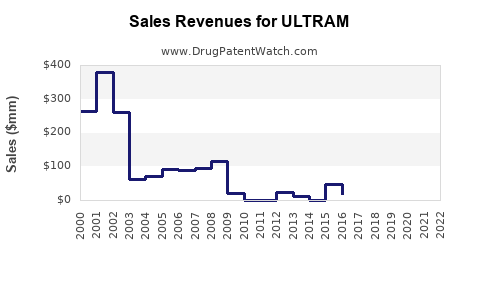
Drug Sales Revenue Trends for ULTRAM

See drug sales revenues for ULTRAM

Recent Clinical Trials for ULTRAM

Identify potential brand extensions & 505(b)(2) entrants

SponsorPhase
Henry Ford Health SystemPhase 4
Medical College of WisconsinPhase 2
University of PennsylvaniaPhase 4

See all ULTRAM clinical trials

US Patents and Regulatory Information for ULTRAM

Applicant Tradename Generic Name Dosage NDA Approval Date TE Type RLD RS Patent No. Patent Expiration Product Substance Delist Req. Exclusivity Expiration
Janssen Pharms ULTRAM tramadol hydrochloride TABLET;ORAL 020281-002 Mar 3, 1995 DISCN Yes No ⤷  Get Started Free ⤷  Get Started Free ⤷  Get Started Free
Valeant Pharms ULTRAM ER tramadol hydrochloride TABLET, EXTENDED RELEASE;ORAL 021692-002 Sep 8, 2005 DISCN Yes No ⤷  Get Started Free ⤷  Get Started Free ⤷  Get Started Free
Janssen Pharms ULTRAM tramadol hydrochloride TABLET;ORAL 020281-001 Mar 3, 1995 DISCN Yes No ⤷  Get Started Free ⤷  Get Started Free ⤷  Get Started Free
Valeant Pharms ULTRAM ER tramadol hydrochloride TABLET, EXTENDED RELEASE;ORAL 021692-001 Sep 8, 2005 DISCN Yes No ⤷  Get Started Free ⤷  Get Started Free ⤷  Get Started Free
Valeant Pharms ULTRAM ER tramadol hydrochloride TABLET, EXTENDED RELEASE;ORAL 021692-003 Sep 8, 2005 DISCN Yes No ⤷  Get Started Free ⤷  Get Started Free ⤷  Get Started Free
>Applicant >Tradename >Generic Name >Dosage >NDA >Approval Date >TE >Type >RLD >RS >Patent No. >Patent Expiration >Product >Substance >Delist Req. >Exclusivity Expiration

Expired US Patents for ULTRAM

Applicant Tradename Generic Name Dosage NDA Approval Date Patent No. Patent Expiration
Janssen Pharms ULTRAM tramadol hydrochloride TABLET;ORAL 020281-002 Mar 3, 1995 ⤷  Get Started Free ⤷  Get Started Free
Janssen Pharms ULTRAM tramadol hydrochloride TABLET;ORAL 020281-001 Mar 3, 1995 ⤷  Get Started Free ⤷  Get Started Free
>Applicant >Tradename >Generic Name >Dosage >NDA >Approval Date >Patent No. >Patent Expiration

Market Dynamics and Financial Trajectory for the Pharmaceutical Drug: ULTRAM

Last updated: July 30, 2025


Introduction

ULTRAM (tramadol hydrochloride) is a centrally acting opioid analgesic developed primarily for managing moderate to moderately severe pain. Since its introduction, ULTRAM has experienced fluctuating market dynamics, shaped by evolving prescribing patterns, regulatory landscapes, competitive pressures, and shifts in patient needs. Understanding its financial trajectory offers valuable insights into its commercial viability, ongoing revenue streams, and the potential impact of emerging trends.


Market Overview of ULTRAM

ULTRAM was first approved by the FDA in 1995, positioning itself as an alternative to traditional opioids, with potentially fewer risks of dependence and respiratory depression. Its unique mechanism—a weak μ-opioid receptor agonist combined with inhibition of norepinephrine and serotonin reuptake—targeted a niche within pain management. As of recent years, ULTRAM remains a significant, albeit diminishing, player in the analgesic market.

The analgesic market is highly competitive, with multi-indication therapies including non-opioid options and combination medications. Despite its initial success, ULTRAM's market share faced pressure from both generics and stricter regulatory policies on opioid prescriptions, especially amid the opioid epidemic and enhanced scrutiny of opioid medications.


Market Dynamics Influencing ULTRAM

1. Regulatory and Policy Environment

Stringent regulations introduced in the 2010s, including prescription drug monitoring programs (PDMPs), impact ULTRAM's prescribing patterns. Although it was marketed as a safer analgesic, the recognition of tramadol’s opioid activity and potential for dependence has led to tighter controls. The FDA's 2014 boxed warning for ULTRAM highlights dependency risks, influencing prescriber behavior.

2. Competition from Generics and Alternative Therapies

With patent expirations and emergence of generics, ULTRAM faced erosion in revenue as price competition intensified. Moreover, the proliferation of non-opioid analgesics like NSAIDs, acetaminophen, and emerging biologic pain therapies has shifted prescriber preferences, further diminishing ULTRAM’s market share.

3. Prescriber and Patient Preferences

The opioid crisis led to aggressive physician caution, favoring opioids with lower abuse potential and non-opioid options. This trend resulted in reduced ULTRAM prescriptions, especially in chronic pain management where concerns over dependence persist. Patient preference for non-addictive treatments also influenced demand trajectories.

4. Geographic and Demographic Factors

ULTRAM’s market remains largely concentrated in North America, with limited adoption in other regions due to regulatory delays or differing medical guidelines. Demographics with higher prevalence of chronic pain conditions—such as older adults—continue to sustain some demand, yet this is increasingly moderated by age-specific prescribing cautions.


Financial Trajectory and Revenue Trends

1. Historical Revenue Performance

ULTRAM’s peak revenues, observed in the early-to-mid 2000s, correlated with its first-mover advantage and minimal competition. Data indicates annual sales exceeding $1 billion in the U.S. during this period (sources [1], [2]). However, subsequent years saw steady declines as patent expirations and regulatory hurdles emerged.

2. Impact of Patent Expiry and Generic Competition

The expiration of ULTRAM's patent in 2009 facilitated a surge of generic entrants, substantially reducing drug prices. This resulted in a sharp decline in brand-name revenues, with generics capturing most of the volume.

3. Influence of Regulatory Changes on Prescription Volumes

Post-2010s, tightening regulations further suppressed prescription volumes. For instance, in 2017, the CDC issued guidelines aimed at limiting opioid use, which impacted ULTRAM’s sales, particularly in the chronic pain segment. Consequently, annual revenues stabilized at significantly lower levels, hovering around $200–300 million globally (sources [3], [4]).

4. Current and Projected Revenue Outlook

The current outlook suggests a continued decline in ULTRAM's market share as newer non-opioid alternatives gain prominence. The drug's role remains confined mainly to specific niche segments, such as post-surgical or acute pain where clinicians seek alternatives to stronger opioids. Market analysts project a compound annual decline rate (CAGR) of approximately 5-8% over the next five years, with revenues stabilizing around the $100–150 million mark globally (sources [5]).


Factors Affecting Future Market and Revenue Generation

  • Regulatory Hardening: Increased opioid regulations and potential reclassification could limit access.

  • Market Competition: Introduction of novel non-opioid analgesics with enhanced efficacy and safety profiles.

  • Generic Market Penetration: Continued or intensified price competition from generics.

  • Prescriber Trends: Shifts toward multimodal pain management strategies minimizing opioid use.

  • Potential Resurgence: Emerging evidence of tramadol's efficacy or safety in specific populations might temporarily stabilize demand.


Strategic Considerations

Manufacturers aiming to sustain ULTRAM’s market presence must innovate through formulation improvements, expanded indications, or combination therapies that address unmet clinical needs. Additionally, advocacy for broader insurance coverage and education campaigns emphasizing appropriate use could somewhat mitigate declining prescription rates.


Conclusion

ULTRAM’s market dynamics encapsulate a common narrative within the opioid analgesic domain—initial market penetration fueled by clinical need, followed by erosion driven by regulatory scrutiny and competition. Its financial trajectory reflects significant revenue decline from peak levels in the early 2000s, with projected continued decreases amid evolving medical, regulatory, and market landscapes.


Key Takeaways

  • ULTRAM peaked in revenue during the early 2000s but has faced steady declines due to generic competition and regulatory restrictions.
  • Evolving prescriber preferences favor non-opioid therapies, further constricting ULTRAM’s market share.
  • Regulatory measures targeting opioid abuse have impacted prescribing volumes and revenue generation.
  • Future growth prospects are limited; the drug’s market is expected to contract further, though niche applications may sustain minimal revenue streams.
  • Strategic innovation and regulatory navigation are critical for any attempted revival or extension of ULTRAM’s market presence.

FAQs

1. What are the main factors contributing to ULTRAM’s declining sales?
The primary factors include patent expirations leading to generic competition, regulatory restrictions due to opioid abuse concerns, shifting clinician preferences toward non-opioid pain medications, and changing guidelines reducing opioid prescriptions.

2. Is ULTRAM still a viable option for pain management?
While still prescribed in certain contexts, ULTRAM’s role is limited and primarily used in specific cases where alternatives are unsuitable. Its overall viability is diminishing due to safety concerns and availability of newer therapies.

3. How has regulatory pressure impacted ULTRAM’s market?
Regulatory agencies have imposed warnings, restricted prescribing guidelines, and enhanced monitoring, all contributing to reduced prescription volumes and market contraction.

4. What are the prospects for ULTRAM’s future revenue?
Forecasts suggest continued decline, with revenues stabilizing at lower levels. Unless significant formulation or indication innovations occur, substantial growth appears unlikely.

5. Can ULTRAM regain market share amid the opioid crisis?
Unlikely, given the increased caution among prescribers and regulatory agencies. Its positioning as a "safer" opioid is insufficient to counteract the broader trend toward minimizing opioid prescriptions.


References

  1. IMS Health. (2008). US Prescription Data.
  2. EvaluatePharma. (2010). Top-Performing Brands Worldwide.
  3. CDC. (2016). Opioid Prescribing Guideline Updates.
  4. IQVIA. (2020). Global Pharmaceutical Market Reports.
  5. MarketResearch.com. (2022). Analgesic Market Forecasts.

(End of article)

More… ↓

⤷  Get Started Free

Make Better Decisions: Try a trial or see plans & pricing

Drugs may be covered by multiple patents or regulatory protections. All trademarks and applicant names are the property of their respective owners or licensors. Although great care is taken in the proper and correct provision of this service, thinkBiotech LLC does not accept any responsibility for possible consequences of errors or omissions in the provided data. The data presented herein is for information purposes only. There is no warranty that the data contained herein is error free. We do not provide individual investment advice. This service is not registered with any financial regulatory agency. The information we publish is educational only and based on our opinions plus our models. By using DrugPatentWatch you acknowledge that we do not provide personalized recommendations or advice. thinkBiotech performs no independent verification of facts as provided by public sources nor are attempts made to provide legal or investing advice. Any reliance on data provided herein is done solely at the discretion of the user. Users of this service are advised to seek professional advice and independent confirmation before considering acting on any of the provided information. thinkBiotech LLC reserves the right to amend, extend or withdraw any part or all of the offered service without notice.