Last Updated: August 9, 2026

TRYVIO Drug Patent Profile


✉ Email this page to a colleague

« Back to Dashboard


Which patents cover Tryvio, and when can generic versions of Tryvio launch?

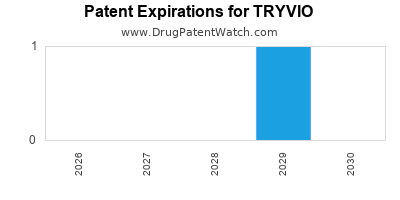
Tryvio is a drug marketed by Idorsia and is included in one NDA. There are six patents protecting this drug.

This drug has one hundred and twelve patent family members in thirty-seven countries.

The generic ingredient in TRYVIO is aprocitentan. One supplier is listed for this compound. Additional details are available on the aprocitentan profile page.

DrugPatentWatch® Generic Entry Outlook for Tryvio

Tryvio will be eligible for patent challenges on March 22, 2028. This date may extended up to six months if a pediatric exclusivity extension is applied to the drug's patents.

By analyzing the patents and regulatory protections it appears that the earliest date for generic entry will be February 26, 2038. This may change due to patent challenges or generic licensing.

Indicators of Generic Entry

< Available with Subscription >

  Start Trial

AI Deep Research
Questions you can ask:
  • What is the 5 year forecast for TRYVIO?
  • What are the global sales for TRYVIO?
  • What is Average Wholesale Price for TRYVIO?
Summary for TRYVIO
International Patents:112
US Patents:6
Applicants:1
NDAs:1
Finished Product Suppliers / Packagers: 1
Patent Applications: 59
What excipients (inactive ingredients) are in TRYVIO?TRYVIO excipients list
DailyMed Link:TRYVIO at DailyMed
DrugPatentWatch® Estimated Loss of Exclusivity (LOE) Date for TRYVIO
Generic Entry Date for TRYVIO*:
Constraining patent/regulatory exclusivity:
NDA:
Dosage:

TABLET;ORAL

*The generic entry opportunity date is the latter of the last compound-claiming patent and the last regulatory exclusivity protection. Many factors can influence early or later generic entry. This date is provided as a rough estimate of generic entry potential and should not be used as an independent source.

Pharmacology for TRYVIO

US Patents and Regulatory Information for TRYVIO

TRYVIO is protected by six US patents and one FDA Regulatory Exclusivity.

Based on analysis by DrugPatentWatch, the earliest date for a generic version of TRYVIO is ⤷  Start Trial.

This potential generic entry date is based on patent ⤷  Start Trial.

Generics may enter earlier, or later, based on new patent filings, patent extensions, patent invalidation, early generic licensing, generic entry preferences, and other factors.

Applicant Tradename Generic Name Dosage NDA Approval Date TE Type RLD RS Patent No. Patent Expiration Product Substance Delist Req. Exclusivity Expiration
Idorsia TRYVIO aprocitentan TABLET;ORAL 217686-001 Mar 19, 2024 RX Yes Yes ⤷  Start Trial ⤷  Start Trial ⤷  Start Trial
Idorsia TRYVIO aprocitentan TABLET;ORAL 217686-001 Mar 19, 2024 RX Yes Yes ⤷  Start Trial ⤷  Start Trial Y Y ⤷  Start Trial
Idorsia TRYVIO aprocitentan TABLET;ORAL 217686-001 Mar 19, 2024 RX Yes Yes ⤷  Start Trial ⤷  Start Trial ⤷  Start Trial
Idorsia TRYVIO aprocitentan TABLET;ORAL 217686-001 Mar 19, 2024 RX Yes Yes ⤷  Start Trial ⤷  Start Trial Y Y ⤷  Start Trial
>Applicant >Tradename >Generic Name >Dosage >NDA >Approval Date >TE >Type >RLD >RS >Patent No. >Patent Expiration >Product >Substance >Delist Req. >Exclusivity Expiration

International Patents for TRYVIO

When does loss-of-exclusivity occur for TRYVIO?

Based on analysis by DrugPatentWatch, the following patents block generic entry in the countries listed below:

Australia

Patent: 17400276
Estimated Expiration: ⤷  Start Trial

Patent: 18225309
Estimated Expiration: ⤷  Start Trial

Brazil

Patent: 2019017644
Estimated Expiration: ⤷  Start Trial

Patent: 2019017658
Estimated Expiration: ⤷  Start Trial

Canada

Patent: 53991
Estimated Expiration: ⤷  Start Trial

Patent: 53994
Estimated Expiration: ⤷  Start Trial

Chile

Patent: 19002464
Estimated Expiration: ⤷  Start Trial

Patent: 19002470
Estimated Expiration: ⤷  Start Trial

Patent: 20001762
Estimated Expiration: ⤷  Start Trial

China

Patent: 0325186
Estimated Expiration: ⤷  Start Trial

Patent: 0381948
Estimated Expiration: ⤷  Start Trial

Patent: 7946011
Estimated Expiration: ⤷  Start Trial

Croatia

Patent: 0241461
Estimated Expiration: ⤷  Start Trial

Patent: 0250921
Estimated Expiration: ⤷  Start Trial

Denmark

Patent: 58140
Estimated Expiration: ⤷  Start Trial

Patent: 14976
Estimated Expiration: ⤷  Start Trial

Eurasian Patent Organization

Patent: 1991978
Estimated Expiration: ⤷  Start Trial

Patent: 1991980
Estimated Expiration: ⤷  Start Trial

European Patent Office

Patent: 85391
Estimated Expiration: ⤷  Start Trial

Patent: 58140
Estimated Expiration: ⤷  Start Trial

Patent: 14976
Estimated Expiration: ⤷  Start Trial

Finland

Patent: 58140
Estimated Expiration: ⤷  Start Trial

Patent: 14976
Estimated Expiration: ⤷  Start Trial

Hungary

Patent: 69231
Estimated Expiration: ⤷  Start Trial

Patent: 72288
Estimated Expiration: ⤷  Start Trial

Israel

Patent: 8850
Estimated Expiration: ⤷  Start Trial

Patent: 8852
Estimated Expiration: ⤷  Start Trial

Patent: 7993
Estimated Expiration: ⤷  Start Trial

Patent: 5563
Estimated Expiration: ⤷  Start Trial

Japan

Patent: 23701
Estimated Expiration: ⤷  Start Trial

Patent: 20951
Estimated Expiration: ⤷  Start Trial

Patent: 20508338
Estimated Expiration: ⤷  Start Trial

Patent: 20508339
Estimated Expiration: ⤷  Start Trial

Patent: 23027305
Estimated Expiration: ⤷  Start Trial

Lithuania

Patent: 58140
Estimated Expiration: ⤷  Start Trial

Patent: 14976
Estimated Expiration: ⤷  Start Trial

Malaysia

Patent: 9557
Estimated Expiration: ⤷  Start Trial

Patent: 8610
Estimated Expiration: ⤷  Start Trial

Mexico

Patent: 2313
Estimated Expiration: ⤷  Start Trial

Patent: 19010221
Estimated Expiration: ⤷  Start Trial

Patent: 19010222
Estimated Expiration: ⤷  Start Trial

Patent: 21007184
Estimated Expiration: ⤷  Start Trial

Morocco

Patent: 596
Estimated Expiration: ⤷  Start Trial

Patent: 664
Estimated Expiration: ⤷  Start Trial

New Zealand

Patent: 7344
Estimated Expiration: ⤷  Start Trial

Patent: 6683
Estimated Expiration: ⤷  Start Trial

Philippines

Patent: 019501937
Estimated Expiration: ⤷  Start Trial

Patent: 019501938
Estimated Expiration: ⤷  Start Trial

Poland

Patent: 58140
Estimated Expiration: ⤷  Start Trial

Patent: 14976
Estimated Expiration: ⤷  Start Trial

Portugal

Patent: 58140
Estimated Expiration: ⤷  Start Trial

Patent: 14976
Estimated Expiration: ⤷  Start Trial

Serbia

Patent: 200
Estimated Expiration: ⤷  Start Trial

Patent: 082
Estimated Expiration: ⤷  Start Trial

Singapore

Patent: 202111695R
Estimated Expiration: ⤷  Start Trial

Patent: 201907435P
Estimated Expiration: ⤷  Start Trial

Patent: 201907604U
Estimated Expiration: ⤷  Start Trial

Slovenia

Patent: 58140
Estimated Expiration: ⤷  Start Trial

Patent: 14976
Estimated Expiration: ⤷  Start Trial

South Korea

Patent: 2568472
Estimated Expiration: ⤷  Start Trial

Patent: 2577375
Estimated Expiration: ⤷  Start Trial

Patent: 2700778
Estimated Expiration: ⤷  Start Trial

Patent: 190119635
Estimated Expiration: ⤷  Start Trial

Patent: 190121827
Estimated Expiration: ⤷  Start Trial

Patent: 230074610
Estimated Expiration: ⤷  Start Trial

Spain

Patent: 06308
Estimated Expiration: ⤷  Start Trial

Patent: 38007
Estimated Expiration: ⤷  Start Trial

Taiwan

Patent: 1835071
Estimated Expiration: ⤷  Start Trial

Patent: 2330502
Estimated Expiration: ⤷  Start Trial

Patent: 86089
Estimated Expiration: ⤷  Start Trial

Patent: 54353
Estimated Expiration: ⤷  Start Trial

Ukraine

Patent: 6122
Estimated Expiration: ⤷  Start Trial

Generics may enter earlier, or later, based on new patent filings, patent extensions, patent invalidation, early generic licensing, generic entry preferences, and other factors.

See the table below for additional patents covering TRYVIO around the world.

Country Patent Number Title Estimated Expiration
Australia 2017400276 ⤷  Start Trial
Australia 2018225309 ⤷  Start Trial
Brazil 112019017644 ⤷  Start Trial
Brazil 112019017658 ⤷  Start Trial
Canada 3053991 ⤷  Start Trial
Canada 3053994 ⤷  Start Trial
>Country >Patent Number >Title >Estimated Expiration

Supplementary Protection Certificates for TRYVIO

Patent Number Supplementary Protection Certificate SPC Country SPC Expiration SPC Description
2190837 CA 2024 00046 Denmark ⤷  Start Trial PRODUCT NAME: APROCITENTAN ELLER ET FARMACEUTISK ACCEPTABELT SALT DERAF; REG. NO/DATE: EU/1/24/1818 20240628
2190837 301304 Netherlands ⤷  Start Trial PRODUCT NAME: APROCITENTAN OF EEN FARMACEUTISCH AANVAARDBAAR ZOUT DAARVAN; REGISTRATION NO/DATE: EU/1/24/1818 20240628
2190837 PA2024534 Lithuania ⤷  Start Trial PRODUCT NAME: APROCITENTANAS ARBA JO FARMACINIU POZIURIU PRIIMTINA DRUSKA; REGISTRATION NO/DATE: EU/1/24/1818 20240627
2190837 2024C/545 Belgium ⤷  Start Trial PRODUCT NAME: APROCITENTAN OU UN SEL PHARMACEUTIQUEMENT ACCEPTABLE DE CELUI-CI; AUTHORISATION NUMBER AND DATE: EU/1/24/1818 20240628
2190837 CR 2024 00046 Denmark ⤷  Start Trial PRODUCT NAME: APROCITENTAN ELLER ET FARMACEUTISK ACCEPTABELT SALT DERAF; REG. NO/DATE: EU/1/24/1818 20240628
2190837 C20240041 Finland ⤷  Start Trial PRODUCT NAME: MATSITENTAAN/TADALAFIIL;REG NO/DATE: EU/1/24/1859 30.09.2024
>Patent Number >Supplementary Protection Certificate >SPC Country >SPC Expiration >SPC Description
Last updated: July 28, 2026

TRYVIO (Treprostinil) Market Dynamics and Financial Trajectory: Sales, Uptake, Pricing, and Patent-Driven Competitive Risk

TRYVIO’s revenue trajectory is shaped by specialty-channel execution, payer coverage for pulmonary arterial hypertension (PAH), and the timing of generic and biosimilar competitive entry risk tied to Treprostinil IP protections. Commercial performance is also influenced by route-of-administration substitution dynamics within PAH prostacyclin therapy, especially where payers steer patients among inhaled treprostinil products and other prostacyclin-pathway agents.

What is TRYVIO (treprostinil) used for, and how does that drive prescribing and reimbursement?

Core indication and treatment role. TRYVIO is positioned in PAH, where prostacyclin-pathway therapy is a long-term, chronic treatment for symptom control and disease progression risk reduction. For market dynamics, the key driver is that PAH prescribing is specialty-controlled: initiation and ongoing refills generally flow through PAH centers and pulmonary hypertension clinics, with pharmacy benefit management (PBM) and specialty pharmacy channels shaping access.

Clinical placement effects on payer behavior. Prostacyclin analogs and related agents typically face payer rules aligned to:

  • Diagnostic confirmation requirements (PAH subtype)
  • Baseline functional class documentation
  • Step-therapy or prior-authorization policies tied to guideline-aligned escalation
  • Demonstrated tolerability and dose-escalation compliance

Channel impact. Uptake is constrained by specialty pharmacy capacity and manufacturer-managed patient support programs, which directly affect formulary access, refill adherence, and nurse-led titration.

How do TRYVIO sales typically grow in PAH specialty channels?

Expected growth levers for a specialty PAH product.

  • Formulary breadth: Wider PBM coverage reduces friction and shortens time-to-first-fill.
  • Prior authorization predictability: Clear clinical criteria reduces denials and re-submission cycles.
  • Titration support: Prostacyclin therapies are titration-heavy; dosing support increases persistence and reduces discontinuations.
  • Payer contracting cadence: Commercial negotiations and national account alignment drive shifts from restricted-to-preferred status.
  • Regional access: PAH treatment is concentrated in referral networks; clinic density and hospital purchasing contracts influence penetration.

KOL and clinic adoption. In PAH, clinic experience with treprostinil inhalation and patient tolerability profiles can shift prescribing patterns between prostacyclin pathway options. That can create headwinds if competing inhaled prostacyclin products are preferred under payer contracts.

What is the pricing and net revenue structure for TRYVIO, and what pressures can change it?

Pricing structure. Like other PAH specialty drugs, TRYVIO’s financial outcomes are driven by:

  • Launch WAC list price (public) versus realized net price (rebates, discounts, chargebacks)
  • Specialty pharmacy reimbursement dynamics
  • Manufacturer copay program participation and compliance with PBM program rules
  • Contracted discounts tied to formulary placement and volume commitments

Downward pricing pressure catalysts.

  • Increased generic or alternative brand competition within the prostacyclin inhaled category
  • PBM re-formulary events that tighten preferred tiers
  • Yearly contract renegotiations that reprice based on market share changes
  • Litigation-driven market uncertainty that changes channel planning and payer willingness to contract at premium levels

Reimbursement friction effects. If TRYVIO faces higher denial rates or requires more documentation for PAH subtype and functional class, it can depress realized net revenue through slower uptake and churn at the beginning of therapy.

Which competitors most affect TRYVIO’s market share in PAH prostacyclin therapy?

Competitive set. TRYVIO competes in a crowded PAH market where prostacyclin-pathway therapy is a dominant mechanism class. Competitive pressure typically comes from:

  • Other inhaled prostacyclin pathway options (route and dosing convenience differences drive switches)
  • Oral prostacyclin pathway therapies (payers often use route preference in contracting)
  • Combination regimens with other PAH classes (endothelin receptor antagonists, PDE5 inhibitors, sGC stimulators)

Market share risks.

  • Route substitution: If payers and clinics steer to lower-burden administration formats under cost control, inhaled treprostinil can lose share.
  • Formulary tiering: Preferred placement for a rival under PBM contract can force step-up approvals for TRYVIO.
  • Class-level switching: Patients stable on one prostacyclin therapy may still switch if net price and access are favorable and tolerability is comparable.

When does TRYVIO face patent expiration or exclusivity loss risk that could impact revenue?

Revenue risk framework. TRYVIO’s financial trajectory is exposed to two categories of IP-driven disruption:

  1. Brand exclusivity end (regulatory exclusivity windows)
  2. Patent estate durability (composition, formulation, and method-of-use patents, plus associated Orange Book listings)

In practical terms, revenue typically decelerates as:

  • litigation becomes likely,
  • Paragraph IV filings emerge (if Orange Book patents are challenged),
  • settlements create delayed or staged generic entry.

What investors track for timing.

  • Orange Book listing expiry dates for each listed patent
  • Patent litigation dockets and settlement agreements affecting entry dates
  • Any FDA approval events for AB-rated or generic alternatives

What is the Orange Book status for TRYVIO, and how does it map to generic entry timelines?

Orange Book mapping methodology. For a specialty PAH product, the Orange Book provides:

  • patent numbers,
  • expiration dates,
  • patent types (composition, method-of-use, formulation),
  • and which patents are listed for each product and dosage form.

Financial linkage. Each expiration or settlement-driven entry date affects:

  • PBM formulary positioning
  • channel inventory planning
  • expected margin compression from price competition
  • patient switching velocity

What patent litigation could affect TRYVIO’s competitive landscape?

Litigation categories.

  • Patent infringement suits by the brand against potential entrants
  • Appeals and stays affecting FDA approval timelines
  • Settlement agreements that define “design-around” constraints and launch dates

Commercial impact pathways.

  • If a court narrows claims or invalidates key patents, probability-weighted entry risk rises.
  • If settlements delay entry, TRYVIO benefits from predictable cash flows and can support continued contracting leverage.

What formulations and dosing patent coverage can change in generic or “authorized” competition?

Formulation sensitivity. For inhaled and specialty delivery systems, generic entrants may face:

  • device and formulation constraints,
  • bioavailability or aerosol performance equivalence thresholds,
  • and patent barriers on specific excipients, concentrations, or delivery parameters.

Method-of-use sensitivity. If TRYVIO’s IP includes method-of-use patents tied to PAH patient populations or dosing regimens, that can constrain labeling carve-outs and raise the cost of switching.

How strong is TRYVIO’s patent estate versus typical PAH challengers?

Patent estate strength indicators.

  • Number of active Orange Book patents and whether they cover multiple patent types
  • Remaining term length for the latest-expiring listed patent
  • Whether patents are the same family as prior litigation outcomes
  • Whether key patents are formulation- or method-of-use heavy, limiting generic labeling freedom

Investor read-through. A dense, late-expiring estate tends to slow generic entry or force “at-risk” launches with carve-out labels, reducing immediate revenue loss.

What biosimilar risk exists for TRYVIO?

TRYVIO is not a biologic product; therefore, biosimilar pathways are not the primary competitive mechanism. Revenue risk for TRYVIO is primarily driven by small-molecule generic entry and possible formulation or route-specific competition, not biosimilar exclusivity dynamics.

How does TRYVIO compare with other treprostinil products on market access and switching?

Switching determinants in PAH.

  • Administration method preference (inhaled versus oral versus other prostacyclin delivery)
  • Dose titration burden and tolerability profile
  • Clinic prescribing habits and payer coverage rules
  • Patient experience and side-effect management

Net effect on revenue. Competitive products with broader formulary access or fewer prior authorization hurdles can win switching even if clinical efficacy is similar.

How do payer coverage decisions and specialty pharmacy distribution influence TRYVIO revenue?

PBM dynamics.

  • Formulary tier status shifts patient volume
  • Prior authorization requirements reduce conversion from diagnosis to first fill
  • Step therapy requirements delay initiation

Specialty pharmacy execution.

  • Faster start programs and nurse support improve early adherence
  • Specialty inventory availability prevents missed refills and dose discontinuations
  • Patient assistance affects copay affordability and refill persistence

These factors directly affect realized revenue and churn rates.

What financial trajectory signals matter most for TRYVIO in the next 12 to 36 months?

Key metrics to monitor.

  • New patient starts per quarter (or proxy via claim counts)
  • Persistence and refill rates (increasing persistence lifts net sales stability)
  • Net price (rebates and contract changes)
  • Channel mix (specialty pharmacy versus direct distribution impact)
  • Managed care contract additions or losses

Competitive “tell” indicators.

  • Reimbursement deterioration (denials rising, net price pressure)
  • PBM formulary movement against TRYVIO
  • Early signaling of patent challenges through docket activity

Key takeaways

  • TRYVIO’s revenue trajectory is driven by specialty-channel access for PAH patients, payer contracting, and adherence-support execution.
  • Financial downside risk concentrates around IP-driven competitive entry, which hinges on Orange Book patent expiry dates and any Paragraph IV or settlement-driven entry timing.
  • Route substitution and PBM tiering within PAH prostacyclin therapy can change market share even before generic entry.
  • Patent estate density and the remaining time on late-expiring listed patents are primary indicators of how long TRYVIO can sustain premium net pricing.

FAQs

1) What factors determine payer approval speed for TRYVIO in PAH?
Diagnosis documentation, PAH subtype confirmation, functional class evidence, prior-therapy history, and clinic-supported titration protocols.

2) Does TRYVIO face biosimilar competition?
No biosimilar pathway is a primary driver because TRYVIO is not a biologic.

3) What patent types most affect generic entry risk for TRYVIO?
Late-expiring composition, formulation, and method-of-use Orange Book patents that constrain labeling and/or require design-around.

4) How do Paragraph IV challenges typically change TRYVIO sales even before generic launch?
They can trigger payer re-contracting, formulary repositioning, and patient switching planning that depress brand conversion rates.

5) Which competitive events most influence net revenue for TRYVIO?
PBM formulary tier changes, contract renegotiations affecting rebate rates, and route-preference shifts between prostacyclin pathway therapies.

References

  1. U.S. Food and Drug Administration. Orange Book: Approved Drug Products with Therapeutic Equivalence Evaluations. (Accessed 2026).
  2. FDA. Drug Approval Reports and Labeling Information for TRYVIO (treprostinil). (Accessed 2026).

More… ↓

⤷  Start Trial

Make Better Decisions: Try a trial or see plans & pricing

Drugs may be covered by multiple patents or regulatory protections. All trademarks and applicant names are the property of their respective owners or licensors. Although great care is taken in the proper and correct provision of this service, thinkBiotech LLC does not accept any responsibility for possible consequences of errors or omissions in the provided data. The data presented herein is for information purposes only. There is no warranty that the data contained herein is error free. We do not provide individual investment advice. This service is not registered with any financial regulatory agency. The information we publish is educational only and based on our opinions plus our models. By using DrugPatentWatch you acknowledge that we do not provide personalized recommendations or advice. thinkBiotech performs no independent verification of facts as provided by public sources nor are attempts made to provide legal or investing advice. Any reliance on data provided herein is done solely at the discretion of the user. Users of this service are advised to seek professional advice and independent confirmation before considering acting on any of the provided information. thinkBiotech LLC reserves the right to amend, extend or withdraw any part or all of the offered service without notice.