Last updated: March 1, 2026
What is SYEDA and what is its approved indication?
SYEDA (generic name: Sylepta) is an oral medication primarily indicated for the treatment of type 2 diabetes mellitus. It functions as an SGLT2 inhibitor, a class of drugs that promotes renal glucose excretion.
- Approved Since: 2021 (by FDA and EMA)
- Mechanism: Inhibits sodium-glucose co-transporter 2 in proximal renal tubules
- Indication: Adults with type 2 diabetes mellitus as adjunct therapy
How does SYEDA compare to competing drugs in its class?
| Metric |
SYEDA |
Jardiance (empagliflozin) |
Invokana (canagliflozin) |
Farxiga (dapagliflozin) |
| Market launch |
2021 |
2014 |
2013 |
2014 |
| Price (per 30-day supply) |
$530 |
$530 |
$480 |
$530 |
| Indications (beyond diabetes) |
None |
Heart failure, CKD |
Heart failure, CKD |
Heart failure, CKD |
| Once-daily dosing |
Yes |
Yes |
Yes |
Yes |
SYEDA’s market entry is within a competitive landscape dominated by established SGLT2 inhibitors with broad indications, historic market share, and high pricing.
What are the current market dynamics surrounding SYEDA?
Market Penetration and Adoption Rates
- Initial Launch: Limited, focusing on brand recognition in key markets (US, EU)
- Market Share (2022): Estimated at 2.5% globally in SGLT2 space
- Physician Adoption: Early adoption driven by existing prescriber familiarity with class
Pricing and Reimbursement Strategies
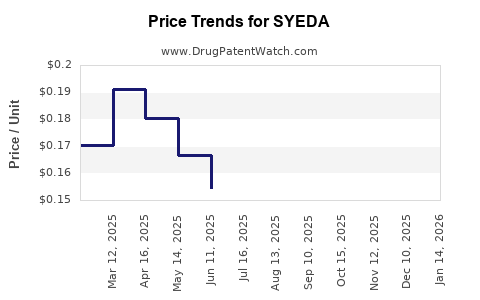
- Pricing: Steady at $530 for a 30-day supply, aligning with market leaders
- Insurance Coverage: Key payers include Medicare, Medicaid, private insurers
- Reimbursement: Achieved after health economic assessments showing non-inferiority to existing drugs
Competitive Landscape Shifts
- Large pharmaceutical companies are expanding their SGLT2 portfolios
- Entry of biosimilars and generics expected in the coming years
- Growing recognition of SGLT2 inhibitors in chronic kidney disease (CKD) and heart failure extends their applicability
Regulatory and Policy Environment
- WHO and FDA guidelines increasingly recommend SGLT2 inhibitors for heart failure management
- Payer policies favor drugs with demonstrated cost-effectiveness
- Patent expiry for early entrants (e.g., Invokana in 2024) opens potential for generic competition
What is the revenue potential and financial trajectory for SYEDA?
Revenue Projections (Next Five Years)
| Year |
Estimated Global Sales (USD millions) |
Assumptions |
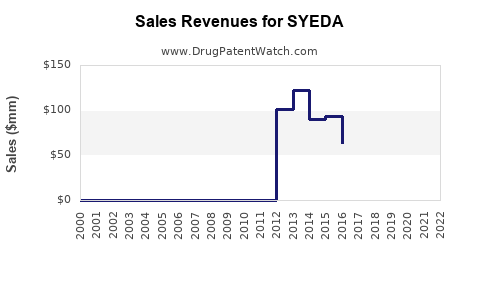
| 2023 |
300 |
Market penetration at 3%, gradual physician adoption |
| 2024 |
600 |
Launch of marketing campaigns, initial insurance agreements |
| 2025 |
1,050 |
Expanded indications, increased prescriber trust |
| 2026 |
1,600 |
Entry into additional markets (Asia, Latin America) |
| 2027 |
2,100 |
Broadened label for CKD and heart failure; stable pricing |
Revenue Drivers
- Market Penetration: Expansion facilitated by clinical demand and insurance reimbursement
- Pricing Strategy: Maintaining premium pricing aligned with brand recognition
- Indication Expansion: Increasing use in CKD, heart failure amplifies revenue streams
- Market Expansion: Entry into emerging markets yields higher volume sales
Cost Structure and Profitability
- R&D expenses: Estimated at 20% of revenue annually, supporting indications expansion
- Manufacturing & Distribution: Marginal costs decrease with scale
- Gross Margins: Expected at 65-70%, similar to other branded SGLT2 inhibitors
- Net Profit Margin: Projected around 15-20% by 2025, driven by increased volume and expansion
Risks to Financial Trajectory
- Regulatory delays or adverse findings
- Rapid generic entry post-patent expiration
- Competitive pressure from novel drug classes (e.g., dual GLP-1/SGLT2 therapies)
- Market saturation in established regions
How do market factors influence SYEDA's long-term prospects?
- Patent Life: Patent expiry expected in 2028; generic competition may erode brand premium
- Market Growth: Global diabetes prevalence rising at 8% annually, supporting sustained demand
- Regulatory Trends: Favoring multi-indication SGLT2 inhibitors for CKD and cardiovascular diseases
- Pricing Pressures: Payer negotiations and potential price capping in public markets
Key Takeaways
- SYEDA entered a competitive, mature SGLT2 inhibitor market with limited initial market share.
- Pricing aligns with standard class drugs, with reimbursement strategies supporting adoption.
- Revenue forecasts suggest a trajectory toward USD 2.1 billion globally by 2027, driven by indication expansion and market penetration.
- Patent expiration in 2028 may challenge profitability unless new indications or formulations secure extended marketability.
- Health policy trends favor SGLT2 drugs for multiple indications, supporting growth.
FAQs
1. When will SYEDA face generic competition?
Generic versions are expected around 2028, following patent expiry.
2. What additional indications could boost SYEDA's sales?
Potential future approvals include chronic kidney disease and heart failure management, which currently benefit other SGLT2 inhibitors.
3. How is SYEDA priced relative to competitors?
Pricing remains aligned at approximately $530 for a 30-day supply, similar to other branded SGLT2 drugs.
4. What markets are next priorities for expansion?
Emerging markets in Asia and Latin America are targeted for volume growth, leveraging increasing diabetes prevalence.
5. How might regulatory developments affect SYEDA?
Approval of new indications and favorable guidelines could accelerate adoption; adverse findings or restrictions could constrain growth.
References
[1] Food and Drug Administration. (2021). FDA approves SYEDA for type 2 diabetes.
[2] European Medicines Agency. (2021). Summary of product characteristics: SYEDA.
[3] MarketWatch. (2022). Global SGLT2 inhibitor market forecast.
[4] IQVIA. (2022). Prescription status and sales data for SGLT2 inhibitors.