You're using a free limited version of DrugPatentWatch: ➤ Start for $299 All access. No Commitment.

Last Updated: December 16, 2025

QNASL Drug Patent Profile


✉ Email this page to a colleague

« Back to Dashboard


Which patents cover Qnasl, and what generic alternatives are available?

Qnasl is a drug marketed by Teva Branded Pharm and is included in one NDA. There is one patent protecting this drug.

This drug has forty-seven patent family members in twenty-nine countries.

The generic ingredient in QNASL is beclomethasone dipropionate. There are twenty drug master file entries for this compound. Two suppliers are listed for this compound. Additional details are available on the beclomethasone dipropionate profile page.

DrugPatentWatch® Generic Entry Outlook for Qnasl

By analyzing the patents and regulatory protections it appears that the earliest date for generic entry will be October 21, 2031. This may change due to patent challenges or generic licensing.

There has been one patent litigation case involving the patents protecting this drug, indicating strong interest in generic launch. Recent data indicate that 63% of patent challenges are decided in favor of the generic patent challenger and that 54% of successful patent challengers promptly launch generic drugs.

There is one tentative approval for the generic drug (beclomethasone dipropionate), which indicates the potential for near-term generic launch.

Indicators of Generic Entry

< Available with Subscription >

  Get Started Free

AI Deep Research
Questions you can ask:
  • What is the 5 year forecast for QNASL?
  • What are the global sales for QNASL?
  • What is Average Wholesale Price for QNASL?
Drug patent expirations by year for QNASL
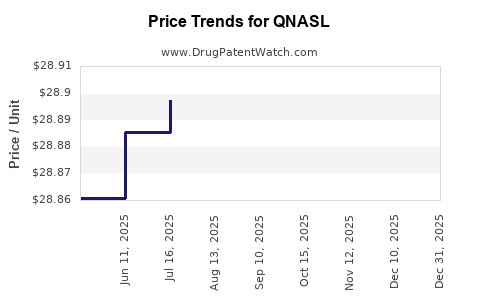
Drug Prices for QNASL

See drug prices for QNASL

DrugPatentWatch® Estimated Loss of Exclusivity (LOE) Date for QNASL
Generic Entry Date for QNASL*:
Constraining patent/regulatory exclusivity:
NDA:
Dosage:
AEROSOL, METERED;NASAL

*The generic entry opportunity date is the latter of the last compound-claiming patent and the last regulatory exclusivity protection. Many factors can influence early or later generic entry. This date is provided as a rough estimate of generic entry potential and should not be used as an independent source.

Pharmacology for QNASL

US Patents and Regulatory Information for QNASL

QNASL is protected by one US patents.

Based on analysis by DrugPatentWatch, the earliest date for a generic version of QNASL is ⤷  Get Started Free.

This potential generic entry date is based on patent 10,188,811.

Generics may enter earlier, or later, based on new patent filings, patent extensions, patent invalidation, early generic licensing, generic entry preferences, and other factors.

Applicant Tradename Generic Name Dosage NDA Approval Date TE Type RLD RS Patent No. Patent Expiration Product Substance Delist Req. Exclusivity Expiration
Teva Branded Pharm QNASL beclomethasone dipropionate AEROSOL, METERED;NASAL 202813-002 Dec 17, 2014 RX Yes No 10,188,811 ⤷  Get Started Free Y ⤷  Get Started Free
Teva Branded Pharm QNASL beclomethasone dipropionate AEROSOL, METERED;NASAL 202813-001 Mar 23, 2012 RX Yes Yes 10,188,811 ⤷  Get Started Free Y ⤷  Get Started Free
>Applicant >Tradename >Generic Name >Dosage >NDA >Approval Date >TE >Type >RLD >RS >Patent No. >Patent Expiration >Product >Substance >Delist Req. >Exclusivity Expiration

Expired US Patents for QNASL

Applicant Tradename Generic Name Dosage NDA Approval Date Patent No. Patent Expiration
Teva Branded Pharm QNASL beclomethasone dipropionate AEROSOL, METERED;NASAL 202813-002 Dec 17, 2014 5,776,432 ⤷  Get Started Free
Teva Branded Pharm QNASL beclomethasone dipropionate AEROSOL, METERED;NASAL 202813-001 Mar 23, 2012 5,776,432 ⤷  Get Started Free
Teva Branded Pharm QNASL beclomethasone dipropionate AEROSOL, METERED;NASAL 202813-001 Mar 23, 2012 5,683,677 ⤷  Get Started Free
Teva Branded Pharm QNASL beclomethasone dipropionate AEROSOL, METERED;NASAL 202813-001 Mar 23, 2012 5,605,674 ⤷  Get Started Free
>Applicant >Tradename >Generic Name >Dosage >NDA >Approval Date >Patent No. >Patent Expiration

International Patents for QNASL

When does loss-of-exclusivity occur for QNASL?

Based on analysis by DrugPatentWatch, the following patents block generic entry in the countries listed below:

Australia

Patent: 11316124
Estimated Expiration: ⤷  Get Started Free

Brazil

Patent: 2013008824
Estimated Expiration: ⤷  Get Started Free

Canada

Patent: 14212
Estimated Expiration: ⤷  Get Started Free

Chile

Patent: 13000958
Estimated Expiration: ⤷  Get Started Free

China

Patent: 3282070
Estimated Expiration: ⤷  Get Started Free

Patent: 6178205
Estimated Expiration: ⤷  Get Started Free

Patent: 6178206
Estimated Expiration: ⤷  Get Started Free

Croatia

Patent: 0150452
Estimated Expiration: ⤷  Get Started Free

Patent: 0190337
Estimated Expiration: ⤷  Get Started Free

Cyprus

Patent: 16292
Estimated Expiration: ⤷  Get Started Free

Patent: 21719
Estimated Expiration: ⤷  Get Started Free

Denmark

Patent: 27386
Estimated Expiration: ⤷  Get Started Free

Patent: 26855
Estimated Expiration: ⤷  Get Started Free

Eurasian Patent Organization

Patent: 3795
Estimated Expiration: ⤷  Get Started Free

Patent: 1390490
Estimated Expiration: ⤷  Get Started Free

European Patent Office

Patent: 27386
Estimated Expiration: ⤷  Get Started Free

Patent: 26855
Estimated Expiration: ⤷  Get Started Free

Hong Kong

Patent: 14990
Estimated Expiration: ⤷  Get Started Free

Hungary

Patent: 43276
Estimated Expiration: ⤷  Get Started Free

Israel

Patent: 5712
Estimated Expiration: ⤷  Get Started Free

Japan

Patent: 23247
Estimated Expiration: ⤷  Get Started Free

Patent: 50236
Estimated Expiration: ⤷  Get Started Free

Patent: 13541378
Estimated Expiration: ⤷  Get Started Free

Patent: 15147061
Estimated Expiration: ⤷  Get Started Free

Lithuania

Patent: 26855
Estimated Expiration: ⤷  Get Started Free

Mexico

Patent: 6164
Estimated Expiration: ⤷  Get Started Free

Patent: 13003840
Estimated Expiration: ⤷  Get Started Free

New Zealand

Patent: 8218
Estimated Expiration: ⤷  Get Started Free

Peru

Patent: 131492
Estimated Expiration: ⤷  Get Started Free

Poland

Patent: 27386
Estimated Expiration: ⤷  Get Started Free

Patent: 26855
Estimated Expiration: ⤷  Get Started Free

Portugal

Patent: 27386
Estimated Expiration: ⤷  Get Started Free

Patent: 26855
Estimated Expiration: ⤷  Get Started Free

San Marino

Patent: 01500114
Estimated Expiration: ⤷  Get Started Free

Patent: 01900135
Estimated Expiration: ⤷  Get Started Free

Serbia

Patent: 037
Estimated Expiration: ⤷  Get Started Free

Patent: 574
Estimated Expiration: ⤷  Get Started Free

Singapore

Patent: 9892
Estimated Expiration: ⤷  Get Started Free

Slovenia

Patent: 27386
Estimated Expiration: ⤷  Get Started Free

Patent: 26855
Estimated Expiration: ⤷  Get Started Free

South Africa

Patent: 1301938
Estimated Expiration: ⤷  Get Started Free

South Korea

Patent: 1559639
Estimated Expiration: ⤷  Get Started Free

Patent: 130100334
Estimated Expiration: ⤷  Get Started Free

Spain

Patent: 36969
Estimated Expiration: ⤷  Get Started Free

Patent: 12996
Estimated Expiration: ⤷  Get Started Free

Turkey

Patent: 1902415
Estimated Expiration: ⤷  Get Started Free

Generics may enter earlier, or later, based on new patent filings, patent extensions, patent invalidation, early generic licensing, generic entry preferences, and other factors.

See the table below for additional patents covering QNASL around the world.

Country Patent Number Title Estimated Expiration
China 106178205 ⤷  Get Started Free
China 103282070 ⤷  Get Started Free
Australia 4595689 ⤷  Get Started Free
Chile 2013000958 ⤷  Get Started Free
>Country >Patent Number >Title >Estimated Expiration

Market Dynamics and Financial Trajectory for the Pharmaceutical Drug: QNASL

Last updated: July 27, 2025


Introduction

QNASL (beclomethasone dipropionate nasal aerosol) is a corticosteroid formulated primarily for the treatment of allergic rhinitis and other nasal inflammatory conditions. As a well-established treatment modality, its market dynamics are influenced by a range of factors—including competitive landscape, regulatory shifts, and evolving healthcare policies. This article examines the current and projected financial trajectory of QNASL, contextualizing it within contemporary pharmaceutical market forces.


Market Landscape and Positioning

QNASL was developed by Teva Pharmaceuticals and gained FDA approval as a nasal spray intended for allergic rhinitis management. Its position in the pharmaceutical market is primarily as a generic or off-brand alternative, with a focus on efficacy and affordability. The drug's market interest hinges on a few critical elements:

  • Therapeutic Radius: The drug's efficacy in reducing nasal inflammation places it among standard treatments for allergic rhinitis, a condition affecting approximately 20-30% of adults globally.[1]
  • Availability and Competition: QNASL faces competition from both branded corticosteroids such as Flonase (fluticasone) and Nasacort (triamcinolone), as well as other generics. The competitive landscape favors cost-conscious healthcare systems seeking efficacy at lower prices.
  • Patent and Regulatory Environment: While QNASL isn’t under patent protection anymore, recent regulatory breakthroughs and approval processes for similar drugs influence its market potential. Regulatory policies favoring generic proliferation could drive volume growth.

Market Drivers

  1. Prevalence of Allergic Rhinitis: The rising incidence globally, driven by environmental factors like pollution and climate change, sustains demand for corticosteroids like QNASL.
  2. Affordable Alternatives: As healthcare systems shift towards cost-effective treatments, the demand for generic nasal corticosteroids compensates for reduced demand for expensive branded drugs.
  3. Older Patient Demographics: Aging populations, particularly in Western markets, bolster the demand for accessible, reliable allergic rhinitis therapies.
  4. Physician Prescribing Trends: Growing familiarity and confidence in generic formulations augment their market share.

Market Challenges

  • Intense Competition: The market is saturated with multiple corticosteroids, reducing QNASL’s market share unless it offers significant advantages.
  • Brand Loyalty: Patients and physicians often prefer established brands, influencing uptake of generic options like QNASL.
  • Regulatory Variability: Differing approvals and regulatory standards across geographies can restrict expansion or delay market entry.

Financial Trajectory Analysis

Historical Performance

While specific revenue figures for QNASL are proprietary or non-disclosed publicly, the drug's trajectory has generally aligned with the growth of the global allergic rhinitis market, which was valued at approximately $13.4 billion in 2021 and is projected to grow at a CAGR of around 4-5% through 2030.[2]

QNASL's revenue historically has been modest relative to newer entrants and dominant brands, constrained further by its mostly generic status and brand recognition barriers. However, it has maintained stable volumes owing to its affordability and consistent prescription patterns among general practitioners.

Current Financial Outlook

Given the increasing prevalence of allergic rhinitis and healthcare systems' emphasis on cost-efficiency, generic corticosteroids like QNASL are expected to sustain a moderate growth trajectory. The key financial factors include:

  • Market Penetration: Post-patent expiry, market penetration stabilizes but can be enhanced through aggressive marketing and expanding geographic reach.
  • Manufacturing Costs: As a generic, QNASL benefits from lower manufacturing costs, which supports healthier margins, especially as economies of scale increase.
  • Pricing Strategies: Price competition remains fierce; however, slight price reductions or bundling could boost volume sales.

Future Growth Projections

Based on current trends:

  • Moderate Growth (CAGR 3-4%): The ongoing expansion in allergy prevalence and increased acceptance of generics point toward steady growth.
  • Market Expansion Potential: Entry into emerging markets, which account for a significant share of allergic rhinitis cases but have underpenetrated pharmacotherapy markets, could bolster revenues.
  • Pipeline and Reformulation Opportunities: Innovations—such as combination therapies or improved delivery mechanisms—could extend product lifecycle and financial yields.

Regulatory and Patent Considerations

QNASL no longer possesses patent protections; thus, generic entry is permitted without patent infringement. Regulatory frameworks continue to favor broader access post-approval, potentially lowering barriers for competitor entry but also presenting an opportunity for Teva and other manufacturers to improve formulations or delivery methods.

Risks and Uncertainties

  • Market Saturation: High competition may suppress revenue.
  • Pricing Pressures: Payers' push for lower-cost alternatives could erode margins.
  • Regulatory Hurdles: Changes in approval standards or reimbursement policies may impact sales.

Implications for Investors and Stakeholders

Investors in QNASL’s parent company or generic pharmaceutical portfolios should monitor emerging competition, evolving regulatory landscapes, and market expansion strategies for allergic rhinitis therapies. While near-term prospects appear stable, the long-term financial trajectory will depend heavily on market access, pricing strategies, and portfolio diversification.

Strategic Recommendations

  • Market Diversification: Focus on expanding into emerging markets where allergy prevalence is rising.
  • Innovation: Invest in delivery innovations or combination therapies to differentiate from competitors.
  • Pricing Strategy: Balance competitive pricing with margin preservation by leveraging manufacturing efficiencies.

Key Takeaways

  • QNASL thrives primarily in a highly competitive, cost-sensitive segment of the allergic rhinitis market.
  • Its financial growth prospects hinge on market penetration, geographic expansion, and competitive pricing.
  • The global increase in allergy prevalence, especially in aging and urban populations, supports steady demand.
  • Patent expiry has opened the door for intense generic competition, demanding strategic differentiation.
  • Strategic innovation and market expansion are critical to enhancing long-term revenue streams.

Frequently Asked Questions (FAQs)

  1. What is the primary therapeutic benefit of QNASL?
    QNASL delivers targeted corticosteroid therapy to reduce nasal inflammation in allergic rhinitis, providing symptom relief and improving patient quality of life.

  2. How does QNASL compare to other corticosteroids in terms of efficacy?
    Clinical trials indicate comparable efficacy to other corticosteroids like Flonase, with minor variations based on patient response. Its main advantage remains cost-effectiveness.

  3. What factors could impact QNASL's future market size?
    Market size will be influenced by regulatory developments, competition from new formulations, generics, or biosimilars, and shifts in healthcare policies favoring or limiting generic prescribing.

  4. Are there any upcoming innovations or formulations for QNASL?
    Currently, no major reformulations have been publicly announced. However, future research may focus on enhanced delivery systems or combination therapies to sustain competitiveness.

  5. What regions offer the most growth potential for QNASL?
    Emerging markets with rising allergy prevalence and expanding healthcare infrastructure present promising growth opportunities beyond traditional markets in North America and Europe.


References

[1] World Allergy Organization. (2021). Allergic Rhinitis Overview.
[2] MarketsandMarkets. (2022). Allergic Rhinitis Market Forecast to 2030.

More… ↓

⤷  Get Started Free

Make Better Decisions: Try a trial or see plans & pricing

Drugs may be covered by multiple patents or regulatory protections. All trademarks and applicant names are the property of their respective owners or licensors. Although great care is taken in the proper and correct provision of this service, thinkBiotech LLC does not accept any responsibility for possible consequences of errors or omissions in the provided data. The data presented herein is for information purposes only. There is no warranty that the data contained herein is error free. We do not provide individual investment advice. This service is not registered with any financial regulatory agency. The information we publish is educational only and based on our opinions plus our models. By using DrugPatentWatch you acknowledge that we do not provide personalized recommendations or advice. thinkBiotech performs no independent verification of facts as provided by public sources nor are attempts made to provide legal or investing advice. Any reliance on data provided herein is done solely at the discretion of the user. Users of this service are advised to seek professional advice and independent confirmation before considering acting on any of the provided information. thinkBiotech LLC reserves the right to amend, extend or withdraw any part or all of the offered service without notice.