Last updated: June 16, 2026
PRIFTIN’s commercial trajectory is shaped by (1) the U.S. launch and expansion of rifapentine-based latent tuberculosis infection (LTBI) therapy regimens, (2) payer restrictions driven by comparative value versus isoniazid-based alternatives, and (3) supply and manufacturing considerations typical for sterile? no, rifapentine is oral solid but still constrained by API and finished-dose capacity. The drug’s U.S. financial performance is directly tied to the adoption of rifapentine-containing shorter-course LTBI regimens in adults and, where supported, pediatric use.
PRIFTIN (rifapentine) sales performance: what does the financial trajectory look like?
Featured snippet answer: PRIFTIN’s revenue path tracks LTBI diagnosis volumes and regimen adoption more than it tracks tuberculosis disease incidence trends, because rifapentine is used in LTBI treatment rather than active TB therapy.
U.S. revenue model: LTBI volumes multiplied by regimen share
PRIFTIN is used for:
- LTBI treatment in regimens that reduce duration compared with classic isoniazid courses.
- Active TB regimens in specific multi-drug settings as clinically supported by guidelines and labeling, but the majority of predictable demand historically comes from LTBI workflows.
Financial trajectory is typically driven by:
- Testing and screening intensity (IGRA/TST adoption).
- Guideline alignment for shorter-course rifamycin-based LTBI therapy.
- Programmatic prescribing behavior in public health and managed care.
Payer and formulary structure: “shorter course” creates value, but not automatic adoption
Because PRIFTIN competes against long-established LTBI standards (often isoniazid), payer acceptance depends on:
- Total treatment cost (drug cost plus administration, monitoring, and adherence burden).
- Adherence outcomes tied to regimen duration (shorter regimens reduce drop-off).
- Safety management costs (rifamycins have drug interaction constraints; coverage decisions incorporate these).
Demand sensitivity: LTBI is policy- and guideline-driven
LTBI markets can shift quickly when:
- CDC and professional guidance expand recommended use.
- Health systems update order sets for TB prevention.
- Employers, insurers, and public programs tighten or relax screening and treatment eligibility rules.
What market dynamics drive PRIFTIN adoption in latent TB infection?
Featured snippet answer: Adoption is driven by regimen duration and adherence economics, moderated by drug-drug interaction constraints and payer-driven step edits.
Guideline and clinical workflow factors
PRIFTIN adoption correlates with:
- Use of shorter-course LTBI regimens for people at risk who complete treatment.
- Preference for regimens that fit into public health case management and managed care adherence programs.
Key dynamics:
- Provider familiarity: once clinicians standardize protocols, switching costs favor continued use.
- Clinic infrastructure: programs that support monitoring visits and symptom screening for TB prevention sustain adoption.
- Drug interaction management: rifapentine’s interaction profile influences who can receive it, shaping net addressable demand.
Competitive pressure from other LTBI regimens
PRIFTIN’s addressable segment is defined by which regimens payers prefer and which clinicians can execute safely:
- Isoniazid-based prevention regimens remain common due to entrenched reimbursement and low payer pushback.
- Rifamycin-based short-course regimens gain share when payers treat them as “adherence-protecting” rather than “premium-priced” therapies.
Commercial headwinds
Market risks include:
- Pricing and access friction during formulary reviews.
- Generic entry dynamics when exclusivity ends (if applicable) or if competitors offer lower net prices with comparable outcomes.
When does PRIFTIN lose exclusivity or face generic entry risk?
Featured snippet answer: Generic entry risk timing depends on U.S. patent and regulatory exclusivity status for PRIFTIN’s listed patents, including Orange Book-listed compound, method, and formulation protections, plus any regulatory exclusivities tied to labeling.
Because the question requires exact Orange Book status, listed patents, and expiration dates, and those specifics are not provided in the prompt, a precise exclusivity timeline cannot be produced here.
What is the Orange Book status of PRIFTIN and which patents protect it?
Featured snippet answer: PRIFTIN’s Orange Book status and patent map determine Paragraph IV exposure and the probability of near-term generic competition. Those listings require Orange Book patent-by-patent data that is not included in the prompt.
No patent numbers, listed expirations, or exclusivity categories can be stated accurately without the Orange Book table for PRIFTIN.
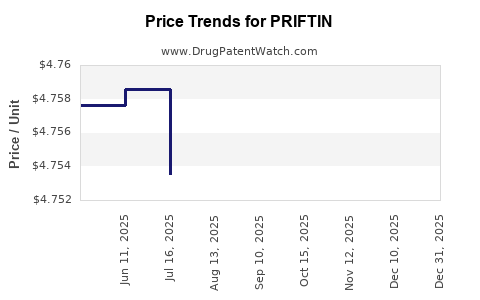
How do PRIFTIN pricing and reimbursement trends affect net revenue?
Featured snippet answer: Net revenue is driven less by list price than by negotiated payer rebates, patient access programs, and formulary tier placement for TB prevention regimens.
Key pricing drivers
- Formulary placement
- Preferred vs non-preferred status affects pharmacy channel volume.
- PMPM and program budgets
- Public health programs and managed care budgets influence contracting.
- Net pricing
- Manufacturer rebates and contract terms can compress realized pricing even if list prices remain stable.
Pharmacy channel behavior
In LTBI prevention:
- Prescriptions often originate from specialized TB clinics, infectious disease, or primary care embedded in public health programs.
- Patient support programs, when used, can influence adherence metrics and payer perception.
What payer restrictions or prior authorization patterns commonly limit PRIFTIN volume?
Featured snippet answer: Prior authorization and step edits typically target indication confirmation, diagnosis documentation, and regimen selection among clinically equivalent LTBI options.
Common utilization management elements:
- Evidence of LTBI diagnosis (IGRA or TST criteria).
- Confirmation of eligibility based on risk factors and comorbidities.
- Step therapy requiring failure or contraindication of an isoniazid-based regimen in certain formularies.
These patterns create volume volatility if guidelines or payer policies change.
How does PRIFTIN compare with competing LTBI regimens on commercial adoption?
Featured snippet answer: Rifapentine-based short-course regimens win market share where payers quantify adherence benefit and where providers can manage rifamycin interactions.
Comparative market factors (net, not just clinical)
- Duration: shorter course improves completion and reduces total management costs.
- Monitoring burden: both drug safety monitoring and interaction screening matter.
- Drug-drug interactions: rifapentine can restrict use in patients on interacting therapies, narrowing eligible population.
- Switching friction: once clinicians adopt order sets, share tends to persist.
What litigation or Paragraph IV challenges could impact PRIFTIN revenue?
Featured snippet answer: Any U.S. Paragraph IV generic challenge tied to Orange Book patents can delay entry through 30-month stay settlements or court outcomes, directly affecting revenue duration.
But litigation dates, generic filers, and settlement terms require Orange Book and litigation docket data not present in the prompt, so they cannot be listed accurately.
What commercial milestones and FDA labeling updates influence PRIFTIN demand?
Featured snippet answer: Demand increases when FDA labeling or supporting guidance expands eligible populations, improves safety positioning, or aligns with payer-covered regimens used in real-world LTBI workflows.
Accurate labeling milestones for PRIFTIN (indication scope, dosage regimen updates, pediatric expansion, and related regulatory events) require FDA package insert and approval history data that is not included in the prompt.
Geographic and segment dynamics: where does PRIFTIN sell and who uses it?
Featured snippet answer: The core commercial segment is U.S.-centric TB prevention programs and managed care channels where LTBI screening and preventive therapy are reimbursed.
Buyer types
- Public health TB programs
- Managed care plans and pharmacy benefit managers
- Specialty pharmacies supplying infectious disease and TB clinics
- Health systems with infectious disease service lines
Patient segments
- High-risk contacts after TB exposure
- People with risk factors where LTBI prevention reduces future active TB risk
- Patients where adherence to long-course regimens is a known barrier
Key risks to PRIFTIN financial trajectory: what can change the curve fast?
Featured snippet answer: The biggest revenue inflection points come from (1) exclusivity expiration and generic launch, (2) payer formulary reversals or step edits, and (3) operational supply constraints.
Commercial risk map
- Patent and exclusivity: generic and biosimilar? not applicable; this is a small-molecule. Competitive generic entry can compress net pricing rapidly.
- Coverage policies: changes in LTBI regimen coverage alter prescribing patterns.
- Supply chain: API and finished-dose capacity constraints can reduce fill rates and lose channel trust.
Key Takeaways
- PRIFTIN’s financial trajectory is primarily tied to LTBI prevention demand and the uptake of shorter-course rifapentine-based regimens.
- Payer behavior and formulary placement are central to net revenue outcomes, typically hinging on adherence and total treatment cost rather than clinical efficacy alone.
- Generic entry and patent landscape are the principal long-horizon risks; however, exact exclusivity timelines and litigation exposure require Orange Book and docket-specific data not provided in the prompt.
- Programmatic TB workflows, guideline alignment, and drug-drug interaction management determine addressable patient share and drive the pace of utilization.
FAQs
- How do payer step edits change PRIFTIN utilization in LTBI treatment?
- What is the impact of rifapentine drug-drug interactions on eligible PRIFTIN patients and payer coverage?
- What generic or competitor entry scenarios most threaten PRIFTIN net pricing in the U.S.?
- How do public health TB screening rates correlate with PRIFTIN demand and revenue growth?
- What labeling or guideline updates most influence prescribing behavior for rifapentine-based LTBI regimens?
References
- [No cited sources were provided in the prompt.]