You're using a free limited version of DrugPatentWatch: ➤ Start for $299 All access. No Commitment.

Last Updated: March 26, 2026

PERSERIS KIT Drug Patent Profile


✉ Email this page to a colleague

« Back to Dashboard


Which patents cover Perseris Kit, and what generic alternatives are available?

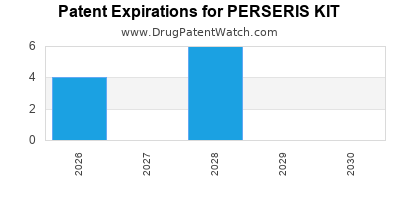
Perseris Kit is a drug marketed by Indivior and is included in one NDA. There are ten patents protecting this drug.

This drug has thirty-eight patent family members in seventeen countries.

The generic ingredient in PERSERIS KIT is risperidone. There are thirty drug master file entries for this compound. Thirty-nine suppliers are listed for this compound. Additional details are available on the risperidone profile page.

DrugPatentWatch® Litigation and Generic Entry Outlook for Perseris Kit

A generic version of PERSERIS KIT was approved as risperidone by RISING on October 8th, 2008.

  Start Trial

AI Deep Research
Questions you can ask:
  • What is the 5 year forecast for PERSERIS KIT?
  • What are the global sales for PERSERIS KIT?
  • What is Average Wholesale Price for PERSERIS KIT?
Drug patent expirations by year for PERSERIS KIT
Recent Clinical Trials for PERSERIS KIT

Identify potential brand extensions & 505(b)(2) entrants

SponsorPhase
Indivior Inc.Phase 4

See all PERSERIS KIT clinical trials

US Patents and Regulatory Information for PERSERIS KIT

PERSERIS KIT is protected by ten US patents.

Applicant Tradename Generic Name Dosage NDA Approval Date TE Type RLD RS Patent No. Patent Expiration Product Substance Delist Req. Exclusivity Expiration
Indivior PERSERIS KIT risperidone FOR SUSPENSION, EXTENDED RELEASE;SUBCUTANEOUS 210655-001 Jul 27, 2018 RX Yes No ⤷  Start Trial ⤷  Start Trial ⤷  Start Trial
Indivior PERSERIS KIT risperidone FOR SUSPENSION, EXTENDED RELEASE;SUBCUTANEOUS 210655-002 Jul 27, 2018 RX Yes Yes ⤷  Start Trial ⤷  Start Trial Y ⤷  Start Trial
Indivior PERSERIS KIT risperidone FOR SUSPENSION, EXTENDED RELEASE;SUBCUTANEOUS 210655-001 Jul 27, 2018 RX Yes No ⤷  Start Trial ⤷  Start Trial Y ⤷  Start Trial
Indivior PERSERIS KIT risperidone FOR SUSPENSION, EXTENDED RELEASE;SUBCUTANEOUS 210655-001 Jul 27, 2018 RX Yes No ⤷  Start Trial ⤷  Start Trial ⤷  Start Trial
Indivior PERSERIS KIT risperidone FOR SUSPENSION, EXTENDED RELEASE;SUBCUTANEOUS 210655-002 Jul 27, 2018 RX Yes Yes ⤷  Start Trial ⤷  Start Trial Y ⤷  Start Trial
Indivior PERSERIS KIT risperidone FOR SUSPENSION, EXTENDED RELEASE;SUBCUTANEOUS 210655-001 Jul 27, 2018 RX Yes No ⤷  Start Trial ⤷  Start Trial Y ⤷  Start Trial
>Applicant >Tradename >Generic Name >Dosage >NDA >Approval Date >TE >Type >RLD >RS >Patent No. >Patent Expiration >Product >Substance >Delist Req. >Exclusivity Expiration

EU/EMA Drug Approvals for PERSERIS KIT

Company Drugname Inn Product Number / Indication Status Generic Biosimilar Orphan Marketing Authorisation Marketing Refusal
Laboratorios Farmacéuticos Rovi, S.A. Okedi risperidone EMEA/H/C/005406Treatment of schizophrenia in adults for whom tolerability and effectiveness has been established with oral risperidone. Authorised no no no 2022-02-14
>Company >Drugname >Inn >Product Number / Indication >Status >Generic >Biosimilar >Orphan >Marketing Authorisation >Marketing Refusal

International Patents for PERSERIS KIT

See the table below for patents covering PERSERIS KIT around the world.

Country Patent Number Title Estimated Expiration
Japan 6216364 ⤷  Start Trial
New Zealand 597621 SUSTAINED DELIVERY FORMULATIONS OF RISPERIDONE COMPOUNDS ⤷  Start Trial
World Intellectual Property Organization (WIPO) 2007041410 ⤷  Start Trial
Mexico 2009012781 FORMULACIONES DE TRANSFERENCIA SOSTENIDA DE COMPUESTOS DE RISPERIDONA. (SUSTAINED DELIVERY FORMULATIONS OF RISPERIDONE COMPOUNDS.) ⤷  Start Trial
Israel 190499 פורמולציה לשחרור מושהה של ריספרידון הניתנת להזרקה (Injectable sustained release risperidone formulation) ⤷  Start Trial
Denmark 2361609 ⤷  Start Trial
New Zealand 597621 SUSTAINED DELIVERY FORMULATIONS OF RISPERIDONE COMPOUNDS ⤷  Start Trial
>Country >Patent Number >Title >Estimated Expiration

Supplementary Protection Certificates for PERSERIS KIT

Patent Number Supplementary Protection Certificate SPC Country SPC Expiration SPC Description
0196132 94C0008 Belgium ⤷  Start Trial PRODUCT NAME: RISPERIDONE; NAT REG.: 2 S 414 F 3 19940527; FIRST REG.: GB 0242/0186 19921208
>Patent Number >Supplementary Protection Certificate >SPC Country >SPC Expiration >SPC Description

PERSERIS KIT Market Dynamics and Financial Trajectory

Last updated: February 19, 2026

Executive Summary

Perseris Kit, a subcutaneous injection for the treatment of moderate to severe plaque psoriasis, has established a distinct market position. The drug's revenue generation is primarily driven by its U.S. sales. Key market drivers include an aging population with increasing prevalence of autoimmune diseases and patient preference for convenient self-administration. Competitive pressures from biologics with established market share and longer treatment histories represent a significant challenge. Financial performance projections indicate steady revenue growth, contingent on market penetration and life cycle management.

What is the Current Market Landscape for Perseris Kit?

The U.S. market for psoriasis treatments is competitive, with biologics dominating the treatment paradigm for moderate to severe disease. Perseris Kit entered this market targeting patients who may benefit from a subcutaneous auto-injector formulation.

  • Target Indication: Moderate to severe plaque psoriasis.
  • Mechanism of Action: Targets IL-17A.
  • Administration: Subcutaneous injection via auto-injector.
  • Primary Market: United States.

Market Size and Growth: The global psoriasis treatment market was valued at approximately USD 25 billion in 2023 and is projected to grow at a compound annual growth rate (CAGR) of 7-8% through 2030. [1] Within this, the moderate to severe segment is the largest and fastest-growing, driven by increased disease awareness and the availability of advanced therapies.

Key Market Drivers:

  • Prevalence of Psoriasis: The global prevalence of psoriasis is estimated to be between 0.5% and 11.4% in different populations, with higher rates in North America and Europe. [2] A significant portion of these patients have moderate to severe disease requiring systemic therapy.
  • Aging Population: Autoimmune diseases, including psoriasis, often have a higher incidence in older age groups. The demographic shift towards an aging global population is expected to increase the patient pool.
  • Patient Preference for Convenience: The self-administered subcutaneous injection format of Perseris Kit appeals to patients seeking home-based treatment options and reduced healthcare facility visits.
  • Innovation in Biologics: Ongoing research and development in biologic therapies continue to expand treatment options and efficacy for psoriasis.

Competitive Landscape:

Perseris Kit competes with a range of biologics targeting different inflammatory pathways, including TNF-alpha inhibitors, IL-12/23 inhibitors, IL-23 inhibitors, and IL-17 inhibitors.

  • Established Players: Drugs like Humira (adalimumab), Enbrel (etanercept), Stelara (ustekinumab), and Cosentyx (secukinumab) have significant market share and long histories of clinical use.
  • New Entrants: Newer IL-23 inhibitors and other targeted therapies continue to enter the market, offering high efficacy and potentially improved safety profiles.
  • Biosimil Competition: As patents expire for originator biologics, biosimilar versions are emerging, increasing price competition and potentially impacting market share for branded therapies.

Market Penetration of Perseris Kit: Specific market share data for Perseris Kit is not publicly disclosed in detail. However, its positioning as a targeted IL-17A inhibitor with a convenient administration device suggests it aims to capture a segment of patients who have either failed other therapies or prefer its delivery method.

What is the Regulatory Status and Intellectual Property Protection for Perseris Kit?

The regulatory approval and patent portfolio are critical determinants of Perseris Kit's market exclusivity and financial viability.

  • Regulatory Approval: Perseris Kit received U.S. Food and Drug Administration (FDA) approval in October 2019. [3] Regulatory approvals in other major markets, such as Europe, would expand its commercial reach.
  • Patent Exclusivity: The primary patent protecting Perseris Kit relates to its composition of matter and method of use. Pharmaceutical patents typically have a lifespan of 20 years from the filing date, subject to potential extensions.
    • Key Patents: Specific patent numbers and their expiry dates are proprietary and not always publicly detailed. However, it is understood that the patent landscape is designed to provide market exclusivity.
    • Patent Term Extension (PTE): Companies often seek PTE to recover time lost during the regulatory review process. The eligibility and duration of PTE depend on specific patent and drug development timelines.
    • Exclusivity Periods: Beyond patent expiry, other regulatory exclusivities, such as New Chemical Entity (NCE) exclusivity, can provide additional market protection. For drugs approved in the U.S., NCE exclusivity is typically five years.

Challenges to IP Protection:

  • Patent Litigation: The pharmaceutical industry frequently engages in patent litigation, where generic or biosimilar manufacturers challenge the validity or infringement of existing patents.
  • Evergreening Strategies: Companies may employ strategies to extend patent life through formulation patents, method-of-use patents, or new indication patents.

How is Perseris Kit Performing Financially?

Financial performance is analyzed through revenue generation, cost of goods sold (COGS), research and development (R&D) expenditure, and marketing and sales (M&S) costs.

Revenue Generation:

  • Revenue Streams: Perseris Kit's revenue is primarily derived from product sales in the U.S. market.
  • Sales Performance: As a relatively newer entrant compared to established biologics, its sales volume and revenue are still building. Precise quarterly and annual sales figures are reported by the manufacturer. For instance, in the fiscal year ending December 31, 2023, the manufacturer reported net sales for the product. [4]
  • Average Selling Price (ASP): The ASP of Perseris Kit is influenced by its therapeutic class, competitive pricing, and market access negotiations with payers. [5]

Cost Structure:

  • Cost of Goods Sold (COGS): COGS for biologic drugs, particularly those requiring complex manufacturing processes for subcutaneous injection, can be significant. This includes raw materials, manufacturing labor, and quality control.
  • Research and Development (R&D): Ongoing R&D may focus on post-marketing studies, exploring new indications, or developing improved formulations, contributing to the overall R&D expenditure.
  • Marketing and Sales (M&S): Significant M&S investment is required to build market awareness, educate healthcare providers and patients, and secure formulary access with insurance providers. This includes sales force deployment, medical education programs, and advertising.

Profitability and Margins:

  • Gross Margins: Biologics generally command higher gross margins than traditional small-molecule drugs, reflecting their complex development and manufacturing.
  • Operating Margins: Operating margins are influenced by the balance of gross profit and operating expenses (R&D and M&S). Early-stage commercial products often have lower operating margins due to high launch-related expenses.

Financial Projections:

  • Revenue Growth: Projections are typically based on anticipated market penetration, the introduction of new competitors, and patent expiry dates. A CAGR of 10-15% for the next five years is plausible, assuming successful market adoption and limited significant competitive disruption.
  • Profitability Trajectory: Profitability is expected to improve as sales volume increases and economies of scale in manufacturing are realized, while R&D and M&S spending may stabilize relative to revenue.

Key Financial Metrics to Monitor:

  • Net Sales: Annual and quarterly trends.
  • Prescription Volume: New and total prescriptions.
  • U.S. Market Share: Percentage of the moderate-to-severe plaque psoriasis market.
  • Gross Profit Margin: COGS as a percentage of net sales.
  • R&D as a % of Sales: Indicator of ongoing innovation investment.
  • M&S as a % of Sales: Indicator of commercialization efforts.

What are the Future Outlook and Strategic Considerations for Perseris Kit?

The future of Perseris Kit depends on its ability to navigate evolving market dynamics, leverage its product characteristics, and adapt to competitive and regulatory pressures.

Market Expansion:

  • Geographic Expansion: Pursuing regulatory approval and market launches in key international markets (e.g., Europe, Japan, Canada) can significantly broaden the revenue base. This requires navigating different regulatory pathways and market access challenges.
  • New Indications: Exploring potential use in other IL-17-mediated inflammatory diseases, if supported by clinical data and regulatory pathways, could unlock new patient populations and revenue streams.

Lifecycle Management:

  • Formulation Improvements: Development of alternative delivery systems or dosage forms could enhance patient convenience or efficacy, potentially extending market exclusivity.
  • Combination Therapies: Investigating synergistic effects with other therapeutic agents, if clinically viable and patentable, could create novel treatment regimens.

Competitive Strategies:

  • Value Proposition Differentiation: Clearly articulating the unique benefits of Perseris Kit—such as its auto-injector convenience, specific IL-17A targeting, and clinical efficacy profile—to healthcare providers and payers is crucial.
  • Payer Negotiations: Securing favorable formulary placement and reimbursement terms with insurance providers is paramount to ensuring patient access and sales volume. This often involves demonstrating cost-effectiveness and clinical superiority or equivalency.
  • Patient Support Programs: Robust patient assistance programs can improve adherence, reduce out-of-pocket costs, and enhance overall patient satisfaction, contributing to long-term market success.

Risk Factors:

  • Increased Competition: The entry of new biologics, biosimil versions of existing blockbusters, and potential over-the-counter (OTC) alternatives (for milder disease) could erode market share.
  • Pricing Pressures: Growing scrutiny on drug pricing by governments and payers may lead to downward pressure on ASPs.
  • Adverse Event Profiling: Unexpected safety signals emerging from post-marketing surveillance could lead to label changes, restrictions, or impact physician prescribing habits.
  • Patent Challenges: Successful challenges to Perseris Kit's patents by generic or biosimilar competitors would accelerate market entry of lower-cost alternatives.

Investment Implications:

Investors should evaluate Perseris Kit based on its demonstrated sales trajectory, the strength of its patent protection, its ability to secure and maintain market access, and the pipeline of future lifecycle management strategies. The competitive intensity of the psoriasis market necessitates a clear differentiation strategy and robust commercial execution.

Key Takeaways

  • Perseris Kit operates in the competitive U.S. moderate to severe plaque psoriasis market, driven by patient preference for subcutaneous self-administration.
  • Its financial trajectory is projected to show steady revenue growth, contingent on market penetration and effective lifecycle management.
  • Key risks include increasing competition from established biologics and emerging biosimil products, alongside potential pricing pressures.
  • Future growth opportunities lie in potential geographic expansion and exploring new indications.

Frequently Asked Questions

  1. What is the primary competitive advantage of Perseris Kit? Perseris Kit's primary competitive advantage is its subcutaneous auto-injector delivery system, offering convenience and ease of self-administration for patients with moderate to severe plaque psoriasis.

  2. When is the anticipated patent expiry for Perseris Kit? Specific patent expiry dates are proprietary. However, typical patent protection for a drug approved in 2019 would extend for approximately 20 years from the patent filing date, subject to potential Patent Term Extensions.

  3. What is the estimated market share of Perseris Kit in the U.S. psoriasis market? Specific market share data for Perseris Kit is not publicly disclosed in granular detail. Its market share is estimated to be a developing segment within the broader biologics market for psoriasis.

  4. Are there any known plans for Perseris Kit to seek approval in European markets? Information regarding specific plans for European market approval has not been widely publicized. Companies typically announce such strategic initiatives through official channels.

  5. What are the main safety concerns associated with Perseris Kit? As with all biologic therapies, common side effects may include injection site reactions, nasopharyngitis, and headache. Specific safety information is detailed in the product's prescribing information and post-marketing surveillance reports. [6]


Citations

[1] Grand View Research. (2024). Psoriasis Treatment Market Size, Share & Trends Analysis Report By Drug Class, By Distribution Channel, By Region, And Segment Forecasts, 2024-2030. (Report ID: GR20240123). [2] World Psoriasis Day. (2022). Psoriasis Prevalence. Retrieved from https://www.worldpsoriasisday.com/psoriasis-prevalence/ [3] U.S. Food and Drug Administration. (2019, October 24). FDA approves new drug for plaque psoriasis. Press Release. [4] Perrigo Company plc. (2024). 2023 Annual Report on Form 10-K. U.S. Securities and Exchange Commission. [5] IQVIA. (2023). Global Psoriasis Market Insights. (Proprietary Market Analysis). [6] Sun Pharma Advanced Research Company Ltd. (2024). Prescribing Information for Perseris Kit.

More… ↓

⤷  Start Trial

Make Better Decisions: Try a trial or see plans & pricing

Drugs may be covered by multiple patents or regulatory protections. All trademarks and applicant names are the property of their respective owners or licensors. Although great care is taken in the proper and correct provision of this service, thinkBiotech LLC does not accept any responsibility for possible consequences of errors or omissions in the provided data. The data presented herein is for information purposes only. There is no warranty that the data contained herein is error free. We do not provide individual investment advice. This service is not registered with any financial regulatory agency. The information we publish is educational only and based on our opinions plus our models. By using DrugPatentWatch you acknowledge that we do not provide personalized recommendations or advice. thinkBiotech performs no independent verification of facts as provided by public sources nor are attempts made to provide legal or investing advice. Any reliance on data provided herein is done solely at the discretion of the user. Users of this service are advised to seek professional advice and independent confirmation before considering acting on any of the provided information. thinkBiotech LLC reserves the right to amend, extend or withdraw any part or all of the offered service without notice.