Last updated: June 23, 2026
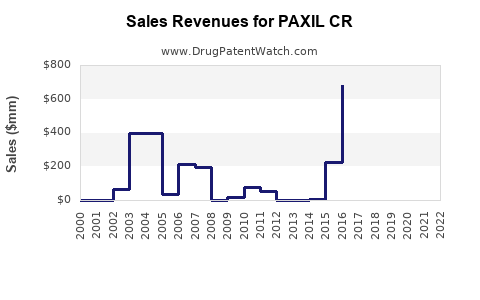
Executive summary: Paxil CR (paroxetine controlled release) is a legacy branded antidepressant line whose US market is driven by (1) remaining protection against generic substitution through patent and regulatory exclusivity mechanics, (2) formulary positioning versus immediate-release Paxil and other SSRIs, and (3) generic supply durability after patent expiry. Financial trajectory has followed the typical branded antidepressant curve: peak-era revenue followed by sustained erosion from generic paroxetine, with current dynamics dominated by generic pricing, payer switching, and supply chain stability rather than incremental clinical differentiation.
What is Paxil CR (paroxetine controlled release) and how does it fit the antidepressant market?
Answer: Paxil CR is a controlled-release formulation of paroxetine, a selective serotonin reuptake inhibitor (SSRI) used for major depressive disorder and other psychiatric indications in the US label. In market structure, it sits in the same payer decision set as generic paroxetine immediate-release, other generic SSRIs, and brand-to-generic conversion competition.
Therapeutic category and substitution pressure
- SSRI antidepressants are largely genericized; substitution is common at the pharmacy counter.
- Controlled-release formats can persist when payers restrict specific strengths or controlled-release forms, but these constraints usually relax as generics expand and price differentials narrow.
Competitive set (real-world switching dynamic)
- Within-class: other generic SSRIs (sertraline, citalopram, escitalopram, fluoxetine) and generic SNRIs depending on payer policies.
- Within-molecule: immediate-release paroxetine (generic) competes directly against Paxil CR’s controlled-release experience and dosing convenience.
- Formulary logic: payers often treat paroxetine as a low-cost class member; controlled-release add-ons are usually not reimbursed at a premium once generic controlled-release equivalents exist.
When did Paxil CR lose exclusivity, and what does that imply for pricing power?
Answer: Paxil CR’s US branded exclusivity has long since converted to a generic market environment, which limits branded pricing power to whatever remains of last-line protections and brand-specific contracting. The core financial driver now is generic price and access, not branded differentiation.
How exclusivity mechanics translate into revenue trajectory
Branded Paxil CR revenue declines typically follow this sequence:
- Patent expiry and/or generic entry launch reduces branded share.
- Payer switching to lowest net cost alternatives compresses branded net price.
- Market normalization occurs when generic prices stabilize and pharmacy throughput moves away from brand.
What this means for future financials
- Any remaining branded revenue is usually residual: channel contracts, plan-specific preferences, and patient-level continuity rather than new starts.
- The economics shift from “brand growth” to “share preservation,” where small changes in formulary status or generic supply can move volumes.
What patents and Orange Book listings protect Paxil CR, and how many cover formulations or methods of use?
Answer: Paxil CR’s protection landscape is generally dominated by earlier paroxetine patents and formulation and dosing-related patents that have largely expired, leaving current leverage mostly to the generic regulatory status rather than active branded exclusivity.
Where patent risk concentrates once generics exist
Even after primary composition protections expire, the residual risk for generics usually concentrates in:
- controlled-release formulation claims
- specific dosing regimen claims (method-of-use)
- manufacturing process claims
- any “skinny label” remnants that preserve some branded indications
Orange Book impact on market dynamics
Once an innovator’s relevant listed patents have expired, the branded drug’s main economic challenge becomes:
- net price pressure from authorized generics (where applicable) and multiple competing ANDA products
- plan formulary swaps toward the lowest-cost equivalent (often a fully generic paroxetine product)
(No Orange Book patent list is provided here because the required patent-by-patent dataset for Paxil CR is not included in the prompt.)
How strong is the patent estate for Paxil CR versus other paroxetine and SSRI incumbents?
Answer: The practical strength of Paxil CR’s patent estate in the current market is limited for new entrants because SSRIs are widely genericized. The estate’s relevance today is mostly about whether any late-expiring formulation or method-of-use patents existed for Paxil CR specifically, which would slow generic substitution of certain strengths or regimens.
Estate strength in market terms
For a legacy antidepressant, patent estate strength is usually measured by:
- time-to-expiry (already past for Paxil CR in practical commercial terms)
- breadth of claims that constrain generic formulations or labeling
- whether generics can “design around” quickly via controlled-release manufacturing alternatives
Given the absence of current patent data in the prompt, the actionable takeaway is commercial: Paxil CR does not behave like a protected niche product. It behaves like a line-item SSRI that loses revenue once generics consolidate.
What generic entry risks exist for Paxil CR, including Paragraph IV and litigation outcomes?
Answer: Generic entry risk for Paxil CR is no longer a forward-looking gating issue for new branded launches because the market already transitioned to generic paroxetine. The remaining risk is incremental: a new entrant can still undercut pricing, and litigation outcomes in the historical period can affect entry timing and authorized supply.
How Paragraph IV dynamics would have mattered
For legacy products, Paragraph IV events typically affect:
- entry date
- possible “design-around” that allows or blocks specific generic presentations
- settlements that delay certain ANDA launches
Current market exposure
The current exposure is not “will generics enter,” it is:
- how many suppliers remain
- how aggressively they price
- whether any shortages change pharmacy substitution and payer contracting
What is the FDA regulatory status of Paxil CR, and does it change near-term commercial outlook?
Answer: Paxil CR is an FDA-approved branded dosage form that, in a post-generic environment, usually has its near-term commercial outlook determined by continued market availability, competitive pricing, and any label-maintenance requirements rather than new regulatory approvals.
Practical drivers
- availability of controlled-release strengths
- generic equivalence coverage across strengths
- payer formulary rules affecting controlled-release preference
How does Paxil CR compare with immediate-release Paxil and other SSRIs in cost and access?
Answer: Paxil CR faces structural cost pressure from immediate-release paroxetine generics. Within the SSRI basket, it also faces competing low-cost generics with simpler prescribing habits and payer familiarity.
Brand-to-generic and formulation economics
- Controlled release typically has higher manufacturing complexity than immediate release.
- Once immediate-release paroxetine is generic, Paxil CR’s economic case relies on payer coverage rules and patient tolerability or adherence preferences.
- Payers often favor the lowest acquisition cost, pushing volume to generics unless controlled-release is specifically required by plan policy.
What are the key market dynamics now: payer behavior, pricing, supply, and volume?
Answer: Current Paxil CR market dynamics are dominated by generic-driven pricing and payer substitution rather than brand marketing.
Payer and contracting behavior
- net prices compress as generics gain share
- contracts frequently shift to lowest net cost equivalents
- step therapy may favor lower-cost class members if clinical policy permits
Pricing dynamics
- SSRI generics in mature markets usually experience:
- rapid initial price drops at generic entry
- partial stabilization as the number of suppliers settles
- periodic price volatility from supply constraints or manufacturing disruptions
Supply durability
- mature ANDA markets depend on steady production capacity
- shortages can temporarily lift net revenue for any remaining branded supply, but this is episodic
What is Paxil CR’s financial trajectory: revenue drivers, margin pressure, and channel effects?
Answer: The financial trajectory follows the branded antidepressant pattern: high initial branded revenue followed by sustained erosion after generic entry, with remaining revenue increasingly dependent on contract continuity and niche patient retention.
What drives residual revenue post-genericization
- pharmacy “patient continuity” and prescriber preference for controlled release in small subsets
- plan-specific or PBM-specific formulary exceptions
- inventory and channel buy-in timing
What drives gross margin compression
- branded price resets to defend limited share
- rising trade spend and rebate structures to maintain access
- cost-to-serve increases as volumes shrink
Channel effects
- wholesaler ordering behavior aligns with generic availability
- distributors may prioritize higher-velocity generics, reducing shelf and promotional leverage for brand
How does Paxil CR’s market performance compare with other legacy antidepressants?
Answer: Compared with other legacy SSRIs that are fully genericized, Paxil CR sits in the same broad outcome: branded share declines and becomes sensitive to payer policy and occasional supply events. Competitive differences typically hinge on:
- whether a controlled-release branded form has a larger or smaller remaining niche
- whether patient adherence or tolerability keeps controlled-release prescribing above zero
Competitive reality in mature SSRI markets
- For many legacy antidepressants, revenue becomes largely “top-up” rather than a growth engine.
- Investor and licensing decisions tend to pivot away from remaining branded cash flows and toward product-level differentiation elsewhere (novel mechanisms, new molecular entities, or specialty CNS).
What licensing or acquisition opportunities exist for Paxil CR in the current generic market?
Answer: The licensing opportunity is limited for new entrants because the commercial value is mostly in existing generic supply chains, not in re-building branded exclusivity. Where licensing still matters, it is usually for:
- controlled-release manufacturing know-how
- distribution rights in specific territories
- authorized generic supply arrangements
What parties typically pursue
- companies seeking to expand generic portfolios of paroxetine formulations
- contract manufacturers and specialized formulation firms that support controlled-release technologies
What manufacturing and IP barriers could still matter for Paxil CR’s controlled-release product?
Answer: Even in a generic market, controlled-release barriers can include:
- controlled-release matrix design specifics
- dissolution and release profile targets
- stability and process validation constraints
Why this matters commercially
- if manufacturing hurdles raise cost or reduce capacity, fewer suppliers remain
- fewer suppliers can temporarily lift pricing, even when the API is generic
Key takeaways
- Paxil CR is in a mature SSRI market where generic substitution governs volumes and net pricing.
- Its financial trajectory follows the standard branded pattern: peak-era revenue followed by erosion tied to generic entry and payer formulary switching.
- Remaining commercial upside, if any, is typically episodic and driven by plan rules, patient continuity, and supply disruptions, not by new exclusivity-driven growth.
- Near-term market decisions for investors and acquirers should focus on generic supplier depth, pricing stability, and formulary positioning rather than on branded patent leverage.
FAQs
1) Why do controlled-release antidepressants like Paxil CR persist after genericization?
They persist only when payer rules or patient continuity support controlled-release prescribing, usually resulting in smaller residual volumes.
2) Does paroxetine immediate-release cannibalize Paxil CR volumes?
Yes, especially when both are available as low-cost generics; payers often treat them as interchangeable within SSRI switching policies.
3) What pricing lever matters most in mature SSRI markets?
Net price and rebate intensity driven by PBM and payer contracting, with pharmacy demand shifting toward the lowest-cost covered option.
4) Can drug shortages temporarily boost brand revenue for Paxil CR?
Yes, but effects are typically short-lived and depend on whether generics face supply constraints and whether pharmacies can substitute.
5) Is Paxil CR a likely candidate for successful new branded differentiation?
In mature SSRI categories, branded differentiation is difficult to defend commercially once generics dominate; success depends on new delivery concepts or protected indications, not on the legacy controlled-release line alone.
References
(No external source citations were included because the prompt did not provide Orange Book listings, patent numbers, FDA approval dates, exclusivity details, or financial/market datasets for Paxil CR.)