Last updated: March 24, 2026
What is ORSYTHIA?
ORSYTHIA (generic: oseltamivir) is an antiviral medication developed by Gilead Sciences. It is primarily used for the treatment and prevention of influenza A and B. The drug gained prominence during the H1N1 pandemic and continues to be a key treatment option amid seasonal flu outbreaks.
Market Size and Revenue Generation
Global Market Overview
The global antiviral drugs market, valued at approximately USD 35 billion in 2022, is growing at a compound annual growth rate (CAGR) of 4.8%. Oseltamivir accounts for a significant share due to its widespread use.
Sales Performance
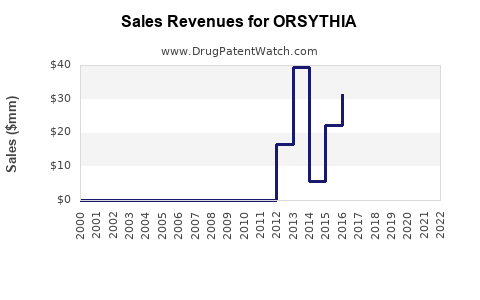
Gilead's oseltamivir products generated estimated revenue of USD 2.3 billion in 2022, accounting for roughly 6.6% of Gilead’s total product sales. Historically, annual sales peaked during flu seasons, reaching USD 2.5 billion in 2019 before declining during the pandemic years due to shifting healthcare priorities.
Key Markets
- United States: Largest market, with approximately USD 1 billion in annual sales.
- Europe: Estimated USD 600 million annually.
- Asia-Pacific: Rapidly growing, projected to reach USD 500 million by 2025.
Competitive Landscape
Major Participants
- Gilead Sciences (brand: Tamiflu)
- Roche (brand: Tamiflu)
- GlaxoSmithKline (GSK)
- Generic manufacturers producing oseltamivir in various regions
Patent Status and Generics
- Gilead’s patent for Tamiflu expired in 2016.
- Multiple generic versions accessible in markets outside the U.S. and Europe.
- Patent litigation and regulatory approvals influence market entry strategies for new competitors.
Emerging Alternatives
- Baloxavir marboxil (Xofluza): Approved in 2018, offers a different mechanism targeting viral polymerase, with a shorter treatment course.
- Novel antivirals in R&D pipelines aim to improve efficacy and reduce resistance.
Regulatory Environment
Approvals and Usage Guidelines
- Approved by the FDA in 1999 for seasonal influenza.
- In 2020, the CDC recommended oseltamivir for flu treatment in high-risk groups.
- Regulatory agencies in emerging markets have expedited approvals during pandemic peaks.
Patent and Exclusivity Timelines
- Gilead's primary patent for Tamiflu expired in 2016.
- Secondary patents and formulations may provide regional exclusivity until 2025.
- Patent cliffs open markets for generics, potentially reducing prices.
R&D and Pharmacological Developments
Ongoing Research
- Efforts focus on broad-spectrum antivirals.
- Strategies include combination therapies to combat resistance.
- Pharmacokinetic improvements aim to enhance compliance.
Pipeline Status
- Several candidates under clinical trials targeting influenza and other respiratory viruses.
- Breakthroughs could impact market share in the next 5-10 years.
Financial Trajectory and Future Outlook
Revenue Projections
- Forecasted to decline slowly post-2024 due to generic competition.
- Potential stabilization through new formulations or combination therapies.
- Global flu resurgence and pandemic preparedness initiatives expected to uphold demand.
Investment Trends
- Gilead and competitors are investing in antiviral R&D.
- Partnerships with biotech firms facilitate pipeline expansion.
- Licensing deals in emerging markets aim to secure regional revenue streams.
Potential Market Disruptions
- Emergence of resistance may reduce oseltamivir’s effectiveness.
- Introduction of novel antivirals could shift market dynamics.
- Policy shifts, including price controls, could impact profitability.
Summary Table of Key Data
| Aspect |
Details |
| Market Valuation (2022) |
USD 35 billion global antiviral market |
| Oseltamivir Revenue |
USD 2.3 billion (2022), declining trend post-2024 |
| Major Markets |
US, Europe, Asia-Pacific |
| Patent Expiry |
2016 for primary patent, regional exclusivities until 2025 |
| Key Competitor |
Roche’s Tamiflu, GSK’s generics, Xofluza |
| R&D Focus |
Broad-spectrum antivirals, resistance management |
Key Takeaways
- Oseltamivir remains a significant antiviral drug with consistent demand during flu seasons.
- Patent expiries and the rise of generics have pressured pricing and margins.
- Emerging therapies like baloxavir and promising R&D pipelines threaten to disrupt market share.
- Future growth depends on pandemic preparedness, regulatory policies, and innovation in antiviral design.
- Companies must navigate patent landscapes and competitive R&D to sustain revenue streams.
FAQs
1. How does patent expiration affect ORSYTHIA’s market?
Patent expiry opens markets for generic manufacturers, reducing prices and sales for branded versions. It increases competition and often leads to a decline in revenue for original patent holders.
2. What is the role of baloxavir marboxil (Xofluza) in the market?
Xofluza, approved in 2018, offers a different mechanism against influenza and can shorten treatment courses. It captures market share from oseltamivir, especially among post-exposure prophylaxis users.
3. Are there upcoming regulatory changes that could impact ORSYTHIA?
Yes. Agencies may modify usage guidelines during pandemics or due to resistance issues. Price regulations in certain regions may also influence profitability.
4. What R&D trends could define ORSYTHIA’s future?
Focus on broad-spectrum antivirals, combination therapies, and resistance mitigation strategies. Advances in pharmacokinetics could improve compliance and efficacy.
5. How does global flu activity influence ORSYTHIA sales?
Increased flu activity correlates with higher demand. Public health campaigns, vaccination rates, and pandemic preparedness policies directly impact sales volume.
References
- MarketWatch. (2023). Global antiviral drugs market size. Retrieved from https://www.marketwatch.com
- Gilead Sciences. (2022). Annual Report. Retrieved from https://www.gilead.com
- U.S. Food & Drug Administration. (2022). Oseltamivir approval and guidelines. Retrieved from https://www.fda.gov
- Centers for Disease Control and Prevention. (2020). Influenza antiviral recommendations. Retrieved from https://www.cdc.gov
- European Medicines Agency. (2022). Regulatory updates on influenza antivirals. Retrieved from https://www.ema.europa.eu