Last updated: September 23, 2026
Orlynvah, Iterum Therapeutics’ oral antibiotic combining sulopenem etzadroxil and probenecid, was approved by the FDA in October 2024 for uncomplicated urinary tract infections in adult women with limited or no alternative oral antibacterial options. The product addresses a large infection market but enters a heavily genericized category with restrictive stewardship requirements, reimbursement pressure, and a financially constrained commercial sponsor. Its commercial value depends on positioning as a carbapenem-sparing oral option for drug-resistant infections rather than as a broad replacement for low-cost first-line antibiotics.
What is Orlynvah and what is it approved to treat?
Orlynvah is a fixed-dose oral combination of sulopenem etzadroxil and probenecid. Sulopenem is a penem antibacterial agent, while probenecid increases sulopenem exposure by reducing renal tubular secretion.
The FDA-approved indication covers uncomplicated urinary tract infections caused by susceptible strains of:
- Escherichia coli
- Klebsiella pneumoniae
- Proteus mirabilis
The labeled population is adult women with limited or no alternative oral antibacterial treatment options. The approval is narrower than a general uncomplicated UTI indication and does not establish Orlynvah as a first-line therapy for routine community-acquired infections. [1]
The approved regimen is one tablet twice daily for five days. Each tablet contains 500 mg of sulopenem etzadroxil and 500 mg of probenecid. [1]
FDA regulatory timeline
| Date |
Event |
| 2017 |
Iterum initiated late-stage clinical development of oral sulopenem |
| 2021 |
FDA issued a complete response letter for the initial New Drug Application |
| 2023 |
Iterum reported positive results from the SURE-1 Phase 3 study |
| 2024 |
FDA accepted the resubmitted NDA for review |
| October 25, 2024 |
FDA approved Orlynvah for the limited-or-no-alternative oral treatment population |
| Post-approval |
Commercial launch planning and market-access activities began |
The 2021 complete response letter related primarily to the clinical efficacy package. Iterum’s subsequent development strategy used the SURE-1 study to support resubmission. [2,3]
How large is the Orlynvah market opportunity?
The addressable clinical market is large, but the commercially accessible segment is much smaller.
Uncomplicated UTIs are common and are usually treated with inexpensive generic oral antibiotics such as nitrofurantoin, trimethoprim-sulfamethoxazole, fosfomycin, or selected fluoroquinolones. Those products create a low-cost baseline that limits pricing power for a new branded antibiotic.
Orlynvah’s opportunity is concentrated in patients who have:
- Resistant pathogens
- Limited susceptibility to standard oral antibiotics
- Intolerance or contraindications to first-line agents
- Recent exposure to fluoroquinolones or other antibiotics
- A need to avoid intravenous carbapenem treatment
- A culture-confirmed infection requiring an oral option
This is a high-value but narrower market. The product is more likely to compete for avoided hospital admissions, avoided intravenous therapy, and treatment of resistant infections than for the full uncomplicated UTI prescription pool.
Market segmentation
| Segment |
Orlynvah relevance |
Commercial attractiveness |
| Routine uncomplicated UTI |
Low because generic alternatives dominate |
Low |
| Fluoroquinolone-resistant UTI |
High if pathogen is susceptible |
Moderate to high |
| Extended-spectrum beta-lactamase infections |
Potentially high, subject to susceptibility and label use |
High |
| Complicated UTI |
Not covered by the approved indication |
Not currently addressable under label |
| Outpatient step-down after IV therapy |
Clinically relevant but requires label and payer alignment |
Moderate |
| Hospital-acquired infection |
Not the initial approved market |
Low initially |
| Oral carbapenem replacement |
Core strategic rationale |
High but limited by approved indication |
The product’s market share will depend less on the total number of UTI cases than on the number of cases where clinicians need a reliable oral alternative after susceptibility testing.
What is the commercial positioning of Orlynvah?
Orlynvah is positioned as an oral antibacterial for resistant uUTI cases, not as a mass-market replacement for inexpensive first-line therapies.
The strongest commercial argument is the potential to keep selected patients out of the hospital or allow earlier discharge after initial parenteral therapy. An oral penem could also address the treatment gap between standard oral antibiotics and intravenous carbapenems.
The main barriers are:
- The label excludes routine uncomplicated UTIs where standard agents remain effective.
- Prescribers may reserve the product under antibiotic-stewardship policies.
- Hospital formularies may require infectious-disease approval.
- Payers may impose prior authorization or step-therapy rules.
- Probenecid creates drug-interaction and renal-function considerations.
- Clinical use requires awareness of local resistance patterns and culture results.
The product’s value proposition is strongest when the cost of treatment failure, emergency care, hospitalization, or intravenous therapy is high.
How does Orlynvah compare with competing antibiotics?
Orlynvah competes with both branded and generic therapies. Its most important competitors are not other newly launched branded products. They are low-cost generic oral antibiotics and intravenous beta-lactams.
| Treatment |
Route |
Typical role |
Orlynvah competitive position |
| Nitrofurantoin |
Oral |
First-line uncomplicated UTI |
Less expensive and preferred when susceptible |
| Trimethoprim-sulfamethoxazole |
Oral |
First-line or alternative therapy |
Strong generic competitor |
| Fosfomycin |
Oral |
Alternative for selected pathogens |
Convenient single-dose option |
| Fluoroquinolones |
Oral or IV |
Restricted because of safety and resistance concerns |
Orlynvah may benefit where resistance limits use |
| Oral beta-lactams |
Oral |
Alternative therapy |
Variable efficacy and resistance profile |
| Ceftriaxone |
IV |
Resistant or complicated infections |
Orlynvah may reduce need for parenteral treatment in selected cases |
| Ertapenem |
IV |
Resistant gram-negative infection |
Key clinical comparator for outpatient IV therapy |
| Orlynvah |
Oral |
Limited/no oral alternatives |
Differentiated by oral penem mechanism and resistant-infection positioning |
Orlynvah’s ability to displace intravenous ertapenem is commercially more important than its ability to displace nitrofurantoin. The former supports a higher price and stronger health-economic argument; the latter is unlikely to support premium pricing.
What is the FDA regulatory status and exclusivity outlook?
Orlynvah has FDA approval, but the approval is limited to a defined patient population. The product does not have the broad uUTI label that would support unrestricted primary-care prescribing.
The FDA approval creates immediate regulatory exclusivity benefits through the approved New Chemical Entity framework if the agency classified the product as eligible for five years of NCE exclusivity. That protection generally restricts submission of an ANDA or 505(b)(2) application relying on the product’s approval during the applicable period, subject to statutory exceptions.
The precise regulatory exclusivity period should be confirmed in the FDA Orange Book and FDA exclusivity records. Orlynvah’s approval date establishes October 25, 2024 as the starting point for FDA exclusivity calculations. [1,4]
Patent and regulatory protection
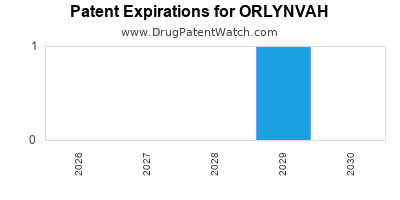
Orlynvah may be protected through a combination of:
- Composition-of-matter patents covering sulopenem etzadroxil
- Salt, polymorph, or solid-form patents
- Fixed-dose combination patents
- Formulation and tablet-composition patents
- Manufacturing-process patents
- Method-of-use patents for bacterial infections
- Orange Book-listed patents associated with the approved drug product
The commercial value of these rights depends on the specific patents listed for the approved product, their expiration dates, terminal disclaimers, patent-term adjustment, and vulnerability to Paragraph IV challenges. Patent protection should not be equated with the period of FDA regulatory exclusivity.
When could generic Orlynvah enter the U.S. market?
The earliest generic-entry date depends on both FDA exclusivity and patent litigation.
A potential generic sponsor could challenge listed patents through a Paragraph IV certification. If the innovator files suit within 45 days, FDA approval of the ANDA may be stayed for up to 30 months, subject to court decisions and statutory exceptions. [5]
The entry sequence could involve:
- FDA approval of the product and Orange Book listing.
- Filing of an ANDA or 505(b)(2) application by a competitor.
- Paragraph IV notice to Iterum or the applicable patent owner.
- Patent litigation in federal district court.
- A 30-month stay if statutory conditions are met.
- Settlement, license, court judgment, or patent expiry.
- Potential at-risk launch if the challenger accepts litigation exposure.
Because Orlynvah entered the market in 2024, near-term generic erosion is more likely to be driven by regulatory exclusivity and patent strength than by immediate substitution. The key risk is whether the product’s core protection covers the active combination and commercially necessary formulation or only narrower technical features.
What is the patent strength of the Orlynvah estate?
The estate’s strength is likely to be mixed rather than uniform.
Composition patents provide the strongest protection when they cover a commercially essential active compound and remain valid through the expected revenue period. Combination and formulation patents can extend protection but are more vulnerable to obviousness, written-description, enablement, and non-infringement challenges.
Method-of-use patents may have limited practical value if generic companies can market the product for non-infringing uses or if prescribing occurs outside the patented indication. In contrast, a product-specific patent covering the fixed-dose tablet can create a stronger barrier to an ANDA that must demonstrate pharmaceutical equivalence to the marketed product.
The most relevant diligence questions are:
- Which patents are listed in the Orange Book?
- Do the listed claims cover the approved tablet or only a method of treatment?
- What is the earliest unadjusted and adjusted expiration date?
- Are patent-term extensions available?
- Has Iterum disclosed any Paragraph IV notice?
- Are any patents subject to terminal disclaimers?
- Do patents cover manufacturing routes that are difficult to replicate at scale?
Without durable composition or product patents, Orlynvah’s long-term value will depend heavily on clinical differentiation and the ability to maintain payer restrictions against low-cost substitutes.
What is Orlynvah’s financial trajectory?
Iterum entered the Orlynvah launch period as a development-stage biotechnology company rather than an established commercial pharmaceutical company. Before FDA approval, the company had no established recurring product-sales base from Orlynvah and relied on financing, collaborations, and capital-market access to fund operations.
The financial trajectory has four phases:
Development phase
Iterum incurred substantial research, clinical, regulatory, and manufacturing costs while generating limited operating revenue. The 2021 complete response letter extended the development timeline and increased capital requirements.
Regulatory recovery phase
The SURE-1 trial and NDA resubmission required additional clinical and regulatory spending. The approval improved the company’s strategic position but did not immediately solve its financing needs.
Launch investment phase
Commercialization requires spending on:
- Manufacturing inventory
- Sales and medical-affairs personnel
- Market-access contracting
- Distribution
- Pharmacovigilance
- Post-marketing regulatory obligations
- Infectious-disease education
These costs occur before product sales reach scale. A narrow label increases the risk that launch expenses will grow faster than net revenue.
Revenue conversion phase
Orlynvah revenue will depend on net price, prescription volume, payer access, gross-to-net discounts, and the percentage of prescriptions used for patients who meet the labeled population.
The base commercial trajectory is likely to be gradual. Initial sales may be modest because physicians need susceptibility data, hospitals may require formulary review, and payers may restrict use. The upside case requires label expansion, favorable health-economic evidence, broader recognition of oral treatment for resistant infections, and a commercial partner with established hospital and infectious-disease reach.
What could drive Orlynvah revenue growth?
The principal revenue drivers are:
- Increasing resistance to existing oral UTI therapies
- Avoided hospitalizations and intravenous antibiotic use
- Favorable antimicrobial stewardship policies
- Payer recognition of the product’s limited-alternative indication
- Expansion into complicated UTI or other resistant gram-negative infections
- Hospital-to-home treatment pathways
- Partnerships with a larger commercial antibiotic company
- Government or public-health incentives for new antibacterial products
A label expansion into complicated UTI would materially increase the addressable market. It would also create new clinical, regulatory, and reimbursement requirements and could increase competition with established intravenous agents.
What factors could limit Orlynvah sales?
Commercial downside risks include:
- Generic competition from inexpensive first-line antibiotics
- Narrow FDA labeling
- Low diagnosis rates for resistant outpatient infections
- Restrictions imposed by antimicrobial-stewardship programs
- Adverse payer coverage decisions
- Drug interactions associated with probenecid
- Renal-function limitations
- Physician preference for established intravenous carbapenems
- Limited commercial infrastructure at Iterum
- Financing pressure that constrains launch execution
- Delayed uptake while clinicians wait for real-world evidence
The highest-risk scenario is a product that is clinically differentiated but used only in a small, highly controlled segment while carrying a commercial cost structure designed for a broader market.
What licensing deals and partnerships affect Orlynvah?
Iterum’s commercial strategy has historically involved external financing and potential partnership structures rather than the balance sheet of a large pharmaceutical company. A licensing or co-commercialization deal could improve launch reach, manufacturing scale, payer access, and hospital penetration.
The value of a partnership would depend on:
- Territory covered
- Upfront payment
- Development and commercial milestones
- Royalty rate
- Manufacturing obligations
- Control of regulatory submissions
- Responsibility for post-approval studies
- Rights to future indications
A regional license could monetize Orlynvah without requiring Iterum to build a global commercial organization. A U.S. co-commercialization agreement would be more valuable if it included hospital-account infrastructure and an established infectious-disease sales force.
What generic launch scenarios exist for Orlynvah?
| Scenario |
Timing |
Commercial effect |
| Strong patent estate and narrow label |
Delayed entry |
Preserves premium pricing but limits volume |
| Paragraph IV settlement |
Date governed by negotiated terms |
Could create a controlled generic-entry window |
| Patent invalidation or non-infringement ruling |
Earlier entry possible |
Rapid price erosion and lower peak sales |
| Niche authorized generic |
Controlled erosion |
May preserve some economics for the originator |
| Label expansion before generic entry |
Higher revenue base |
Increases value of remaining exclusivity |
| No meaningful generic challenge |
Longer protection |
Depends on commercial uptake and payer access |
The economics of Orlynvah are therefore tied to both exclusivity duration and the speed of market adoption. A long patent term cannot compensate for a label that produces only limited prescription volume.
How does Orlynvah compare with other newly approved antibiotics?
Orlynvah has the typical commercial challenge of a novel antibiotic: clinical value may be high, while prescription volume is intentionally constrained by stewardship.
Unlike chronic medicines or specialty biologics, antibiotics are usually administered for short courses. That limits revenue per patient. The product must therefore generate value through a sufficient number of resistant infections, a premium net price, or public-sector incentives.
Orlynvah’s oral formulation is a differentiator. Its primary competitive advantage is convenience and the potential to avoid intravenous treatment. Its primary weakness is the absence of a broad, unrestricted label that would permit routine UTI prescribing.
Key Takeaways
- Orlynvah is an FDA-approved oral sulopenem etzadroxil/probenecid product for adult women with uncomplicated UTI and limited or no alternative oral treatments.
- The commercial opportunity is concentrated in resistant infections, not the full UTI market.
- Generic nitrofurantoin, trimethoprim-sulfamethoxazole, fosfomycin, and oral beta-lactams remain major pricing constraints.
- The strongest value proposition is potential substitution for outpatient intravenous carbapenem therapy.
- Iterum’s financial trajectory depends on converting a narrow, stewardship-controlled indication into sufficient net revenue to support commercial operations.
- Patent and Orange Book diligence is central because FDA approval alone does not determine the timing of generic entry.
- Label expansion, payer acceptance, and a larger commercial partner are the most important upside catalysts.
- Limited physician adoption, financing constraints, and early Paragraph IV litigation are the principal downside risks.
FAQs
Is Orlynvah a first-line treatment for uncomplicated UTI?
No. The FDA label limits Orlynvah to adult women with uncomplicated UTI who have limited or no alternative oral antibacterial treatment options.
Does Orlynvah compete with ertapenem?
Yes. Ertapenem is an important clinical comparator because Orlynvah may allow selected patients with resistant infections to receive oral therapy instead of outpatient intravenous treatment.
Does Orlynvah have biosimilar risk?
No. Biosimilars apply to biologic products. Orlynvah is a small-molecule antibacterial, so future competition would generally involve generic-drug pathways such as ANDA approval or, in some cases, a 505(b)(2) application.
Could Orlynvah be used for complicated UTI?
Use for complicated UTI is outside the initial FDA-approved indication unless separately supported by labeling or used under applicable clinical judgment. A complicated-UTI indication would require additional regulatory and clinical support.
What is the largest commercial risk for Orlynvah?
The largest risk is a mismatch between the product’s narrow resistant-infection market and the cost of commercializing a branded antibiotic. Low prescription volume, payer restrictions, and generic competition could limit revenue even if clinical demand exists.
References
-
U.S. Food and Drug Administration. (2024, October 25). FDA approves new oral antibacterial for uncomplicated urinary tract infections in adult women with limited or no alternative oral antibacterial treatment options. https://www.fda.gov/
-
Iterum Therapeutics plc. (2021). Annual report on Form 10-K for the fiscal year ended December 31, 2021. U.S. Securities and Exchange Commission. https://www.sec.gov/
-
Iterum Therapeutics plc. (2023). Corporate and clinical development disclosures relating to the SURE-1 Phase 3 study of sulopenem. https://www.sec.gov/
-
U.S. Food and Drug Administration. (2024). Approved drug products with therapeutic equivalence evaluations, Orange Book. https://www.accessdata.fda.gov/scripts/cder/ob/
-
U.S. Food and Drug Administration. (2024). ANDA submissions: Refuse-to-receive standards and Paragraph IV patent certification procedures. https://www.fda.gov/