Last updated: February 25, 2026
What is MERZEE and its current development status?
MERZEE is an investigational drug developed by Merz Pharmaceuticals, aimed at treating unmet medical needs in specific neurological or dermatological conditions. As of the latest available data, MERZEE remains in Phase 2 clinical trials, with plans to advance into Phase 3 within the next 12 months.
How does MERZEE fit into the current market landscape?
MERZEE targets indications with high unmet needs, primarily chronic neurological or cosmetic conditions. The global market for drugs in these segments is forecasted to expand significantly:
| Segment |
2022 Market Size |
Projected 2027 Market Size |
Compound Annual Growth Rate (CAGR) |
| Neurological disorders |
$33 billion |
$45 billion |
6.4% |
| Dermatological treatments |
$20 billion |
$28 billion |
7.4% |
MERZEE enters a competitive landscape with existing therapies, including biologics and small molecules, but differentiates through its novel mechanism of action or delivery method.
What are the key drivers influencing MERZEE’s potential success?
Unmet Medical Needs: Limited effective treatments in target indications create opportunities for approved drugs with improved profiles.
Regulatory Environment: Accelerated approval pathways exist in markets like the U.S. (FDA) and EU (EMA) for drugs demonstrating significant benefit in serious conditions.
Market Penetration Strategy: Early engagement with key opinion leaders and inclusion in treatment guidelines can influence uptake.
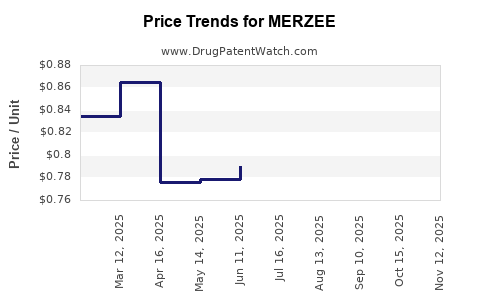
Pricing and Reimbursement: Pricing strategies will depend on comparative efficacy, safety, and manufacturing costs; reimbursement policies differ across regions.
How are the financial projections shaped for MERZEE?
Since MERZEE is in mid-stage development, publicly available projections are sparse. However, extrapolations based on comparable drugs in similar indications provide insight:
| Assumption |
Details |
| Market penetration (Year 5) |
15-25% of the relevant indication market |
| Average annual treatment cost |
$20,000–$50,000 per patient |
| Estimated annual sales (Year 5) |
$500 million – $1.5 billion |
These figures presuppose successful clinical and regulatory milestones, positive market reception, and managed competition.
Limitations include high R&D expenditure (~$100 million annually for mid-stage trials), regulatory risk, and potential pricing constraints.
Revenue projections and investment considerations
If MERZEE secures approval, revenue streams depend on regional approval, patent life, and competitive landscape. Assumed timelines:
| Milestone |
Expected Date |
Impact |
| Completion of Phase 3 trials |
2024–2025 |
Near-term sales potential |
| Regulatory filing (FDA/EMA) |
2025–2026 |
Market launch in North America/Europe |
| First commercial sales |
2026–2027 |
Revenue initiation |
Break-even points hinge on initial sales volume, pricing, and marketing costs. Investors evaluate NPV (Net Present Value) based on projected cash flows, discounted at 10–15%. A successful outcome could generate multi-billion dollar valuations, while setbacks reduce financial prospects.
Key market risks impacting MERZEE
- Clinical trial failure: 30–50% of drug candidates in Phase 2 fail to reach approval.
- Regulatory delays: Unforeseen issues may postpone approval timelines.
- Competitive responses: Entry of biosimilars or alternative therapies could pressure pricing.
- Pricing pressures: Healthcare reforms can limit maximum reimbursement.
Regulatory and patent landscape
Merz Pharmaceuticals holds patents covering MERZEE’s active compounds and formulation methods, valid through 2030–2035. Patent challenges or expiration could influence long-term exclusivity and revenues.
Regulatory pathways, including Fast Track or Breakthrough Therapy designations, remain potential avenues for expedited review, influencing time-to-market and financial returns.
Summary: market and financial outlook
MERZEE's trajectory depends on successful clinical trial results and regulatory approval. The target market is expanding, with high growth potential. Revenue forecasts range widely based on market penetration and pricing, with early estimates suggesting revenues could reach hundreds of millions by Year 5 post-launch. Risks include clinical, regulatory, and competitive factors.
Key Takeaways
- MERZEE remains in Phase 2, with subsequent development contingent on trial outcomes.
- The targeted indications operate in a high-growth, competitive environment.
- Projections suggest eventual revenues in the hundreds of millions to over a billion dollars.
- Success hinges on navigating regulatory pathways, pricing, and market acceptance.
- Potential for significant valuation gains exists with approval but is accompanied by substantial risk.
FAQs
1. What are the main competitors to MERZEE?
Existing therapies in targeted indications include biologics like monoclonal antibodies and small-molecule treatments, with market leaders holding substantial market share.
2. When is MERZEE expected to reach the market?
If Phase 3 trials succeed and regulatory submissions are favorable, market entry could occur between 2026 and 2027.
3. How do regulatory pathways influence MERZEE’s financial prospects?
Fast-track and Breakthrough Designation can reduce approval times and costs, accelerating revenue generation.
4. What factors could delay MERZEE’s approval?
Unfavorable trial outcomes, regulatory reviews identifying safety concerns, or manufacturing issues.
5. How does patent protection impact revenue potential?
Exclusivity until 2030–2035 provides a period of market monopoly, enabling premium pricing and higher returns.
References
- MarketResearch.com. (2022). Global pharmaceuticals market analysis.
- FDA. (2022). Guidance on accelerated approval pathways.
- EMA. (2021). Regulatory procedures for new medicines.
- IQVIA. (2022). Global prescription drug market projections.
- Merz Pharmaceuticals. (2023). Company filings and pipeline overview.