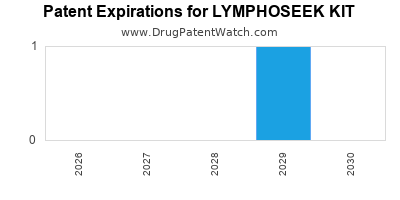
Last updated: September 4, 2026
Lymphoseek kit, the brand name for technetium Tc 99m tilmanocept, is an FDA-approved radiopharmaceutical used for lymphatic mapping and sentinel lymph-node localization. The product has a specialized but durable market position in breast cancer, melanoma, and head-and-neck cancer surgery. Its commercial outlook depends less on broad pharmaceutical volume and more on nuclear-pharmacy distribution, hospital procedure volumes, reimbursement, radiotracer availability, and the timing of generic or 505(b)(2) competition.
Navidea Biopharmaceuticals developed Lymphoseek and retains core intellectual-property rights. Cardinal Health has been the principal U.S. commercial and distribution partner. Norgine has held rights in selected European markets. The product has no conventional biosimilar risk because it is a small-molecule, radiolabeled diagnostic agent rather than a biologic.
What is Lymphoseek kit and how is it used?
Lymphoseek is a kit for the preparation of technetium Tc 99m tilmanocept injection. The radiolabeled product binds to CD206 receptors on macrophages in lymph nodes, allowing surgeons to identify sentinel lymph nodes using a gamma detection device.
The FDA-approved indications include:
- Lymphatic mapping using a handheld gamma detection device.
- Localization of lymph nodes draining a primary tumor.
- Use in patients with clinically node-negative breast cancer or melanoma.
- Use in patients with clinically node-positive or clinically node-negative squamous-cell carcinoma of the head and neck.
The product is administered after radiolabeling with technetium Tc 99m. It is not supplied as a ready-to-inject conventional drug. Hospitals and nuclear pharmacies must prepare the dose under radiopharmaceutical handling procedures.
| Product attribute |
Lymphoseek |
| Active agent |
Tilmanocept labeled with technetium Tc 99m |
| Dosage form |
Kit for radiolabeling |
| FDA approval |
March 13, 2013 |
| FDA application |
NDA 202008 |
| Primary use |
Sentinel lymph-node localization |
| Original developer |
Navidea Biopharmaceuticals |
| Major U.S. commercial partner |
Cardinal Health |
| Prescription status |
Radiopharmaceutical requiring medical supervision |
| Biosimilar exposure |
None |
| Main substitutes |
Blue dye, sulfur colloid and other lymphatic mapping approaches |
The approved product label is the principal source for dosing, preparation, handling and safety requirements (U.S. Food and Drug Administration [FDA], 2023).
What is the FDA regulatory status of Lymphoseek?
Lymphoseek holds full FDA approval under NDA 202008. The initial approval covered lymphatic mapping in breast cancer and melanoma. FDA later expanded the indication to include sentinel lymph-node localization in head-and-neck squamous-cell carcinoma.
Lymphoseek received new chemical entity exclusivity when first approved. The five-year period associated with that regulatory exclusivity expired in 2018. Regulatory exclusivity no longer prevents an eligible competitor from filing a qualifying application, but patent rights and the technical complexity of radiopharmaceutical manufacturing remain relevant barriers.
The product is not a biologic and does not receive the 12-year reference-product exclusivity applicable to biologics. A competitor would likely evaluate an abbreviated new drug application, a 505(b)(2) application, or another FDA pathway depending on formulation, labeling, radiolabeling process and reference-product comparability.
When does Lymphoseek lose exclusivity?
Lymphoseek’s principal commercial protection has shifted from regulatory exclusivity to patent, contracting and operational protection.
| Protection category |
Status |
| New chemical entity exclusivity |
Expired in 2018 |
| FDA approval |
Active |
| Core product patents |
Extend beyond regulatory exclusivity |
| Orange Book-listed patents |
Relevant to ANDA and Paragraph IV analysis |
| Biosimilar exclusivity |
Not applicable |
| Distribution and manufacturing know-how |
Commercially important |
| Hospital and nuclear-pharmacy relationships |
Important non-patent barrier |
Publicly available patent records identify U.S. patents covering tilmanocept, radiolabeled compositions and related uses. Patent expiration dates depend on the specific claim, patent-term adjustment, terminal disclaimers and Orange Book listing status. The principal commercial risk is therefore not a single “patent cliff,” but staged erosion as individual composition, formulation and method-of-use claims expire or become vulnerable to challenge.
The Orange Book should be reviewed for the current listed-patent set before relying on any specific expiration date. FDA’s Drugs@FDA database and the current Orange Book provide the controlling regulatory record (FDA, 2024a, 2024b).
What patents protect Lymphoseek?
Lymphoseek’s patent estate has historically centered on four technical areas:
- Tilmanocept composition and receptor-targeting structure.
- Radiolabeled tilmanocept, including technetium Tc 99m preparations.
- Methods for lymphatic mapping and sentinel-node localization.
- Formulation, preparation and administration methods.
The relevant protection is narrower than a typical blockbuster small-molecule estate because Lymphoseek is a specialized diagnostic radiopharmaceutical. A competitor may attempt to avoid a composition claim by developing a different receptor-targeted molecule, while still competing for the same surgical procedure.
The most commercially important patent questions are:
- Whether a listed patent covers the exact proposed generic or 505(b)(2) product.
- Whether the challenger seeks approval for all or only some indications.
- Whether a method-of-use patent can be carved out of the proposed labeling.
- Whether radiolabeling and kit preparation claims cover the competitor’s manufacturing process.
- Whether the patent is enforceable after prosecution-history and validity review.
Are there Paragraph IV challenges to Lymphoseek?
No publicly reported Paragraph IV litigation has materially altered the Lymphoseek market as of the available public record. That does not eliminate future challenge risk. The product’s small market, specialized manufacturing requirements and dependence on short-lived technetium logistics may reduce the immediate economic incentive for an ANDA filer.
A Paragraph IV entrant would face several commercial constraints:
- Limited sales potential relative to major oral drugs.
- Need for validated kit manufacturing and radiolabeling instructions.
- Dependence on technetium-99m supply and nuclear-pharmacy distribution.
- Need to support hospital adoption and procedural confidence.
- Potential litigation over composition and use patents.
- Difficulty building a national distribution network for time-sensitive doses.
The most plausible competitive entry route may be a 505(b)(2) product with a differentiated formulation, labeling strategy or preparation process rather than a direct, fully substitutable generic.
What formulations are protected by Lymphoseek patents?
The commercial product is a lyophilized kit that must be reconstituted and radiolabeled with technetium Tc 99m. Formulation-related protection may cover the nonradioactive kit composition, stabilizers, reconstitution process, radiolabeling conditions and product specifications.
Formulation patents matter because a radiopharmaceutical competitor cannot rely solely on chemical identity. It must produce a product that maintains radiochemical purity, stability and reliable lymph-node localization through the full preparation and administration workflow.
Manufacturing controls also create a practical barrier. The product must meet pharmaceutical quality standards while being distributed through a network capable of handling radioactive materials. This favors an incumbent with established nuclear-pharmacy infrastructure.
Who owns and commercializes Lymphoseek?
Navidea is the originating developer and the core intellectual-property holder. Cardinal Health has been the principal U.S. commercial and distribution partner. The arrangement gives Cardinal access to its nuclear-pharmacy network while allowing Navidea to monetize Lymphoseek through royalties or related economic rights rather than carrying the full cost of a national commercial infrastructure.
Norgine has commercial rights in certain European territories under agreements with Navidea. Geographic rights have changed over time through licensing and amendments, so territory-specific commercial analysis must distinguish the United States, Europe and other international markets.
| Company |
Role in Lymphoseek economics |
| Navidea Biopharmaceuticals |
Developer, patent holder and royalty beneficiary |
| Cardinal Health |
U.S. commercial and nuclear-pharmacy distribution partner |
| Norgine |
European commercialization partner in selected territories |
| Hospitals and surgical centers |
End users and reimbursement recipients |
| Nuclear pharmacies |
Dose preparation and time-sensitive distribution |
How large is the Lymphoseek market?
Lymphoseek operates in a focused procedural market rather than a broad chronic-treatment market. Demand is tied to the number of eligible surgeries and the share of those procedures using receptor-targeted lymphatic mapping.
The relevant procedure pools include:
- Breast-conserving surgery and mastectomy with sentinel-node evaluation.
- Melanoma surgery.
- Head-and-neck cancer surgery.
- Selected academic and specialized surgical procedures.
Market growth is constrained by the product’s indication-specific use. It does not address all lymphatic imaging or all oncology procedures. The product competes with established techniques, including blue dye and sulfur colloid, and with institution-specific protocols.
The market has several favorable characteristics:
- High clinical value when accurate sentinel-node localization affects surgical management.
- Low drug cost relative to the total cost of cancer surgery.
- Recurring use across eligible procedures.
- Integration with existing gamma-detection equipment.
- Distribution through established radiopharmaceutical channels.
The market also has material limitations:
- Limited addressable procedure volume.
- Hospital budget and reimbursement sensitivity.
- Short product preparation and delivery windows.
- Dependence on technetium availability.
- Competition from lower-cost or familiar alternatives.
- Exposure to surgical-volume changes.
What is the financial trajectory for Lymphoseek?
Lymphoseek is financially important to Navidea but is not reported as a standalone high-growth product by Cardinal Health. Cardinal reports broad pharmaceutical and nuclear-pharmacy operations rather than detailed Lymphoseek sales, limiting external visibility into product-level revenue, gross margin and market share.
Navidea’s financial trajectory has been shaped by royalty income, licensing arrangements, litigation and corporate liquidity rather than by direct product sales alone. The company has historically depended on Lymphoseek-related economics while pursuing additional diagnostic and therapeutic assets. Its reported revenue base has therefore been much smaller than the product’s end-market sales value.
| Financial factor |
Effect on trajectory |
| Royalty-based economics |
Limits reported revenue relative to end-market sales |
| Cardinal distribution |
Supports reach but reduces direct commercial control |
| Procedure-linked demand |
Produces recurring but moderate volume |
| No large chronic-use indication |
Limits blockbuster-scale revenue |
| Radiopharmaceutical infrastructure |
Raises entry costs and supports incumbent position |
| Patent aging |
Creates long-term price and share pressure |
| New clinical indications |
Could expand demand if supported by evidence and approved labeling |
The most likely financial pattern is stable or moderately growing procedural revenue followed by pressure as patent protection weakens and competitors gain regulatory access. A sharp revenue collapse is less likely than a gradual decline if competitors enter because adoption depends on logistics, hospital protocols and nuclear-pharmacy coverage.
What drives Lymphoseek demand?
Surgical procedure volumes
Breast cancer remains the largest potential demand source. Melanoma and head-and-neck cancer contribute smaller but strategically important volumes. Any decline in elective surgeries, hospital staffing or cancer diagnosis rates can reduce use.
Reimbursement
Lymphoseek is generally used within a broader surgical episode. Reimbursement is influenced by hospital payment systems, ambulatory-surgery economics, payer policies and the availability of separately billable radiopharmaceutical services. Because the drug is a diagnostic adjunct rather than the principal treatment, hospitals may prioritize predictable total episode economics over product-level differentiation.
Clinical adoption
Surgeons and nuclear-medicine departments must coordinate administration, imaging and operative timing. Adoption is stronger where hospitals already use sentinel-node protocols and have reliable radiopharmaceutical support.
Supply reliability
Technetium-99m is produced through specialized supply chains. Interruptions in generator supply, nuclear-pharmacy operations or transportation can affect product use even when end-market demand remains stable.
How strong is the Lymphoseek patent estate?
The estate is commercially meaningful but not comparable to the broad, layered protection surrounding a major therapeutic franchise. Its strength comes from the combination of:
- Product-specific composition claims.
- Radiolabeled preparation claims.
- Method-of-use claims.
- Manufacturing and formulation know-how.
- Distribution scale.
- Surgeon and hospital familiarity.
Its weaknesses are equally clear:
- Regulatory exclusivity has expired.
- The product serves a narrow market.
- Some use claims may be design-around candidates.
- Generic or 505(b)(2) entry could target only selected indications.
- Patent expiration would occur against a product with limited manufacturing complexity compared with biologics, although radiopharmaceutical logistics remain difficult.
The estate is best characterized as a moderate barrier with meaningful operational reinforcement, not as an impenetrable exclusivity position.
What generic entry risks exist for Lymphoseek?
The highest-probability entry scenario is a staged challenge:
- A competitor develops a technically comparable kit.
- The filing targets the highest-volume breast-cancer indication.
- The applicant uses a section viii carve-out for protected method-of-use claims where possible.
- The entrant initially relies on a regional nuclear-pharmacy network.
- Price competition develops in hospitals and integrated delivery networks.
- The incumbent responds through contracting, supply reliability and additional clinical support.
A fully interchangeable national competitor would have greater impact than a limited regional product. However, even one approved competitor could weaken contracting leverage and reduce royalty economics.
What litigation and settlement agreements affect Lymphoseek?
No major publicly reported patent settlement has established an early generic launch date for Lymphoseek. The principal legal exposure remains future patent litigation involving an ANDA or 505(b)(2) applicant.
Commercial agreements with Cardinal and Norgine are more important to current economics than publicly disclosed patent settlements. These agreements determine regional control, distribution responsibilities, royalty flows and the extent to which Navidea can influence pricing and commercialization.
How does Lymphoseek compare with competing lymphatic mapping products?
| Product or approach |
Main advantage |
Main limitation |
| Lymphoseek |
Targeted lymph-node localization and established FDA labeling |
Specialized kit and radiopharmaceutical logistics |
| Blue dye |
Familiar, inexpensive adjunct |
Less precise visual and logistical performance; adverse reactions possible |
| Tc-99m sulfur colloid |
Established radiocolloid technique |
Less receptor-specific targeting |
| Indocyanine green |
Optical visualization and growing surgical use |
Requires compatible imaging equipment and has different workflow |
| Other investigational tracers |
Potentially improved imaging or targeting |
Regulatory and adoption risk |
Lymphoseek’s competitive position depends on whether hospitals value targeted localization enough to offset the cost and operational requirements of the kit.
What are the geographic growth opportunities?
The United States remains the most commercially developed market because of established nuclear-pharmacy infrastructure and FDA-approved labeling. Europe offers a smaller but diversified opportunity through Norgine and other regional arrangements. International expansion is constrained by:
- Country-specific radiopharmaceutical approvals.
- Nuclear-medicine infrastructure.
- Local reimbursement.
- Technetium supply.
- Import and distribution requirements.
- Hospital familiarity with sentinel-node protocols.
The product’s geographic growth potential is therefore selective. It is more likely to expand through additional covered institutions and procedures than through broad population-scale prescribing.
Key Takeaways
- Lymphoseek is technetium Tc 99m tilmanocept, an FDA-approved kit for lymphatic mapping and sentinel-node localization.
- FDA approval remains active, but new chemical entity exclusivity expired in 2018.
- Navidea owns the core development and intellectual-property position; Cardinal Health is the principal U.S. commercial partner.
- The product has no biosimilar risk, but generic and 505(b)(2) competition remains possible.
- Patent, formulation and method-of-use protection provide a moderate barrier, reinforced by nuclear-pharmacy logistics.
- Revenue is procedure-driven and recurring but limited by the product’s focused indications.
- Cardinal does not publicly disclose standalone Lymphoseek sales, while Navidea’s economics are primarily linked to royalties and licensing.
- The most likely erosion pattern is gradual price and share pressure rather than an immediate blockbuster-style cliff.
- Breast cancer surgery is the largest commercial demand pool.
- No major publicly reported Paragraph IV settlement or early generic launch agreement has materially changed the market position.
FAQs
Is Lymphoseek a radioactive drug?
Yes. Lymphoseek is a kit that is radiolabeled with technetium Tc 99m before administration. It must be prepared and handled through qualified radiopharmaceutical procedures.
Is Lymphoseek interchangeable with blue dye?
No. Lymphoseek and blue dye are different lymphatic-mapping approaches. They may be used under different institutional protocols and are not automatically interchangeable.
Can a generic company copy the Lymphoseek kit?
A competitor may pursue an ANDA or 505(b)(2) application, but it must address product composition, radiolabeling, stability, manufacturing, labeling and patent requirements. Approval would not guarantee immediate national adoption.
Does Lymphoseek have biosimilar competition?
No. Lymphoseek is a radiolabeled small-molecule diagnostic product, not a biologic. Biosimilar regulation does not apply.
What is the main investment risk tied to Lymphoseek?
The main risk is concentration in a narrow, procedure-dependent market combined with aging patent protection. Additional risks include generic entry, hospital price pressure, technetium supply disruptions and dependence on commercial partners.
References
-
Cardinal Health, Inc. (2024). Annual report pursuant to Section 13 or 15(d) of the Securities Exchange Act of 1934 for the fiscal year ended June 30, 2024. U.S. Securities and Exchange Commission.
-
Navidea Biopharmaceuticals, Inc. (2024). Annual report pursuant to Section 13 or 15(d) of the Securities Exchange Act of 1934. U.S. Securities and Exchange Commission.
-
U.S. Food and Drug Administration. (2023). Lymphoseek prescribing information. FDA.
-
U.S. Food and Drug Administration. (2024a). Drugs@FDA: Lymphoseek, NDA 202008. FDA.
-
U.S. Food and Drug Administration. (2024b). Approved drug products with therapeutic equivalence evaluations, Orange Book. FDA.
-
U.S. Patent and Trademark Office. (2024). Patent Center and Patent Assignment Search. USPTO.