Last updated: July 22, 2026
KLOXXADO (naloxone HCl) Market Dynamics and Financial Trajectory: Pricing, Sales Trends, Exclusivity, and Generic/Biosimilar Risk
Kloxxado (naloxone hydrochloride) is an intranasal, opioid-overdose rescue product positioned against intranasal and auto-injector naloxone brands in the US. Its financial trajectory is driven by (1) payer reimbursement and net price pressure across the naloxone class, (2) channel inventory dynamics typical of acute-care products, (3) state and federal procurement cycles, and (4) competitive substitution between naloxone delivery systems. Patent and exclusivity leverage is narrower than for many branded specialty drugs; the market’s near- to mid-term economics are mostly determined by tendering, formulary outcomes, and generic entry timing for naloxone nasal competitors.
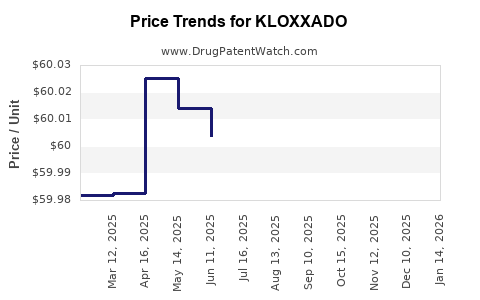
How does KLOXXADO make money in the US market: pricing, reimbursement, and buyer demand?
Kloxxado competes in the US naloxone market where purchasing behavior is segmented:
- Public sector and procurement: State EMS and public health agencies buy in bulk using competitive bids. These contracts often reward lowest-cost-per-dose and reliable supply.
- Retail and pharmacy benefit managers (PBMs): Pharmacy channel volume depends on formulary placement, copay design, and net price after rebates.
- Institutional buyers: Hospitals and urgent care systems choose products based on clinical training ease, administration time, and stocking policies, then negotiate price.
What drives net pricing for intranasal naloxone products
Net pricing generally reflects:
- PBM rebate intensity and formulary tier placement.
- Contract pricing in public sector tenders.
- Substitution pressure between delivery systems (intranasal vs auto-injector) when clinical teams standardize on one device type.
Because naloxone is an acute, life-saving OTC-like category in practice (even when Rx), buyers focus on cost, availability, and training fit rather than differentiated clinical outcomes.
What is KLOXXADO’s revenue trajectory versus competing naloxone products?
Kloxxado’s revenue trajectory should be read as a function of competitive share in:
- Intranasal naloxone (Kloxxado) versus intranasal competitors.
- Auto-injector naloxone (a parallel segment) that can win share through device preference and payer coverage.
Key market dynamics likely to shape quarterly sales
- Demand spikes from policy and outreach cycles: Naloxone access programs and community distribution campaigns tend to create periodic procurement surges.
- Inventory corrections: Acute products often show end-market timing mismatches between wholesaler and retail pull-through.
- Formulary changes: One contract win or loss can shift volume across quarters.
What to track for actual trajectory
For actionable monitoring, the most predictive signals are:
- US pharmacy claims growth by product and NDC (monthly).
- Public tender awards and state contract renewals.
- Wholesale channel inventory and chargebacks (if available through data services).
- Any FDA label updates that impact procurement eligibility (device handling instructions).
When does KLOXXADO lose exclusivity and what does that imply for financial downside?
Kloxxado is a naloxone formulation product. For intranasal naloxone, branded revenue risk generally comes from:
- Generic intranasal naloxone approvals with product labeling that enables substitution at the pharmacy.
- Device-level or formulation-level challengers that can enter without needing to replicate clinical rationale.
How exclusivity typically maps to naloxone pricing
When generic intranasal naloxone products enter:
- PBMs increase tier pressure (lower copays, broader coverage).
- Public tenders shift to lowest-cost winning bids.
- Branded manufacturers face margin compression unless they retain contracts or introduce differentiated pack configurations.
Implication for financial trajectory: Expect accelerated price erosion in the US once a credible generic supply chain establishes volume. The timing and magnitude depend on (a) whether generics are substitutable at the point of sale and (b) how quickly payers revise formularies or state contracts.
What patents protect KLOXXADO and how strong is the patent estate?
Kloxxado’s patent landscape is most relevant for:
- Formulation protection (naloxone nasal composition, excipients, concentration, stability).
- Delivery/device integration (spray performance, atomization characteristics, dose metering).
- Manufacturing methods (process steps improving stability or particle distribution).
- Method-of-use (less common for naloxone rescue products because naloxone use is well established).
Patent estate strength: practical indicators
The practical strength of Kloxxado’s patent estate should be evaluated via:
- Presence of unexpired formulation/device patents listed in the FDA Orange Book.
- Whether challengers have targeted those listed patents through Paragraph IV or other litigation strategies.
- Whether patent expiry aligns with any major tender cycle, because that determines market share transfer speed.
Market implication: In naloxone intranasals, the brand typically competes more on cost and supply than on patent exclusivity once generic readiness appears. Patent strength mainly delays the first credible competitive entry.
Are there Paragraph IV filings against KLOXXADO that could trigger price erosion?
Paragraph IV actions are the main legal catalyst for near-term generic entry in the Hatch-Waxman framework. For a meaningful market impact, a challenger must:
- File under ANDA with a naloxone nasal product and request approval before patent expiry.
- Be tied to specific Orange Book-listed patents.
- Reach litigation or settlement outcomes that set an entry date.
Why timing of settlement matters financially
If litigation settles, the negotiated “launch date” dictates:
- When wholesalers begin stocking the generic at scale.
- The speed of payer switching and tender rebids.
- The size of the revenue ramp-down for the incumbent.
Financial implication: If a settlement establishes early entry, branded sales usually show a step-down rather than a smooth decline because payers often coordinate switching during the contract renewal window.
What is the Orange Book status of KLOXXADO, and which listings matter most?
Orange Book status is critical because it determines:
- Which patents a generic challenger must address.
- Which patents can be the basis of a Paragraph IV notice.
- The earliest feasible generic launch date under the statutory framework.
Which Orange Book listings usually drive launch risk
- The most expiration-relevant patents are those with the earliest “last approved” dates and the latest patent expiry tied to drug product and formulation.
- If multiple patents are listed, litigation can extend beyond the initial patent that appears most “obvious,” especially if device/formulation patents have different expiry schedules.
How does KLOXXADO compare with intranasal naloxone competitors on market access and substitution?
Intranasal naloxone is not a single competitive set. Substitution patterns depend on:
- Whether a competitor is listed as preferred or on formulary.
- Copay design and rebate structures.
- Public sector acceptance of the device, including training and usability.
Where competitive substitution usually favors incumbents
Brands often retain share if:
- They already win state procurement contracts.
- They are stocked by EMS systems and emergency departments.
- Their net price remains competitive through rebate management.
Where substitution accelerates against brands
Substitution accelerates when:
- A generic intranasal product becomes widely available and contracted.
- A competitor’s device has favorable user feedback that drives institutional switching.
What regulatory milestones affect KLOXXADO sales: FDA, REMS, and label changes?
Naloxone products typically do not rely on complex REMS-like programs, but regulatory events still affect market access:
- Labeling updates affecting administration instructions.
- Packaging changes that impact unit usability.
- Any FDA actions that require distribution adjustments or impose supply constraints.
Financial impact channels
- Institutional procurement often ties to “current label version” compliance.
- Any supply interruption can shift tender allocation to competitors even if pricing is less favorable.
What litigation or settlements could affect KLOXXADO’s near-term competitive position?
Naloxone market dynamics are shaped by litigation only insofar as it changes launch timing. If Kloxxado has been subject to:
- ANDA litigation over Orange Book patents, or
- Settlement agreements that define an entry date,
then the primary financial question is whether the outcome accelerates generic access relative to the baseline patent expiry schedule.
What to monitor for litigation-driven financial shifts
- Date of Paragraph IV notices (if any).
- Court decisions on patent validity or infringement.
- Settlement terms specifying “design” changes or launch calendars.
- Injunction outcomes that delay generic distribution.
How does KLOXXADO’s manufacturing and supply chain influence financial performance?
For intranasal products, supply chain risks can move revenue even when market demand stays stable:
- Limited fill-and-finish capacity can constrain shipments.
- Raw material sourcing and device component availability can delay deliveries.
- Shelf-life stability affects ability to supply public sector stockpiles.
Economic implication
When supply constraints occur, incumbents may lose contracts because procurement buyers shift to alternative SKUs. The longer the disruption, the more persistent the share loss.
What generic entry risks exist for KLOXXADO and what launch scenarios matter most?
The most important launch scenarios are:
-
Full generic substitution at pharmacy
- Rapid formulary movement and high switching rates.
- Revenue step-down and margin erosion.
-
Delayed uptake in public sector procurement
- Generic availability exists but tender cycles postpone switching.
- Incumbent retains share until contract renewal.
-
Design-around or partial label substitution
- If a generic product has differences affecting usability or prescribing behavior.
- Slower substitution unless payers drive it.
Financial implication
The magnitude of Kloxxado revenue erosion depends on how quickly substitution occurs in:
- the pharmacy channel (claims volume),
- and state/local procurement (units and renewals).
Does KLOXXADO face international competition or only US patent and reimbursement pressure?
Near-term financial trajectory is typically US-heavy because:
- Orange Book and Hatch-Waxman dynamics are US-specific.
- Tendering and PBM contracting are US-driven.
International expansion opportunities depend on local reimbursement frameworks and device regulation approvals. Absent confirmed ex-US market scale, US pricing pressure tends to dominate consolidated revenue risk.
Key Takeaways
- Kloxxado’s financial trajectory is mainly shaped by US payer contracting, procurement cycles, and intranasal naloxone substitution mechanics rather than by long specialty-style pricing power.
- Generic and Paragraph IV-driven risks are the primary catalysts for step-down revenue via formulary and tender switching.
- Orange Book status determines challenger risk and expected launch timing; settlement outcomes can define launch dates and speed of market share transfer.
- Supply chain reliability is a direct revenue lever because public sector and institutional buyers can switch SKUs during disruptions.
FAQs
1) What sale channels contribute most to KLOXXADO unit volume in the US?
Public procurement and institutions plus pharmacy channel formulary placement drive the bulk of unit volume.
2) How do pharmacy rebates typically change intranasal naloxone brand economics?
Net prices compress as PBM rebates and tier placement shift toward lower-cost products.
3) What is the fastest way generic intranasal naloxone can reduce KLOXXADO revenue?
Wide pharmacy substitution paired with contract-based state and institutional switching during renewal windows.
4) Do device differences between intranasal naloxone products affect buyer behavior?
Yes. Administration usability and training fit influence institutional stocking and can slow or accelerate switching.
5) What monitoring indicators best predict KLOXXADO near-term revenue changes?
Monthly product claims, wholesale inventory movements, state tender awards, and any Orange Book litigation/settlement timing signals.
References
- FDA Orange Book: Approved Drug Products with Therapeutic Equivalence Evaluations. (n.d.). U.S. Food and Drug Administration.
- Hatch-Waxman Act (Drug Price Competition and Patent Term Restoration Act) overview. (n.d.). U.S. Food and Drug Administration.