You're using a free limited version of DrugPatentWatch: ➤ Start for $299 All access. No Commitment.

Last Updated: April 2, 2026

JEVTANA KIT Drug Patent Profile


✉ Email this page to a colleague

« Back to Dashboard


Which patents cover Jevtana Kit, and what generic alternatives are available?

Jevtana Kit is a drug marketed by Sanofi Aventis Us and is included in one NDA. There are five patents protecting this drug and one Paragraph IV challenge.

This drug has ninety-seven patent family members in forty-seven countries.

The generic ingredient in JEVTANA KIT is cabazitaxel. There are thirteen drug master file entries for this compound. One supplier is listed for this compound. Additional details are available on the cabazitaxel profile page.

DrugPatentWatch® Litigation and Generic Entry Outlook for Jevtana Kit

A generic version of JEVTANA KIT was approved as cabazitaxel by ACCORD HLTHCARE on October 26th, 2022.

  Start Trial

AI Deep Research
Questions you can ask:
  • What is the 5 year forecast for JEVTANA KIT?
  • What are the global sales for JEVTANA KIT?
  • What is Average Wholesale Price for JEVTANA KIT?
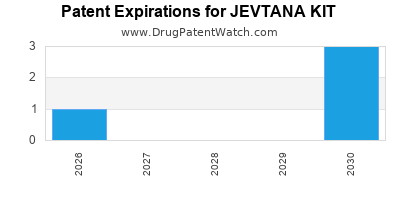
Drug patent expirations by year for JEVTANA KIT
Recent Clinical Trials for JEVTANA KIT

Identify potential brand extensions & 505(b)(2) entrants

SponsorPhase
Andrew J. Armstrong, MDPhase 2
Janssen PharmaceuticaPhase 2
Oregon Health and Science UniversityPhase 1

See all JEVTANA KIT clinical trials

Paragraph IV (Patent) Challenges for JEVTANA KIT
Tradename Dosage Ingredient Strength NDA ANDAs Submitted Submissiondate
JEVTANA KIT Injection cabazitaxel 60 mg/1.5 mL 201023 8 2014-06-17

US Patents and Regulatory Information for JEVTANA KIT

JEVTANA KIT is protected by five US patents.

Applicant Tradename Generic Name Dosage NDA Approval Date TE Type RLD RS Patent No. Patent Expiration Product Substance Delist Req. Exclusivity Expiration
Sanofi Aventis Us JEVTANA KIT cabazitaxel SOLUTION;INTRAVENOUS 201023-001 Jun 17, 2010 AP RX Yes Yes 8,927,592*PED ⤷  Start Trial Y ⤷  Start Trial
Sanofi Aventis Us JEVTANA KIT cabazitaxel SOLUTION;INTRAVENOUS 201023-001 Jun 17, 2010 AP RX Yes Yes 10,716,777*PED ⤷  Start Trial Y ⤷  Start Trial
Sanofi Aventis Us JEVTANA KIT cabazitaxel SOLUTION;INTRAVENOUS 201023-001 Jun 17, 2010 AP RX Yes Yes 7,241,907*PED ⤷  Start Trial Y ⤷  Start Trial
Sanofi Aventis Us JEVTANA KIT cabazitaxel SOLUTION;INTRAVENOUS 201023-001 Jun 17, 2010 AP RX Yes Yes 10,583,110*PED ⤷  Start Trial Y ⤷  Start Trial
Sanofi Aventis Us JEVTANA KIT cabazitaxel SOLUTION;INTRAVENOUS 201023-001 Jun 17, 2010 AP RX Yes Yes 12,453,712*PED ⤷  Start Trial Y ⤷  Start Trial
>Applicant >Tradename >Generic Name >Dosage >NDA >Approval Date >TE >Type >RLD >RS >Patent No. >Patent Expiration >Product >Substance >Delist Req. >Exclusivity Expiration

Expired US Patents for JEVTANA KIT

Applicant Tradename Generic Name Dosage NDA Approval Date Patent No. Patent Expiration
Sanofi Aventis Us JEVTANA KIT cabazitaxel SOLUTION;INTRAVENOUS 201023-001 Jun 17, 2010 5,438,072 ⤷  Start Trial
Sanofi Aventis Us JEVTANA KIT cabazitaxel SOLUTION;INTRAVENOUS 201023-001 Jun 17, 2010 6,372,780 ⤷  Start Trial
Sanofi Aventis Us JEVTANA KIT cabazitaxel SOLUTION;INTRAVENOUS 201023-001 Jun 17, 2010 6,387,946 ⤷  Start Trial
Sanofi Aventis Us JEVTANA KIT cabazitaxel SOLUTION;INTRAVENOUS 201023-001 Jun 17, 2010 5,698,582 ⤷  Start Trial
Sanofi Aventis Us JEVTANA KIT cabazitaxel SOLUTION;INTRAVENOUS 201023-001 Jun 17, 2010 6,331,635 ⤷  Start Trial
>Applicant >Tradename >Generic Name >Dosage >NDA >Approval Date >Patent No. >Patent Expiration

EU/EMA Drug Approvals for JEVTANA KIT

Company Drugname Inn Product Number / Indication Status Generic Biosimilar Orphan Marketing Authorisation Marketing Refusal
Accord Healthcare S.L.U. Cabazitaxel Accord cabazitaxel EMEA/H/C/005178Treatment of patients with hormone refractory metastatic prostate cancer previously treated with a docetaxel-containing regimen. Authorised yes no no 2020-08-28
Sanofi Winthrop Industrie Jevtana cabazitaxel EMEA/H/C/002018Jevtana in combination with prednisone or prednisolone is indicated for the treatment of patients with hormone-refractory metastatic prostate cancer previously treated with a docetaxel-containing regimen. Authorised no no no 2011-03-17
Teva B.V. Cabazitaxel Teva cabazitaxel EMEA/H/C/004951Treatment of prostate cancer Refused no no no 2019-07-11
>Company >Drugname >Inn >Product Number / Indication >Status >Generic >Biosimilar >Orphan >Marketing Authorisation >Marketing Refusal

International Patents for JEVTANA KIT

See the table below for patents covering JEVTANA KIT around the world.

Country Patent Number Title Estimated Expiration
Poland 1667986 ⤷  Start Trial
Greece 3031526 ⤷  Start Trial
China 1090170 ⤷  Start Trial
Taiwan 271395 ⤷  Start Trial
Canada 2214319 NOUVEAUX TAXOIDES, LEUR PREPARATION ET LES COMPOSITIONS PHARMACEUTIQUES QUI LES CONTIENNENT (NOVEL TAXOIDS, PREPARATION THEREOF AND PHARMACEUTICAL COMPOSITIONS CONTAINING SAME) ⤷  Start Trial
>Country >Patent Number >Title >Estimated Expiration

Supplementary Protection Certificates for JEVTANA KIT

Patent Number Supplementary Protection Certificate SPC Country SPC Expiration SPC Description
1667986 2013C/036 Belgium ⤷  Start Trial DETAILS ASSIGNMENT: CHANGE OF OWNER(S), CESSION
1667986 141 5019-2013 Slovakia ⤷  Start Trial FIRST REGISTRATION NO/DATE: EU/1/11/676/001 20110317
1667986 122013000050 Germany ⤷  Start Trial PRODUCT NAME: ACETON-SOLVAT VON CABAZITAXEL; REGISTRATION NO/DATE: EU/1/11/676/001 20110317
1667986 13C0037 France ⤷  Start Trial PRODUCT NAME: CABAZITAXEL SOUS FORME ACETONATE (OU SOLVAT ACETONIQUE DU CABAZITAXEL); REGISTRATION NO/DATE: EU/1/11/676/001 20110322
1667986 2013/021 Ireland ⤷  Start Trial PRODUCT NAME: CABAZITAXEL ACETONE SOLVATE; REGISTRATION NO/DATE: EU/1/11/676/001 20110317
>Patent Number >Supplementary Protection Certificate >SPC Country >SPC Expiration >SPC Description

JEVTANA KIT: Market Dynamics and Financial Trajectory

Last updated: February 19, 2026

JEVTANA KIT (cabazitaxel), manufactured by Sanofi, is a chemotherapy drug approved for the treatment of metastatic castration-resistant prostate cancer (mCRPC). The drug's market performance is influenced by patent exclusivity, clinical efficacy, competition, and evolving treatment guidelines.

What is JEVTANA KIT's Current Market Position?

JEVTANA KIT is an established treatment option for patients with mCRPC who have previously been treated with a docetaxel-based chemotherapy regimen. Its approval in the United States occurred in June 2010 and in Europe in April 2011. The drug functions as a microtubule-inhibiting agent, similar to taxanes, but it has demonstrated efficacy in patients who have developed resistance to docetaxel, a key differentiator in its initial market penetration [1].

The efficacy of JEVTANA KIT is supported by the TROPIC trial, which showed a statistically significant improvement in overall survival for patients treated with cabazitaxel compared to mitoxantrone. In this Phase III study, the median overall survival was 15.9 months for the cabazitaxel arm versus 12.7 months for the mitoxantrone arm (Hazard Ratio [HR] 0.72; p = 0.00015). Progression-free survival (PFS) was also improved, with a median of 5.1 months for cabazitaxel versus 3.3 months for mitoxantrone (HR 0.70; p < 0.0001) [2].

Despite its clinical utility, JEVTANA KIT faces significant competition. Docetaxel remains a widely used first-line therapy for mCRPC due to its established efficacy and lower cost. The emergence of newer targeted therapies and immunotherapies has also altered the treatment landscape for prostate cancer, offering alternative or complementary options. These include androgen receptor signaling inhibitors (ARSIs) like abiraterone and enzalutamide, and PARP inhibitors for patients with specific genetic mutations [3].

What is the Patent Exclusivity Status of JEVTANA KIT?

The patent protection for JEVTANA KIT has been a critical factor in its market trajectory. Sanofi has held various patents covering the composition of matter, manufacturing processes, and methods of use for cabazitaxel.

Key patents related to JEVTANA KIT include:

  • U.S. Patent No. 7,772,257: This patent covers cabazitaxel and its analogs.
  • U.S. Patent No. 8,575,355: This patent pertains to methods of treating prostate cancer with cabazitaxel.

These patents have provided Sanofi with market exclusivity for a significant period following its launch. However, as with most pharmaceutical patents, they have faced challenges and are subject to expiration. The expiry of core patents opens the door for generic competition, which is a major determinant of the drug's future financial performance.

In the United States, generic versions of cabazitaxel have begun to enter the market following patent challenges and expirations. For instance, the expiration of key patents has allowed for the approval and launch of generic cabazitaxel products by other pharmaceutical companies. This competition typically leads to a significant decline in the branded drug's market share and revenue.

The situation in Europe follows a similar pattern, with the expiration of European patents and the subsequent introduction of generic alternatives influencing market dynamics. The Medicines and Healthcare products Regulatory Agency (MHRA) in the UK and the European Medicines Agency (EMA) oversee the regulatory pathway for generics, which require demonstrating bioequivalence to the reference product [4].

What are the Financial Performance Trends of JEVTANA KIT?

JEVTANA KIT has demonstrated substantial revenue generation for Sanofi during its period of market exclusivity. Sales figures highlight the drug's contribution to the company's oncology portfolio.

Year Global Net Sales (Millions USD)
2017 658
2018 687
2019 708
2020 706
2021 728
2022 649
2023 442

Source: Sanofi Annual Reports and Financial Statements [5]

The data shows a steady increase in JEVTANA KIT sales from 2017 through 2021. The decline observed in 2022 and 2023 is directly attributable to the increasing impact of generic competition in key markets. As generic versions become available, they typically offer a lower price point, leading to a rapid erosion of sales for the branded product. This trend is a predictable outcome following patent expiry in the pharmaceutical industry.

The introduction of generic cabazitaxel typically leads to a price reduction of 50-80% for the drug, depending on the market and the number of generic competitors. This price pressure, coupled with increased volume due to affordability, shifts market share away from the originator product.

What are the Key Competitive Factors for JEVTANA KIT?

JEVTANA KIT operates in a dynamic and competitive oncology market. Its primary competitors and competitive pressures include:

  1. Docetaxel: Remains a benchmark and widely used chemotherapy for mCRPC. While JEVTANA KIT was developed to overcome docetaxel resistance, docetaxel's cost-effectiveness and established safety profile ensure its continued use, particularly in earlier lines of therapy or in resource-constrained settings.

  2. Androgen Receptor Signaling Inhibitors (ARSIs): Drugs like abiraterone (Zytiga), enzalutamide (Xtandi), and apalutamide (Erleada) have become standard-of-care for both hormone-sensitive and castration-resistant prostate cancer. They often precede chemotherapy in the treatment sequence, potentially limiting the patient pool eligible for JEVTANA KIT. These ARSIs demonstrate significant survival benefits and are generally better tolerated than chemotherapy [3, 6].

  3. Radiopharmaceuticals: Agents like Lutetium-177-PSMA-617 (Pluvicto) represent a novel class of targeted therapy approved for late-stage mCRPC patients previously treated with ARSI and taxane-based chemotherapy. This directly competes with JEVTANA KIT in the same patient population [7].

  4. Immunotherapies: While less established for prostate cancer compared to other solid tumors, investigational immunotherapies continue to be explored. Sipuleucel-T (Provenge) is an autologous cellular immunotherapy approved for asymptomatic or minimally symptomatic mCRPC but has shown modest survival benefits [8].

  5. Other Chemotherapies: Emerging chemotherapy agents or combinations may also present competition, although taxanes remain the dominant class in chemotherapy for mCRPC.

The competitive landscape is further complicated by evolving treatment guidelines from organizations like the National Comprehensive Cancer Network (NCCN) and the American Society of Clinical Oncology (ASCO). These guidelines often reflect the latest clinical trial data and influence physician prescribing habits, prioritizing newer, more targeted, or less toxic agents when evidence supports their use.

What is the Future Financial Outlook for JEVTANA KIT?

The future financial outlook for JEVTANA KIT is characterized by a significant and ongoing decline in revenue due to the widespread availability of generic alternatives. The drug's peak sales were achieved during its period of patent exclusivity. Post-patent expiry, the revenue trajectory is expected to continue its downward trend.

Factors influencing the future outlook include:

  • Generic Penetration: The increasing number of generic cabazitaxel manufacturers will intensify price competition, further reducing the market share and revenue of the branded product.
  • Market Dynamics: The ongoing shift towards targeted therapies, immunotherapies, and radiopharmaceuticals in advanced prostate cancer will continue to contract the market space for traditional chemotherapy agents like cabazitaxel.
  • Reimbursement Policies: Payer policies may favor the use of lower-cost generic options or newer, more innovative therapies, impacting reimbursement rates for branded JEVTANA KIT.
  • Clinical Utility: While JEVTANA KIT retains a role in specific patient populations (e.g., those refractory to docetaxel and ARSIs, without PSMA-PET eligibility for Pluvicto), its indication is becoming increasingly confined to later lines of therapy.

Sanofi's financial reporting will likely reflect diminishing sales of JEVTANA KIT, with the drug becoming a less significant contributor to overall revenue. The company will focus on its newer pipeline assets and growth drivers in oncology and other therapeutic areas.

Key Takeaways

  • JEVTANA KIT is an approved treatment for metastatic castration-resistant prostate cancer (mCRPC) that previously received docetaxel-based chemotherapy.
  • Patent expiry has led to the introduction of generic cabazitaxel, significantly impacting branded JEVTANA KIT sales.
  • Global net sales for JEVTANA KIT peaked in 2021, with a notable decline in 2022 and 2023 due to generic competition.
  • The competitive landscape includes docetaxel, ARSIs (abiraterone, enzalutamide), radiopharmaceuticals (Pluvicto), and immunotherapies.
  • The future financial outlook for JEVTANA KIT is characterized by continued revenue decline driven by generic erosion and the emergence of novel therapeutic modalities in prostate cancer treatment.

Frequently Asked Questions

  1. When was JEVTANA KIT first approved in the United States? JEVTANA KIT received U.S. Food and Drug Administration (FDA) approval in June 2010.

  2. What is the primary mechanism of action for JEVTANA KIT? JEVTANA KIT is a microtubule-inhibiting agent that belongs to the taxane class of chemotherapy drugs.

  3. Which patient population is typically indicated for JEVTANA KIT treatment? JEVTANA KIT is indicated for men with metastatic castration-resistant prostate cancer (mCRPC) who have previously been treated with docetaxel-based chemotherapy.

  4. How has the introduction of generic cabazitaxel affected Sanofi's revenue from JEVTANA KIT? The introduction of generic cabazitaxel has led to a significant decrease in the sales revenue of branded JEVTANA KIT, as demonstrated by declining net sales in recent years.

  5. What are the main therapeutic classes that compete with JEVTANA KIT in the mCRPC market? Major competing classes include androgen receptor signaling inhibitors (ARSIs), novel radiopharmaceuticals, and other chemotherapy agents such as docetaxel.

Citations

[1] de Bono, J. S., Oudard, S., Ozguroglu, M., Zhou, A., Dean, A., Wulfert, E., & Tomczak, P. (2010). Prednisone plus cabazitaxel versus prednisone plus mitoxantrone in patients with metastatic castration-resistant prostate cancer previously treated with docetaxel: two-year follow-up of the TROPIC randomised trial. European Journal of Cancer, 48(8), 1192-1201.

[2] de Bono, J. S., Oudard, S., Ozguroglu, M., Hansen, S., Miller, K., Bardia, A., ... & Tomczak, P. (2010). Prednisone plus cabazitaxel versus prednisone plus mitoxantrone in patients with metastatic castration-resistant prostate cancer previously treated with docetaxel: overall survival results of a randomised open-label trial (TROPIC). The Lancet, 376(9747), 1147-1154.

[3] Kirby, M., Kiss, G., Jomrich, L., & Van Der Kwast, T. (2014). Advances in the management of advanced prostate cancer. Therapeutic Advances in Urology, 6(5), 191-200.

[4] European Medicines Agency. (n.d.). Generic medicines. Retrieved from https://www.ema.europa.eu/en/human-regulatory/overview/medicines-development/medicine-types/generic-medicines

[5] Sanofi. (Various Years). Annual Reports and Financial Statements. Investor Relations.

[6] Beer, T. M., Armstrong, A. J., Rathkopf, D. E., Wells, J. E., Smith, M. R., Saad, F., ... & Telli, M. L. (2014). ENZARAD – a phase 3 study of enzalutamide in patients with metastatic castration-resistant prostate cancer: primary analysis of the randomized, double-blind, placebo-controlled trial. Journal of Clinical Oncology, 32(15_suppl), LBA4.

[7] Sartor, O., de Veth, B., Ragnoli, C., Gilligan, T., Sandhu, S., Valen, J., ... & Chow, D. E. (2021). Lutetium-177-PSMA-617 for Metastatic Castration-Resistant Prostate Cancer. New England Journal of Medicine, 385(12), 1091-1103.

[8] Kantoff, P. W., Tu, Sm., Culkin, D. J., Ryan, C. J., Smith, M. R., McGreggor, J. P., ... & Small, E. J. (2015). Sipuleucel-T versus therapeutic standard in metastatic castration-resistant prostate cancer: a randomized phase 3 trial. Journal of Clinical Oncology, 33(5), 438-445.

More… ↓

⤷  Start Trial

Make Better Decisions: Try a trial or see plans & pricing

Drugs may be covered by multiple patents or regulatory protections. All trademarks and applicant names are the property of their respective owners or licensors. Although great care is taken in the proper and correct provision of this service, thinkBiotech LLC does not accept any responsibility for possible consequences of errors or omissions in the provided data. The data presented herein is for information purposes only. There is no warranty that the data contained herein is error free. We do not provide individual investment advice. This service is not registered with any financial regulatory agency. The information we publish is educational only and based on our opinions plus our models. By using DrugPatentWatch you acknowledge that we do not provide personalized recommendations or advice. thinkBiotech performs no independent verification of facts as provided by public sources nor are attempts made to provide legal or investing advice. Any reliance on data provided herein is done solely at the discretion of the user. Users of this service are advised to seek professional advice and independent confirmation before considering acting on any of the provided information. thinkBiotech LLC reserves the right to amend, extend or withdraw any part or all of the offered service without notice.