Last updated: October 15, 2026
INOmax is Mallinckrodt’s inhaled nitric oxide product for term and near-term newborns with hypoxic respiratory failure associated with pulmonary hypertension. Its commercial position is driven less by composition-of-matter patents than by hospital contracts, delivery-system compatibility, neonatal intensive-care protocols, product reliability, and service infrastructure.
The product remains commercially important, but its exclusivity profile is mature. FDA regulatory exclusivity has expired, competing nitric oxide products are approved, and generic or alternative-device entry can pressure price and hospital share. Mallinckrodt’s restructuring and continuing financial obligations add commercial risk even though INOmax remains a core specialty pharmaceutical asset.
What is INOmax and how does it generate revenue?
INOmax contains nitric oxide for inhalation. It is administered with a dedicated delivery system that blends nitric oxide with ventilator gas and monitors nitrogen dioxide and oxygen concentrations. The product is used primarily in neonatal intensive-care units and, in selected cases, in pediatric and adult critical-care settings.
The U.S. product is approved under NDA 020845. The FDA indication covers term and near-term newborns with hypoxic respiratory failure associated with clinical or echocardiographic evidence of pulmonary hypertension, used with ventilatory support and other appropriate agents.[1]
INOmax revenue comes from several linked commercial components:
| Revenue component |
Commercial role |
| Nitric oxide drug supply |
Core product revenue |
| Delivery systems and accessories |
Supports product use and switching costs |
| Cylinder logistics |
Requires storage, replacement and distribution infrastructure |
| Monitoring and technical support |
Reduces hospital implementation risk |
| Hospital contracts |
Influences formulary and purchasing decisions |
| Clinical familiarity |
Supports retention in neonatal intensive-care units |
The product is therefore difficult to evaluate as a conventional small-molecule medicine. Hospitals purchase an integrated therapy and delivery workflow rather than only a vial or tablet.
What is the FDA regulatory status of INOmax?
INOmax is an FDA-approved prescription drug. It is not a biologic and does not have biosimilar exposure in the conventional FDA biosimilar pathway.
| Regulatory item |
Status |
| Active ingredient |
Nitric oxide |
| Dosage form |
Gas for inhalation |
| FDA application |
NDA 020845 |
| Original U.S. approval |
1999 |
| Primary use |
Neonatal hypoxic respiratory failure with pulmonary hypertension |
| Regulatory class |
Small-molecule drug product delivered as an inhaled gas |
| Biosimilar pathway |
Not applicable |
| Current regulatory risk |
Competing nitric oxide products and delivery systems |
The product’s approval predates the modern competitive market for inhaled nitric oxide. The original new chemical entity exclusivity period expired years ago. Any remaining commercial protection comes from manufacturing know-how, device integration, customer relationships, trademarks, operational scale and patents that may cover specific systems rather than nitric oxide itself.
What is the Orange Book status of INOmax?
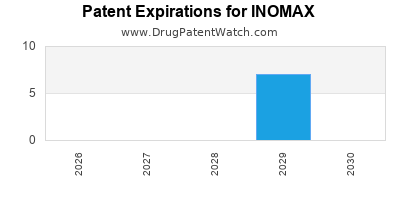
INOmax’s core active ingredient is not protected by a live composition-of-matter patent. The original exclusivity period has expired, and the principal competitive question is whether any listed patent claims a specific delivery system, formulation, method of use or manufacturing process.
Public FDA Orange Book records should be reviewed by application number and patent status because patent listings can change through delisting, expiration or regulatory updates. The commercial conclusion is clear: INOmax does not have the profile of a newly approved medicine protected by a current five-year NCE period or a broad unexpired molecule patent.[2]
| Exclusivity category |
INOmax position |
| NCE exclusivity |
Expired |
| Orphan-drug exclusivity |
No current blocking period |
| Pediatric exclusivity |
Any historical extension has expired |
| Patent-based exclusivity |
No broad active molecule protection |
| Device or delivery-system protection |
Potentially relevant, but narrower |
| Regulatory exclusivity against competitors |
No current broad barrier identified |
When does INOmax lose exclusivity?
INOmax lost the practical protection associated with its original FDA exclusivity long ago. The relevant commercial loss of exclusivity occurred through a series of events rather than a single future date:
| Milestone |
Approximate timing |
Commercial effect |
| FDA approval |
1999 |
Established the reference product |
| Five-year NCE period |
Ended approximately 2004 |
Removed NCE exclusivity barrier |
| Historical formulation and delivery patents |
Expired over subsequent years |
Reduced patent-based protection |
| Competing branded nitric oxide products |
Entered the U.S. market from 2019 onward |
Increased hospital choice |
| Current market |
Mature |
Competition centers on price, supply and equipment |
The absence of a single looming patent cliff changes the risk pattern. INOmax faces gradual erosion from competing products, contracting pressure and formulary substitution instead of one predictable generic launch date.
What patents protect INOmax?
The strongest remaining intellectual-property arguments are likely to concern the delivery and operating environment, not nitric oxide as a chemical entity.
Delivery-system patents
Relevant claims may cover:
- Gas blending and delivery architecture
- Nitrogen dioxide monitoring
- Ventilator integration
- Concentration control
- Cylinder or cartridge interfaces
- Alarm systems
- Portable or transportable delivery systems
- Calibration and safety controls
These patents can make direct substitution more difficult when a hospital has standardized on a particular device. They do not necessarily prevent a competitor from selling nitric oxide through a different device architecture.
Method-of-use patents
Method-of-use protection may cover administration parameters, patient populations or treatment settings. Its practical value is limited when the core neonatal use is already established and competing products carry similar labels.
A method patent can support litigation against a specific labeled use, but it is less powerful when physicians can prescribe an equivalent product for the same standard-of-care indication. Enforcement also depends on claim scope, induced-infringement evidence and the availability of noninfringing uses.
Manufacturing and process protection
Nitric oxide is a technically demanding product because impurities, nitrogen dioxide formation, concentration stability and cylinder handling affect patient safety. Manufacturing know-how can remain commercially valuable after patent expiration.
Important barriers include:
- High-purity gas production
- Stable concentration during storage and transport
- Cylinder qualification
- Analytical testing
- Nitrogen dioxide control
- Pharmacovigilance and adverse-event monitoring
- Hospital delivery-system validation
Trade secrets and quality systems can delay practical competition even when patent protection is weak.
Which companies compete with INOmax?
The primary competitive threat comes from approved inhaled nitric oxide products and integrated delivery platforms.
| Company or product |
Competitive significance |
| Mallinckrodt INOmax |
Reference product with established neonatal use and installed base |
| Vero Biotech Genosyl |
Branded nitric oxide competitor with its own delivery platform |
| Air Liquide Healthcare |
Medical-gas and hospital-infrastructure competitor in selected markets |
| Linde |
Medical-gas supplier with potential institutional reach |
| Other regional suppliers |
Relevant in non-U.S. markets and hospital tenders |
Genosyl changed the U.S. market by offering an alternative to the INOmax delivery model. Competition is based on total treatment cost, device usability, portability, cylinder handling, monitoring, service response and contracting terms.
What is the Paragraph IV challenge risk for INOmax?
Paragraph IV risk is moderate to high at the product-category level but less clear at the individual patent level. The core drug is an inhaled gas with long-expired original exclusivity. A challenger can pursue an ANDA or another FDA pathway if it can demonstrate pharmaceutical equivalence, bioequivalence where applicable, safety, performance and compatibility with the relevant delivery system.
Potential challenge strategies include:
- A direct product application for nitric oxide gas.
- A product paired with a competing delivery system.
- A 505(b)(2) application relying partly on INOmax’s clinical and regulatory record.
- A commercial alternative approved under its own NDA.
- Hospital-level substitution without a formal patent challenge.
A formal Paragraph IV notice is not required for every competitive threat. Genosyl demonstrates that an independently approved product can compete without relying on a traditional generic substitution model.
What patent litigation affects INOmax?
The principal litigation risk is commercial and antitrust exposure rather than a known, current molecule-patent dispute. Potential disputes may involve:
- Alleged infringement of delivery-system patents
- Product-by-process or manufacturing claims
- Hospital contracting practices
- Device tying or exclusivity arrangements
- Trade-secret claims involving gas production or monitoring
- Patent-listing disputes
- Product labeling and inducement theories
The record should be assessed through PACER, FDA Orange Book updates and company securities filings. No current litigation outcome should be treated as a market-wide injunction against INOmax without a specific court order.
What is the financial trajectory for INOmax?
Mallinckrodt has historically reported INOmax as a major product within its Specialty Brands portfolio. Public filings show a mature revenue trajectory with declines from earlier peak levels as competitors entered, pricing pressure increased and neonatal procedure volumes fluctuated.[3][4]
| Financial factor |
Direction |
| Historical revenue base |
Hundreds of millions of dollars annually |
| Recent trend |
Downward from earlier peak levels |
| Margin profile |
Historically attractive relative to commodity products |
| Main pressure |
Competition and hospital pricing |
| Volume sensitivity |
Neonatal admissions, respiratory-support utilization and procedure mix |
| Balance-sheet relevance |
High because INOmax is a core specialty-brand asset |
| Forecast risk |
Substitution, contracting and supply reliability |
Mallinckrodt’s filings have described INOmax sales in the low-to-mid hundreds of millions of dollars in recent reporting periods, with year-over-year pressure from competition and pricing. Exact annual comparisons should be taken from the applicable Form 10-K because Mallinckrodt’s post-restructuring reporting periods and segment classifications can affect comparability.[3][4]
The financial profile has four important characteristics:
Revenue concentration
INOmax is concentrated in neonatal and critical-care institutions. That produces a relatively narrow customer base compared with primary-care medicines. A small number of group purchasing organizations and hospital systems can influence price realization.
High switching friction
Hospitals must validate equipment, staff training, monitoring and emergency procedures before switching nitric oxide suppliers. This supports retention and can slow market-share loss.
Declining exclusivity value
Because the molecule is mature, revenue depends on execution rather than patent protection. A competitor with an easier-to-use device or lower total cost can erode share without first overcoming a strong composition patent.
Restructuring exposure
Mallinckrodt’s Chapter 11 restructuring and post-emergence capital structure increased the importance of cash-generating assets. INOmax’s recurring hospital revenue is strategically valuable, but debt obligations, settlement payments and refinancing conditions can affect investment in sales, manufacturing and product development.[5]
How does INOmax compare with Genosyl?
| Factor |
INOmax |
Genosyl |
| Sponsor |
Mallinckrodt |
Vero Biotech |
| Active ingredient |
Nitric oxide |
Nitric oxide |
| Core market |
Neonatal and critical care |
Neonatal and critical care |
| FDA pathway |
Established NDA |
Separate FDA-approved product |
| Main advantage |
Long clinical history and installed base |
Alternative delivery platform |
| Main risk |
Legacy pricing and competitive erosion |
Need to expand hospital adoption |
| Substitution barrier |
Existing protocols and equipment |
Device conversion and contracting |
| Patent dependence |
Limited molecule protection |
Platform and operational differentiation |
Neither product has an unlimited exclusivity position. The winner in a hospital account is likely to be determined by equipment availability, service levels, clinical familiarity, contract economics and supply continuity.
What generic launch scenarios exist for INOmax?
Scenario 1: Gradual branded competition
This is the most likely base case. Existing products take share progressively, while INOmax remains entrenched in hospitals that value its installed equipment and historical clinical use.
Scenario 2: Device-enabled price disruption
A competitor with lower equipment costs, simpler gas handling or improved transport capability could accelerate substitution. This scenario would pressure both price and volume.
Scenario 3: Direct generic or 505(b)(2) entry
A lower-priced nitric oxide product could target hospitals with compatible delivery infrastructure. The impact would depend on FDA labeling, reimbursement treatment, interchangeability and whether the product requires proprietary hardware.
Scenario 4: Supply-driven share shift
A manufacturing interruption or cylinder shortage could cause hospitals to qualify a second supplier. Once qualified, that supplier may retain the account after the immediate shortage ends.
What geographic markets matter for INOmax?
The United States is the central value market because of the product’s established FDA approval, neonatal intensive-care infrastructure and specialty-drug economics. Europe and other developed markets are more dependent on national reimbursement, hospital tenders and medical-gas regulation.
| Region |
Market dynamic |
| United States |
Brand competition, hospital contracts and FDA-approved alternatives |
| Europe |
Tender pricing and country-specific reimbursement |
| Canada |
Public procurement and hospital formulary decisions |
| Asia-Pacific |
Medical-gas infrastructure and neonatal-care expansion |
| Emerging markets |
Price sensitivity, supply logistics and equipment access |
International expansion can increase volume, but geographic growth does not remove the central constraints: manufacturing quality, cylinder distribution, trained staff and delivery-system availability.
How strong is the INOmax patent estate?
The patent estate is commercially useful but not dominant. Its strength is strongest where claims are tied to a specific delivery platform, monitoring system or manufacturing process. It is weakest against an independently designed nitric oxide product that uses a different device and obtains separate FDA approval.
| IP category |
Relative strength |
| Nitric oxide molecule |
Weak or expired |
| Core neonatal indication |
Weak as an exclusivity tool |
| Delivery system |
Moderate, claim-specific |
| Monitoring and safety controls |
Moderate |
| Manufacturing know-how |
Potentially strong but difficult to assess publicly |
| Trademark and brand |
Stronger than molecule patent protection for hospital retention |
| Trade secrets |
Potentially material |
Key Takeaways
- INOmax is an FDA-approved inhaled nitric oxide product marketed primarily for neonatal hypoxic respiratory failure with pulmonary hypertension.
- Its original regulatory exclusivity and broad molecule protection have expired.
- The commercial moat is based on installed delivery systems, hospital protocols, supply reliability, service and clinical familiarity.
- Genosyl and other medical-gas or nitric oxide suppliers create sustained competitive pressure.
- Paragraph IV risk exists at the product-category level, but an independent NDA or 505(b)(2) entrant may be more relevant than a conventional generic.
- Mallinckrodt’s INOmax revenue remains strategically important, but filings indicate a mature and declining trajectory from earlier peak levels.
- The principal downside risks are price erosion, hospital contracting, device substitution, supply disruption and Mallinckrodt’s post-restructuring financial constraints.
- Patent value is concentrated in delivery, monitoring and manufacturing claims rather than the nitric oxide molecule.
FAQs
Is INOmax interchangeable with Genosyl?
No. Both products deliver nitric oxide, but they use different commercial and technical platforms. Hospital substitution may require equipment validation, staff training and formulary approval.
Does INOmax have orphan-drug exclusivity?
No current orphan-drug exclusivity period blocks competition. Any historical regulatory exclusivity associated with the original approval has expired.
Is nitric oxide a biologic?
No. Nitric oxide is a small chemical entity administered as an inhaled gas. Biosimilar litigation and the FDA biosimilar pathway do not apply.
Can a hospital switch from INOmax without changing ventilators?
The answer depends on the competing product and equipment configuration. Delivery-system compatibility, monitoring and institutional validation determine whether a switch is operationally simple.
What would most increase INOmax’s valuation?
The largest value drivers would be stable hospital retention, successful pricing discipline, reliable cylinder supply, expansion into additional critical-care uses where supported by labeling, and evidence that competing delivery systems are not rapidly displacing the installed base.
References
- U.S. Food and Drug Administration. (n.d.). INOmax nitric oxide labeling and prescribing information. FDA.
- U.S. Food and Drug Administration. (n.d.). Approved drug products with therapeutic equivalence evaluations: Orange Book. FDA.
- Mallinckrodt plc. (2023). Annual report on Form 10-K for the fiscal year ended December 31, 2022. U.S. Securities and Exchange Commission.
- Mallinckrodt plc. (2024). Annual report on Form 10-K for the fiscal year ended December 31, 2023. U.S. Securities and Exchange Commission.
- Mallinckrodt plc. (2024). Current reports and restructuring disclosures. U.S. Securities and Exchange Commission.