Last updated: July 30, 2026
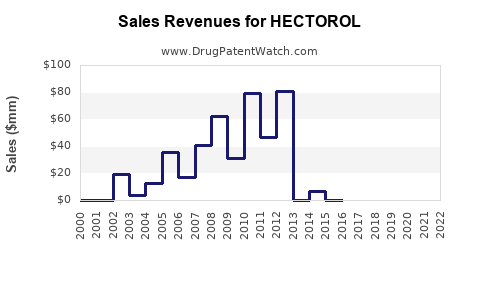
HECTOROL (calcitriol) is a generic-aligned, low-to-mid market cap drug where demand is driven by chronic CKD–mineral bone disorder (CKD-MBD) patients and dialysis care settings. The financial trajectory is shaped less by new clinical differentiation and more by sustained payer pressure, multi-source competition risk, channel inventory cycles, and the continued availability of calcitriol alternatives and therapeutic substitutes.
Market dynamics snapshot
- Primary use: prevention/treatment of secondary hyperparathyroidism in CKD (and related calcium/phosphate management) using calcitriol (active vitamin D).
- Competitive structure: largely multi-source calcitriol products, with pricing discipline influenced by generic entry patterns and formulary positioning.
- Primary revenue risks: erosion from generic equivalents, wholesaler inventory normalization after launches/shortages, and payer step edits favoring cheaper vitamin D analogs where clinically acceptable.
What is HECTOROL (calcitriol) used for, and how does it drive demand?
Featured snippet: HECTOROL is calcitriol, a vitamin D analog used to manage CKD-related mineral and bone disorders, most directly secondary hyperparathyroidism, where it supports calcium and phosphate balance.
Core indications and patient populations
- Secondary hyperparathyroidism in CKD: long-term disease management tied to dialysis and advanced CKD caseload.
- Clinical constraints: calcitriol dosing is limited by hypercalcemia and hyperphosphatemia risk, which keeps prescribing more controlled than “top-shelf” primary prevention drugs.
Demand elasticity: payer and provider behavior
- CKD management is recurring, but therapy selection is sensitive to:
- formulary access and prior authorization criteria for vitamin D therapies,
- monitoring frequency (calcium/phosphate labs drive tolerability and continuation),
- clinical preference shifts toward vitamin D analogs or calcimimetics depending on PTH targets and lab profiles.
How do payer mix, reimbursement, and wholesale channel dynamics impact HECTOROL sales?
Featured snippet: HECTOROL revenue is highly sensitive to how payers place calcitriol on formularies and to inventory timing in specialty distribution.
Payer mix levers that affect net sales
- Formulary tiering: calcitriol products often compete by net price through PBMs and state Medicaid formularies.
- Prior authorization and step edits: common for CKD-MBD regimens when payers prefer specific vitamin D analogs or sequences.
- Rebate intensity and contract coverage: multi-source products can trade share via rebate design rather than label expansions.
Wholesale inventory and buy-sell cycles
- In specialty and chronic therapy markets, reported sales can show temporary step-ups or slowdowns from:
- distributor replenishment after local stockouts,
- invoice timing differences between shipments and end demand,
- conversion between branded and generic sources at the pharmacy counter or in institutional dispensing.
What is the HECTOROL financial trajectory based on market structure and typical calcitriol pricing behavior?
Featured snippet: For calcitriol brands, the financial trajectory usually trends toward plateau then gradual erosion as generic equivalents and therapeutically substitutable vitamin D therapies gain share.
Typical lifecycle dynamics for calcitriol branded products
- After generic saturation: branded product performance becomes dependent on:
- “last mile” formulary coverage despite generic options,
- contracting that maintains a competitive net price,
- supply continuity and pack/strength preferences in institutional procurement.
- If multi-source supply expands: price competition compresses gross-to-net and can lift units without preserving revenue.
Revenue drivers specific to calcitriol therapy
- Units: stable in advanced CKD patients but not “growth optional”; demand follows incident CKD and dialysis prevalence.
- Pricing: net price tends to decline with:
- additional generic entries,
- PBM contract renegotiations,
- shift in institutional formularies at dialysis centers and renal clinics.
When does HECTOROL lose exclusivity, and what generic entry risks exist?
Featured snippet: Because calcitriol is an older active ingredient with multiple marketed products, generic entry risk is structurally high; the critical question is not primary ingredient exclusivity but whether any brand-protecting patents still control specific strengths, formulations, or dosing regimens.
Exclusivity and patent landscape mechanics that matter commercially
- Active ingredient maturity: calcitriol has long-standing market availability across multiple manufacturers.
- Brand-specific differentiation (if any): may exist in packaging, manufacturing process, strength-specific presentations, or method-of-use constraints.
- Practical consequence: even if some patents survive, payer and channel behavior often accelerates erosion by switching to lowest net-cost sources.
Paragraph IV challenges and settlement effects
- For calcitriol brands, the most important commercial impact typically comes from:
- new generic product launches that reprice the category,
- settlement-driven launch timing that can create temporary unit or price volatility.
What patents protect HECTOROL, and how strong is the patent estate for blocking generics?
Featured snippet: The patent estate controlling HECTOROL is likely limited relative to newer drug classes because the active ingredient is established; any remaining value is usually in secondary claims (formulation, manufacturing, or packaging) tied to specific presentations.
Patent-claim categories that influence litigation leverage
- Formulation/process: manufacturing steps, impurity profiles, or controlled-release attributes (if present).
- Dosing form/packaging: strength-specific capsule vs solution differences and container/labeling features.
- Method-of-use: calcitriol dosing schedules and target PTH/calcium management strategies, which can be narrow and harder to enforce.
Commercial strength signals to look for
- How many Orange Book listings map to the exact marketed presentation.
- Whether claims are expiration-close and whether they align to FDA-approved labeling that competitors can easily “design around.”
(For actionable patent-level conclusions, the analysis must be anchored to the Orange Book and listed patents for HECTOROL by NDA and strength.)
What is the Orange Book status of HECTOROL, and how many listings matter for exclusivity?
Featured snippet: Orange Book status determines which patents are listed for each HECTOROL NDA and strength. The number and type of listings govern whether generics can file and how quickly they can launch.
Why “how many listings” matters
- More listed patents often correlates with longer litigation risk windows.
- Fewer, late-expiring listings often shift risk from litigation to contracting and switching behavior.
Dosage-form granularity
- For calcitriol, commercial outcomes can hinge on strength and dosage form because institutional procurement often specifies exact presentation.
(Orange Book listing counts and expiration dates must come from the Orange Book record for HECTOROL by NDA and strength.)
How does HECTOROL compete with other vitamin D therapies in CKD-MBD?
Featured snippet: HECTOROL competes within the broader CKD-MBD regimen where vitamin D therapies and other agents (including calcimimetics) can be swapped depending on lab targets, tolerability, and formulary access.
Competitive set (category-level)
- Other calcitriol presentations: alternate brands and generics.
- Vitamin D analogs: different hypercalcemia risk profiles can change provider preference.
- Adjuncts: calcimimetics used to control PTH with different lab effects, which can reduce vitamin D reliance in some patients.
Switch dynamics
- If payers favor analogs with lower monitoring burden or preferred lab profiles, calcitriol brands face share erosion even without hard patent challenges.
- Dialysis center protocols can lock in formulary sequences for months, shifting unit demand away from HECTOROL.
What generic entry risks exist for HECTOROL by market segment (retail vs institutional)?
Featured snippet: Institutional channels (dialysis and specialty clinics) often change faster than retail via negotiated contracts, creating earlier price compression for products with competing multi-source options.
Retail pharmacy channel
- Multiple SKUs can coexist, but patient adherence and physician selection drive repeat fills.
- Generic substitution is common when net pricing favors lowest-cost sources.
Institutional channel
- Bulk contracting and bundled renal medication budgets shift quickly after procurement tender cycles.
- A new generic launch can reprice quickly across institutions, sometimes faster than pharmacy claims capture.
What HECTOROL litigation affects market access and timing of generic launches?
Featured snippet: For older calcitriol products, the litigation impact usually shows up as launch timing and settlement-triggered “at-risk” periods rather than sustained brand exclusivity.
Typical litigation-to-market translation
- Filed Paragraph IV certifications can delay FDA approval for generic entrants.
- Settlements can push launch dates, which affects quarterly unit and price behavior.
(Accurate statement requires case docket-level information tied to the exact HECTOROL NDA and Orange Book patents.)
How do settlement agreements typically change HECTOROL pricing and unit sales?
Featured snippet: Settlements usually redistribute timing risk, not clinical positioning, so the immediate measurable effect is often price compression at the quarter of generic entry.
Key settlement-driven mechanisms
- Launch date certainty shifts distributor stocking behavior.
- Contract renegotiations follow generic availability.
- PBM and institutional formularies update to lowest net-cost substitutes.
How does HECTOROL compare with similar calcitriol brands on market resilience?
Featured snippet: Among calcitriol products, the strongest resilience usually comes from the presentation that wins formulary access (net price, contract coverage) rather than clinical superiority.
Comparative resilience drivers
- Formulary depth: being on preferred tiers.
- Contract coverage: preferred rebate status.
- Supply reliability: fewer shortages reduce institutional switching.
Commercial implication
- If HECTOROL is not the cheapest net-cost option in most contracts, its sales tend to degrade as competitors gain contract placements.
(Comparative conclusions require brand-by-brand net pricing and formulary coverage data.)
What manufacturing and IP barriers could delay generic or biosimilar-like competition?
Featured snippet: For calcitriol, manufacturing and regulatory compliance barriers can delay specific generic SKUs, but they do not typically prevent long-term multi-source availability.
Barriers that can matter
- Current Good Manufacturing Practice (cGMP) quality consistency: batch impurity profiles and stability can impact ANDA approval and ongoing supply.
- Scale economics: small-portfolio manufacturers may exit, which can temporarily stabilize pricing for remaining suppliers.
- Packaging and shelf-life constraints: can slow conversion in institutional procurement even when FDA approval is granted.
Key Takeaways
- HECTOROL demand is structurally tied to chronic CKD-MBD management, but financial performance is mainly driven by pricing, formulary access, and channel inventory timing rather than new clinical differentiation.
- Generic and multi-source competition risk is inherently high for calcitriol actives; the main financial swings come from launch timing and contract-driven net price changes.
- The exclusivity and litigation questions are decisive only at the NDA presentation level, which depends on Orange Book patent listings and their expiration schedule.
- Institutional contracting accelerates erosion when lower-net-cost equivalents launch, often outpacing retail substitution patterns.
FAQs
- Which CKD-MBD populations drive the highest HECTOROL utilization rates?
- How do net price and rebate structures typically affect calcitriol branded revenue once generic competition expands?
- What Orange Book listing types (composition, method-of-use, or manufacturing) most often remain relevant for calcitriol products?
- How quickly do dialysis centers and renal clinics switch vitamin D therapies after generic availability changes?
- What settlement patterns most commonly influence generic launch timing for older vitamin D therapies?
References (APA)
- U.S. Food and Drug Administration. Orange Book: Approved Drug Products with Therapeutic Equivalence Evaluations. https://www.accessdata.fda.gov/scripts/cder/daf/ (accessed 2026-07-30).
- U.S. Food and Drug Administration. Drug Approval Reports and Related Documents. https://www.fda.gov/drugs/drug-approvals-and-databases (accessed 2026-07-30).