Last updated: July 29, 2026
GATTEX KIT (teduglutide) is an adult Crohn’s disease–related short bowel syndrome (SBS) therapy sold as a prescription, injectable biologic. Market dynamics hinge on (1) continued reimbursement access for Medicaid/Commercial and specialty pharmacy coverage, (2) uptake in SBS patients eligible for long-term parenteral nutrition reduction, (3) competitive pressure from GLP-1–pathway alternatives and emerging SBS pipeline assets, and (4) the durability of patent and data exclusivity, which protects branded pricing and delays high-volume generic erosion.
What is the current market position of GATTEX KIT (teduglutide) in short bowel syndrome?
Is GATTEX KIT the category leader for adult SBS requiring parenteral nutrition?
GATTEX KIT is positioned as the established branded standard-of-care for adult SBS patients with intestinal failure who remain on parenteral nutrition (PN). Commercial performance depends on how payers interpret clinical endpoints tied to PN volume reduction and nutritional independence, and on whether plan formularies classify it as a high-acuity biologic requiring strict prior authorization and step therapy.
Key market dynamics:
- Patient identification friction: SBS is rare, and many candidates are managed across complex GI and nutrition programs. Launch-like growth is constrained by referral pathways.
- Specialty channel dependency: Demand is driven by GI specialty prescribing and infusion/nutrition center workflows, not primary care or retail pharmacy.
- Reimbursement gatekeeping: Coverage controls “effective demand” more than pure prescription volume.
What segments drive sales volume and stickiness?
- SBS patients on long-term PN: The most clinically aligned and typically easiest to justify for coverage when evidence thresholds match payer policies.
- Centers with intestinal rehabilitation programs: Higher adoption rates where nutrition teams are already managing PN weaning protocols.
- Patients who respond clinically: Continued therapy is strongly tied to observed reductions in PN needs, which stabilizes treatment adherence.
How do exclusivity timelines influence GATTEX KIT pricing and revenue durability?
When does GATTEX KIT lose exclusivity?
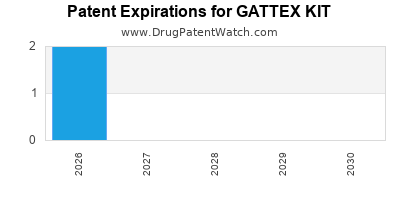
GATTEX KIT is protected by a layered estate: biologic exclusivity (data protection), patent term exclusivity, and formulation and method-of-use patents. Exact expiration depends on the specific listed patents and their jurisdictional term calculations. The practical impact for finance is straightforward: until the last relevant exclusivity/patent barriers clear, payers and competitors have limited leverage to push meaningful price erosion.
What does exclusivity mean for revenue trajectory?
- Base-case revenue profile: Branded revenue tends to remain structurally protected from high-volume price compression until biosimilar or interchangeable entry becomes feasible.
- Near-term volatility is mostly payer- and channel-driven: Even without direct substitution, negotiated rebates and utilization management can compress net price faster than gross pricing changes.
What patents protect GATTEX KIT (teduglutide) and how strong is the patent estate?
How many patent families cover teduglutide and GATTEX formulations?
The strength and breadth of GATTEX protection usually comes from:
- Composition/formulation patents (drug product and delivery system)
- Manufacturing method patents
- Method-of-use patents (patient selection and dosing regimens)
- Second-generation improvements (packaging, stability, or administration changes)
For a high-confidence risk view, investors typically map:
- Earliest priority and latest expiration across each family
- Jurisdiction-by-jurisdiction coverage (US, EU, etc.)
- Whether any patents are subject to post-grant review or licensing carve-outs
What generic entry risks exist for GATTEX KIT?
For a biologic, “generic” entry risk is not the same as for small molecules. The competitive threat is biosimilar development and, potentially, interchangeability claims, which depend on clinical and analytical comparability requirements and regulatory acceptance of the product.
Financial implication:
- If biosimilar filing windows are open: expect payer re-negotiation and procurement pressure even before launch.
- If the estate is dense through key use patents: payers may delay contracting changes and revenue stabilizes.
What is the Orange Book status of GATTEX KIT?
Is GATTEX KIT listed in the US Orange Book?
Orange Book listings apply to approved drug products under the Hatch-Waxman framework, typically small molecules. Biologics are not listed on the Orange Book in the same way; instead, investors track biologics-related protections through FDA biologics reference product information, patent listings in the Biologics Price Competition and Innovation Act (BPCIA) ecosystem, and litigation records tied to those protections.
What should investors track instead of Orange Book alone?
- FDA biologics patent listings and reference product protection
- Biosimilar application timelines and interchangeability pathways
- Patent litigation or settlement terms that control launch calendars
How does pricing and net revenue typically move for GATTEX KIT?
What drives net price compression without generic entry?
Even with biologic exclusivity intact, net revenue can decline due to:
- Rebate pressure: formulary decisions often shift toward aggressive contracting at the plan level.
- Utilization management: prior authorizations and criteria for PN reduction can limit continuation access.
- Distribution incentives: specialty pharmacy networks can negotiate fees and bundled program costs.
- Indexing to payer budgets: high-cost biologics face annual benchmark resets.
What does channel behavior imply for sales growth or decline?
- Strong GI networks and intestinal rehabilitation centers increase conversion of eligible patients into treated patients.
- If centers already established on alternative supportive regimens, incremental adoption slows.
- Continuation persistence is crucial. If PN weaning rates drop for newly treated patients (real-world response variability), net treatment months fall.
Which competitive threats affect GATTEX KIT revenue (biosimilar risk and pipeline)?
Are biosimilar competitors likely to emerge for teduglutide?
The biosimilar threat depends on:
- Completion of analytical and functional comparability development
- Ability to match formulation and stability constraints
- Strategic willingness to challenge key patents
Financial pattern:
- Pre-launch: payer contracting shifts toward lowest-cost alternatives once biosimilar entry looks credible.
- Launch year: rapid rebound of unit volumes to the lowest-net-price product if multiple biosimilar offers exist.
- Post-launch: pricing floors often stabilize, but revenue remains constrained versus pre-entry net prices.
What non-teduglutide alternatives can affect payer behavior?
Payers may consider:
- Broader SBS supportive approaches (home PN optimization, enteral strategies)
- Emerging biologics or small molecules targeting intestinal growth pathways
- Off-label GLP-1–class or metabolic agents in practice (less likely to fully replace, but can influence negotiation leverage)
Impact is often indirect: even without full substitution, alternatives increase payer confidence to resist high-cost coverage thresholds.
What FDA pathway events matter most for GATTEX KIT market access?
Does GATTEX KIT face ongoing label or utilization constraints?
Market access is influenced by:
- Maintenance of adult SBS indication eligibility
- Any label refinements that narrow or expand eligible patient cohorts
- Distribution constraints tied to risk management programs (if applicable)
FDA timing effects show up in:
- Updated prescribing guidance
- Payer policy revisions after label updates
- Changes in prior authorization criteria
How do reimbursement policies shape real-world demand for GATTEX KIT?
What do prior authorization and step therapy typically require?
Reimbursement for biologics in rare disease settings usually hinges on documentation of:
- Adult diagnosis of SBS with intestinal failure
- Ongoing requirement for PN
- Evidence of medical necessity and treatment goals tied to PN reduction
- Baseline nutritional status and monitoring plans
Financial consequence:
- Even when prescriptions are written, denied or delayed coverage can depress net sales and create “lumpy” quarterly results.
How do specialty pharmacy and copay structures influence uptake?
- Enrollment into patient assistance or copay support can improve persistence and reduce discontinuations.
- Specialty pharmacy onboarding times can delay initiation, affecting quarterly ramp.
- Formulary placement determines whether units flow through contracted channels.
What does the financial trajectory of GATTEX KIT look like under base, downside, and upside scenarios?
Base case
- Branded revenue remains supported by protected biologic status and continued demand among adult SBS patients requiring PN.
- Net price drifts downward gradually due to annual rebate resets and contracting.
Downside
- Increased payer pushback leads to tighter PN reduction criteria, higher denial rates, or reduced continuation.
- Market development slows as regional GI centers consolidate prescribing on fewer high-evidence regimens.
- Patent or biosimilar signals accelerate payer switching, reducing net price before any competitor launches.
Upside
- Improved real-world persistence from better patient selection or enhanced intestinal rehabilitation protocols increases treatment duration.
- Payers broaden coverage criteria based on budget impact models or updated evidence.
- Additional managed-entry agreements reduce net price volatility while sustaining volume.
How do patent litigation and settlements affect GATTEX KIT revenue timing?
What litigation outcomes typically change the launch timetable?
Settlement structures often:
- Delay biosimilar launch via effective “stay” periods
- Create contingent payment terms tied to launch date
- Limit commercial penetration through carve-outs for certain strengths or delivery formats (if permitted)
Revenue effect:
- If litigation narrows and settlement accelerates biosimilar feasibility, revenue often shows step-down in expectations before actual entry due to contracting behavior.
What is the commercialization footprint for GATTEX KIT (manufacturing and distribution constraints)?
Are supply and distribution issues a meaningful risk?
For specialty injectables and biologics:
- Manufacturing capacity, lot release timelines, and cold-chain logistics can affect fulfillment.
- Shortages can temporarily depress prescriptions filled, impacting revenue recognition.
Financially, supply risk manifests as quarter-to-quarter unit volatility rather than long-run demand collapse.
What commercial metrics should be tracked to forecast GATTEX KIT performance?
Leading indicators
- New patient starts (by specialty, by treatment initiation time)
- Treatment persistence and discontinuation rates
- Denial rates and appeal outcomes from prior authorization
- Specialty pharmacy fill rates and days-to-therapy
- Net price trends tied to rebate and distribution agreements
Lagging indicators
- Total prescription demand in claims data
- Average sales price trajectory and rebate liabilities
- Seasonal effects linked to specialty clinic scheduling
- Shifts in payer formulary status and managed-entry contracting
Key Takeaways
- GATTEX KIT’s revenue trajectory is primarily shaped by payer access and specialty-channel contracting, not by small-molecule generic erosion.
- Exclusivity and patent-layer strength determine the timing of biosimilar threats and preemptive pricing pressure.
- Near-term net sales volatility is most likely driven by reimbursement policy tightness, prior authorization friction, and persistence rather than unit growth alone.
- Competitive risk is best modeled as biosimilar entry with step-down net pricing effects once launch credibility rises.
FAQs
- How do prior authorization criteria for adult SBS affect GATTEX KIT net sales each quarter?
- What biosimilar filing signals typically precede a GATTEX KIT net price decline?
- How does treatment persistence in PN reduction impact long-term revenue for teduglutide?
- What payer contracting mechanisms most often drive rebate compression for high-cost specialty injectables like GATTEX KIT?
- How do patent settlements in biologics usually change the timeline of biosimilar competition?
References (APA)
- US FDA. (n.d.). Biologics license application (BLA) and biosimilar-related information. FDA.gov.
- FDA. (n.d.). BPCI Act framework and biosimilar/interchangeability pathway overview. FDA.gov.