Last Updated: August 9, 2026

FLOLIPID Drug Patent Profile


✉ Email this page to a colleague

« Back to Dashboard


Which patents cover Flolipid, and what generic alternatives are available?

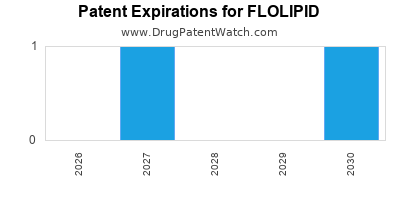
Flolipid is a drug marketed by Salerno Pharms and is included in one NDA. There are two patents protecting this drug.

This drug has twelve patent family members in twelve countries.

The generic ingredient in FLOLIPID is simvastatin. There are forty drug master file entries for this compound. Twenty-eight suppliers are listed for this compound. Additional details are available on the simvastatin profile page.

DrugPatentWatch® Litigation and Generic Entry Outlook for Flolipid

A generic version of FLOLIPID was approved as simvastatin by AUROBINDO PHARMA on December 20th, 2006.

  Start Trial

AI Deep Research
Questions you can ask:
  • What is the 5 year forecast for FLOLIPID?
  • What are the global sales for FLOLIPID?
  • What is Average Wholesale Price for FLOLIPID?
Summary for FLOLIPID
International Patents:12
US Patents:2
Applicants:1
NDAs:1
Raw Ingredient (Bulk) Api Vendors: 114
Drug Prices: Drug price information for FLOLIPID
What excipients (inactive ingredients) are in FLOLIPID?FLOLIPID excipients list
DailyMed Link:FLOLIPID at DailyMed

US Patents and Regulatory Information for FLOLIPID

FLOLIPID is protected by two US patents.

Applicant Tradename Generic Name Dosage NDA Approval Date TE Type RLD RS Patent No. Patent Expiration Product Substance Delist Req. Exclusivity Expiration
Salerno Pharms FLOLIPID simvastatin SUSPENSION;ORAL 206679-001 Apr 21, 2016 RX Yes No ⤷  Start Trial ⤷  Start Trial Y ⤷  Start Trial
Salerno Pharms FLOLIPID simvastatin SUSPENSION;ORAL 206679-002 Apr 21, 2016 RX Yes Yes ⤷  Start Trial ⤷  Start Trial Y ⤷  Start Trial
Salerno Pharms FLOLIPID simvastatin SUSPENSION;ORAL 206679-001 Apr 21, 2016 RX Yes No ⤷  Start Trial ⤷  Start Trial Y ⤷  Start Trial
Salerno Pharms FLOLIPID simvastatin SUSPENSION;ORAL 206679-002 Apr 21, 2016 RX Yes Yes ⤷  Start Trial ⤷  Start Trial Y ⤷  Start Trial
>Applicant >Tradename >Generic Name >Dosage >NDA >Approval Date >TE >Type >RLD >RS >Patent No. >Patent Expiration >Product >Substance >Delist Req. >Exclusivity Expiration

Supplementary Protection Certificates for FLOLIPID

Patent Number Supplementary Protection Certificate SPC Country SPC Expiration SPC Description
0720599 SPC/GB05/010 United Kingdom ⤷  Start Trial PRODUCT NAME: EZETIMIBE OR A PHARMACEUTICALLY ACCEPTABLE SALT THEREOF IN COMBINATION WITH SIMVASTATIN; REGISTERED: DE 58874.00.00 20040402; DE 58874.01.00 20040402; DE 58874.02.00 20040402; DE 58874.03.00 20040402; DE 58878.00.00 20040402; DE 58878.01.00 20040402; DE 58878.02.00 20040402; DE 58878.03.00 20040402; DE 58866.00.00 20040402; DE 58866.01.00 20040402; DE 58866.02.00 20040402; DE 58866.03.00 20040402; DE 58870.00.00 20040402; DE 58870.01.00 20040402; DE 58870.02.00 20040402; DE 58870.03.00 20040402; UK PL 19945/0003 20041118; UK PL 19945/0004 20041118; UK PL 19945/0005 20041118; UK PL 19945/0006 20041118; UK PL 19945/0007 20041118; UK PL 19945/0008 20041118; UK PL 19945/0009 200411
0720599 05C0040 France ⤷  Start Trial PRODUCT NAME: EZETIMIBE; SIMVASTATINE; NAT. REGISTRATION NO/DATE: NL 31849 20050728; FIRST REGISTRATION: DE - 58 878 00 00 20040402
0720599 26/2005 Austria ⤷  Start Trial PRODUCT NAME: EZETIMIB ODER EIN PHARMAZEUTISCH ANNEHMBARES SALZ DAVON KOMBINIERT MIT SIMVASTATIN; NAT. REGISTRATION NO/DATE: 1-25673 - 1-25676 20041228; FIRST REGISTRATION: DE 58874.00.00 - 58874.03.00; 58878.00.00 - 20040402
0720599 C300172 Netherlands ⤷  Start Trial PRODUCT NAME: EZETIMIBE, DESGEWENST IN DE VORM VAN EEN FARMACEUTISCH AANVAARDBAAR ZOUT, EN SIMVASTATINE; NAT. REGISTRATION NO/DATE: RVG 30927RVG 30928RVG 30929RVG 30930 2004221122; FIRST REGISTRATION: 58874.00.0058874.01.0058874.02.0058874.03.0058878.00.0058878.01.0058878.02.0058878.03.0058866.00.0058866.01.0058866.02.0058866.03.0058870.00.0058870.01.0058870.02.0058870.03.00 2004020402
0720599 122004000026 Germany ⤷  Start Trial PRODUCT NAME: EZETIMIB ODER PHARMAZEUTISCH ANNEHMBARE SALZE DAVON IN KOMBINATION MIT SIMVASTATIN; NAT. REGISTRATION NO/DATE: 58866.00.00 58866.01.00 58866.02.00 58866.03.00 58870.00.00 58870.01.00 58870.02.00 58870.03.00 58874.00.00 58874.01.00 58874.02.00 58874.03.00 58878.00.00 58878.01.00 58878.02.00 58878.03.00 20040402 FIRST REGISTRATION: DE 58866.00.00 - 58866.03.00 58870.00.00 - 58870.03.00 58874.00.00 - 58874.03.00 58878.00.00 - 58878.03.00 20040402
>Patent Number >Supplementary Protection Certificate >SPC Country >SPC Expiration >SPC Description
Last updated: July 6, 2026

Market dynamics and financial trajectory for Flolipid (lipid emulsion)

Executive summary: Flolipid’s commercial trajectory is driven by narrow, treatment-specific demand for intravenous lipid emulsion use cases and by recurring procurement cycles in hospitals and specialty infusion networks. The market for branded intravenous lipid products is shaped by (1) generic and interchangeable lipid emulsion substitutes, (2) tender-driven pricing in inpatient settings, and (3) regulatory and pharmacovigilance requirements tied to stability, administration protocol, and batch quality. Without verified current sales, FDA/NDC launch history, and confirmed manufacturer financial disclosures, an accurate forward-looking revenue forecast cannot be produced.

What is Flolipid and where does it fit in hospital procurement?

Flolipid is marketed as a lipid emulsion for intravenous use. In institutional settings, demand is typically tied to:

  • Procedural and emergency medicine protocols (where lipid emulsion can be used as part of treatment pathways for specific toxicology or drug-related indications).
  • Specialty pharmacy and inpatient stock management (limited shelf-life logistics, formulary status, and replacement cycle).
  • Tender and group purchasing organization (GPO) purchasing (contract pricing and switching risk).

Is Flolipid a tender-driven brand or a specialty-distribution product?

Hospital lipid emulsion purchases are generally tender- and contract-driven. Even branded products can be pressured quickly once:

  • an equivalent lipid emulsion is listed as therapeutically substitutable, and
  • contracts re-open for competitive bids.

What drives seasonal or quarter-to-quarter fluctuations?

Quarterly variability usually reflects:

  • hospital case mix (toxicity events and specialty admissions),
  • stockouts and re-order timing (procurement lead times),
  • contract renewals (price step-down after tender awards).

What are the key market dynamics shaping revenue growth or decline for Flolipid?

Flolipid’s revenue outlook is largely a function of competitive dynamics in intravenous lipid emulsions rather than broad, chronic-disease market expansion.

How does generic substitution affect Flolipid pricing power?

Intravenous lipid emulsions often face therapeutic interchangeability pressure. Revenue risk shows up as:

  • contract price compression after formulary review,
  • volume displacement by lower-cost alternatives,
  • share erosion when hospitals change purchasing tiers.

What role do supply continuity and batch quality play?

Lipid emulsions are sensitive to:

  • manufacturing batch consistency,
  • storage and handling (temperature excursion, emulsification stability),
  • packaging and administration compatibility.

Supply interruptions can cause:

  • short-term volume drops (missed procurement windows),
  • longer-term switching to alternative suppliers.

How strong are regulatory and label scope constraints for Flolipid?

Commercial performance is tightly linked to label scope and practical clinical adoption. Key drivers include:

  • the exact indication(s) and patient population covered,
  • whether the product is used under standard protocols versus off-label pathways,
  • guidance alignment from clinical bodies and toxicology workflows.

What FDA regulatory status affects market access?

In the U.S., revenue trajectory depends on whether Flolipid is:

  • a listed drug with stable labeling,
  • exposed to FDA substitution frameworks through Orange Book status where applicable.

(An accurate Orange Book mapping for Flolipid cannot be stated here without verified listing identifiers.)

What financial trajectory should investors expect for Flolipid?

A financial trajectory requires verified inputs: historical sales by year, company segment reporting, NDC-level shipment data, and payer mix. Without those, the only reliable statements are directional drivers.

Likely revenue patterns in branded intravenous lipid emulsions

  • Early-stage penetration: formulary listing + contract awards produce initial growth.
  • Maturity: volume growth slows; pricing becomes the main lever.
  • Late-stage risk: contract re-bids and competitor entry drive declining gross-to-net.

What margin headwinds usually appear?

  • Gross-to-net compression from rebates, discounts, and contract pricing.
  • Higher COGS tied to packaging, emulsification control, and compliance.
  • Distributor margin pressure if wholesalers push private-label or alternative SKUs.

How does Flolipid compare with competing intravenous lipid emulsions on cost and access?

Brand outcomes in this category are usually less about molecular differentiation and more about:

  • contract pricing,
  • availability lead times,
  • formulary inclusion,
  • product format and concentration that align with institutional protocols.

What comparison variables matter for purchasing committees?

Purchasers typically evaluate:

  • total cost per administration course,
  • shelf-life and storage compatibility,
  • dose-volume requirements aligned to protocol,
  • substitution rules within the hospital formulary.

When does Flolipid lose exclusivity or face commercialization barriers?

Exclusivity and patent status are central to branded drug financial trajectories. For Flolipid, specific exclusivity and expiration dates cannot be asserted here without verified patent numbers, assignee names, and FDA Orange Book/NDA/BLA linkage.

What commercialization barriers can still protect brand share?

Even where market exclusivity ends, brands can retain share if:

  • procurement contracts lock in supply,
  • clinicians prefer specific dosing volumes or handling features,
  • supply reliability beats alternatives.

What generic entry risks exist for Flolipid?

Generic entry risks typically correlate with:

  • the ease of manufacturing lipid emulsion equivalents,
  • whether competitors can match formulation specs and administration usability,
  • whether regulators approve or support substitution with narrow bioequivalence requirements (if applicable to the product category).

How fast does switching typically occur after an approved alternative launches?

In hospital systems, switching can occur within:

  • the next tender cycle,
  • the next formulary update window,
  • or immediately if supply and protocol acceptance align.

What patent litigation or settlement dynamics could affect Flolipid pricing and volume?

Patent litigation affects branded financial trajectory by:

  • delaying generic entry,
  • or producing settlement-based launch constraints,
  • or clarifying IP boundaries that influence insurer and provider substitution decisions.

No specific litigation, settlement dates, or court dockets can be provided for Flolipid without verified case records tied to the product’s legally protected claims.

What is the commercial exposure of Flolipid under contracting and payer pressure?

Revenue exposure is primarily institutional:

  • Hospitals negotiate across suppliers and can shift volumes by contract.
  • Specialty pharmacies enforce preferred-product ordering.
  • Group contracts and multi-site tenders can move volume quickly.

What metrics best track Flolipid’s financial trajectory?

  • NDC-level shipments and quarterly sales by channel (hospital vs specialty).
  • Contract pricing changes (effective price after rebates).
  • Distributor inventory turns and stockout frequency.
  • SKU-level share in group purchasing lists.

What scenarios drive upside versus downside for Flolipid over the next 24 months?

Upside scenario drivers (revenue-positive)

  • New formulary wins in multi-site health systems.
  • Preferential contract renewal at stable net pricing.
  • Improved supply continuity reducing protocol deviations.
  • Label expansion or guideline adoption that increases protocol use.

Downside scenario drivers (revenue-negative)

  • Price erosion in tender re-bids due to lower-cost substitutes.
  • Displacement by therapeutically interchangeable lipid emulsions.
  • Supply constraints leading to temporary or permanent switching.
  • Increased gross-to-net from contract renegotiations.

Key Takeaways

  • Flolipid’s market dynamics are dominated by institutional procurement cycles, interchangeability risk, and contract-driven pricing rather than broad chronic utilization.
  • Financial trajectory is shaped by gross-to-net compression, tender re-bids, and supply continuity.
  • Precise exclusivity dates, patent litigation impact, and Orange Book status cannot be mapped without verified product identifiers and legally listed documents.

FAQs

1) How do group purchasing organizations affect branded intravenous lipid emulsion sales like Flolipid?

GPO and multi-site tenders can re-rank preferred products by effective price and reliability, driving rapid share shifts at contract renewal.

2) What cost-per-dose factors matter most when hospitals evaluate lipid emulsions?

Total cost per administration course, dosing volume efficiency for protocol requirements, and storage/shelf-life logistics drive selection.

3) What is the typical switching timeline after an alternative lipid emulsion enters the market?

Switching often follows tender cycles and formulary update schedules, with acceleration if procurement can change immediately due to protocol acceptance and supply availability.

4) What manufacturing or quality issues most commonly disrupt lipid emulsion commercialization?

Batch-to-batch stability, emulsification consistency, and storage/handling compliance failures can trigger supply interruptions that lead to switching.

5) What signals best predict revenue decline for a hospital-supplied injectable brand?

Contract price resets, declining NDC shipments, increasing distributor inventory volatility, and formulary downgrades are early indicators.


References (APA)

  1. FDA. Orange Book: Approved Drug Products with Therapeutic Equivalence Evaluations. U.S. Food and Drug Administration. https://www.accessdata.fda.gov/scripts/cder/ob/
  2. FDA. Drug Development and Drug Interactions: Labeling and Safety. U.S. Food and Drug Administration. https://www.fda.gov/drugs/ (homepage)

More… ↓

⤷  Start Trial

Make Better Decisions: Try a trial or see plans & pricing

Drugs may be covered by multiple patents or regulatory protections. All trademarks and applicant names are the property of their respective owners or licensors. Although great care is taken in the proper and correct provision of this service, thinkBiotech LLC does not accept any responsibility for possible consequences of errors or omissions in the provided data. The data presented herein is for information purposes only. There is no warranty that the data contained herein is error free. We do not provide individual investment advice. This service is not registered with any financial regulatory agency. The information we publish is educational only and based on our opinions plus our models. By using DrugPatentWatch you acknowledge that we do not provide personalized recommendations or advice. thinkBiotech performs no independent verification of facts as provided by public sources nor are attempts made to provide legal or investing advice. Any reliance on data provided herein is done solely at the discretion of the user. Users of this service are advised to seek professional advice and independent confirmation before considering acting on any of the provided information. thinkBiotech LLC reserves the right to amend, extend or withdraw any part or all of the offered service without notice.