You're using a free limited version of DrugPatentWatch: Upgrade for Complete Access

Last Updated: December 14, 2025

FEMHRT Drug Patent Profile


✉ Email this page to a colleague

« Back to Dashboard


When do Femhrt patents expire, and when can generic versions of Femhrt launch?

Femhrt is a drug marketed by Apil and is included in one NDA.

The generic ingredient in FEMHRT is ethinyl estradiol; norethindrone acetate. There are twenty-six drug master file entries for this compound. Twenty-seven suppliers are listed for this compound. Additional details are available on the ethinyl estradiol; norethindrone acetate profile page.

AI Deep Research
Questions you can ask:
  • What is the 5 year forecast for FEMHRT?
  • What are the global sales for FEMHRT?
  • What is Average Wholesale Price for FEMHRT?
Summary for FEMHRT
US Patents:0
Applicants:1
NDAs:1
Clinical Trials: 1
Drug Prices: Drug price information for FEMHRT
What excipients (inactive ingredients) are in FEMHRT?FEMHRT excipients list
DailyMed Link:FEMHRT at DailyMed
Drug patent expirations by year for FEMHRT
Drug Prices for FEMHRT

See drug prices for FEMHRT

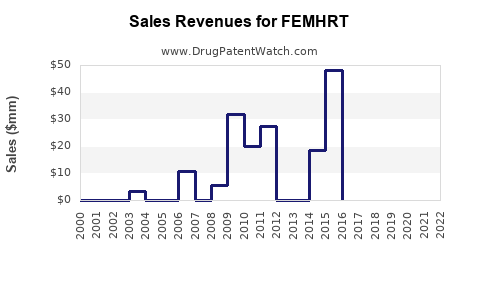
Drug Sales Revenue Trends for FEMHRT

See drug sales revenues for FEMHRT

Recent Clinical Trials for FEMHRT

Identify potential brand extensions & 505(b)(2) entrants

SponsorPhase
University of FloridaN/A
Johns Hopkins UniversityN/A
Cedars-Sinai Medical CenterN/A

See all FEMHRT clinical trials

US Patents and Regulatory Information for FEMHRT

Applicant Tradename Generic Name Dosage NDA Approval Date TE Type RLD RS Patent No. Patent Expiration Product Substance Delist Req. Exclusivity Expiration
Apil FEMHRT ethinyl estradiol; norethindrone acetate TABLET;ORAL 021065-001 Jan 14, 2005 DISCN Yes No ⤷  Get Started Free ⤷  Get Started Free ⤷  Get Started Free
Apil FEMHRT ethinyl estradiol; norethindrone acetate TABLET;ORAL 021065-002 Oct 15, 1999 DISCN Yes No ⤷  Get Started Free ⤷  Get Started Free ⤷  Get Started Free
>Applicant >Tradename >Generic Name >Dosage >NDA >Approval Date >TE >Type >RLD >RS >Patent No. >Patent Expiration >Product >Substance >Delist Req. >Exclusivity Expiration

Expired US Patents for FEMHRT

Applicant Tradename Generic Name Dosage NDA Approval Date Patent No. Patent Expiration
Apil FEMHRT ethinyl estradiol; norethindrone acetate TABLET;ORAL 021065-001 Jan 14, 2005 ⤷  Get Started Free ⤷  Get Started Free
Apil FEMHRT ethinyl estradiol; norethindrone acetate TABLET;ORAL 021065-002 Oct 15, 1999 ⤷  Get Started Free ⤷  Get Started Free
>Applicant >Tradename >Generic Name >Dosage >NDA >Approval Date >Patent No. >Patent Expiration

International Patents for FEMHRT

See the table below for patents covering FEMHRT around the world.

Country Patent Number Title Estimated Expiration
Spain 2059403 ⤷  Get Started Free
South Africa 8700332 ⤷  Get Started Free
Hong Kong 182795 Composition useful in the treatment of estrogen deficiencies ⤷  Get Started Free
Australia 6913087 ⤷  Get Started Free
Canada 1300017 PREPARATION POUR PREVENIR L'OSTEOPOROSE (COMPOSITION FOR PREVENTING OSTEOPOROSIS) ⤷  Get Started Free
Denmark 99987 ⤷  Get Started Free
Netherlands 300004 ⤷  Get Started Free
>Country >Patent Number >Title >Estimated Expiration

Supplementary Protection Certificates for FEMHRT

Patent Number Supplementary Protection Certificate SPC Country SPC Expiration SPC Description
1214076 SZ 49/2008 Austria ⤷  Get Started Free PRODUCT NAME: WIRKSTOFFKOMBINATION VON ETHINYLESTRADIOL UND DROSPIRENON
1214076 49/2008 Austria ⤷  Get Started Free PRODUCT NAME: WIRKSTOFFKOMBINATION VON ETHINYLESTRADIOL UND DROSPIRENON; REGISTRATION NO/DATE: 1-27586 20080612
1214076 C01214076/01 Switzerland ⤷  Get Started Free PRODUCT NAME: DROSPIRENONE + ETHINYLESTRADIOL; REGISTRATION NUMBER/DATE: SWISSMEDIC 57946 13.06.2008
1380301 CA 2009 00017 Denmark ⤷  Get Started Free PRODUCT NAME: ETHINYLESTRADIOL (SOM BETADEXCLATHRAT) OG DROSPIRENON; NAT. REG. NO/DATE: 42417 (DK) 20080619; FIRST REG. NO/DATE: NL 33842 20070629
1453521 CA 2016 00016 Denmark ⤷  Get Started Free PRODUCT NAME: LEVONORGESTREL OG ETHINYLOESTRADIOL; NAT. REG. NO/DATE: 56336 20151105; FIRST REG. NO/DATE: SK 17/0017/15-S 20150211
0771217 07C0001 France ⤷  Get Started Free PRODUCT NAME: ETHINYLESTRADIOL BETADEX CLATHRATE; NAT. REGISTRATION NO/DATE: NL 32343 20060710; FIRST REGISTRATION: NL - RVG 31781 20050804
1453521 122015000093 Germany ⤷  Get Started Free PRODUCT NAME: LEVONORGESTREL UND ETHINYLESTRADIOL; NAT. REGISTRATION NO/DATE: 87675.00.00 20150720; FIRST REGISTRATION: SLOWAKEI 17/0017/15-S 20150129
>Patent Number >Supplementary Protection Certificate >SPC Country >SPC Expiration >SPC Description

Market Dynamics and Financial Trajectory for the Pharmaceutical Drug: FEMHRT

Last updated: July 31, 2025


Introduction

FEMHRT, a synthetic hormone therapy product, is positioned within the hormone replacement therapy (HRT) segment, primarily targeting menopausal women. With evolving market trends driven by demographic shifts, regulatory landscapes, and technological advancements, understanding the drug’s market dynamics and financial trajectory is critical for stakeholders. This article provides a comprehensive analysis of FEMHRT’s current market status, forecasted growth, competitive positioning, and the factors shaping its financial outlook.


Market Overview

The global hormone replacement therapy market was valued at approximately USD 3.2 billion in 2022 and is projected to grow at a CAGR of 6.2% through 2030, driven by increasing menopausal women, rising awareness of women's health, and advancements in drug formulations [1]. FEMHRT, as a synthetic hormone therapy, caters to this expanding demographic, competing with established brands such as Premarin, Estrace, and newer bioidentical options.

FEMHRT offers advantages over traditional therapies—such as improved safety profiles due to specific hormone combinations and delivery mechanisms—making it attractive within the nuanced HRT landscape. Its positioning depends heavily on regulatory approval, clinical efficacy data, and acceptance by healthcare providers.


Key Market Drivers

1. Demographic Shifts and Aging Population

By 2030, the UN projects that women aged 50 and above will comprise over 16% of the global female population [2]. This demographic is the primary target market for FEMHRT. As life expectancy increases, the incidence and duration of menopausal symptoms extend, elevating demand for effective hormone therapy options.

2. Rising Awareness and Women's Health Initiatives

Global campaigns emphasizing women's health, menopause management, and quality of life improvements contribute to higher acceptance of HRT options like FEMHRT. Educational initiatives reduce stigma and promote early intervention, boosting prescription rates.

3. Innovation and Personalized Medicine

Incorporating precision medicine approaches allows FEMHRT to tailor therapies, reduce adverse effects, and improve efficacy—a significant differentiator in a competitive market. Advances in delivery systems, such as transdermal patches and oral formulations, improve patient compliance and expand market reach.

4. Regulatory Environment

Regulatory landscapes influence FEMHRT’s market trajectory significantly. In regions with stringent approval processes, such as the US and European Union, the success of FEMHRT hinges on robust clinical trial data demonstrating safety and efficacy, impacting the pace of market entry and uptake.


Market Challenges

1. Safety Concerns and Regulatory Scrutiny

Historical safety concerns, particularly regarding long-term hormone therapy risks like breast cancer and cardiovascular events, persist. Recent data from large trials (e.g., Women’s Health Initiative) have altered prescribing practices, necessitating comprehensive safety profiles for FEMHRT to gain clinician confidence.

2. Competition and Brand Loyalty

Established drugs with long market presence, such as Premarin, benefit from brand recognition and physician inertia. Neurologic and cardiovascular safety profiles heavily influence physician choices, posing barriers for new entrants like FEMHRT.

3. Patent Status and Pricing Pressures

Patent expirations and biosimilar entries compel pricing competitiveness. Stakeholders seek innovative formulations and delivery methods to maintain premium pricing, impacting FEMHRT’s financial margins.


Financial Trajectory Forecast

1. Revenue Growth Potential

Assuming successful regulatory approval in key markets and targeted marketing campaigns, FEMHRT could capture an estimated 3–8% of the global HRT market within five years post-launch, translating to revenues of approximately USD 100–200 million annually for a mid-sized pharmaceutical company [3].

2. Cost Structure and Investment

Initial R&D investments, clinical trial costs, regulatory submission expenses, and marketing campaigns are substantial. Estimated initial outlays range between USD 50–100 million, with ongoing expenses driven by post-market surveillance and pharmacovigilance.

3. Profitability Outlook

Margins depend on production costs, competition, and market penetration. With streamlined manufacturing and favorable pricing strategies, FEMHRT could achieve gross margins of 50 to 60% in mature markets, with breakeven within 3–5 years post-launch.

4. Long-term Adoption and Growth

Market adoption rates hinge on safety perceptions and physician willingness. A projected annual growth rate of 5–7% in mature markets is feasible with demonstrable clinical advantages. Patent protections or exclusive formulations could enhance revenue stability.


Strategic Factors Influencing Financial Trajectory

Regulatory Approvals: Accelerated approval pathways, if leveraged, could shorten time-to-market, boosting early revenue streams. Conversely, delays diminish projected revenues.

Market Penetration Strategies: Strategic partnerships with healthcare providers and patient advocacy groups can accelerate adoption.

Geographic Expansion: Entry into emerging markets like Asia-Pacific and Latin America offers additional revenue streams, albeit with considerations regarding regional regulatory standards and pricing.

Product Differentiation: Innovations such as bioidentical hormone formulations or personalized dosing can justify premium pricing and improve market share.

Pricing and Reimbursement Policies: These are inherently region-specific, influencing profit margins. Engaging with payers early ensures better reimbursement frameworks.


Regulatory and Ethical Considerations

Regulatory agencies scrutinize HRT therapies for safety and efficacy. FemHRT’s historical positioning must be supported by rigorous clinical trial data, long-term safety evidence, and transparent risk disclosures [4]. Ethical considerations involving informed consent and patient safety influence both regulatory approval and market acceptance.


Emerging Trends and Future Outlook

1. Adoption of Digital Health Tools

Utilizing digital platforms for patient monitoring and adherence programs offers the potential to improve outcomes and gather real-world evidence, influencing FEMHRT’s long-term market sustainability.

2. Biosimilars and Competition

The proliferation of biosimilars in hormone therapy could erode profits, urging FEMHRT to focus on unique formulations or delivery methods to sustain competitive advantage.

3. Increasing Preference for Bioidentical Hormones

The rise of bioidentical hormone therapies influences market dynamics. FEMHRT’s ability to adapt formulations aligning with patient preferences will be pivotal in maintaining relevance.

4. Focus on Safety Profiles

Enhanced safety data demonstrating minimal adverse effects will be decisive—dictating prescriber confidence and patient acceptance.


Key Takeaways

  • The FEMHRT market is poised for growth, driven by demographic trends and lifestyle factors but faces significant challenges involving safety perceptions and competition.
  • Success hinges on robust clinical data, strategic regulatory navigation, and effective stakeholder engagement.
  • Financial prospects are favorable for producers that innovate, optimize costs, and expand geographically.
  • Market entry strategies should emphasize safety, personalized formulations, and educational initiatives.
  • Continuous surveillance and post-market studies will shape FEMHRT’s long-term financial trajectory and reputation.

FAQs

Q1: What are the major regulatory hurdles for FEMHRT?
A1: FEMHRT must demonstrate safety and efficacy through rigorous clinical trials aligned with regional regulatory frameworks such as the FDA in the US and EMA in Europe. Long-term safety data are crucial to mitigate concerns from past hormone therapy controversies.

Q2: How does FEMHRT differentiate itself from existing hormone therapies?
A2: FEMHRT’s differentiators include its formulation tailored for improved safety, innovative delivery mechanisms like transdermal patches, and personalized dosing options aimed at reducing adverse effects and improving compliance.

Q3: What market segments represent the highest growth potential for FEMHRT?
A3: Women aged 50–65 in developed markets, particularly those seeking alternatives to traditional therapies and interested in personalized treatments, offer significant growth opportunities. Emerging regions with increasing women’s health awareness also present expanding markets.

Q4: How do safety concerns impact FEMHRT’s market potential?
A4: Safety concerns have historically limited HRT adoption. Demonstrating minimal risks in clinical and real-world settings is essential to building trust and expanding FEMHRT’s market share.

Q5: What are the key factors influencing FEMHRT’s long-term financial success?
A5: Factors include regulatory approval timelines, clinical safety and efficacy data, market acceptance, competitive positioning, price strategies, reimbursement policies, and ongoing innovations to meet evolving patient needs.


References

[1] MarketsandMarkets. "Hormone Replacement Therapy Market," 2022.
[2] United Nations. "World Population Prospects," 2022.
[3] EvaluatePharma. "Pharmaceutical Market Forecast," 2023.
[4] Food and Drug Administration (FDA). "Hormone Therapy Approvals," 2022.

More… ↓

⤷  Get Started Free

Make Better Decisions: Try a trial or see plans & pricing

Drugs may be covered by multiple patents or regulatory protections. All trademarks and applicant names are the property of their respective owners or licensors. Although great care is taken in the proper and correct provision of this service, thinkBiotech LLC does not accept any responsibility for possible consequences of errors or omissions in the provided data. The data presented herein is for information purposes only. There is no warranty that the data contained herein is error free. We do not provide individual investment advice. This service is not registered with any financial regulatory agency. The information we publish is educational only and based on our opinions plus our models. By using DrugPatentWatch you acknowledge that we do not provide personalized recommendations or advice. thinkBiotech performs no independent verification of facts as provided by public sources nor are attempts made to provide legal or investing advice. Any reliance on data provided herein is done solely at the discretion of the user. Users of this service are advised to seek professional advice and independent confirmation before considering acting on any of the provided information. thinkBiotech LLC reserves the right to amend, extend or withdraw any part or all of the offered service without notice.