ENSKYCE Drug Patent Profile
When do Enskyce patents expire, and when can generic versions of Enskyce launch?
Enskyce is a drug marketed by Lupin Ltd and is included in one NDA.
The generic ingredient in ENSKYCE is desogestrel; ethinyl estradiol. There is one drug master file entry for this compound. Fifteen suppliers are listed for this compound. Additional details are available on the desogestrel; ethinyl estradiol profile page.
DrugPatentWatch® Litigation and Generic Entry Outlook for Enskyce
A generic version of ENSKYCE was approved as desogestrel; ethinyl estradiol by DURAMED PHARMS BARR on August 12th, 1999.
AI Deep Research
Questions you can ask:
- What is the 5 year forecast for ENSKYCE?
- What are the global sales for ENSKYCE?
- What is Average Wholesale Price for ENSKYCE?
Summary for ENSKYCE
| US Patents: | 0 |
| Applicants: | 1 |
| NDAs: | 1 |
| Finished Product Suppliers / Packagers: | 1 |
| Drug Prices: | Drug price information for ENSKYCE |
| Drug Sales Revenues: | Drug sales revenues for ENSKYCE |
| DailyMed Link: | ENSKYCE at DailyMed |
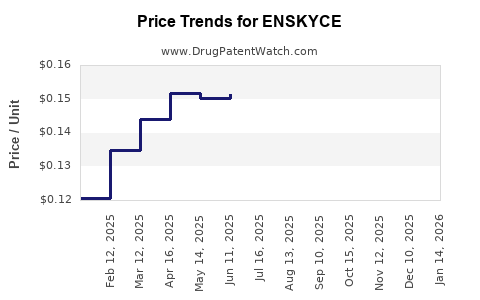
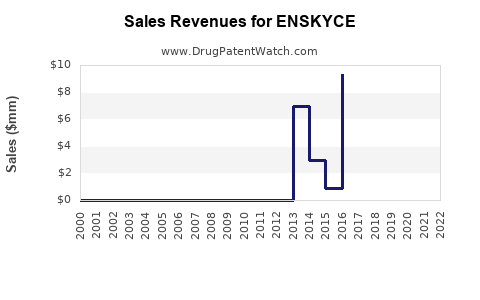
US Patents and Regulatory Information for ENSKYCE
| Applicant | Tradename | Generic Name | Dosage | NDA | Approval Date | TE | Type | RLD | RS | Patent No. | Patent Expiration | Product | Substance | Delist Req. | Exclusivity Expiration |
|---|---|---|---|---|---|---|---|---|---|---|---|---|---|---|---|
| Lupin Ltd | ENSKYCE | desogestrel; ethinyl estradiol | TABLET;ORAL-28 | 201887-001 | Mar 7, 2013 | AB | RX | No | No | ⤷ Start Trial | ⤷ Start Trial | ⤷ Start Trial | |||
| >Applicant | >Tradename | >Generic Name | >Dosage | >NDA | >Approval Date | >TE | >Type | >RLD | >RS | >Patent No. | >Patent Expiration | >Product | >Substance | >Delist Req. | >Exclusivity Expiration |
ENSKYCE Market Dynamics, Financial Trajectory, Patent Position, and Generic Competition
Enskyce is a mature U.S. generic combined oral contraceptive containing desogestrel 0.15 mg and ethinyl estradiol 0.03 mg. Its commercial position is driven by formulary access, pharmacy purchasing contracts, reimbursement, substitution, and manufacturing reliability rather than patent exclusivity. The product has no meaningful standalone financial disclosure, and public filings do not provide Enskyce-specific revenue or profit data. Its revenue trajectory is therefore best characterized as a low-margin, volume-dependent generic trajectory within the broader oral contraceptive market.
What is Enskyce and who manufactures it?
Enskyce is an oral contraceptive equivalent to the desogestrel and ethinyl estradiol reference product historically marketed as Ortho-Cept. Each active tablet contains 0.15 mg of desogestrel and 0.03 mg of ethinyl estradiol. The product is approved for the prevention of pregnancy in women who elect to use oral contraception.[1]
| Product attribute | Enskyce profile |
|---|---|
| Active ingredients | Desogestrel and ethinyl estradiol |
| Strength | 0.15 mg / 0.03 mg |
| Dosage form | Oral tablet |
| Therapeutic class | Combined hormonal contraceptive |
| Regulatory pathway | Abbreviated New Drug Application, or ANDA, generic pathway |
| Reference product | Ortho-Cept |
| Prescription status | Prescription-only |
| Primary market | United States |
| Biosimilar exposure | None |
| Principal commercial drivers | Generic substitution, payer coverage, pharmacy access, supply reliability |
Enskyce has been marketed through the U.S. generic drug supply chain rather than as a differentiated innovator product. Product labeling and National Drug Code records may identify the responsible labeler or distributor, but that entity is not necessarily the underlying manufacturer. Generic contraceptive products are frequently sourced through contract manufacturing, private-label arrangements, and distributor networks.[2]
What is the FDA regulatory status of Enskyce?
Enskyce is an FDA-approved generic oral contraceptive. Its approval depends on pharmaceutical equivalence and bioequivalence to the reference product, together with compliance with current good manufacturing practice requirements.
The FDA-approved labeling identifies standard combined oral contraceptive risks, including thromboembolic events, cardiovascular risk in certain smokers, hypertension, hepatic disease, and contraindications involving breast cancer or other serious medical conditions.[1]
Enskyce does not have the regulatory profile of a new molecular entity. It does not receive a new-drug exclusivity period tied to its own active ingredient. Its commercial life is governed by generic competition and the continuing approval status of the relevant ANDA.
FDA market characteristics
The regulatory characteristics are commercially important:
- No new chemical entity exclusivity applies to Enskyce.
- There is no reference-product exclusivity remaining for the desogestrel/ethinyl estradiol combination that would prevent ordinary generic competition.
- Generic approval allows substitution where state law, payer rules, and prescriber instructions permit it.
- FDA approval does not guarantee preferred formulary placement or stable reimbursement.
- Supply interruptions can materially affect market share because purchasers often switch between equivalent manufacturers.
When does Enskyce lose exclusivity?
Enskyce has no material remaining product-specific exclusivity period. The active ingredients and the combination have been available in generic form for many years, and the original reference-product exclusivity period has expired.
The relevant commercial conclusion is that Enskyce does not face a future “loss of exclusivity” event comparable to a branded drug approaching patent expiry. It already operates in a post-exclusivity market.
| Exclusivity category | Enskyce status |
|---|---|
| New chemical entity exclusivity | Not applicable |
| Orphan-drug exclusivity | Not applicable |
| Pediatric exclusivity | No meaningful product-specific protection identified |
| Patent-based exclusivity | No commercially relevant Enskyce-specific protection identified |
| Generic competition | Established |
| Biosimilar exclusivity | Not applicable |
What patents protect Enskyce?
No material patent estate protecting Enskyce as a commercial product has been identified in the public regulatory record. The underlying active ingredients are long-established, and the original composition-of-matter protection is expired.
Orange Book status
The FDA Orange Book primarily records patents and regulatory exclusivity associated with approved new drug applications. Enskyce is an ANDA product and does not normally create an independent Orange Book patent estate.
The relevant patent position is therefore:
- The reference combination was subject to historical patent and regulatory protection.
- That protection expired before the current generic market matured.
- Enskyce does not rely on a current composition-of-matter patent.
- Any later patents would need to cover a specific formulation, method of use, or manufacturing process, and would not automatically block ordinary generic versions.
No commercially significant Orange Book listing is associated with Enskyce itself based on the public FDA framework.[3]
Formulation and method-of-use patents
A generic oral contraceptive may still encounter patents directed to:
- Extended-cycle dosing schedules.
- Specific packaging configurations.
- Modified-release delivery systems.
- Treatment methods unrelated to ordinary pregnancy prevention.
- Manufacturing intermediates or process controls.
Those patents would have limited relevance to Enskyce’s standard immediate-release tablet unless the generic product practices the claimed subject matter. The ordinary Enskyce product does not require a differentiated delivery system or a proprietary method of use.
Are there Paragraph IV challenges involving Enskyce?
No major Paragraph IV litigation involving Enskyce has been identified as a current commercial issue. Paragraph IV litigation generally arises when an ANDA applicant challenges a listed patent for a brand-name reference drug. Enskyce is already a mature generic product, so the principal litigation risk is not an impending Paragraph IV launch.
A Paragraph IV filing could theoretically target a later-listed patent covering a specific use or formulation. That would not create a conventional Enskyce exclusivity event unless the patent directly covered the marketed product and remained enforceable.
The practical litigation assessment is low:
| Litigation risk | Assessment |
|---|---|
| Paragraph IV challenge against Enskyce | Low |
| Enskyce as a patent challenger | Historically possible but not a current market driver |
| Patent-infringement risk from branded contraceptives | Low for standard use |
| ANDA litigation affecting supply | Low based on the public record |
| Product-liability litigation | More relevant than patent litigation |
How does Enskyce compare with competing contraceptives?
Enskyce competes with several categories rather than one direct brand.
| Competitor category | Examples | Competitive effect on Enskyce |
|---|---|---|
| Same active ingredients | Desogestrel/ethinyl estradiol generics | Direct price and formulary competition |
| Other combined oral contraceptives | Norgestimate/ethinyl estradiol, levonorgestrel/ethinyl estradiol | Prescriber substitution and therapeutic competition |
| Progestin-only pills | Norethindrone, drospirenone products | Relevant where estrogen is contraindicated |
| Long-acting reversible contraception | IUDs and implants | Compete on adherence and duration |
| Emergency contraception | Levonorgestrel and ulipristal products | Different use case, limited direct substitution |
| Branded oral contraceptives | Products with differentiated dosing or branding | Compete through marketing, coverage, and patient preference |
Enskyce’s direct competitors can generally offer equivalent clinical utility at similar or lower acquisition cost. This weakens the ability of any single generic labeler to sustain a premium.
How does Enskyce compare with Yaz and other branded products?
Enskyce differs from drospirenone/ethinyl estradiol products such as Yaz in active ingredient, labeling profile, clinical positioning, and pricing. Yaz and related products have historically used brand differentiation around acne, premenstrual dysphoric disorder, dosing schedules, and patient familiarity. Enskyce competes primarily as a low-cost contraceptive option.
Enskyce does not have the same commercial exposure to brand conversion, direct-to-consumer marketing, or branded copay economics. Its principal risk is substitution by another generic, not conversion from a branded product after patent expiry.
What drives Enskyce revenue?
Enskyce revenue depends on prescription volume multiplied by net price after wholesaler discounts, pharmacy concessions, rebates, returns, and administrative fees. Unit volume can remain stable while net sales decline if price competition intensifies.
Revenue drivers
The principal drivers are:
- Number of prescriptions dispensed.
- Number of tablets or 28-day packs per prescription.
- Share of covered lives.
- Inclusion on Medicaid and commercial formularies.
- Pharmacy benefit manager reimbursement.
- Wholesale acquisition cost and average realized price.
- Manufacturing cost and active pharmaceutical ingredient cost.
- Product availability during competitor shortages.
- Contract awards from wholesalers, health systems, and public programs.
- Patient and prescriber switching among equivalent generics.
Revenue constraints
The product faces structural limitations:
- Generic oral contraceptives have low switching costs.
- Retail pharmacies can substitute among equivalent products.
- Payers frequently favor the lowest-cost manufacturer.
- Distributor contracts can change rapidly.
- A labeler may lose volume without losing FDA approval.
- Brand-level financial reporting is generally unavailable for a small generic product.
No reliable public source reports Enskyce-specific annual sales, operating margin, or market share. Any precise revenue estimate would require commercial prescription or channel data not disclosed in FDA labeling or public issuer filings.
What is the financial trajectory for Enskyce?
Enskyce’s likely financial trajectory is mature and declining on a net-price basis, with periodic volume recovery during competitor supply disruptions.
| Financial dimension | Expected trajectory |
|---|---|
| Prescription demand | Stable to modestly variable |
| Net price | Downward pressure |
| Gross margin | Low and exposed to manufacturing costs |
| Market share | Volatile among generic suppliers |
| Revenue visibility | Limited |
| Patent-driven upside | None |
| Supply-driven upside | Possible but temporary |
| Long-term growth | Low |
| Cash-flow quality | Dependent on scale and contract retention |
A generic product can remain profitable after substantial price erosion if manufacturing costs are low and production volume is efficient. That profitability is vulnerable to raw-material inflation, quality remediation, plant shutdowns, and loss of a major wholesaler or payer contract.
The most credible upside scenario is a temporary increase in Enskyce volume caused by a shortage, recall, or manufacturing problem affecting a competing desogestrel/ethinyl estradiol product. Such gains usually reverse when supply normalizes.
What licensing deals affect Enskyce?
No major publicly disclosed licensing transaction appears to be economically tied to Enskyce as a standalone product. Generic oral contraceptives are commonly commercialized through supply, distribution, private-label, or contract-manufacturing arrangements rather than high-value asset licenses.
Potential commercial arrangements include:
- ANDA ownership or transfer.
- Contract manufacturing.
- Private-label distribution.
- Wholesale supply agreements.
- Pharmacy benefit manager contracting.
- Product acquisition portfolios involving multiple generic drugs.
The absence of a publicly disclosed Enskyce-specific licensing transaction limits the ability to attribute royalty expense, milestone obligations, or transaction value to the product.
What generic launch risks exist for Enskyce?
Generic launch risk is low because Enskyce is already a generic. The more relevant issue is continuing generic competition.
Manufacturing and intellectual-property barriers
Manufacturing barriers are modest but not zero. The product requires compliant production of a low-dose hormonal tablet, reliable content uniformity, packaging controls, stability data, and validated quality systems. The active ingredients are established and generally available from multiple sources.
The main operational risks are:
- FDA warning letters or import alerts affecting a supplier.
- Batch failures or recalls.
- API shortages.
- Contract-manufacturer capacity constraints.
- Packaging or labeling errors.
- Failure to maintain bioequivalence and quality documentation.
- Loss of a preferred distributor relationship.
These barriers can reduce the number of active suppliers temporarily, but they do not create durable patent protection.
What is the competitive outlook for Enskyce?
Enskyce has a defensive, low-growth market position. It can retain demand because oral contraceptives have recurring use and broad clinical familiarity. It lacks the pricing power associated with patented drugs, differentiated delivery systems, or proprietary clinical indications.
The competitive outlook is shaped by three factors:
- Generic price compression will continue to limit revenue per prescription.
- Formulary and pharmacy access will determine volume more than brand recognition.
- Supply reliability can temporarily improve or damage market share.
Biosimilar risk is irrelevant because Enskyce is a chemically synthesized small-molecule tablet, not a biologic. The product is more exposed to ordinary generic substitution than to biosimilar competition.
Key Takeaways
- Enskyce is a mature generic combined oral contraceptive containing desogestrel and ethinyl estradiol.
- It has no meaningful remaining product-specific exclusivity.
- Its commercial position is not protected by a material current patent estate.
- Orange Book patent protection is not a significant Enskyce value driver.
- No major current Paragraph IV dispute has been identified as affecting the product.
- Standalone Enskyce revenue, margin, and market share are not publicly disclosed.
- The financial trajectory is likely flat to declining on a net-price basis, with volume dependent on formulary access and supply reliability.
- The principal competitive threat is substitution by another generic contraceptive, not biosimilars or branded patent expiry.
- Temporary upside can arise from competitor shortages, recalls, or manufacturing disruptions.
- Long-term value depends on efficient production, quality compliance, and retention of payer and distributor contracts.
FAQs
Is Enskyce still available as a prescription contraceptive?
Yes. Enskyce is an FDA-approved prescription combined oral contraceptive marketed through the U.S. generic drug supply chain.[1]
Is Enskyce the same as Ortho-Cept?
Enskyce contains the same active ingredients and strength as the historical Ortho-Cept product: desogestrel 0.15 mg and ethinyl estradiol 0.03 mg. The products may differ in inactive ingredients, packaging, manufacturer, and labeling presentation.
Does Enskyce have a patent expiration date?
No commercially meaningful Enskyce-specific patent expiration date governs current market entry. The product is already in the post-patent generic market.
Can pharmacies substitute another generic for Enskyce?
Substitution generally depends on state pharmacy law, prescriber instructions, payer requirements, and whether the alternative product is therapeutically and pharmaceutically equivalent under applicable FDA standards.
Is Enskyce exposed to biosimilar competition?
No. Enskyce is a small-molecule oral tablet. Its relevant competitors are other generic oral contraceptives and alternative contraceptive methods, not biosimilars.
References
-
U.S. Food and Drug Administration. (n.d.). Enskyce: Desogestrel and ethinyl estradiol tablets, prescribing information. DailyMed.
-
U.S. Food and Drug Administration. (n.d.). Drugs@FDA and National Drug Code directory. FDA.
-
U.S. Food and Drug Administration. (2024). Approved drug products with therapeutic equivalence evaluations. FDA.
More… ↓
