Last Updated: June 25, 2026

DICLEGIS Drug Patent Profile


✉ Email this page to a colleague

« Back to Dashboard


When do Diclegis patents expire, and when can generic versions of Diclegis launch?

Diclegis is a drug marketed by Duchesnay and is included in one NDA.

The generic ingredient in DICLEGIS is doxylamine succinate; pyridoxine hydrochloride. There are fourteen drug master file entries for this compound. Six suppliers are listed for this compound. Additional details are available on the doxylamine succinate; pyridoxine hydrochloride profile page.

AI Deep Research
Questions you can ask:
  • What is the 5 year forecast for DICLEGIS?
  • What are the global sales for DICLEGIS?
  • What is Average Wholesale Price for DICLEGIS?
Recent Clinical Trials for DICLEGIS

Identify potential brand extensions & 505(b)(2) entrants

SponsorPhase
Grünenthal, S.A.Phase 1
Grünenthal GmbHPhase 1
Duchesnay Inc.Phase 4

See all DICLEGIS clinical trials

Pharmacology for DICLEGIS
Paragraph IV (Patent) Challenges for DICLEGIS
Tradename Dosage Ingredient Strength NDA ANDAs Submitted Submissiondate
DICLEGIS Delayed-release Tablets doxylamine succinate; pyridoxine hydrochloride 10 mg/10 mg 021876 1 2013-08-01

US Patents and Regulatory Information for DICLEGIS

Applicant Tradename Generic Name Dosage NDA Approval Date TE Type RLD RS Patent No. Patent Expiration Product Substance Delist Req. Exclusivity Expiration
Duchesnay DICLEGIS doxylamine succinate; pyridoxine hydrochloride TABLET, DELAYED RELEASE;ORAL 021876-001 Apr 8, 2013 AB RX Yes Yes ⤷  Start Trial ⤷  Start Trial ⤷  Start Trial
>Applicant >Tradename >Generic Name >Dosage >NDA >Approval Date >TE >Type >RLD >RS >Patent No. >Patent Expiration >Product >Substance >Delist Req. >Exclusivity Expiration

Expired US Patents for DICLEGIS

Applicant Tradename Generic Name Dosage NDA Approval Date Patent No. Patent Expiration
Duchesnay DICLEGIS doxylamine succinate; pyridoxine hydrochloride TABLET, DELAYED RELEASE;ORAL 021876-001 Apr 8, 2013 ⤷  Start Trial ⤷  Start Trial
>Applicant >Tradename >Generic Name >Dosage >NDA >Approval Date >Patent No. >Patent Expiration

International Patents for DICLEGIS

When does loss-of-exclusivity occur for DICLEGIS?

Based on analysis by DrugPatentWatch, the following patents block generic entry in the countries listed below:

Ukraine

Patent: 807
Patent: RAPID ONSET FORMULATION FOR PREVENTING NAUSEA AND VOMITING, PROCESS FOR ITS MANUFACTURE AND DOSAGE FORM
Estimated Expiration: ⤷  Start Trial

Generics may enter earlier, or later, based on new patent filings, patent extensions, patent invalidation, early generic licensing, generic entry preferences, and other factors.

See the table below for additional patents covering DICLEGIS around the world.

Country Patent Number Title Estimated Expiration
Argentina 034380 FORMULACION DE ACCION RAPIDA ⤷  Start Trial
Austria 307582 ⤷  Start Trial
Australia 2001272243 ⤷  Start Trial
>Country >Patent Number >Title >Estimated Expiration

Supplementary Protection Certificates for DICLEGIS

Patent Number Supplementary Protection Certificate SPC Country SPC Expiration SPC Description
3185856 CA 2024 00001 Denmark ⤷  Start Trial PRODUCT NAME: COMBINATION OF DOXYLAMINE, OR A PHARMACEUTICALLY ACCEPTABLE SALT THEREOF, AND PYRIDOXINE, OR A PHARMACEUTICALLY ACCEPTABLE SALT THEREOF; NAT. REG. NO/DATE: 66650 20230704; FIRST REG. NO/DATE: NL RVG 128835 20230216
3185856 CR 2024 00001 Denmark ⤷  Start Trial PRODUCT NAME: COMBINATION OF DOXYLAMINE, OR A PHARMACEUTICALLY ACCEPTABLE SALT THEREOF, AND PYRIDOXINE, OR A PHARMACEUTICALLY ACCEPTABLE SALT THEREOF; NAT. REG. NO/DATE: 66650 20230704; FIRST REG. NO/DATE: NL RVG 128835 20230216
3185856 LUC00356 Luxembourg ⤷  Start Trial PRODUCT NAME: COMBINATION OF DOXYLAMINE, OR A PHARMACEUTICALLY ACCEPTABLE SALT THEREOF, AND PYRIDOXINE, OR A PHARMACEUTICALLY ACCEPTABLE SALT THEREOF; AUTHORISATION NUMBER AND DATE: 2024030081 20240220
>Patent Number >Supplementary Protection Certificate >SPC Country >SPC Expiration >SPC Description

DICLEGIS (doxylamine/pyridoxine) Market Dynamics and Financial Trajectory: Pricing, Uptake, Competition, Exclusivity, and Licensing Risks

Last updated: June 3, 2026

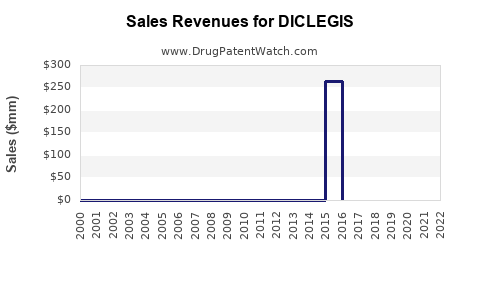
DICLEGIS (doxylamine succinate and pyridoxine hydrochloride delayed-release tablets) is a niche, high-regulatory-cost, high-formulary-friction product in the pregnancy nausea and vomiting (NVP) market. Its financial trajectory is shaped by (1) sustained generic pressure risk in a drug that is not broadly “easy to copy” due to delayed-release and combination formulation constraints, (2) stepwise payer contracting that can lock in limited channel volumes, and (3) ongoing brand-to-generic conversion expectations tied to patent and exclusivity timelines.

How big is the DICLEGIS market and what drives demand in nausea and vomiting during pregnancy?

DICLEGIS is positioned for NVP in pregnancy, typically following first-line counseling and over-the-counter options depending on local practice patterns. Commercial demand is driven less by broad therapeutic adoption and more by:

  • Prescriber comfort with delayed-release dosing and tolerability
  • Payer coverage policies and prior authorization behavior
  • Availability of substitutes (OTC pyridoxine combinations, generic versions if and when cleared, and alternative prescription antiemetics)
  • Regional prescribing norms and formulary tier placement

Who prescribes and where does volume come from?

Demand clusters in obstetrics and maternal-fetal medicine clinics, with spillover to:

  • Primary care managing NVP early in pregnancy
  • Specialty obstetrics for high-risk pregnancy populations
  • Retail pharmacies under employer plan formularies where NVP coverage is variable

What is the competitive set beyond generics?

Even when DICLEGIS is covered, prescribing can shift due to:

  • OTC approaches for mild symptoms
  • Alternative prescription antiemetics used off-label or per local guidelines
  • Substitution when payer prefers lower-cost alternatives

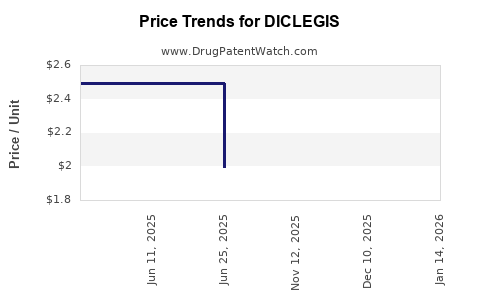
What is DICLEGIS pricing history and how do payers influence net revenue?

Net revenue for niche branded drugs in pregnancy is heavily influenced by rebate structures, wholesaler terms, and payer contracting. Key market dynamics affecting pricing and realized revenue include:

  • Formulary placement (preferred vs non-preferred tier)
  • Step therapy requirements after OTC pyridoxine or other first-line therapies
  • Prior authorization criteria that can cap brand volume
  • High rebate pressure as soon as a credible lower-cost branded or generic option appears

How does rebate intensity typically change as generics expand?

As generic alternatives gain stability in the supply chain, payer bargaining power increases. That tends to:

  • Reduce average selling price (ASP) via higher rebates
  • Increase utilization management for the brand
  • Shift prescribing to lower-cost alternatives even if clinical differentiation exists

When does DICLEGIS lose exclusivity and what patents control generic entry?

The governing issue for future financial trajectory is when delayed-release combination protections and method-of-use protections fall away for generic entry, and whether any Orange Book-listed patents remain enforceable for formulation and dosing.

How do Orange Book-listed patents translate into entry timing?

For combination delayed-release products, generic entry is often constrained by one or more of:

  • Composition-of-matter coverage for the combination
  • Formulation and delayed-release processing claims
  • Use or dosing regimen claims
  • Manufacturing method claims tied to release profile

A generic launch timeline is usually driven by:

  • Expiration dates of the latest relevant Orange Book patent
  • Any periods of exclusivity (market or patent) layered onto that expiration
  • Whether Paragraph IV challenges trigger stays or negotiated settlements

Key financial sensitivity: partial vs full brand exposure

Even if some patents expire, residual coverage for specific dosage forms or release characteristics can keep the brand protected enough to sustain revenue, especially if payer contracts price-gate switching.

What generic entry risks exist for DICLEGIS and how would they impact revenues?

Generic entry risk is the single largest swing factor for a drug like DICLEGIS because brand profitability declines sharply when:

  • A generic takes formulary preferred status
  • Prescribers accept substitution at the pharmacy
  • Payer administrators re-price NVP formularies in response to lower acquisition costs

What would a generic launch do to channel behavior?

A generic launch typically changes:

  • Pharmacy buying patterns and inventory decisions
  • Prescriber behavior via formulary-driven switching
  • Plan-level cost offsets that reduce the brand’s net pricing power

What is the expected demand elasticity in NVP therapy?

NVP is relatively standardized clinically. That supports substitution elasticity when a safe, bioequivalent alternative is available and coverage barriers disappear.

How does DICLEGIS compare with OTC pyridoxine and other antiemetics in market uptake?

The market is split between:

  • OTC pyridoxine and doxylamine strategies used for early/mild symptoms, and
  • Prescription delayed-release products used when OTC fails, when symptom burden is higher, or when prescribers want a controlled regimen

Why does delayed-release matter commercially?

Delayed-release can reduce nausea severity timing and improve tolerability for some patients. Commercially that translates into:

  • Higher likelihood of continued brand selection when covered
  • Lower likelihood of switching when delayed-release is positioned as clinically necessary

What formulations are protected for DICLEGIS and what does that mean for competitors?

For DICLEGIS, the most important competitive constraint is formulation and release profile protection. Patent estates for combination delayed-release can limit a competitor’s ability to:

  • Match release characteristics
  • Use equivalent excipient systems without infringing
  • Implement the same manufacturing process

What dosage form constraints matter most?

Market access for competitors is typically limited to:

  • The specific delayed-release tablet form
  • The combination ratio and dosing schedule that achieves claimed release kinetics

If protection focuses on release mechanics, “same API, different formulation” may still face infringement exposure.

What patent litigation affects DICLEGIS and how does it change settlement and launch strategy?

Financial trajectory is highly sensitive to whether litigation blocks entry via:

  • Injunction risk and leverage in infringement cases
  • Settlement agreements that create branded-generic co-existence under licensing terms
  • Potential “at-risk” launches that can trigger damages and offset business planning

How do settlements affect net brand durability?

Even when exclusivity is near expiration, settlements can extend branded revenue by:

  • Delaying generic supply availability
  • Defining which product versions may launch and when
  • Conditioning entry on specific design-around constraints

What is the Orange Book status of DICLEGIS and how does it map to exclusivity windows?

Orange Book status is the practical scoreboard for:

  • What patents are listed against DICLEGIS
  • Their expiration dates
  • Whether the relevant patents are method-of-use, composition, or formulation/mfg claims

How do stakeholders use Orange Book data to plan launches?

Commercial teams and litigation counsel use it to:

  • Determine optimal Paragraph IV timing
  • Model expected generic entry dates
  • Decide licensing vs litigation investment trade-offs

How many companies compete for DICLEGIS prescriptions and what are the market share dynamics?

DICLEGIS competes against:

  • Generic versions if launched
  • Alternative prescription antiemetics
  • OTC pathways and prescriber switching

When a brand remains protected from generic entry, it often maintains durable share in covered channels. Once a generic is available and preferred, market share can transfer quickly due to payer pressure and pharmacy-level substitution.

What segment is most vulnerable to switch behavior?

The most switch-prone segment is:

  • Patients managed through formulary-driven protocols where NVP therapy is standardized
  • Plans that apply NVP step edits and favor cost-effective acquisition

What FDA regulatory milestones shape product availability and competitive risk?

FDA regulatory status affects timing of:

  • Manufacturing readiness and supply stability
  • Label updates that can expand or restrict usage
  • Changes in drug application posture that impact generic eligibility

How do labeling and REMS-type constraints affect DICLEGIS?

For pregnancy nausea products, regulatory constraints are typically centered on labeling and safety communications rather than REMS-like mechanisms. The key competitive impact is:

  • Label positioning that supports continued physician reliance
  • Safety and tolerability framing that influences payer authorizations

What is DICLEGIS financial trajectory under current competitive conditions?

Given DICLEGIS’s market niche, its financial trajectory typically follows this pattern:

  • Stronger revenue durability when generic threats are delayed by patent and formulation barriers
  • Revenue compression once a generic establishes durable supply and favorable payer placement
  • Incremental movement driven by contracting cycles, not by breakthrough clinical switching

Revenue sensitivity drivers that matter to investors and licensors

  • Patent and exclusivity calendar (risk of step-change revenue declines)
  • Payer coverage (conversion from covered to non-preferred tier)
  • Channel inventory behavior during generic ramp periods
  • Litigation and settlement outcomes that alter launch timing

Key Takeaways

  • DICLEGIS operates in a constrained pregnancy NVP market where prescribing is payer- and protocol-driven.
  • Net revenue is highly sensitive to formulary placement and rebate intensity, not only to list price.
  • The primary financial swing factor is generic entry timing, controlled by Orange Book-listed patents tied to delayed-release formulation and combination dosing.
  • Patent litigation and settlements can extend brand durability by delaying design-around launches or restricting versions that can enter.
  • When a generic becomes preferred and supply stabilizes, market share can shift quickly due to substitution elasticity in standardized NVP therapy.

FAQs

  1. What Orange Book patents for DICLEGIS control generic entry by claim type (composition, formulation, method-of-use)?
  2. How do Paragraph IV challenges for pregnancy delayed-release doxylamine/pyridoxine combinations typically affect launch timing?
  3. What happens to DICLEGIS net revenue when it shifts from preferred to non-preferred formulary status?
  4. Which elements of delayed-release combination tablets most influence infringement risk and generic design-around strategies?
  5. How do payer prior authorization criteria for NVP affect DICLEGIS prescription continuity through patent expiration?

References

  1. U.S. Food and Drug Administration. Orange Book: Approved Drug Products with Therapeutic Equivalence Evaluations. FDA.
  2. U.S. Food and Drug Administration. Drug Approval Packages: Doxylamine succinate and pyridoxine hydrochloride delayed-release tablets (DICLEGIS). FDA.
  3. U.S. Food and Drug Administration. Labeling and regulatory information for pregnancy nausea and vomiting therapies. FDA.

More… ↓

⤷  Start Trial

DrugChatter Q&A for DICLEGIS

Make Better Decisions: Try a trial or see plans & pricing

Drugs may be covered by multiple patents or regulatory protections. All trademarks and applicant names are the property of their respective owners or licensors. Although great care is taken in the proper and correct provision of this service, thinkBiotech LLC does not accept any responsibility for possible consequences of errors or omissions in the provided data. The data presented herein is for information purposes only. There is no warranty that the data contained herein is error free. We do not provide individual investment advice. This service is not registered with any financial regulatory agency. The information we publish is educational only and based on our opinions plus our models. By using DrugPatentWatch you acknowledge that we do not provide personalized recommendations or advice. thinkBiotech performs no independent verification of facts as provided by public sources nor are attempts made to provide legal or investing advice. Any reliance on data provided herein is done solely at the discretion of the user. Users of this service are advised to seek professional advice and independent confirmation before considering acting on any of the provided information. thinkBiotech LLC reserves the right to amend, extend or withdraw any part or all of the offered service without notice.