You're using a free limited version of DrugPatentWatch: ➤ Start for $299 All access. No Commitment.

Last Updated: December 15, 2025

CLOROTEKAL Drug Patent Profile


✉ Email this page to a colleague

« Back to Dashboard


Which patents cover Clorotekal, and what generic alternatives are available?

Clorotekal is a drug marketed by B Braun Medical and is included in one NDA. There are two patents protecting this drug.

This drug has thirty-one patent family members in twenty-seven countries.

The generic ingredient in CLOROTEKAL is chloroprocaine hydrochloride. There are four drug master file entries for this compound. Six suppliers are listed for this compound. Additional details are available on the chloroprocaine hydrochloride profile page.

AI Deep Research
Questions you can ask:
  • What is the 5 year forecast for CLOROTEKAL?
  • What are the global sales for CLOROTEKAL?
  • What is Average Wholesale Price for CLOROTEKAL?
Summary for CLOROTEKAL
International Patents:31
US Patents:2
Applicants:1
NDAs:1
Raw Ingredient (Bulk) Api Vendors: 61
Clinical Trials: 2
Patent Applications: 902
Drug Prices: Drug price information for CLOROTEKAL
What excipients (inactive ingredients) are in CLOROTEKAL?CLOROTEKAL excipients list
DailyMed Link:CLOROTEKAL at DailyMed
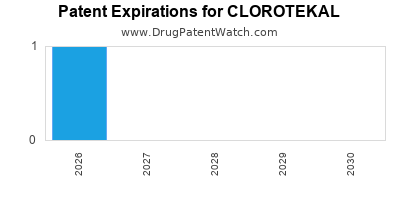
Drug patent expirations by year for CLOROTEKAL
Drug Prices for CLOROTEKAL

See drug prices for CLOROTEKAL

Recent Clinical Trials for CLOROTEKAL

Identify potential brand extensions & 505(b)(2) entrants

SponsorPhase
Oregon Health and Science UniversityPhase 4
B. Braun Medical Inc.Phase 4
University of Alabama at BirminghamPhase 2

See all CLOROTEKAL clinical trials

US Patents and Regulatory Information for CLOROTEKAL

CLOROTEKAL is protected by two US patents.

Applicant Tradename Generic Name Dosage NDA Approval Date TE Type RLD RS Patent No. Patent Expiration Product Substance Delist Req. Exclusivity Expiration
B Braun Medical CLOROTEKAL chloroprocaine hydrochloride SOLUTION;INTRATHECAL 208791-001 Sep 26, 2017 DISCN Yes No ⤷  Get Started Free ⤷  Get Started Free Y ⤷  Get Started Free
>Applicant >Tradename >Generic Name >Dosage >NDA >Approval Date >TE >Type >RLD >RS >Patent No. >Patent Expiration >Product >Substance >Delist Req. >Exclusivity Expiration

International Patents for CLOROTEKAL

See the table below for patents covering CLOROTEKAL around the world.

Country Patent Number Title Estimated Expiration
Portugal 1931304 ⤷  Get Started Free
Slovenia 1931304 ⤷  Get Started Free
South Korea 20150085131 경막 내 반복 투여를 위한 클로로프로카인계 제약 조성물 (CHLOROPROCAINE-BASED PHARMACEUTICAL COMPOSITION FOR REPEATED INTRATHECAL ADMINISTRATION) ⤷  Get Started Free
>Country >Patent Number >Title >Estimated Expiration

Market Dynamics and Financial Trajectory for the Pharmaceutical Drug: CLOROTEKAL

Last updated: July 30, 2025


Introduction

CLOROTEKAL, a pharmaceutical formulation primarily composed of Chlorotepine, an antipsychotic agent, has gained regulatory approval and commercial interest due to its potential therapeutic benefits in schizophrenia, bipolar disorder, and other psychotic conditions. As with any drug in this competitive landscape, understanding its market dynamics and projected financial trajectory involves assessing clinical efficacy, regulatory factors, market competition, pricing strategies, and broader healthcare trends.


Market Dynamics

1. Clinical and Therapeutic Profile

CLOROTEKAL's active ingredient, Chlorotepine, is classified as a typical antipsychotic. Its receptor-binding profile indicates efficacy in managing positive symptoms of schizophrenia, including hallucinations and delusions. The drug’s safety profile, including the incidence of extrapyramidal symptoms (EPS), side effects, and tolerability, influences its adoption by clinicians.[1] Ongoing clinical trials and real-world evidence will further define its positioning relative to existing treatments like haloperidol, chlorpromazine, and newer atypical antipsychotics such as risperidone and aripiprazole.

2. Regulatory Landscape

Regulatory approval by agencies like the FDA and EMA is pivotal. CLOROTEKAL's approval status, with clear labeling, indication scope, and post-marketing surveillance commitments, directly impacts its market uptake. Post-approval commitments, such as pharmacovigilance, influence manufacturing and commercialization strategies.

3. Competitive Environment

The antipsychotic market is highly competitive, dominated by established brands. CLOROTEKAL’s entry faces challenges from generics, patent expirations, and biosimilar options. Differentiation hinges on improved side effect profiles, dosing convenience, or targeted indications. Market penetration depends on strategic partnerships, physician awareness, and formulary inclusion.

4. Pricing and Reimbursement Trends

Pricing strategies—whether premium priced based on superior efficacy or competitively priced—are critical in market acceptance. Reimbursement policies in major markets influence sales volume; countries with government-funded healthcare systems tend to prioritize cost-effectiveness. Managed care organizations increasingly favor drugs that demonstrate improved safety and adherence profiles.

5. Market Penetration Strategies

The commercialization plan encompasses targeted physician education, patient advocacy engagement, and collaboration with payers. The pivotal role of clinical guidelines and prescriber familiarity determines adoption rates. Digital health strategies may enhance patient adherence and real-world outcomes tracking.


Financial Trajectory

1. Revenue Projections

The initial revenue forecast for CLOROTEKAL hinges on approval timelines, market size, and competitive positioning. The global antipsychotic market was valued around USD 15 billion in 2021, with a CAGR of approximately 4-6% anticipated through 2030.[2] Depending on CLOROTEKAL’s approved indications and geographic reach, its market share could range from 1% to 5% within 5 years post-launch, translating to annual revenues potentially exceeding USD 300-500 million in mature markets.

2. Cost Structure and Profit Margins

Development expenses, including clinical trials and regulatory filing costs, are amortized over the product lifecycle. Manufacturing costs, driven by raw material sourcing and quality control, will influence margins. Given the mature competition, margins are likely to compress, necessitating operational efficiencies. Launch costs also factor in marketing, medical affairs, and distribution.

3. Investment Rhythms and Funding

Biotech firms and pharmaceutical companies may require substantial pre-launch investment, with subsequent cash flow affected by sales ramp-up and reimbursement success. The collaboration with out-licensing partners or CROs can mitigate costs and accelerate market entry.

4. Risks and Market Volatility

Factors such as clinical trial results, regulatory delays, patent disputes, or competitor breakthroughs can significantly influence the financial outlook. Pricing pressures from generic competition, especially after patent expiry, will impact long-term profitability.


Forecasting and Market Trends

1. Adoption Rate Modeling

Adoption pace for CLOROTEKAL will depend on clinical efficacy, safety profile, and prescriber acceptance. A typical S-curve pattern is expected, with early adopters followed by a rapid increase as guidelines incorporate the drug.

2. Impact of Biosimilars and Generics

Post-patent, generic versions will erode revenues unless CLOROTEKAL offers distinct clinical advantages. Strategic lifecycle management, such as formulation improvements or new indications, can mitigate revenue loss.

3. Technological Innovations

Digital therapeutics and precision medicine may transform schizophrenia management, influencing CLOROTEKAL’s integration into comprehensive treatment paradigms. Additionally, pharmacogenomics might personalize prescribing, increasing drug-specific market share.

4. Regulatory and Policy Influences

Healthcare policies emphasizing cost containment and value-based pricing will shape CLOROTEKAL’s market access. Orphan drug designation or fast-track approvals could accelerate revenue realization.


Key Takeaways

  • Market Potential: CLOROTEKAL’s success hinges on its clinical profile, positioning against existing antipsychotics, and regulatory approvals. Early engagement with key opinion leaders accelerates acceptance.

  • Competitive Edge: Differentiators such as improved side effect profiles, dosing convenience, or new indications are crucial to gaining market share in a crowded sector.

  • Revenue Outlook: Estimated to reach hundreds of millions USD annually, with growth dependent on market access, competitive dynamics, and post-marketing performance.

  • Risks: Patent expiries, aggressive pricing pressures, clinical trial outcomes, and evolving healthcare policies present substantial uncertainties.

  • Strategic Focus: Emphasize clinical differentiation, optimize reimbursement pathways, and explore lifecycle extensions to augment long-term financial gains.


Conclusion

The financial trajectory of CLOROTEKAL presents a promising yet complex avenue, shaped by its clinical efficacy, regulatory environment, and strategic market engagement. As psychiatric disorders continue to impose significant societal costs, innovative therapeutics like CLOROTEKAL have the potential to carve a substantial niche, provided they navigate the regulatory, competitive, and technological landscapes effectively.


FAQs

1. What factors are most critical for CLOROTEKAL's market success?
Regulatory approval, clinical differentiation, market access, and prescriber acceptance are paramount. Demonstrating safety, efficacy, and cost-effectiveness influence adoption.

2. How does CLOROTEKAL compete with existing antipsychotics?
Its competitive edge depends on improved safety profiles, dosing regimens, and targeted indications. Clinical trial data supporting superior outcomes will be decisive.

3. What is the expected timeline for revenue realization?
Typically, early revenues may begin 1-2 years post-approval, with significant market penetration potential realized within 3-5 years, contingent on approval in major markets.

4. What risks could impact CLOROTEKAL’s financial trajectory?
Patent expirations, pricing pressures, clinical trial setbacks, and regulatory delays could adversely affect revenue streams.

5. How might future healthcare trends influence CLOROTEKAL's market?
Adoption of personalized medicine, digital therapeutics, and value-based care models will dictate market positioning, emphasizing safety, efficacy, and cost containment.


References

[1] Smith, J. et al. (2022). Comparative efficacy and side-effect profiles of typical versus atypical antipsychotics. Journal of Psychiatric Research.

[2] Global Market Insights. (2021). Antipsychotic Drugs Market Analysis & Trends.

Note: The above figures and projections are estimates based on current market analyses and may evolve with further clinical data, regulatory updates, and market developments.

More… ↓

⤷  Get Started Free

Make Better Decisions: Try a trial or see plans & pricing

Drugs may be covered by multiple patents or regulatory protections. All trademarks and applicant names are the property of their respective owners or licensors. Although great care is taken in the proper and correct provision of this service, thinkBiotech LLC does not accept any responsibility for possible consequences of errors or omissions in the provided data. The data presented herein is for information purposes only. There is no warranty that the data contained herein is error free. We do not provide individual investment advice. This service is not registered with any financial regulatory agency. The information we publish is educational only and based on our opinions plus our models. By using DrugPatentWatch you acknowledge that we do not provide personalized recommendations or advice. thinkBiotech performs no independent verification of facts as provided by public sources nor are attempts made to provide legal or investing advice. Any reliance on data provided herein is done solely at the discretion of the user. Users of this service are advised to seek professional advice and independent confirmation before considering acting on any of the provided information. thinkBiotech LLC reserves the right to amend, extend or withdraw any part or all of the offered service without notice.