You're using a free limited version of DrugPatentWatch: Upgrade for Complete Access

Last Updated: December 19, 2025

CAPLYTA Drug Patent Profile


✉ Email this page to a colleague

« Back to Dashboard


Which patents cover Caplyta, and what generic alternatives are available?

Caplyta is a drug marketed by Intra-cellular and is included in one NDA. There are twenty-five patents protecting this drug and one Paragraph IV challenge.

This drug has one hundred and seventy-six patent family members in twenty countries.

The generic ingredient in CAPLYTA is lumateperone tosylate. One supplier is listed for this compound. Additional details are available on the lumateperone tosylate profile page.

DrugPatentWatch® Generic Entry Outlook for Caplyta

Caplyta was eligible for patent challenges on December 20, 2023.

By analyzing the patents and regulatory protections it appears that the earliest date for generic entry will be August 30, 2039. This may change due to patent challenges or generic licensing.

There have been four patent litigation cases involving the patents protecting this drug, indicating strong interest in generic launch. Recent data indicate that 63% of patent challenges are decided in favor of the generic patent challenger and that 54% of successful patent challengers promptly launch generic drugs.

There are two tentative approvals for the generic drug (lumateperone tosylate), which indicates the potential for near-term generic launch.

Indicators of Generic Entry

< Available with Subscription >

  Get Started Free

AI Deep Research
Questions you can ask:
  • What is the 5 year forecast for CAPLYTA?
  • What are the global sales for CAPLYTA?
  • What is Average Wholesale Price for CAPLYTA?
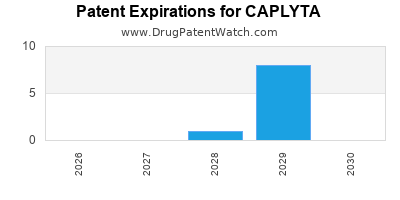
Drug patent expirations by year for CAPLYTA
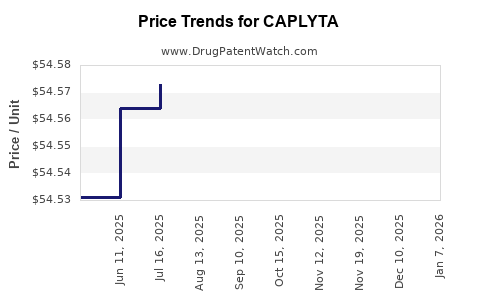
Drug Prices for CAPLYTA

See drug prices for CAPLYTA

DrugPatentWatch® Estimated Loss of Exclusivity (LOE) Date for CAPLYTA
Generic Entry Date for CAPLYTA*:
Constraining patent/regulatory exclusivity:
NDA:
Dosage:
CAPSULE;ORAL

*The generic entry opportunity date is the latter of the last compound-claiming patent and the last regulatory exclusivity protection. Many factors can influence early or later generic entry. This date is provided as a rough estimate of generic entry potential and should not be used as an independent source.

Recent Clinical Trials for CAPLYTA

Identify potential brand extensions & 505(b)(2) entrants

SponsorPhase
University of Massachusetts, WorcesterPhase 4
Intra-Cellular Therapies, Inc.Phase 4
University of New MexicoPhase 4

See all CAPLYTA clinical trials

Pharmacology for CAPLYTA
Paragraph IV (Patent) Challenges for CAPLYTA
Tradename Dosage Ingredient Strength NDA ANDAs Submitted Submissiondate
CAPLYTA Capsules lumateperone tosylate 42 mg 209500 7 2023-12-20

US Patents and Regulatory Information for CAPLYTA

CAPLYTA is protected by thirty-three US patents.

Based on analysis by DrugPatentWatch, the earliest date for a generic version of CAPLYTA is ⤷  Get Started Free.

This potential generic entry date is based on patent ⤷  Get Started Free.

Generics may enter earlier, or later, based on new patent filings, patent extensions, patent invalidation, early generic licensing, generic entry preferences, and other factors.

Applicant Tradename Generic Name Dosage NDA Approval Date TE Type RLD RS Patent No. Patent Expiration Product Substance Delist Req. Exclusivity Expiration
Intra-cellular CAPLYTA lumateperone tosylate CAPSULE;ORAL 209500-001 Dec 20, 2019 RX Yes Yes ⤷  Get Started Free ⤷  Get Started Free Y Y ⤷  Get Started Free
Intra-cellular CAPLYTA lumateperone tosylate CAPSULE;ORAL 209500-001 Dec 20, 2019 RX Yes Yes ⤷  Get Started Free ⤷  Get Started Free ⤷  Get Started Free
Intra-cellular CAPLYTA lumateperone tosylate CAPSULE;ORAL 209500-003 Apr 22, 2022 RX Yes No ⤷  Get Started Free ⤷  Get Started Free Y ⤷  Get Started Free
Intra-cellular CAPLYTA lumateperone tosylate CAPSULE;ORAL 209500-001 Dec 20, 2019 RX Yes Yes ⤷  Get Started Free ⤷  Get Started Free Y ⤷  Get Started Free
Intra-cellular CAPLYTA lumateperone tosylate CAPSULE;ORAL 209500-001 Dec 20, 2019 RX Yes Yes ⤷  Get Started Free ⤷  Get Started Free ⤷  Get Started Free
Intra-cellular CAPLYTA lumateperone tosylate CAPSULE;ORAL 209500-003 Apr 22, 2022 RX Yes No ⤷  Get Started Free ⤷  Get Started Free Y ⤷  Get Started Free
>Applicant >Tradename >Generic Name >Dosage >NDA >Approval Date >TE >Type >RLD >RS >Patent No. >Patent Expiration >Product >Substance >Delist Req. >Exclusivity Expiration

Expired US Patents for CAPLYTA

Applicant Tradename Generic Name Dosage NDA Approval Date Patent No. Patent Expiration
Intra-cellular CAPLYTA lumateperone tosylate CAPSULE;ORAL 209500-001 Dec 20, 2019 ⤷  Get Started Free ⤷  Get Started Free
>Applicant >Tradename >Generic Name >Dosage >NDA >Approval Date >Patent No. >Patent Expiration

International Patents for CAPLYTA

When does loss-of-exclusivity occur for CAPLYTA?

Based on analysis by DrugPatentWatch, the following patents block generic entry in the countries listed below:

Australia

Patent: 19331490
Patent: Novel methods
Estimated Expiration: ⤷  Get Started Free

Patent: 25205128
Patent: NOVEL METHODS
Estimated Expiration: ⤷  Get Started Free

Brazil

Patent: 2021003838
Patent: métodos novos
Estimated Expiration: ⤷  Get Started Free

Canada

Patent: 08558
Patent: NOUVELLES METHODES (NOVEL METHODS)
Estimated Expiration: ⤷  Get Started Free

China

Patent: 2584838
Patent: 新方法 (NOVEL METHODS)
Estimated Expiration: ⤷  Get Started Free

Patent: 8873536
Patent: 新方法 (Novel method)
Estimated Expiration: ⤷  Get Started Free

European Patent Office

Patent: 43739
Patent: NOUVELLES MÉTHODES (NOVEL METHODS)
Estimated Expiration: ⤷  Get Started Free

Israel

Patent: 0913
Patent: שיטות חדשות (Novel methods)
Estimated Expiration: ⤷  Get Started Free

Japan

Patent: 57000
Estimated Expiration: ⤷  Get Started Free

Patent: 21535151
Patent: 新規方法
Estimated Expiration: ⤷  Get Started Free

Patent: 24073559
Patent: 新規方法 (NOVEL METHODS)
Estimated Expiration: ⤷  Get Started Free

Mexico

Patent: 21002321
Patent: NUEVOS METODOS. (NOVEL METHODS.)
Estimated Expiration: ⤷  Get Started Free

Patent: 24010140
Patent: NUEVOS METODOS. (NOVEL METHODS.)
Estimated Expiration: ⤷  Get Started Free

South Korea

Patent: 210052472
Patent: 신규한 방법
Estimated Expiration: ⤷  Get Started Free

Generics may enter earlier, or later, based on new patent filings, patent extensions, patent invalidation, early generic licensing, generic entry preferences, and other factors.

See the table below for additional patents covering CAPLYTA around the world.

Country Patent Number Title Estimated Expiration
Mexico 2020012868 METODOS Y COMPOSICIONES PARA TRASTORNOS DEL SUE?O Y OTROS TRASTORNOS. (METHODS AND COMPOSITIONS FOR SLEEP DISORDERS AND OTHER DISORDERS.) ⤷  Get Started Free
Japan 6475727 ⤷  Get Started Free
China 118873536 新方法 (Novel method) ⤷  Get Started Free
Canada 3148326 ⤷  Get Started Free
Canada 2716730 SOLIDE DE GAMMA-CARBOLINES FUSIONNEES A HETEROCYCLES SUBSTITUES (SUBSTITUTED HETEROCYCLE FUSED GAMMA-CARBOLINES SOLID) ⤷  Get Started Free
Brazil 0012084 ⤷  Get Started Free
Russian Federation 2682658 ⤷  Get Started Free
>Country >Patent Number >Title >Estimated Expiration

Market Dynamics and Financial Trajectory for CAPLYTA

Last updated: July 27, 2025

Introduction

CAPLYTA (lumateperone) represents a significant advancement in the treatment of schizophrenia and bipolar depression, marketed by Sumitomo Dainippon Pharma and its U.S. subsidiary, Intra-Cellular Therapies. Since its FDA approval in December 2019, the drug has navigated complex market dynamics influenced by regulatory landscapes, competitive environment, clinical efficacy, and emerging indications. This analysis explores the current market environment for CAPLYTA, its sales trajectory, growth forecasts, competitive positioning, and strategic considerations shaping its future.

Regulatory Milestones and Approval Landscape

CAPLYTA received FDA approval in December 2019 for schizophrenia in adults, establishing a foothold in the bipolar disorder segment in early 2020. The approval was supported by Phase 3 trials demonstrating the drug’s efficacy and tolerability profile comparable or superior to existing antipsychotics. Notably, the drug's unique mechanism of action as a serotonin and dopamine modulator distinguishes it from traditional antipsychotics, potentially broadening its clinical appeal.

Regulatory dynamics continue to shape market penetration. The company has sought approval for additional indications, notably bipolar depression, which received FDA clearance in 2021. The extension into bipolar depression opens a new revenue stream, although the drug's market share will depend on the competitive response and clinician adoption patterns.

Market Size and Segmentation

Schizophrenia Market

According to the National Institute of Mental Health, approximately 1 million individuals in the U.S. live with schizophrenia, with an estimated 50% untreated or inadequately managed [1]. Globally, the market exceeds several billion dollars, with the U.S. accounting for roughly 40% of total sales.

Bipolar Disorder and Depression

The bipolar disorder segment is estimated at $4.4 billion in the U.S., with bipolar depression accounting for a sizable proportion. The expanding label for bipolar depression positions CAPLYTA to target an underserved niche, with potential to capture significant market share owing to its favorable side effect profile.

Market Drivers and Constraints

Key drivers include increasing prevalence, heightened awareness, expanding indications, and the aging population. Constraints involve existing competition from established antipsychotics and mood stabilizers, regulatory hurdles for new indications, and physician familiarity with competitors.

Competitive Landscape

CAPLYTA operates within a highly competitive ecosystem comprising both first-generation and second-generation antipsychotics, as well as emerging therapies:

  • Traditional antipsychotics (e.g., haloperidol) are well-established but have unfavorable side-effect profiles.
  • Atypical antipsychotics (e.g., risperidone, olanzapine, aripiprazole) dominate the market with higher sales, though they pose risks related to weight gain, metabolic disturbances, and extrapyramidal symptoms.
  • Emerging drugs include pimavanserin and brexpiprazole, offering alternative mechanisms with different efficacy and tolerability profiles.

CAPLYTA's positioning hinges on its novel mechanism, which may translate into improved side-effect profiles and better adherence, impacting its market share trajectory.

Sales Trajectory and Revenue Estimates

Initial Performance

Intra-Cellular Therapies disclosed that in 2020, CAPLYTA generated approximately $4.4 million in net product sales, indicating modest initial uptake [2]. This conservative figure reflects typical early-phase commercial performance, including limited prescriber familiarity, insurance coverage hurdles, and distribution challenges.

Growth Trends and Projections

By Q2 2022, sales had increased substantially, reaching approximately $25 million, driven by broader insurance coverage, strategic marketing efforts, and gradual acceptance [3]. Analysts project that, with expanded indications and increased market penetration, sales could surpass $200 million annually by 2025.

Factors Influencing Revenue Growth

  • Indication Expansion: FDA approval for bipolar depression and potential future labels (e.g., schizophrenia maintenance, treatment-resistant depression) can catalyze growth.
  • Market Penetration Strategies: Collaborations with key payers, clinician education, and formulary placements are critical.
  • Pricing Strategy: As a novel agent, premium pricing may initially be sustainable but could face pressure from payers and competing generics.

Risk Considerations

Potential barriers include delayed approval for additional indications, market entry of competing therapies, safety concerns, and reimbursement challenges—factors that could temper revenue growth or prolong time to full market potential.

Strategic Opportunities and Challenges

Opportunities

  • Unmet Need Targeting: CAPLYTA’s improved tolerability profile offers significant appeal for patients intolerant to side effects of older antipsychotics.
  • Adjunctive and Expanded Indications: Future trials exploring augmentation in major depressive disorder could unlock further revenue streams.
  • Global Expansion: Developing markets present additional growth avenues, contingent on regulatory approvals.

Challenges

  • Competitive Saturation: Gaining physician trust and market share against entrenched medications remains a hurdle.
  • Pricing and Reimbursement: Balancing premium pricing with payer acceptance influences profitability.
  • Manufacturing Scalability: Ensuring supply chain robustness is crucial to meet growing demand.

Financial Outlook and Investment Considerations

Intra-Cellular Therapies continues investing in clinical trials and medical education, impacting short-term profitability but laying groundwork for long-term expansion. The company’s financial reports indicate steady revenue growth, with potential for acceleration if expansion plans materialize successfully.

Investors should monitor:

  • Sales data updates for real-world uptake.
  • Pipeline developments for new indications.
  • Regulatory developments in key markets outside the U.S.
  • Competitive actions by proprietary and generic players.

Conclusion

CAPLYTA’s market trajectory hinges on its ability to expand indications and penetrate competitive environments effectively. Its recent sales momentum signifies initial acceptance, with substantial growth potential as broadening usage and clinician familiarity increases. Strategic focus on reimbursement, clinical differentiation, and global expansion will be paramount over the next 3–5 years.


Key Takeaways

  • Market potential remains substantial within schizophrenia and bipolar disorder, with an expanding pipeline and indications.
  • Early sales figures demonstrate steady growth, but long-term success depends on market access, prescriber adoption, and competitive differentiation.
  • Regulatory approvals and clinical data supporting expanded use will be pivotal.
  • Pricing and reimbursement strategies will significantly influence revenue trajectories.
  • Competitor activity and emerging therapies could impact market share; proactive positioning is essential.

FAQs

1. How does CAPLYTA differ from traditional antipsychotics?
CAPLYTA (lumateperone) employs a novel serotonergic and dopaminergic modulation mechanism, offering a potentially improved side-effect profile, especially regarding metabolic adverse effects and extrapyramidal symptoms.

2. What are the primary markets driving CAPLYTA's growth?
The U.S. remains the leading market due to its large patient base, robust healthcare infrastructure, and regulatory approvals. Expansion into European and Asian markets depends on subsequent regulatory clearances.

3. What obstacles could impede CAPLYTA’s market penetration?
Key barriers include clinician familiarity with established therapies, reimbursement hurdles, competition from generics, and potential safety concerns leading to negative prescribing trends.

4. Are there plans for further indications?
Yes, Intra-Cellular has ongoing trials for additional indications such as maintenance treatment for schizophrenia and possibly depression, which could significantly expand market opportunity if approved.

5. How does pricing influence CAPLYTA’s adoption?
Pricing strategies must balance profitability with payer acceptance; high upfront costs could hinder rapid adoption unless justified by superior efficacy or safety benefits.


References

[1] National Institute of Mental Health. Schizophrenia. Available at: https://www.nimh.nih.gov/health/statistics/schizophrenia
[2] Intra-Cellular Therapies. 2020 Financial Results.
[3] Analyst Reports, Q2 2022 Earnings Call Transcripts.

More… ↓

⤷  Get Started Free

Make Better Decisions: Try a trial or see plans & pricing

Drugs may be covered by multiple patents or regulatory protections. All trademarks and applicant names are the property of their respective owners or licensors. Although great care is taken in the proper and correct provision of this service, thinkBiotech LLC does not accept any responsibility for possible consequences of errors or omissions in the provided data. The data presented herein is for information purposes only. There is no warranty that the data contained herein is error free. We do not provide individual investment advice. This service is not registered with any financial regulatory agency. The information we publish is educational only and based on our opinions plus our models. By using DrugPatentWatch you acknowledge that we do not provide personalized recommendations or advice. thinkBiotech performs no independent verification of facts as provided by public sources nor are attempts made to provide legal or investing advice. Any reliance on data provided herein is done solely at the discretion of the user. Users of this service are advised to seek professional advice and independent confirmation before considering acting on any of the provided information. thinkBiotech LLC reserves the right to amend, extend or withdraw any part or all of the offered service without notice.